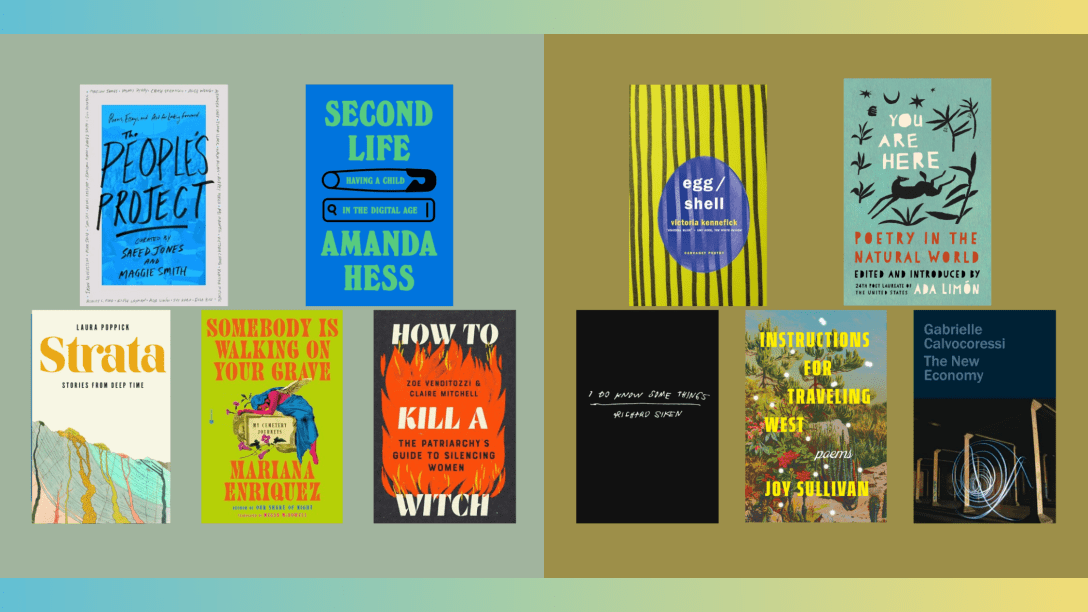
Following up on my post of my fave fiction of 2025, I also read some great nonfiction and poetry this year. Poetry in particular was a wonderful treasure trove this past year, with new work from old favourites and discoveries from poets I hadn’t encountered before but immediately came to love.
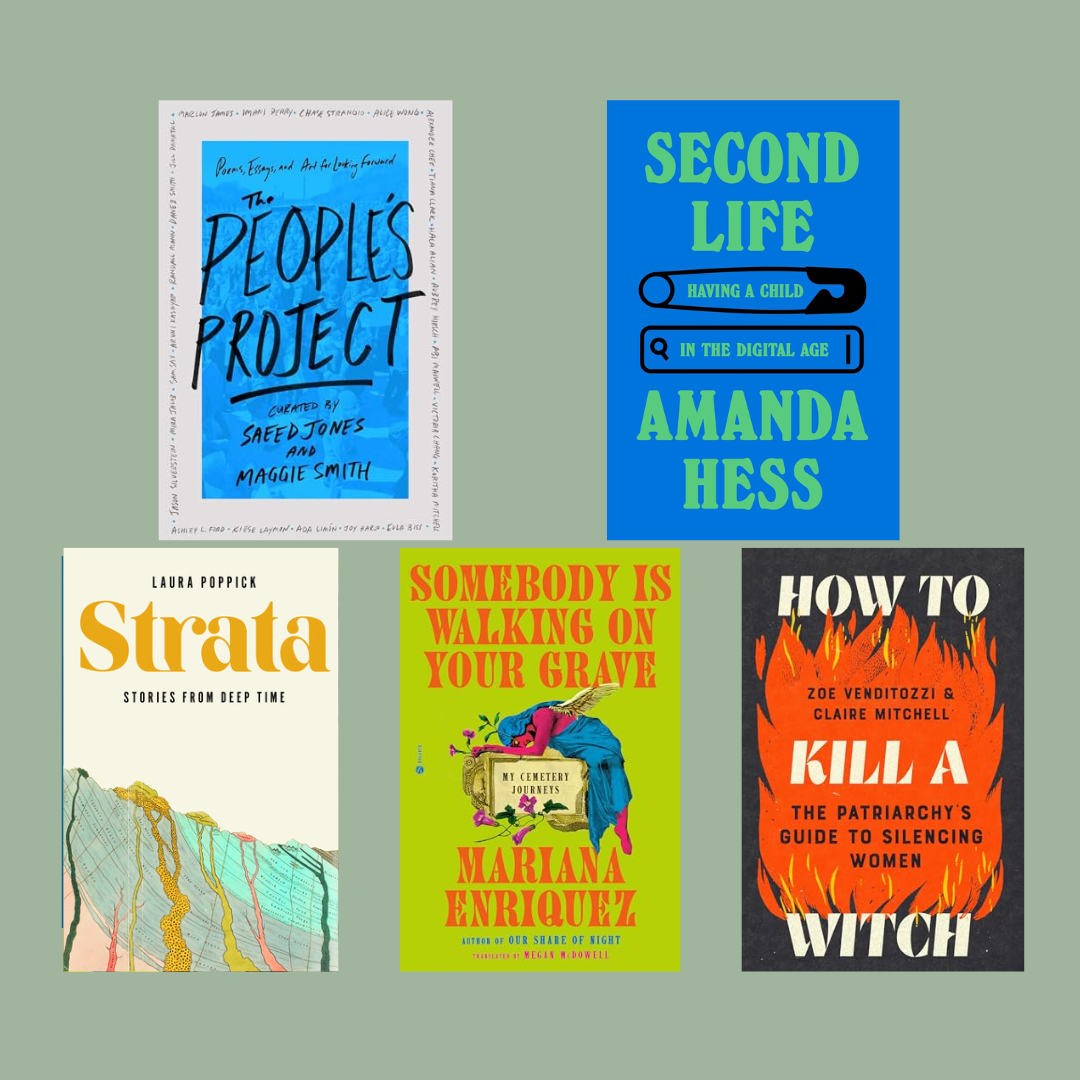
The People’s Project edited by Saeed Jones and Maggie Smith – This anthology strikes the perfect tone for the current moment. A defiant response to Project 2025 that refuses to bend to hate and fear, this collection is fantastically curated, beautifully written across the board, and exactly what we need. The poems and essays within, written by a variety of wonderful writers like Ada Limón, Marlon James, Joy Harjo, Hala Alyan, and more, as well as the editors Saeed Jones and Maggie Smith, are neither rosily optimistic nor nihilistically doom-filled. Instead they offer realism about the state of the nation, but also a reminder that there are ways to face it, and that facing it is a thing worth doing.
Second Life by Amanda Hess – This book made me realize that there is a whole world of pregnancy capitalism that I knew nothing about, but that is apparently being foisted on expecting and new mothers via social media and the broader internet. I really enjoyed Hess’s writing style, which reminded me of Naomi Klein (and I equally came away from her work feeling as fascinated as I did infuriated). The strongest moments of the book are when Hess focuses on her personal journey, her anxiety over and love for her children, but the cultural criticism elements offer important and interesting context and insight into the intersection of internet and technology in modern motherhood.
Strata by Laura Poppick – I love the dual nature of the phrase “deep time.” As Laura Poppick’s beautiful science and nature book, Strata, shows, it refers not only to the physical depth of the minerals, fossils, relics, and other materials that allow scientists to study Earth’s history, but also to the profundity of a study that connects our lives to the many millions of years that came before us. Strata combines all of the best elements of nature writing. I enjoyed “meeting” the author and the other scientists she worked with, in particular reading about her own awe at and gratitude for the Earth (as evidenced by the quote above from her introduction). And I appreciated the look at things such as efforts toward making geoscience more inclusive for indigenous people and incorporating their traditional beliefs.
Somebody is Walking on Your Grave by Mariana Enriquez – As a certified Cemetery Enjoyer, I’ve definitely added a good few locations to my to-visit list after reading this collection. I’ve heard so many good things about Mariana Enriquez and I’ve had one of her short story collections sitting on my bookshelf for a while, but reading this has definitely spurred me to pick up that one and all the rest of her work. I loved the tone of this book, respectful to the dead she is visiting and yet still conversational, convivial, and entertaining.
How to Kill a Witch by Claire Mitchell and Zoe Venditozzi – Claire Mitchell and Zoe Venditozzi spearheaded the campaign to secure legal pardons for the victims of Scottish witch-hunts between 1563-1736, and were successful in securing a public apology from the Scottish government in 2022. How to Kill a Witch furthers the aims of their campaign by dispelling misinformation regarding the accused, laying out the patriarchal, societal, religious, and legal conditions that led to witch-hunts in Scotland and beyond. Smart and thorough in research and content, and darkly comical in tone, this book is as entertaining as it is informative. I loved the use of fictionalized vignettes to put us in the minds of some of the historical figures — both accused and accusers — discussed in greater depth in the nonfictional chapters. And the book does an excellent job of explaining the throughlines from historical witch-hunts to witch-hunts, both metaphorical and real, that continue to occur today.
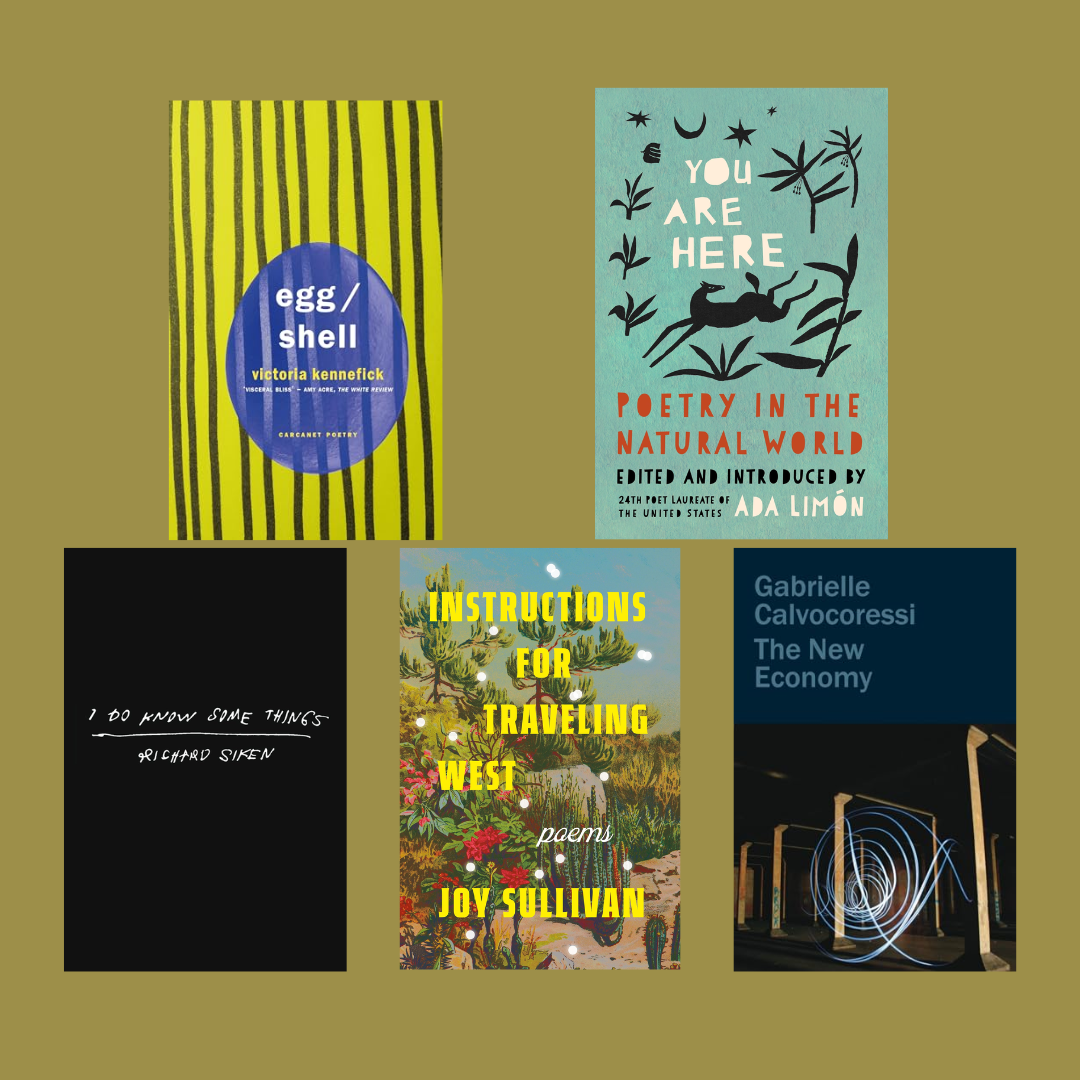
egg/shell by Victoria Kennefick – This book is so unbelievably beautiful and moving and empathetic. I felt so much emotion while I was reading it. The first half explores pregnancy, early motherhood, and infertility. The poet speaks to her children, both the one she gives birth to and the ones she miscarries. The dichotomy of soft, quiet grief and sometimes sharp, unexpected humor is brilliant. The second half is about her ex-partner’s gender transition and the end of their marriage. It’s a book about transformation: her own, her body’s, her child’s, her partner’s. Throughout, she offers the title metaphors — the eggs and the shells, the swans and incubation and the cracking and the flight.
You Are Here edited by Ada Limón – This is a beautiful anthology edited by Poet Laureate Ada Limón (herself one of my favourite poets). Nature has always been such a source of inspiration for poets, and I loved seeing the different ways that manifested in this collection. A few of my highlights were ‘To A Blossoming Saguaro’ by Eduardo C Corral, ‘Lullaby for the Grieving’ by Ashley M Jones, ‘Letters’ by Ilya Kaminsky, ‘It Was Summer, the Wind Blew’ by Matthew Zapruder, and ‘Heliophilia’ by Aimee Nezhukumatathil.
I Do Know Some Things by Richard Siken – I Do Know Some Things is about Siken’s journey after a stroke— learning how to walk again, and to speak, and to write poetry; as well as his childhood and his relationship with his parents, and their deaths, and his own mortality, and love, and grief, and these themes are certainly not so far from what we would expect from his work. There’s an intimacy here that feels deeper and more personal than his previous collections, poignant and heartbreaking and occasionally funny. Perhaps in part because he had to rediscover language after his stroke (he wrote one of the poems of a time when he couldn’t recall the word ‘waitress’ and came up with ‘restaurant nurse’), there are so many moments in this collection that feel like discovery in themselves.
Instructions for Traveling West by Joy Sullivan – Oh, I loved this one. I wasn’t sure at the very start; there were a few poems that didn’t quite hit for me and a few grammatical bits — oddly placed commas and the like — that felt like errors rather than artistic license. But the more I read, the more I was drawn in, and so many poems in this collection resonated with me. There were more than a few that I read and then immediately reread. I felt the themes deeply, the hopes, the fears, the joy.
The New Economy by Gabrielle Calvocoressi – My review for this collection on Goodreads is simply: if an alien came to earth and asked what it feels like to be human I might give them this book. And I think that just about sums it up.

 thebestpossibletime