Intro to the Uncanny: A Spooky Seasonal Curriculum

Intro to the Uncanny

Something I’ve been seeing a lot of on social media lately that has really intrigued me is the idea of a “personal curriculum.” In essence, this is like a school syllabus that you create for yourself: you choose a topic, make a reading list, and study it. Maybe I’m just boring and miss college, but I love this idea and decided I wanted to make one. 

It was easy to decide on a theme. A few months ago I reread Stephen King’s Pet Sematary and ended up writing an essay on grief in horror (more on this later), and I decided to delve deeper into a topic that I have actually studied in an academic setting: the unheimlich, or uncanny. 

When I was in college, I took a class on The Literature of Horror, which is where I first encountered Sigmund Freud’s essay, Das Unheimlich. A concept originally philosophized by Ernst Jentsch, Freud explains that the uncanny deals with “that kind of terror which goes back to the long-known.” In other words, that which feels familiar… almost, but isn’t. 

Obviously there is a place for horror that is far outside our sphere of understanding. Cosmic horror and everything influenced by Lovecraft’s Cthulhu mythos proves that we can and love to be terrorized by beings beyond our comprehension. But often horror does find its most unsettling moments in those things that aren’t quite right. Even when it comes to monsters, many appear to be nearly-human, from vampires to wendigo, fear stemming from the uncanny valley of seeing our own distorted reflections. 

Being already very familiar with horror and the uncanny, I decided that instead of creating a personal curriculum on the topic, I wanted to make one to share. And what better time to share it than Halloween month! Over the next four weeks, I’m going to post a syllabus introducing the uncanny, with recommendations on material to read and watch for each. I’m also going to be sharing an essay on each of my chosen themes within the topic: 

Week one (this post): Introduction to the Uncanny

Week two: Doppelgängers, Doubles, and the Uncanny Valley

Week three: The Uncanny Nature of Grief 

Week four: Uncanny Architecture 

Obviously I’m not expecting anyone to complete this curriculum within a month, as each of my units has multiple book, article, and movie/television recommendations, but if you do decide to delve in I’d love to hear your thoughts! And by the way, don’t worry if you’re not a horror fan — in each unit I’m including some non-horror (or at least less scary) recs as well. 

So, if this post is your introduction to the uncanny, then unit 1 is a primer for what’s to come. Let’s begin: 

Unit 1: Introduction to the Uncanny

Primary reading: 

Das Unheimlich by Sigmund Freud: The foundational text of this curriculum, Freud’s essay is required reading for anyone interested in the uncanny. Freud defines the unhemlich as such: 

The German word “unheimlich” (uncanny) is evidently the opposite of “heimlich” (secret), “heimat” (homely), and “Vertraut” (familiar), leading to the conclusion that something is frightening precisely because it is unknown and unfamiliar. Of course, not everything that is new and unfamiliar is frightening; the relationship is not reversible. One can only say that what is novel easily becomes frightening and uncanny; some novel things are frightening, but certainly not everything. Something else must be added to the new and unfamiliar to make it uncanny.

Secondary reading: 

The Tate on Abject Art – Abject art is a strong companion to the uncanny because it twists normal body parts and bodily functions through a transgressive lens. This is often done with a feminist perspective, because the female body and female bodily functions in particular are often subject to accusations of uncleanliness, impureness, etc (think menstruation or breastfeeding). Because uncanny horror deals with the familiar and normal, twisted into something unknown, and often takes place in the home or domestic sphere, it too often has a feminist element. 

Next week, I’ll be taking a look at Doppelgängers, Doubles, and the Uncanny Valley. Here’s my reading list of recommendations for that unit. I’ll be sharing my reasons for choosing these pieces of media, as well as a closer look at Ira Levin’s 1970s classic The Stepford Wives — and how it’s even more relevant today. 

Unit 2: Doppelgängers, Doubles, and the Uncanny Valley

Primary recommendations:

The Stepford Wives by Ira Levin
The Strange Case of Dr. Jekyll & Mr. Hyde by Robert Louis Stevenson
Us (dir. Jordan Peele)
Companion (dir. Drew Hancock) 

Secondary recommendations:

Doppelgänger: A Trip Into the Mirror World by Naomi Klein 
The Age of Instagram Face by Jia Tolentino for The New Yorker
Black Swan (dir. Darren Aronovsky)
Klara & the Sun by Kazuo Ishiguro 

My favourite books of 2026 (so far)

Favourite books of 2026 so far title image

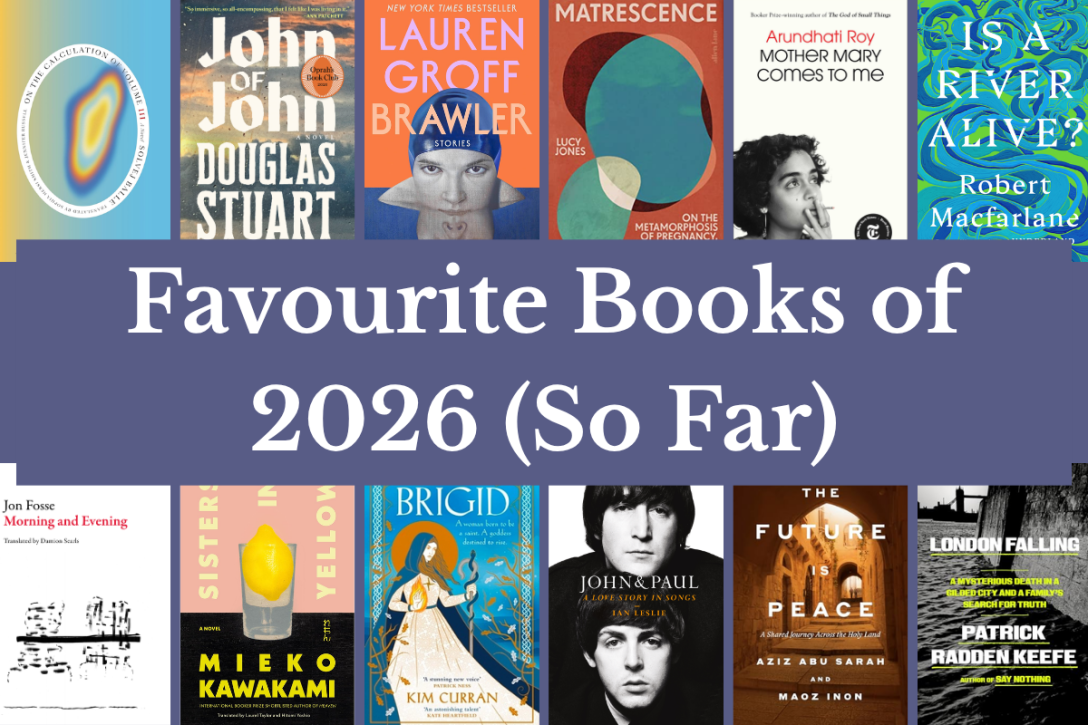
It is wild that we’re halfway through the year already. Despite my new year’s resolution to read fewer books, I have somehow still read a ton of books. Luckily I have some big ones on the TBR to take up my second half of the year (#lonesomedovesummer), but in the meantime here are some favorites read in 2026 so far. 

I do have to say that I would normally have a section specifically for horror since I read so much in that genre, but surprisingly I haven’t read a horror novel, published this year or otherwise, that has really blown me away yet (apart from rereading a couple of Stephen King classics). But I do have a few on the docket that I have high hopes for, so fingers crossed. 

Continue reading “My favourite books of 2026 (so far)” →

Review: Sisters in Yellow by Mieko Kawakami

Sisters in Yellow

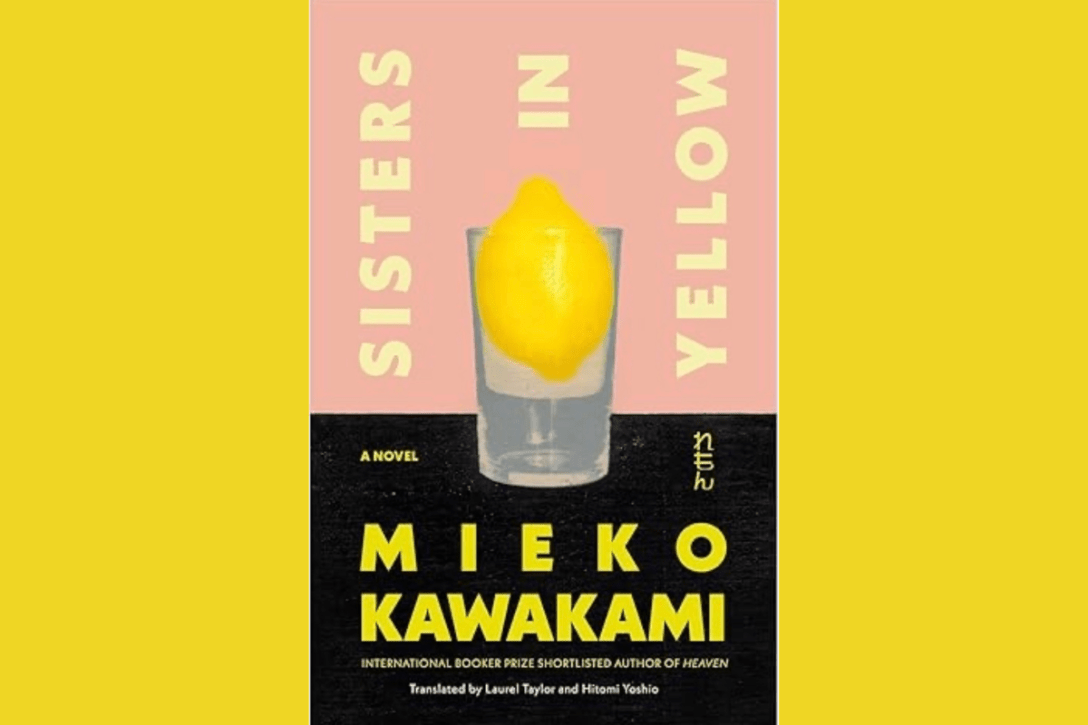
The best way I can describe how Sisters in Yellow made me feel is wrung out. Like a bit of fabric left on the ground under a leaky roof or  tap, each chapter the drip, drip, dripping water, filling to the point of saturation. Then the ending, when the fabric was picked up and twisted and twisted until every bit of water was squeezed back out, emptied. 

I’d only previously read Kawakami’s Breasts and Eggs, which I liked but did not love, but Sisters in Yellow really, really worked for me. It’s a ball of contradictions in the best way: slow burning yet propulsive, stoic yet thrilling, unassuming yet memorable. And if you’re wondering how the novel can be all of those things at once, you need only look at its protagonist Hana, who is herself a mess of contradictions as well. She’s naive in some ways but mature in others, obsessed with earning money but quick to give it away, compassionate and self-sacrificing and also dictatorial and ruthless. 

The story begins in the present day, when Hana reads a news article about someone she used to know some twenty years before. It dredges up memories that she had willfully repressed. She reaches out to Ran, another friend from the time, who validates her feelings but does not want to speak about the events that Hana is beginning to remember, nor to Hana in general. And so the novel transitions into an extended flashback (that lasts until the final chapter) in which Hana revisits a strange period in her life. 

Continue reading “Review: Sisters in Yellow by Mieko Kawakami” →

Review: John of John by Douglas Stuart

“I have to have something to show at the end of this life. If I’m for hell, then I deserve a love that was worth it.”

Were it not for the fact that I have a half dozen novels borrowed from the library with impending due dates (plus the new books by Doireann ní Ghríofa and Maggie O’Farrell waiting to me on my bookshelf), I might’ve finished John of John and then started it right over again. I loved both of Douglas Stuart’s previous novels, but this one is a real masterpiece. 

In John of John, Douglas Stuart whisks us away from the gritty Glasgow streets that served as the setting for Shuggie Bain and Young Mungo and takes us to the Outer Hebrides. The book is set in the late 90s (or early 2000s?), but the Isle of Harris feels like it is in a world at least two decades earlier thanks to the decline of the weaving trade that has mired many of its residents into seemingly unshakeable rural poverty. Even if they’re accurately topical, mentions of Charles and Diana’s divorce and the growing popularity of email feel anachronistic on this lonely island. 

Cal and his father John are two of the island’s residents. In some ways, the two men couldn’t be more different — Cal returns after doing a degree in textiles at an art college and being unsuccessful in finding work that will keep him on the mainland, but he dreams of more than the island on which he was raised. John is a crofter, a weaver, and a devoutly religious man who feels, for better or worse, deeply rooted in the fabric of his rural, strictly Presbyterian community. 

In one important way, they couldn’t be more similar, although neither of them knows it about each other. Both are gay, with Cal hoping that a life outside of Harris might allow him to live this truth openly, and with John carrying on a decades-long clandestine romance with his neighbor Innes. This dual-secrecy drives the relationship between father and son, although of course they don’t know that this shared trait has such an impact on their lives as individuals and as a family. 

Continue reading “Review: John of John by Douglas Stuart” →

Women’s Prize for Fiction Shortlist 2026, ranked and reviewed

Women's Prize 2026 Shortlist

You may have noticed that my blog was dormant for the last few months. I’m still trying to figure out what exactly I want to do with it — more on that to come, hopefully.

By the way, I did finally do something I’ve been talking about for years, which is to make an instagram account specifically for talking about books: soleofareader. I still prefer long-form writing to pithy instagram captions (and definitely to any sort of video content), but I wanted a place where I could chit-chat a little more about what I’m reading, so give it a follow if you like.

In the meantime, I had to bring it back at least for one my annual post in the lead up to the Women’s Prize announcement! One of my favourite literary awards, I always make sure to read the full shortlist for the fiction prize before the winner is announced.

My thoughts on previous years’ shortlists: 2025; 2024; 2022; 2021

This year of the six shortlisted novels, I had only read one prior to the shortlist being announced. So I was excited to dive in to the other five over the last couple of months. Overall, it’s a strong shortlist. There were four novels I loved, one that didn’t quite hit for me but that had a lot to recommend about it, and only one that I unfortunately didn’t connect with. Find my reviews and ranking below, and make sure to look out for the winner announcement on June 10!

Continue reading “Women’s Prize for Fiction Shortlist 2026, ranked and reviewed” →

My favourite books of 2025: Horror edition

I’m a horror girlie every month of every year, but in 2025 I really outdid myself. I read 52 works of horror fiction and 6 works of horror nonfiction, plus 5 rereads. Most of them (aside from the rereads) were published new in 2025. I blame the excellent Jump Scares by Emily C. Hughes, which features a list of upcoming horror releases that is both fantastic and devastating to my to-read list.

While I’m planning to spend more time focusing on the back catalogue in 2026 instead of chasing new releases, 2025 did have some serious heavy-hitters in the genre. I’ve somehow narrowed down my top 5, so here are my horror favourites of the year:

Continue reading “My favourite books of 2025: Horror edition” →