Intro to the Uncanny Unit 3: The Uncanniness of Grief

the uncanniness of grief

This week, we’re reading about grief. “Grief horror” has been a popular trope in the last decade of so-called “Elevated horror” films, but it has always permeated the genre. Here are a few classic and contemporary picks (as well as a few non-horror-ish options).

Primary reading:

Pet Sematary by Stephen King – As I’ll explore in my essay tomorrow, everyone knows the story of the pet sematary. But the real horror of the novel isn’t just the fact that reanimated corpses come out of the ground, or even that they come back wrong; it’s the unsettling fact of how far characters will go in their grief, despite their logical instincts.

Our Wives Under the Sea by Julia Armfield – If you want a take on the grief over a loved one coming back wrong that isn’t outright scary like Pet Sematary, Julia Armfield’s literary novel is a beautiful, devastating choice. Miri’s wife Leah returns from a deep-sea research mission, but life doesn’t return to normal. So often, grief stories revolve around someone who has died or otherwise been lost, but this novel is particularly tragic because Miri is forced to grieve someone who is, technically, still there.

The Haunting of Hill House (dir. Mike Flanagan) – Both the original Shirley Jackson novel and Flanagan’s 2018 adaptation could easily fit on this list, but I’ve chosen to highlight the miniseries – in part because Jackson’s novel will get a mention next week, and in part because Flanagan’s version not only captures the tragic themes of the book but also features some of the most startling jump scares I’ve ever encountered. There’s one that I guarantee will make you scream.

The Babadook (dir. Jennifer Kent) – Perhaps the movie that kicked off the current popularity of “grief as horror / horror as grief” movies, The Babadook follows a woman and her child as they confront a monster in their home that may be a physical manifestation of their grief. While some horror fans may be growing weary of grief metaphors by this stage, the film is a cult classic for a reason.

Secondary reading:

Beloved by Toni Morrison – In the venn diagram of Great American Novels and horror books, Beloved fits in the middle, although not necessarily neatly. This brutal, powerful novel has elements of the horror genre, but it’s the depiction of trauma and grief that will really leave you feeling shaken, and it’s an intense and essential read for its writing style and the strength of its themes.

Next to Normal (stage musical) – A non-horror take on the “haunted by your grief” storyline, this 2008 rock musical left me reeling the first time I saw it. I know for some folks, musicals are their own sort of horror, but it’s a brilliant story about the way grief manifests and distorts itself from the known feeling of love into something more unsettling and uncanny.

Bring Her Back (dir. Danny & Michael Philippou) – If you think the lengths to which Louis Creed went to bring back his child were too far, they don’t hold a candle to the events of Bring Her Back. There are so many layers of grief in this film, and so many layers of horror. It’s incredibly gruesome and probably the most disturbing film on this whole curriculum, so viewer beware, but it’s also an intensely devastating depiction of grief, desperation, and an inability to let go.

In the Dream House by Carmen Maria Machado – Machado’s memoir about an abusive relationship takes many forms; each chapter is a different literary trope or style. The Dream House as choose-your-own-adventure, as unreliable narrator, as epiphany, as sci-fi thriller. The dream house is haunted by the ghost of the relationship and the scars it left. It’s not a horror book per se, but it’s the sort of story that will leave you feeling unsettled for a long time afterward.
Doppelgangers, Doubles, and the Uncanny Valley: The Stepford Wives by Ira Levin

Doppelgangers, Doubles, and the Uncanny Valley

One requirement of the uncanny is that it cannot be entirely removed from our realm of experience. Cosmic and existential horror are not uncanny, because they force us to reckon with things beyond our comprehension. The uncanny relies on the abjection of familiarity, something that feels as though we should be able to understand it, but which has an element we cannot recognise. 

Imagine a funhouse mirror, or better yet, imagine an Instagram filter. You’re looking at your own reflection, a face you know better than any other, but it is distorted. You can still recognise yourself, but it’s not you, not quite.

Unit 2: Doppelgängers, Doubles, and the Uncanny Valley Reading List

Continue reading “Doppelgangers, Doubles, and the Uncanny Valley: The Stepford Wives by Ira Levin” →

Intro to the Uncanny Unit 2: Doppelgangers, Doubles, and the Uncanny Valley

Doppelgangers, Doubles, and the Uncanny Valley

Last week I gave you a bit of an overview of what this spooky little curriculum is about with my Introduction to the Uncanny post. This week we’re really delving into it with Unit 2: Doppelgängers, Doubles, and the Uncanny Valley. Tomorrow I’ll share my thoughts on one of horror’s satirical classics, Ira Levin’s The Stepford Wives, and how it connects to our theme, but first, your reading list:

Primary reading: 

The Stepford Wives by Ira Levin – Ira Levin’s 1972 novel is the main topic of my essay for this unit, and I think most people are somewhat familiar with its plot anyway, so I won’t go into too much detail here. But it’s a classic of a number of genres: science fiction, feminist literature, and more, and a quick read to boot. A must read.

The Strange Case of Dr. Jekyll & Mr. Hyde by Robert Louis Stevenson – Often the “evil twin” is something that is forced on the protagonist without consent. But sometimes, as in Stevenson’s classic, it is a dark foil that allows a virtuous character to live out their most base and sinful desires. Of course, there are consequences. 

Us (dir. Jordan Peele) – Jordan Peele’s directorial debut Get Out draws influence from The Stepford Wives, but his second film Us offers a different take on the doppelgänger. Lupita Nyong’o is sympathetic as Adelaide and chilling as her “tethered” mirror image, Red. It feels like a classic horror story as the nice suburban family is terrorized by their evil twins. As the film goes on, the backstory of the “tethered” begins to be revealed, and Us forces us to alter our perspectives on which side of the mirror we’re on. 

Companion (dir. Drew Hancock) – A Stepford Wives for the modern age, Iris is the perfect girlfriend to her boyfriend Josh, because he made her that way. But unlike in Stepford, this is the beginning of the story rather than the finale. Iris’s survival depends on crossing the uncanny valley, seeming (and perhaps becoming) real. This film is gory in places but not overly scary, ideal for the horror-curious but jump scare-averse. 

Secondary reading: 

Doppelgänger: A Trip Into the Mirror World by Naomi Klein – Many people believe that everyone has a doppelgänger somewhere in the world. In some ways, Naomi Klein found hers, given the frequency with which she is confused with Naomi Wolf. To her chagrin, given that Wolf has descended from feminist commentary into unhinged conspiracy theory, while Klein continues to take a fact-based approach to her writing (remember this helpful rhyme: “If Naomi be Klein, you’re doing fine. If Naomi be Wolf, oh, buddy. Oof”). It’s a fascinating look at what Klein calls “the Mirror World” in a world beyond fiction. 

The Age of Instagram Face by Jia Tolentino for The New Yorker – Are we Stepford-ing ourselves? Culture writer Jia Tolentino’s article explores the way plastic surgery allows women to transform themselves into an uncanny valley, cyborgian amalgam of on-trend beauty standards, and how social media encourages them to create their own perfect doppelgängers through apps and filters. More horrifying than any horror novel. 

Black Swan (dir. Darren Aronovsky) – In Black Swan, rival ballerinas compete for the role of innocent Odette and sensuous Odile in Tchaikovsky’s Swan Lake, and each embodies the characteristics of one element of this dual role. But lines begin to blur as their relationship becomes tense (and sometimes erotic), and they — and we, the audience — begin to question where one dancer ends and the other begins. 

Klara & the Sun by Kazuo Ishiguro – The uncanny valley is usually unsettling; hence, its name. But in Ishiguro’s novel, Klara is the heroine, a sweet and loyal AF (Artificial Friend) companion to a young human girl. There is a dystopian element to the novel that goes beyond the existence of robots “living” amongst humans, but it makes the story melancholy rather than frightening. The novel is a good choice for a reader interested in themes appearing outside of the horror genre. 

Intro to the Uncanny: A Spooky Seasonal Curriculum

Intro to the Uncanny

Something I’ve been seeing a lot of on social media lately that has really intrigued me is the idea of a “personal curriculum.” In essence, this is like a school syllabus that you create for yourself: you choose a topic, make a reading list, and study it. Maybe I’m just boring and miss college, but I love this idea and decided I wanted to make one. 

It was easy to decide on a theme. A few months ago I reread Stephen King’s Pet Sematary and ended up writing an essay on grief in horror (more on this later), and I decided to delve deeper into a topic that I have actually studied in an academic setting: the unheimlich, or uncanny. 

When I was in college, I took a class on The Literature of Horror, which is where I first encountered Sigmund Freud’s essay, Das Unheimlich. A concept originally philosophized by Ernst Jentsch, Freud explains that the uncanny deals with “that kind of terror which goes back to the long-known.” In other words, that which feels familiar… almost, but isn’t. 

Obviously there is a place for horror that is far outside our sphere of understanding. Cosmic horror and everything influenced by Lovecraft’s Cthulhu mythos proves that we can and love to be terrorized by beings beyond our comprehension. But often horror does find its most unsettling moments in those things that aren’t quite right. Even when it comes to monsters, many appear to be nearly-human, from vampires to wendigo, fear stemming from the uncanny valley of seeing our own distorted reflections. 

Being already very familiar with horror and the uncanny, I decided that instead of creating a personal curriculum on the topic, I wanted to make one to share. And what better time to share it than Halloween month! Over the next four weeks, I’m going to post a syllabus introducing the uncanny, with recommendations on material to read and watch for each. I’m also going to be sharing an essay on each of my chosen themes within the topic: 

Week one (this post): Introduction to the Uncanny

Week two: Doppelgängers, Doubles, and the Uncanny Valley

Week three: The Uncanny Nature of Grief 

Week four: Uncanny Architecture 

Obviously I’m not expecting anyone to complete this curriculum within a month, as each of my units has multiple book, article, and movie/television recommendations, but if you do decide to delve in I’d love to hear your thoughts! And by the way, don’t worry if you’re not a horror fan — in each unit I’m including some non-horror (or at least less scary) recs as well. 

So, if this post is your introduction to the uncanny, then unit 1 is a primer for what’s to come. Let’s begin: 

Unit 1: Introduction to the Uncanny

Primary reading: 

Das Unheimlich by Sigmund Freud: The foundational text of this curriculum, Freud’s essay is required reading for anyone interested in the uncanny. Freud defines the unhemlich as such: 

The German word “unheimlich” (uncanny) is evidently the opposite of “heimlich” (secret), “heimat” (homely), and “Vertraut” (familiar), leading to the conclusion that something is frightening precisely because it is unknown and unfamiliar. Of course, not everything that is new and unfamiliar is frightening; the relationship is not reversible. One can only say that what is novel easily becomes frightening and uncanny; some novel things are frightening, but certainly not everything. Something else must be added to the new and unfamiliar to make it uncanny.

Secondary reading: 

The Tate on Abject Art – Abject art is a strong companion to the uncanny because it twists normal body parts and bodily functions through a transgressive lens. This is often done with a feminist perspective, because the female body and female bodily functions in particular are often subject to accusations of uncleanliness, impureness, etc (think menstruation or breastfeeding). Because uncanny horror deals with the familiar and normal, twisted into something unknown, and often takes place in the home or domestic sphere, it too often has a feminist element. 

Next week, I’ll be taking a look at Doppelgängers, Doubles, and the Uncanny Valley. Here’s my reading list of recommendations for that unit. I’ll be sharing my reasons for choosing these pieces of media, as well as a closer look at Ira Levin’s 1970s classic The Stepford Wives — and how it’s even more relevant today. 

Unit 2: Doppelgängers, Doubles, and the Uncanny Valley

Primary recommendations:

The Stepford Wives by Ira Levin
The Strange Case of Dr. Jekyll & Mr. Hyde by Robert Louis Stevenson
Us (dir. Jordan Peele)
Companion (dir. Drew Hancock) 

Secondary recommendations:

Doppelgänger: A Trip Into the Mirror World by Naomi Klein 
The Age of Instagram Face by Jia Tolentino for The New Yorker
Black Swan (dir. Darren Aronovsky)
Klara & the Sun by Kazuo Ishiguro 

My favourite books of 2025: Horror edition

I’m a horror girlie every month of every year, but in 2025 I really outdid myself. I read 52 works of horror fiction and 6 works of horror nonfiction, plus 5 rereads. Most of them (aside from the rereads) were published new in 2025. I blame the excellent Jump Scares by Emily C. Hughes, which features a list of upcoming horror releases that is both fantastic and devastating to my to-read list.

While I’m planning to spend more time focusing on the back catalogue in 2026 instead of chasing new releases, 2025 did have some serious heavy-hitters in the genre. I’ve somehow narrowed down my top 5, so here are my horror favourites of the year:

Continue reading “My favourite books of 2025: Horror edition” →

What you should read this October (spooky szn book recs) 

Pumpkins. Photo by Leandra Rieger for unsplash

It’s the most wonderful time of the year! 

The leaves are falling, the pumpkin men are dancing and it’s currently the most socially acceptable season to read as much horror as you can get your hands on. Obviously, I’m a year-round horror kind of gal, but for those who save their scares for spooky season, I have some recommendations of horror novels, new and old, that will get you in to the Samhain spirit.

Just to keep it simple, I’ve stuck to books published in the last five years, and I’ve left out the obvious heavy hitters like Stephen King because I figure if you’re interested in the horror classics you can probably find them yourselves. But if you do want some recommendations by the masters and from the back catalogue, give me a shout. 

What to read if… you’re new to horror

The Hacienda by Isabel Cañas, The Bog Wife by Kay Chronister

I was thrilled that my book club allowed me to suggest a horror novel recently, and The Hacienda by Isabel Cañas was a big hit. This lush, atmospheric novel is as much romance as it is horror, and the beautiful writing will draw you in even if you’re hesitant about the scares. 

There are no jump scares in The Bog Wife by Kay Chronister, only a sense of melancholy and decay that is potentially as scary as any ghost or demon. For those who love folk tales, family drama, and climate anxiety (maybe “love” is the wrong word), this book is the one. 

What to read if… you’re all about the vibes 

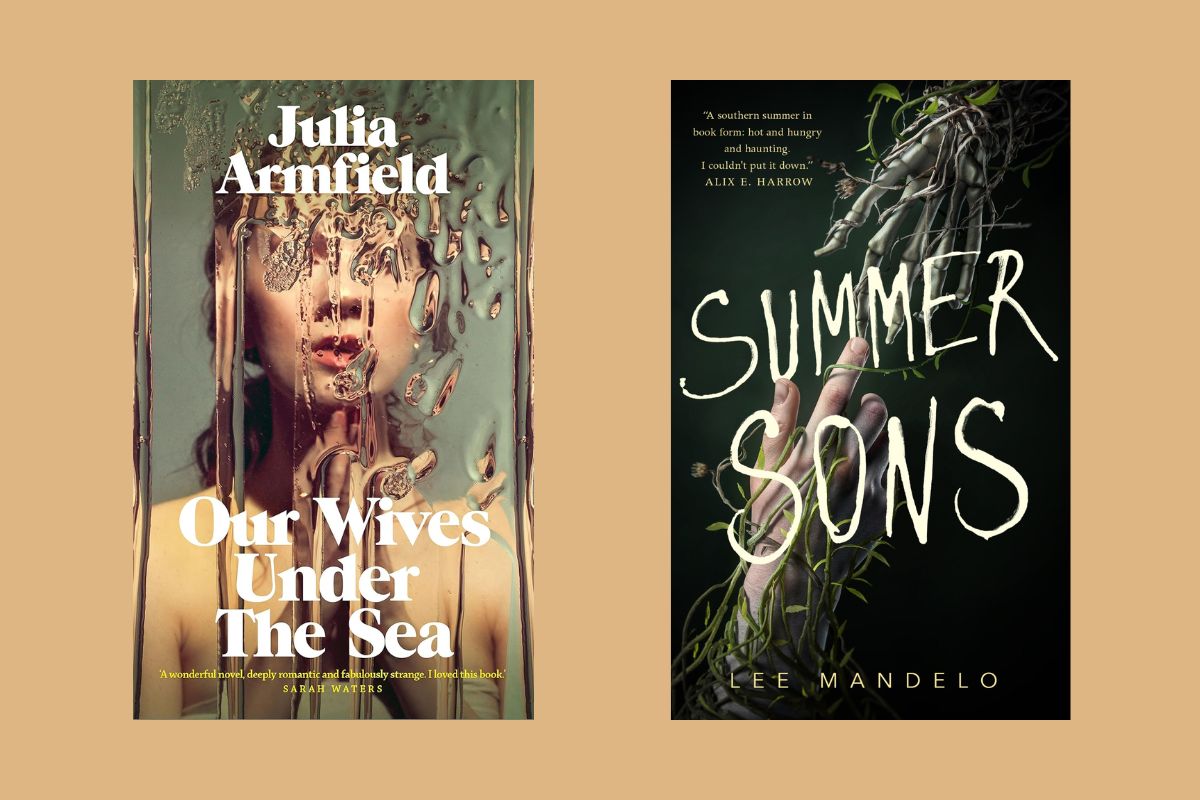
Our Wives Under the Sea by Julia Armfield, Summer Suns by Lee Mandelo

If you know me, I’ve probably already told you to read Our Wives Under the Sea by Julia Armfield. But in case I haven’t, please read Our Wives Under the Sea by Julia Armfield. Weird, watery, beautiful and devastating. 

Lee Mandelo is a master of the modern southern gothic, and Summer Sons is my favorite of his books. It’s visceral and compelling, and the sweat practically drips off the page. 

What to read if… you’re in your “good for her” era 

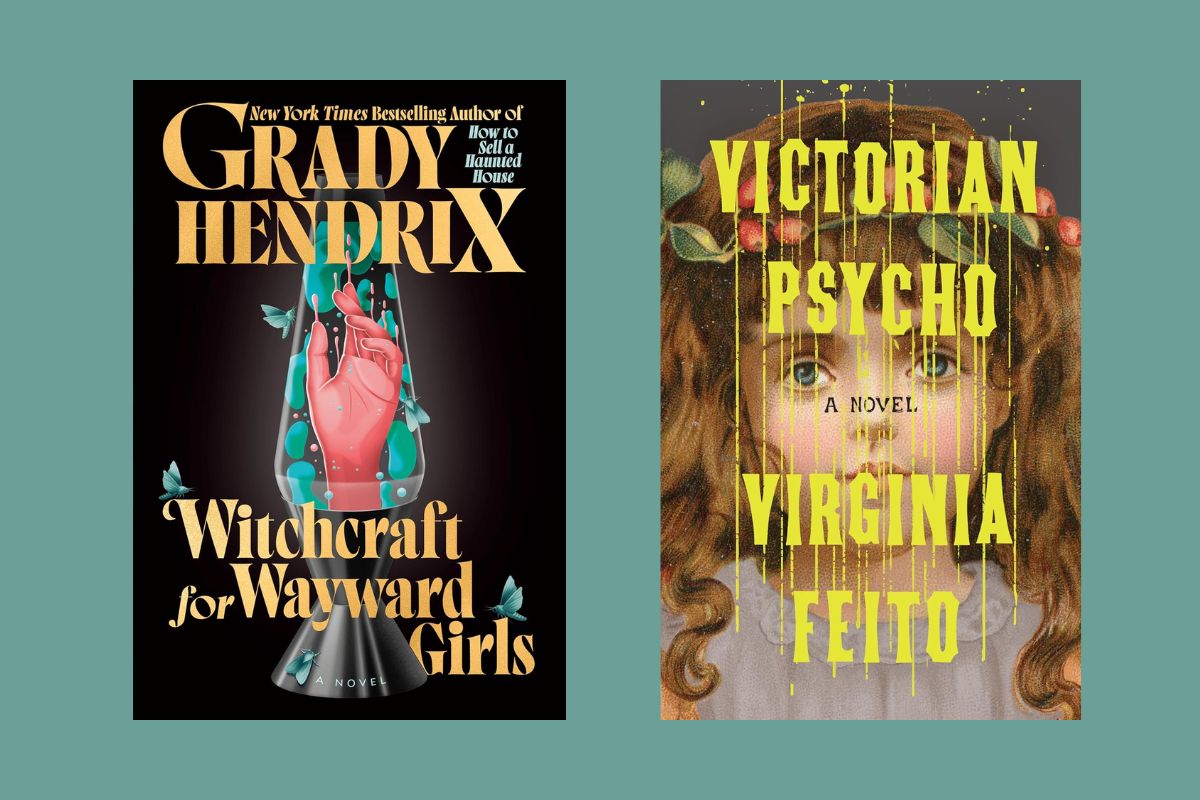
Witchcraft for Wayward Girls by Grady Hendrix, Victorian Psycho by Virginia Feito

The pregnant teenage characters in Witchcraft for Wayward Girls by Grady Hendrix are due a win as they’re sent to a miserable mother and baby home in 1970s Florida to be hidden away until they give birth. And if that win is getting tangled up in some seriously shady witch business? So be it. 

If you’d rather your heroines just to be deranged for no reason, then Victoria Feito’s cheerful murderess Winifred Notty is your girl. Victorian Psycho, indeed. This book is wild and gory and so much fun. 

What to read if… you want a recent book that’ll be remembered as a classic 

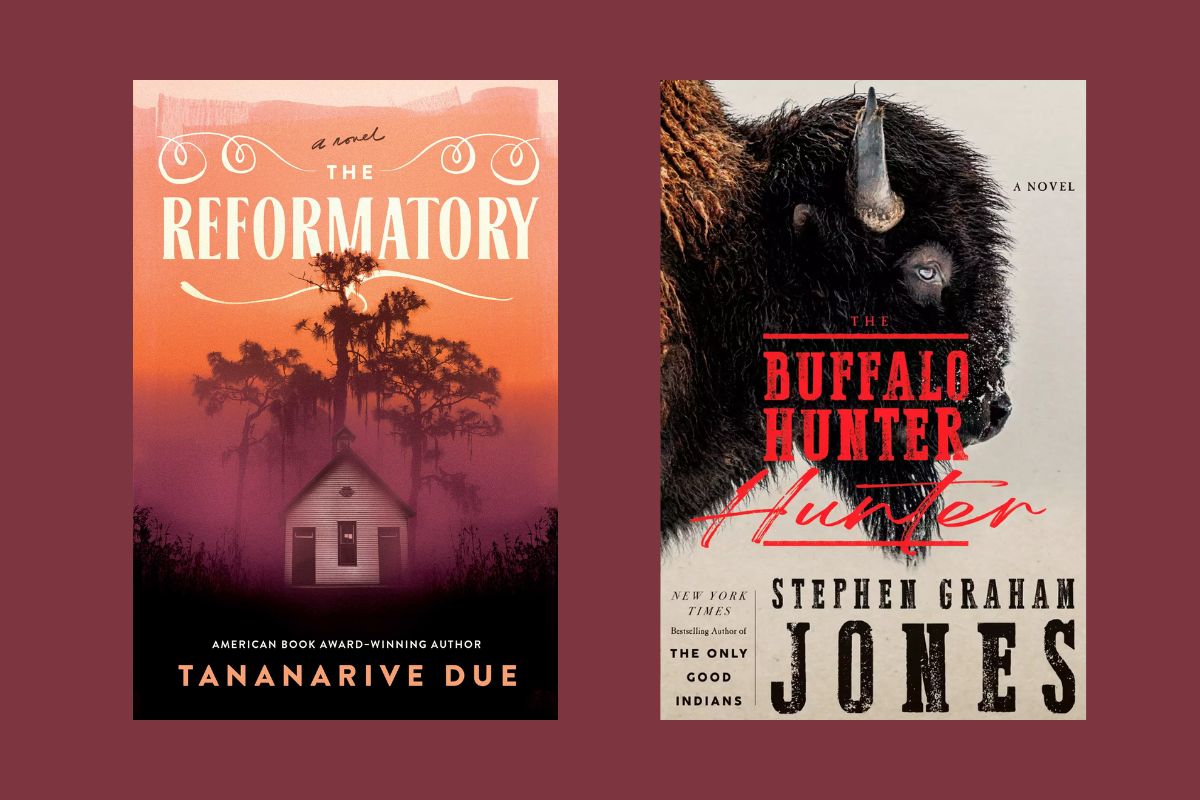
The Reformatory by Tananarive Due, The Buffalo Hunter Hunter by Stephen Graham Jones

The Reformatory by Tananarive Due and The Buffalo Hunter Hunter by Stephen Graham Jones have a lot in common. They’re both deeply inspired by true historical evils (abusive reformatory schools in the Jim Crow era Deep South for the former, the Marias massacre of Blackfeet peoples in the latter), they both bring supernatural elements to these real-life horrors, and they’re both written by authors who I’m confident will be regarded as integral parts of the literary canon for the genre in years and decades to come. Two powerful, frightening, incredible books. 

What to read if… you like your stories short and sweet scary

Never Have I Ever by Isabel Yap, She's Always Hungry by Eliza Clark

Spanning a variety of genres and drawing inspiration from folklore and myth, Never Have I Ever by Isabel Yap is a short story collection that will appeal to horror and non-horror fans alike. A strong debut and I hope we’ll see more from Yap soon. 

One for the weird girls, She’s Always Hungry by Eliza Clark reminds us that there’s nothing better than a really fucked up short story. A must-read for “The Shadow Over Little Chitaly” alone, which is formatted as a series of meal delivery app reviews. 

What to read if… forever sounds like a scarily long time

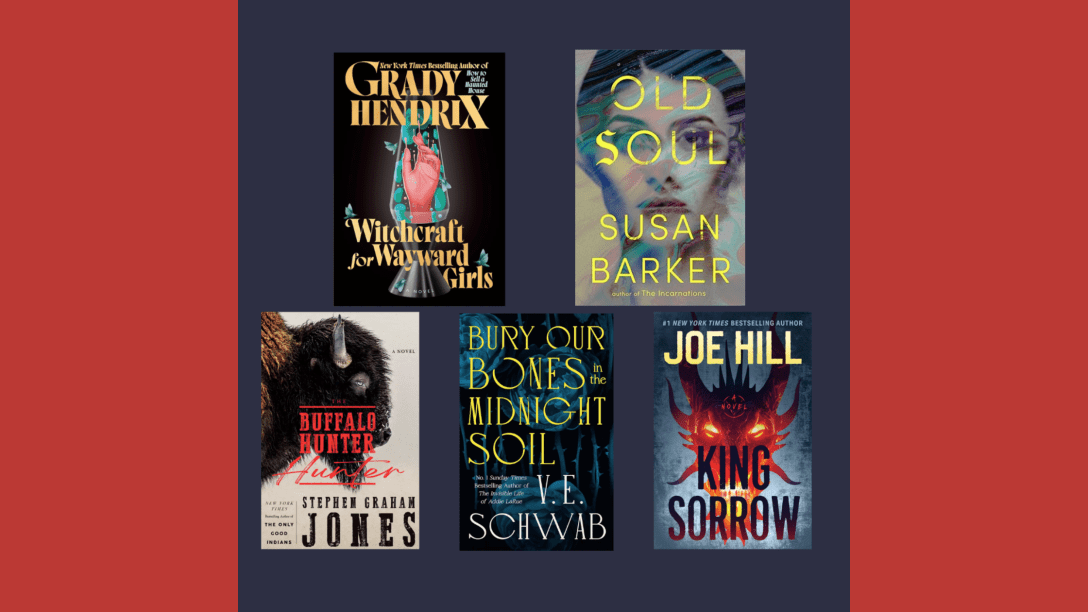
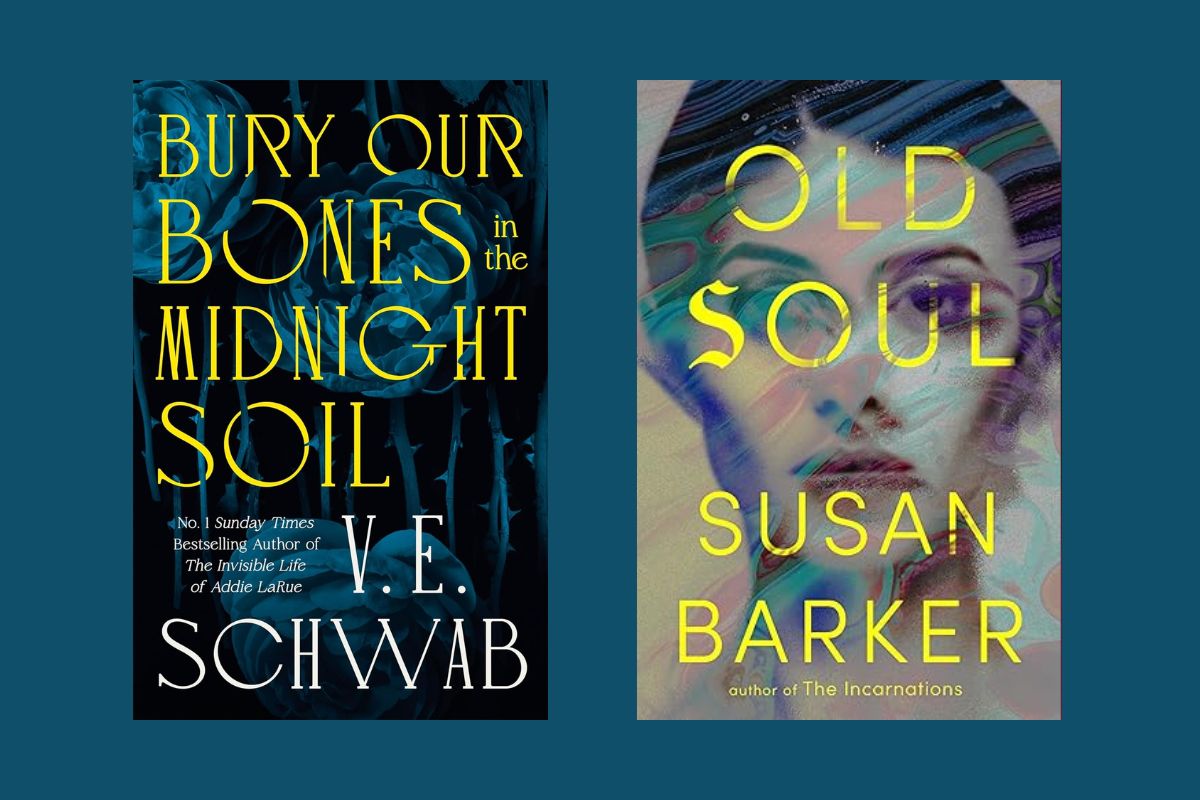
Bury Our Bones in the Midnight Soil by VE Schwab, Old Soul by Susan Barker

Nobody does immortality quite like a vampire, and Bury Our Bones in the Midnight Soil by V.E. Schwab follows three vampiric women across their long, long lives, from 1500s Spain to 1800s London to 2000s Boston. Schwab’s story has all the timeless elements while also bringing something new to the classic tropes. 

There’s an old myth that someone taking your photo can steal your soul, and a similar horrifying concept serves as the conceit of Old Soul by Susan Barker. As much as I love horror, I rarely feel genuinely shaken when reading, but this book definitely did it. 

What to read if… you think fact is scarier than fiction 

Feeding the Monster by Anna Bogutskaya, American Scary by Jeremy Dauber

I think that, maybe more than in any other genre, most people who love horror can pinpoint exactly when they became fans. Why Horror Has a Hold on Us by Anna Bogutskaya explores those moments, as well as why the horror genre gets so many of us in its grips. 

For a more academic take on the topic, Jeremy Dauber’s American Scary: A History of Horror, from Salem to Stephen King and Beyond provides an exhaustive but fascinating look at similar themes, with a focus on the way horror has held up a mirror to American society and history. 

Bonus: what I’m reading this October (and beyond) 

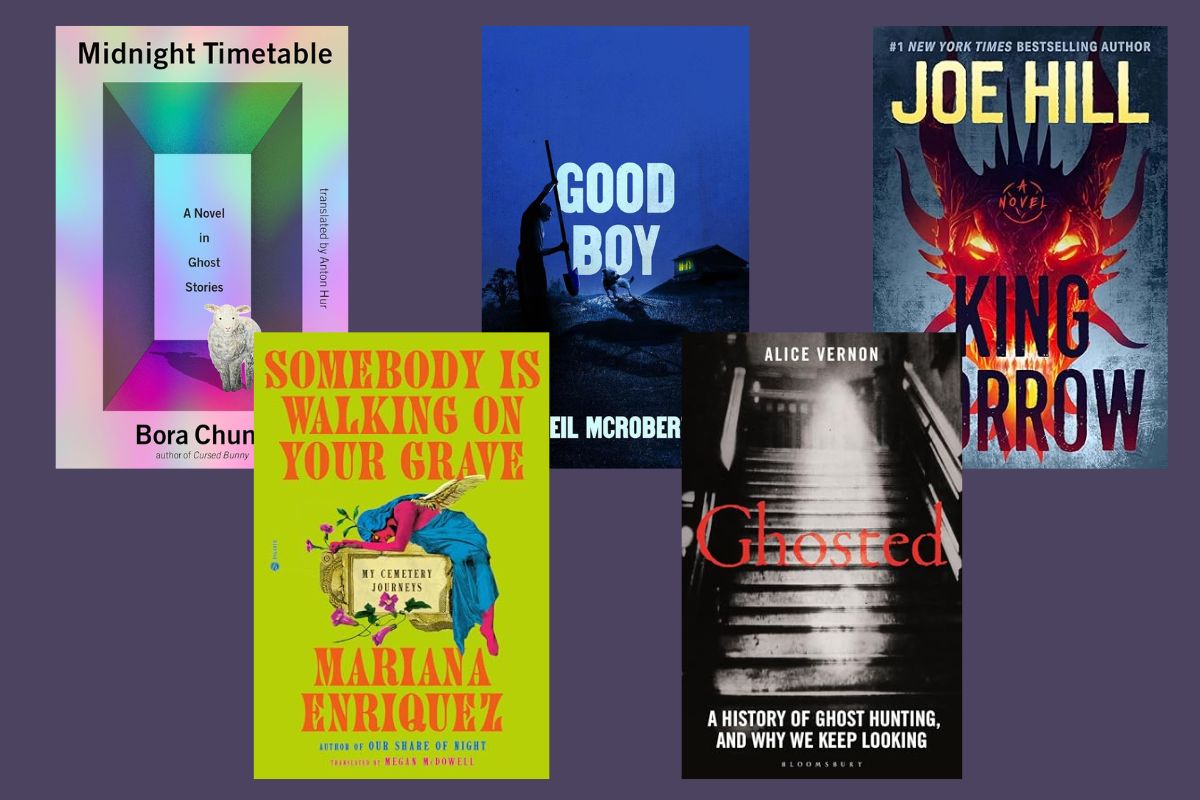
A selection of new and upcoming horror book covers

2025 has been a ridiculously good year for horror, with new books from big names, fresh faces, and scary stories across every sub-genre. I already wrote about my favorite horror books published in January-June of this year, and since then I’ve read plenty more that I’ll share about later.

Naturally, late-September through October is peak publishing season for horror, and some of the new and upcoming releases I’ve got on the tbr this month are Midnight Timetable by Bora Chung, Good Boy by Neil McRobert and King Sorrow by Joe Hill. 

I’ve also been eager to read The End of the World As We Know It, an anthology of short stories set in the world of Stephen King’s epic The Stand, but I realized it’s been at least 16 years since I read the novel so I want to revisit it first. Anyway, what’s October without some Stephen King? 

On the nonfiction side I’m looking forward to reading Somebody is Walking on Your Grave by Mariana Enriquez and Ghosted by Alice Vernon. 

What are you reading this October?