Doppelgangers, Doubles, and the Uncanny Valley: The Stepford Wives by Ira Levin

Doppelgangers, Doubles, and the Uncanny Valley

One requirement of the uncanny is that it cannot be entirely removed from our realm of experience. Cosmic and existential horror are not uncanny, because they force us to reckon with things beyond our comprehension. The uncanny relies on the abjection of familiarity, something that feels as though we should be able to understand it, but which has an element we cannot recognise. 

Imagine a funhouse mirror, or better yet, imagine an Instagram filter. You’re looking at your own reflection, a face you know better than any other, but it is distorted. You can still recognise yourself, but it’s not you, not quite.

Unit 2: Doppelgängers, Doubles, and the Uncanny Valley Reading List

Continue reading “Doppelgangers, Doubles, and the Uncanny Valley: The Stepford Wives by Ira Levin” →

Intro to the Uncanny Unit 2: Doppelgangers, Doubles, and the Uncanny Valley

Doppelgangers, Doubles, and the Uncanny Valley

Last week I gave you a bit of an overview of what this spooky little curriculum is about with my Introduction to the Uncanny post. This week we’re really delving into it with Unit 2: Doppelgängers, Doubles, and the Uncanny Valley. Tomorrow I’ll share my thoughts on one of horror’s satirical classics, Ira Levin’s The Stepford Wives, and how it connects to our theme, but first, your reading list:

Primary reading: 

The Stepford Wives by Ira Levin – Ira Levin’s 1972 novel is the main topic of my essay for this unit, and I think most people are somewhat familiar with its plot anyway, so I won’t go into too much detail here. But it’s a classic of a number of genres: science fiction, feminist literature, and more, and a quick read to boot. A must read.

The Strange Case of Dr. Jekyll & Mr. Hyde by Robert Louis Stevenson – Often the “evil twin” is something that is forced on the protagonist without consent. But sometimes, as in Stevenson’s classic, it is a dark foil that allows a virtuous character to live out their most base and sinful desires. Of course, there are consequences. 

Us (dir. Jordan Peele) – Jordan Peele’s directorial debut Get Out draws influence from The Stepford Wives, but his second film Us offers a different take on the doppelgänger. Lupita Nyong’o is sympathetic as Adelaide and chilling as her “tethered” mirror image, Red. It feels like a classic horror story as the nice suburban family is terrorized by their evil twins. As the film goes on, the backstory of the “tethered” begins to be revealed, and Us forces us to alter our perspectives on which side of the mirror we’re on. 

Companion (dir. Drew Hancock) – A Stepford Wives for the modern age, Iris is the perfect girlfriend to her boyfriend Josh, because he made her that way. But unlike in Stepford, this is the beginning of the story rather than the finale. Iris’s survival depends on crossing the uncanny valley, seeming (and perhaps becoming) real. This film is gory in places but not overly scary, ideal for the horror-curious but jump scare-averse. 

Secondary reading: 

Doppelgänger: A Trip Into the Mirror World by Naomi Klein – Many people believe that everyone has a doppelgänger somewhere in the world. In some ways, Naomi Klein found hers, given the frequency with which she is confused with Naomi Wolf. To her chagrin, given that Wolf has descended from feminist commentary into unhinged conspiracy theory, while Klein continues to take a fact-based approach to her writing (remember this helpful rhyme: “If Naomi be Klein, you’re doing fine. If Naomi be Wolf, oh, buddy. Oof”). It’s a fascinating look at what Klein calls “the Mirror World” in a world beyond fiction. 

The Age of Instagram Face by Jia Tolentino for The New Yorker – Are we Stepford-ing ourselves? Culture writer Jia Tolentino’s article explores the way plastic surgery allows women to transform themselves into an uncanny valley, cyborgian amalgam of on-trend beauty standards, and how social media encourages them to create their own perfect doppelgängers through apps and filters. More horrifying than any horror novel. 

Black Swan (dir. Darren Aronovsky) – In Black Swan, rival ballerinas compete for the role of innocent Odette and sensuous Odile in Tchaikovsky’s Swan Lake, and each embodies the characteristics of one element of this dual role. But lines begin to blur as their relationship becomes tense (and sometimes erotic), and they — and we, the audience — begin to question where one dancer ends and the other begins. 

Klara & the Sun by Kazuo Ishiguro – The uncanny valley is usually unsettling; hence, its name. But in Ishiguro’s novel, Klara is the heroine, a sweet and loyal AF (Artificial Friend) companion to a young human girl. There is a dystopian element to the novel that goes beyond the existence of robots “living” amongst humans, but it makes the story melancholy rather than frightening. The novel is a good choice for a reader interested in themes appearing outside of the horror genre. 
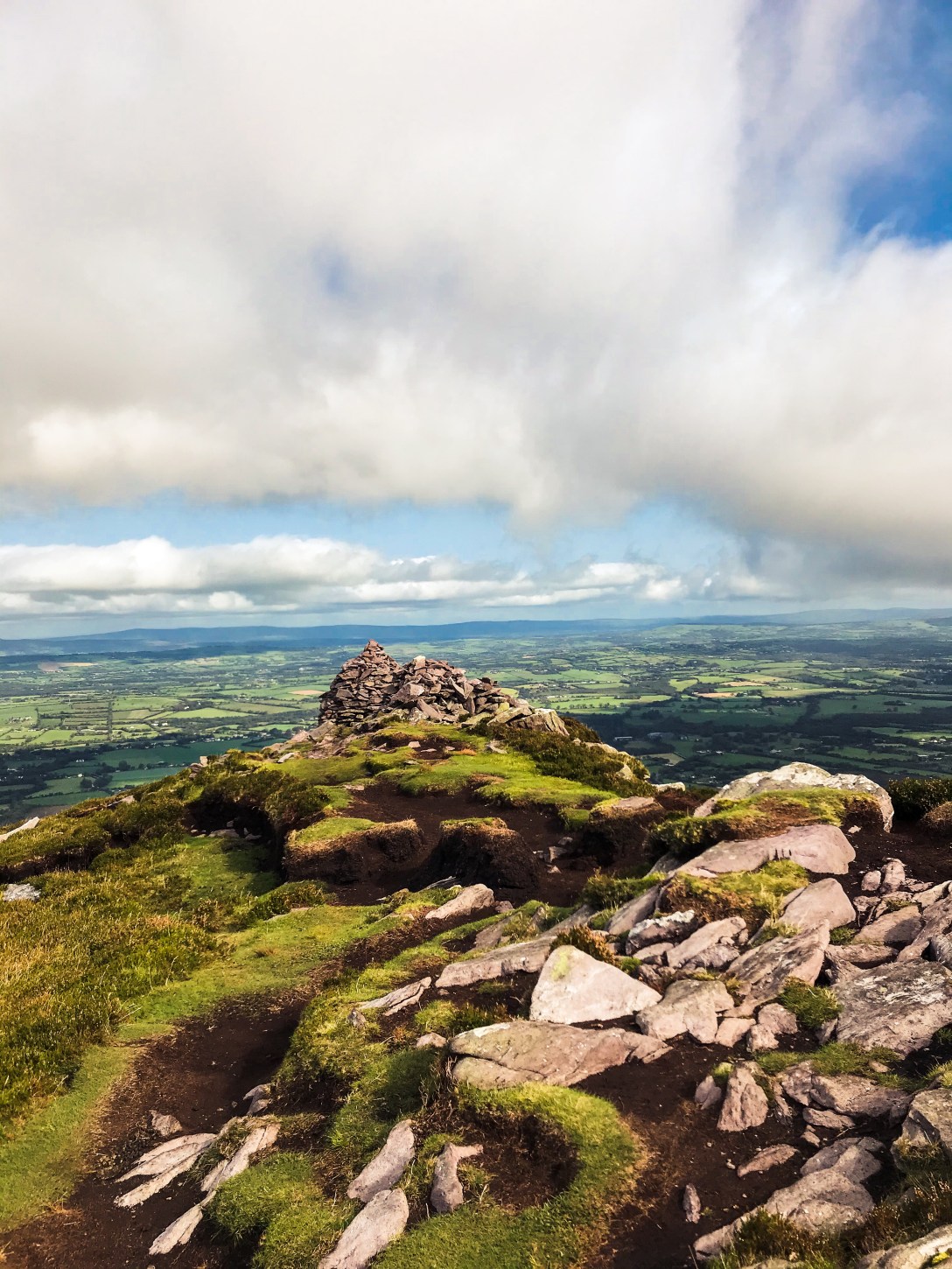
Crohane in my own 5k

In Ireland we are currently restricted to our own 5km radius from home for exercise due to lockdown rules. Unfortunately, we live on a fairly busy and not very interesting main road, so our walking options are limited. We had to get creative. So we took a look at this website to see what might be in our 5km radius that was worth exploring.

Crohane mountain immediately caught our eye—in fact, it catches our eye every morning because we can see it out the back window. However, despite looking at it from afar his whole life, Steve had never hiked up it, and of course neither had I, so off we went on Saturday morning.

Continue reading “Crohane in my own 5k” →

A small ramble up Strickeen

If you’re looking for a hike around the Killarney area that offers a combination of great views and easy trails, you couldn’t get much better bang for your buck than Strickeen. The mountain’s name is anglicised from Stricín, or “little peak” (-een or -ín is a diminutive suffix as Gaeilge) but while the peak is indeed little (only ~380 elevation gain for a summit height of 440 meters), this 6.5km hike finishes with lovely views of the surrounds, the lakes of Killarney, and the rest of the MacGillycuddy Reeks, such as Carrauntoohil.

Continue reading “A small ramble up Strickeen” →

Six Months to Marathon

When I finished my first half-marathon, I thought “I’ll definitely do that again, but I’ll probably never run more than a half.” When I ran my second, I thought, “I could probably tack on a few more kms, but I’ll probably never run a full marathon.” After the third, when I had finally reached my sub-two-hour half-marathon goal (1:56:42), I found myself immediately thinking ahead to the next goal. But this time my goal isn’t just time (although I’m hoping to run <1:55 in my next half-marathon in a few months), but distance. I finally felt ready to take the plunge and sign up for a full marathon.

The first thing I had to decide was: which one? My first, obvious thought was the Melbourne marathon in October, as I knew that we would be moving over here after our time in Wellington had finished. However, we originally weren’t certain that we were going to stay in Australia for a full year, and I didn’t want to train for a marathon and then not run it (barring circumstances like injury that could obviously crop up wherever I am).

I started looking at the Gold Coast marathon in July, hearing that it was a flat course and figuring that the dead of winter would hopefully cool things down. After moving to Australia I quickly reassessed; the heat and humidity of summer in Melbourne has both made it very hard to run much, meaning I’d be very behind on my training if I was to run a marathon three months from now, and it showed me that I have no interest in going up to the notoriously-humid Gold Coast for a race. Luckily, by this point we had decided that we were going to see out our year in Australia, so Melbourne was back on the table.

The Melbourne marathon is on Sunday, 13 October, exactly six months from now, and I officially registered last night. I’ve decided to use a Hal Higdon plan based on the recommendation of… pretty much everybody, and I’m going with the Novice 2 plan because I want to push myself a little (I’ll drop back to the Novice 1 plan if needed but looking at the prerequisites I think I should be okay. It will be slightly modified as the plan has you running a half-marathon at the end of the ninth week and I am going to do Run Melbourne’s half-marathon event on 28 July, which is only seven weeks in, but for the most part I’m aiming to stick to the plan as closely as possible. It’s definitely going to be tough to stick to in points—namely just two weeks before the race, when we’re planning to be in Japan for the Rugby World Cup—but I’ll make the time to run and will luckily be tapering then anyway.

The plan runs for 18 weeks up until the marathon which means that I won’t actually be starting it officially until the second week of June, but in the meantime I’m taking advantage of the cooler weather (finally) and building mileage, strength, and endurance by running as much as I can in preparation. Running a full marathon six months from today is going to be the biggest fitness goal I have ever, and maybe will ever, achieve, and I’m planning to do it right. I’ll check in with updates on my training and progress as I go, for support and accountability, and on 13 October I’ll see you at the far side of 26.2.

Follow me on Strava if you want to keep up with my training!