Book Review: Feeding the Monster by Anna Bogutskaya

Feeding the Monster

Everyone has a foundational horror. It’s the image that seeps under our psyche and won’t let go, transforming the film and the image of horror itself into an avatar for our biggest fear. Take a moment and remember yours. – Anna Bogutskaya, Feeding the Monster

Feeding the Monster

My love of horror stems from two sources. One, you will not be surprised to hear, was Stephen King. I would suspect that at least 70% of horror enthusiasts came to their love of the genre by picking up a Stephen King novel at an inappropriately young age. For me, it was The Dark Half

My other formative horror experience was Friday the 13th. I didn’t see it in full at the time; I certainly wasn’t allowed to watch it. I was about ten years old, at my friend’s house, getting ready to go out to dinner with her family. But then her sister accidentally slammed her fingers in the car door, and so instead of a trip to a restaurant it was a trip to the hospital, and a hastily-engaged babysitter arriving to the house to look after my friend and me. The babysitter decided to watch Friday the 13th, and so did we, hiding behind the couch and running out of the room every time she caught us. 

One of the things I love about horror is how personal it is. Something that terrifies one person can leave another completely unmoved. For years I refused to sleep in a room with a mirror I could look into from my bed, an unnamed fear I could not explain but which mystified my best friend, although she kindly agreed to reposition the furniture to accommodate me.

But equally true, horror is universal. There are certain fears that are found across eras, across cultures, and if there’s something you are afraid of it is certain that there is someone else in the world who shares the same fear. 

In Feeding the Monster: Why Horror Has a Hold on Us, Anna Bogutskaya looks at the past decade in horror film, television, and literature, exploring why so many of us love the genre so much. She divides the book into five categories: fear, hunger, anxiety, pain, and power. Some aspects offer examples of our worries, and some explanations for our enjoyment. 

The book is less dense than similar deep dives like King’s classic Danse Macabre or the recent American Scary by Jeremy Dauber and instead offers a more conversational take on the subject. But this doesn’t take away from its overall thesis. It’s full of academic and cultural analysis, and rife with examples, augmented with casual, often humorous footnotes: 

*Would I eat human flesh if Mads Mikkelsen, clad in a tailored velvet suit, with his sleeves rolled up, served it to me on an elegant, dark porcelain platter, adorned with radishes and romaine lettuce? I don’t know! It’s all very confusing! Don’t look at me. – Anna Bogutskaya, Feeding the Monster

Much has been said about the way vampire stories always seem to experience a renaissance during economic recessions, and there are obvious reasons that there have been a plethora of films about the horror of unwanted pregnancies released over the past few years, but Bogutskaya also makes strong arguments in terms of placing the popularity of other horror tropes into our current cultural context. How cannibalism, for example — from Hannibal to Bones and All to Yellowjackets, often reflects the loneliness and isolation of modern life, as well as the anxieties of capitalism and class struggle. Do we eat the rich? Or do the rich eat us?  

Do be warned, as the author makes clear in the introduction, that this book contains copious spoilers for the media she uses as evidence for her arguments. However, I think that she does a solid job of writing about the books, films, and tv shows in a way that does not damper my enthusiasm for reading or watching the the ones I haven’t yet. I didn’t find the amount of spoilers overwhelming, as mostly they teased rather than revealing all. 

(I did think it was funny that the only spoiler Bogutskaya redacts is one for Game of Thrones, a show whose cultural cache has sunk so much following its final season that I doubt most people who haven’t seen it yet would care). 

While there were a few omissions that I thought deserved a mention (as other reviews have pointed out, for example, it’s surprising not to see Tender is the Flesh by Augustina Bazterrica included in examining the current popularity of cannibalism stories), overall I found this to be a solid exploration of contemporary horror and why we love it. Feeding the Monster is an ideal pick for those looking for a fresh and readable work that still offers a strong academic thesis on our fears and our favorite fearful fictions. 

Best Horror of 2024

Best Horror 2024

As with every year, I read so much good horror in 2024 that I had to give it its own best-of list rather than lumping it in with my Best Fiction I Read in 2024 list (or my best non-fiction list, although I read a couple of good non-fiction horror books, and non-fiction in general aka real life is pretty horrifying right now). All of the books on my list were published in 2024 bar one, which was published at the end of October 2023, so if you’re looking for good, recent horror, read on!

Bonus: I was lucky enough to get an ARC of a book being published later in 2025 that I think a lot of folks are going to really love, and one of my first reads of the year was a 2024 book that would absolutely have made my best-of list if I’d read it two weeks earlier, so I’m not going to save it all the way for my end-of-year lists.

Best Horror 2024

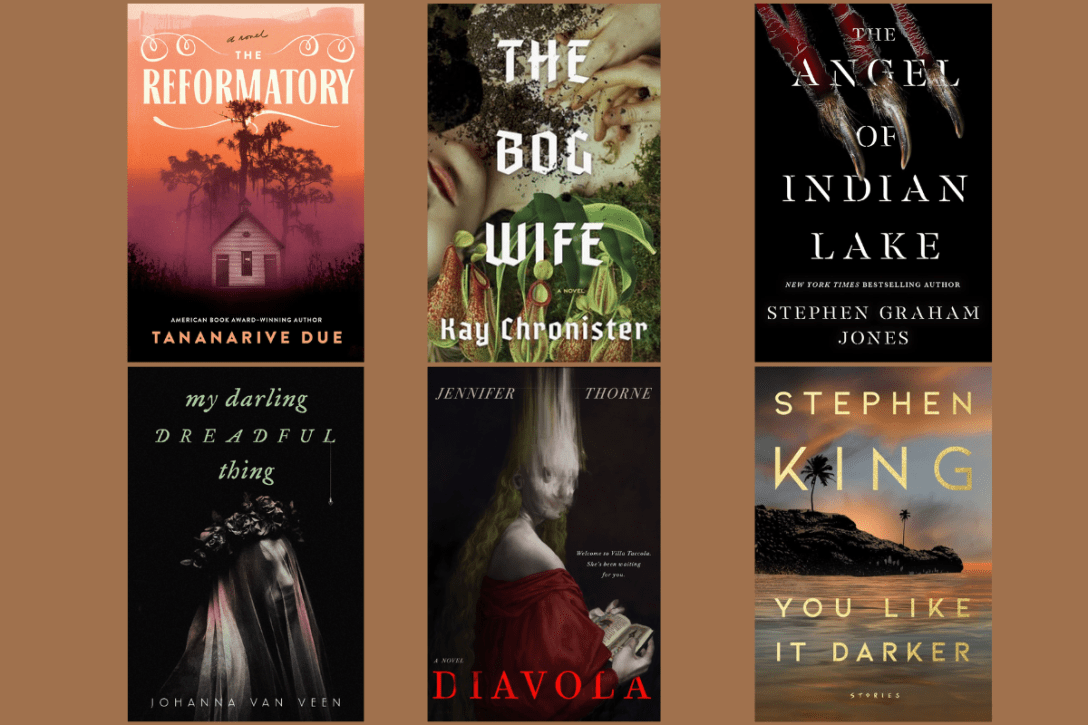
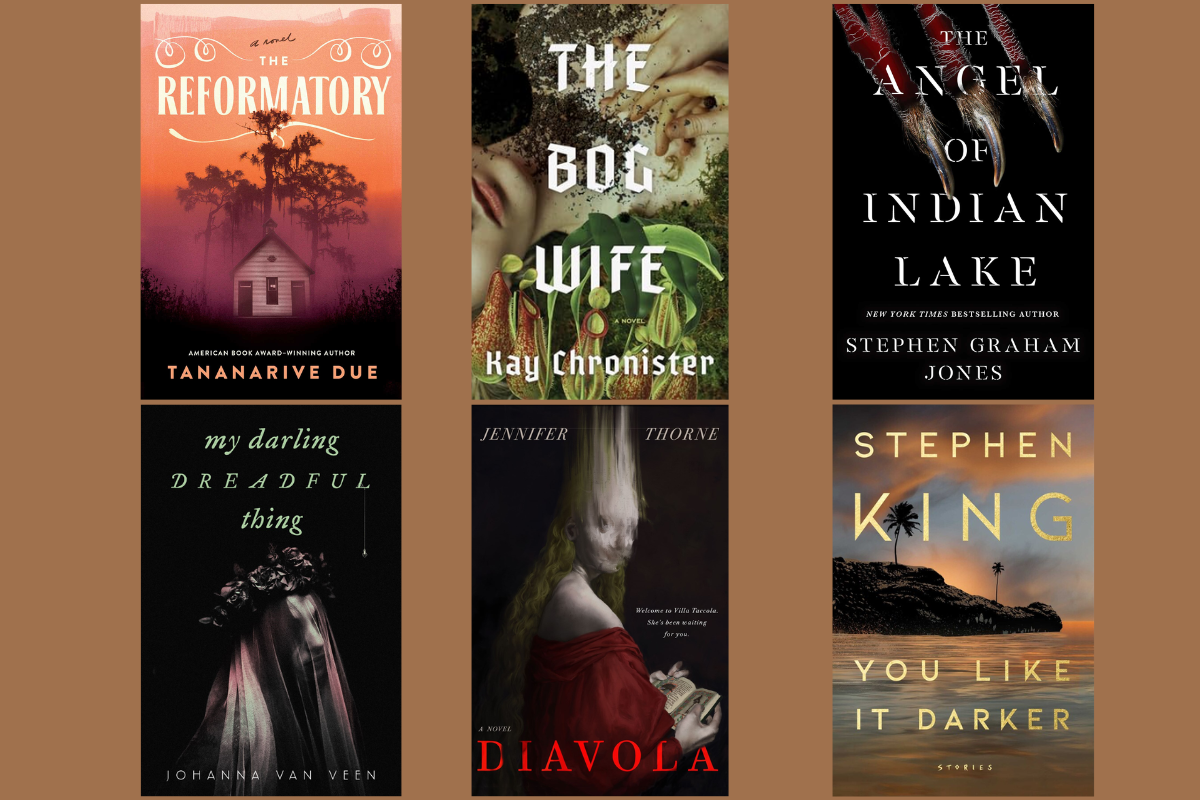
The Reformatory by Tananarive Due (2023)

I finished reading Tananarive Due’s The Reformatory on January 9, and on that early date I was willing to stake the claim that it would be the best horror book I’d read in the year. And you know what, I was absolutely right. Set in the Jim Crow south at a boy’s reform school and based true events including the life and unjust death one of Due’s own relatives, this novel is horrifying enough even before it is touched by the paranormal. But there are plenty of ghosts and premonitions as well for those who love a supernatural element in their horror novels. It’s a harrowing, haunting read, but it’s a masterpiece of horror, historical fiction, and fiction in general.

The Bog Wife by Kay Chronister (2024)

You can judge a book by its cover on this one. If you are immediately drawn in by the earthy color palette and eerie details of The Bog Wife‘s cover, then you’ll probably love the book, too. A rural gothic, the novel features an Appalachian family, isolated and co-dependent, who are gifted (or cursed) with a covenant that has run and been renewed by generations before them. When this time the pact seems to fail, each of the siblings react in their own ways to attempt to stitch it back together, or rend it further apart. I loved the writing style in this novel, so descriptive I could nearly smell the peat. Adding in a heavy helping of family trauma, plenty of folk horror, and a dash of climate anxiety, The Bog Wife hit all the notes for me.

The Angel of Indian Lake by Stephen Graham Jones (2024)

In my opinion, the Indian Lake trilogy is destined to be considered a modern horror classic. And this closing novel novel hits a perfect balance on every level — gory and violent without losing its emotional core, nostalgic and referential to the scores of horror classics that came before without getting too meta. Jade Daniels is a final girl for the ages; in this last installment we see the culmination of her growth and maturity, while still maintaining her edge and of course her encyclopedic knowledge of slasher films across all subgenres. The trilogy isn’t going to be for everyone — you might find yourself having to cast your mind back to remember a minor character who makes a sudden reappearance or do a bit of wikipedia-ing to understand one of Jade’s film references — but for those who will make the effort, it’s up there with the all-time greats.

My Darling Dreadful Thing by Johanna van Veen (2024)

Now this is gothic horror. It’s grotesque, unsettling, ambiguous, and romantic. Roos and her ghostly, ghastly companion Ruth are a fascinating duo, aiding Roos’s conniving mother in fake séances to con wealthy customers. Eventually, she is sent to live with a widow who offers a handsome sum for her companionship after Roos pretends to channel the woman’s dead husband, and Roos’s relationship with the bold yet mysterious Agness is equally compelling. The supporting characters are as complex and intriguing as the main characters, and excellent pacing and an eerie setting round out the novel and help to create a tense, thrilling story.

Diavola by Jennifer Marie Thorne (2024)

This quick horror read is tons of fun. Our protagonist, Anna, is the black sheep of her family, and her dry, sarcastic tone is perfect for narrating both the mundane drama that occurs as the family gets together at an AirBnB in Italy, and the paranormal horrors they experience there. She’s not a likable character, per se, but she is an enjoyable one, and probably a relatable one, too, ideal for a story like this. The scares are balanced out with the humor, and the blend offers a satisfying and sometimes satirical take on the classic haunted house novel. Maybe the true horror was the family vacations we took along the way, am I right (I’m kidding, I actually love family vacations, Steve and I are meeting my parents in Portugal for a holiday in March — hopefully sans hauntings).

You Like It Darker by Stephen King (2024)

Death, taxes, and a new Stephen King book. Some things are pretty much guaranteed, and it’s inevitable that a writer as prolific as King is going to have some peaks and valleys in his oeuvre. Luckily, his latest short story collection, You Like It Darker, is a definite high. There are a couple of so-so stories, but the good ones are beyond good, and a little bit of variance in short story quality is probably inevitable in a collection as well. “Danny Coughlin’s Bad Dream” is worth the price of admission alone, and I love when King dips into cosmic horror as he does in “The Dreamers.” “The Answer Man” is simple, classic, and just the right amount of melancholy, and Cujo pseudo-sequel “Rattlesnakes” is creepy as hell. A solid collection from the horror master.

Bonus:

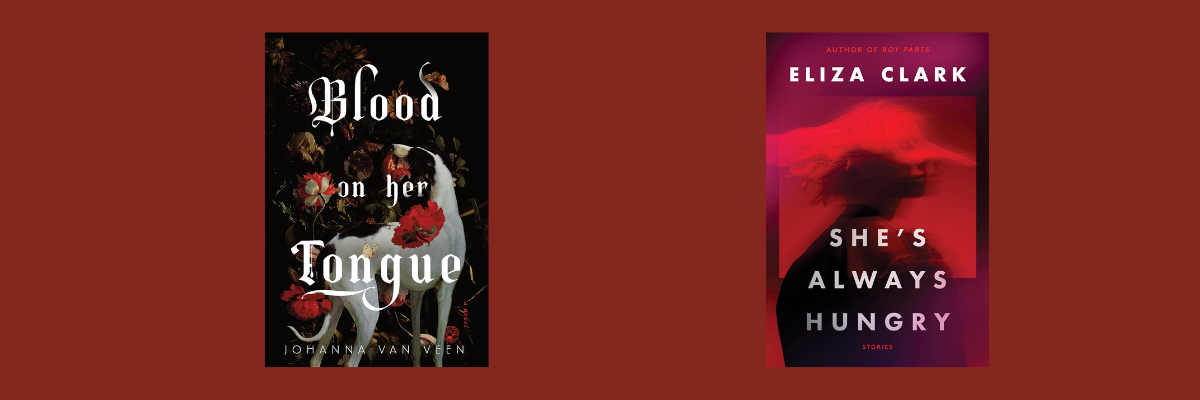
blood on her tongue and she's always hungry

Blood on Her Tongue by Johanna van Veen (2025)

After reading My Darling Dreadful Thing, I instantly added Johanna van Veen to the list of authors whose work I will be sure to pick up, so I was thrilled to snag an ARC of her second novel, Blood on Her Tongue (thanks very much to the author, Netgalley, and Poisoned Pen Press). I’ll share more of my thoughts on the book closer to its publication date, but in short, I think I loved this novel even more than I loved van Veen’s debut. Toxic codependence will always be a favorite horror trope of mine, especially when it leads to devastating consequences, and it’s so well executed here along with an exquisitely-crafted story that grows the creeping, unsettling tension to a truly disturbing climax.

She’s Always Hungry by Eliza Clark (2024)

As I said above, I read this at the very start of 2025, but since it was only published in mid-November 2024 and since it’s so early in the year, I don’t want to save it all the way for my end-of-2025 reviews since I would absolutely have included it in my best-of-2024 list had I read it in time, and I want to recommend it to anyone who is looking for disturbing, outrageous, fucked up short stories to start their year. Some highlights: the spooky siren folklore title tale, the cannibal lady cosmic oddity “The King,” the nothing-paranormal-but-just-as-creepy “Goth GF” about a young man’s obsession with his coworker, the climate anxiety-tinged space/bio horror “Extinction Event,” and the absurd (and absurdly unsettling) “The Shadow Over Little Chitaly,” which is formatted as a series of meal delivery app reviews about a takeaway restaurant that’s Not Quite Right.

Best Horror of 2022

In my opinion, 2022 was a fantastic year for horror. With excellent horror films of every type being released in cinemas and on streaming, from the artistic and beautiful to the gory and intense, from creative new takes on stale franchises to innovative, out-of-the-box concepts, there was always something new and frightening to watch. It was a great year for horror literature as well, with terrifying anthologies, spooky stories of all sorts, and classics told in fresh and exciting ways.

If you’re looking to bring the scares in 2023, here are my favourite horror films from 2022 and my favourite horror books read in 2022 (some old and some new):

Best horror films of 2022 (Follow me on Letterboxd!)

Bones and All, dir. Luca Guadagnino

Who would have thought a film about cannibalism could be so tender (pun not intended)? This delicate, haunting, horrifying film was not only my favourite horror film of the year, but one of my favourites of any genre. As outsiders from society, finding solace in each other as they satisfy their urges (the story can be read as a both queer allegory and one of addiction,), this film is all about contrast. The central couple’s intimacy with each other contrasts with the wide open landscapes of the cinematography and setting. The soundwork contrasts the gnashing, gnawing sharpness of their actions with the quietness of the solitude around them. And the contrast between the final two shots are as emotional as they are gutting.

Continue reading “Best Horror of 2022”

What I Read in January 2022

I swear I’ll use this blog for something other than to log my reading at some point. But it was a busy month of writing for work and so I wasn’t really in the mood to write for fun either (the biggest downside to having a job that involves a blog as well). It was a good month for books though, with two absolute standouts and several other good reads as well. I’m starting a massive House of Leaves reread this month, so I expect my reading numbers will be lower for February (totally fine! reading’s not a quantity game!) but in the meantime, here’s what I read in January:

Continue reading “What I Read in January 2022”

The Best Books I Read in 2021

Due to a combination of things (lockdown, no social life, a really good to-read list), I completely obliterated my yearly goal of 52 books. I hit my goal by the end of May, and by the end of 2021 I had read (or listened to on audiobook, it was around a 70/30 split) 100 books. And folks, most of them were very good.

I’m pretty much a pro at only choosing books I’ll enjoy these days. This is good, because I hate to DNF (did not finish) a book. Luckily, I know whose reviews I trust, both among friends and pros, which tropes I love and hate, which authors I’ll follow to the end of the earth, and so on. That doesn’t mean I never pick up a dud, or that I never take a risk with something that may (or may not) surprise me, but when you look at my Goodreads and see heaps of 4- and 5-star reviews, it’s more because I know how to pick ’em than because I’m not discerning.

Speaking of Goodreads, I’m trying to transition to Storygraph this year, or at least use it in addition to GR, although I’m not sure how I feel about it yet. So if anyone’s on it, add me!

Anyway, my best books of the year. I couldn’t narrow it down further than 15 fiction and 10 nonfiction favourites, so here they are:

Continue reading “The Best Books I Read in 2021”

What I read in October and November

First of all, I managed another successful NaNoWriMo this November, writing 50111 words over the course of the month. Hopefully this will finally be the year I actually stick with the story and continue working on it. Because of NaNo, I didn’t do as much reading as I usually might, but I still managed to read a couple of the best books I’ve read all year. Plus, plenty of reading from October. Choosing my end-of-year best-ofs is going to be tough this year for sure.

I’ve split them between fiction and nonfiction and put them roughly in order of how much I liked them.

Continue reading “What I read in October and November”