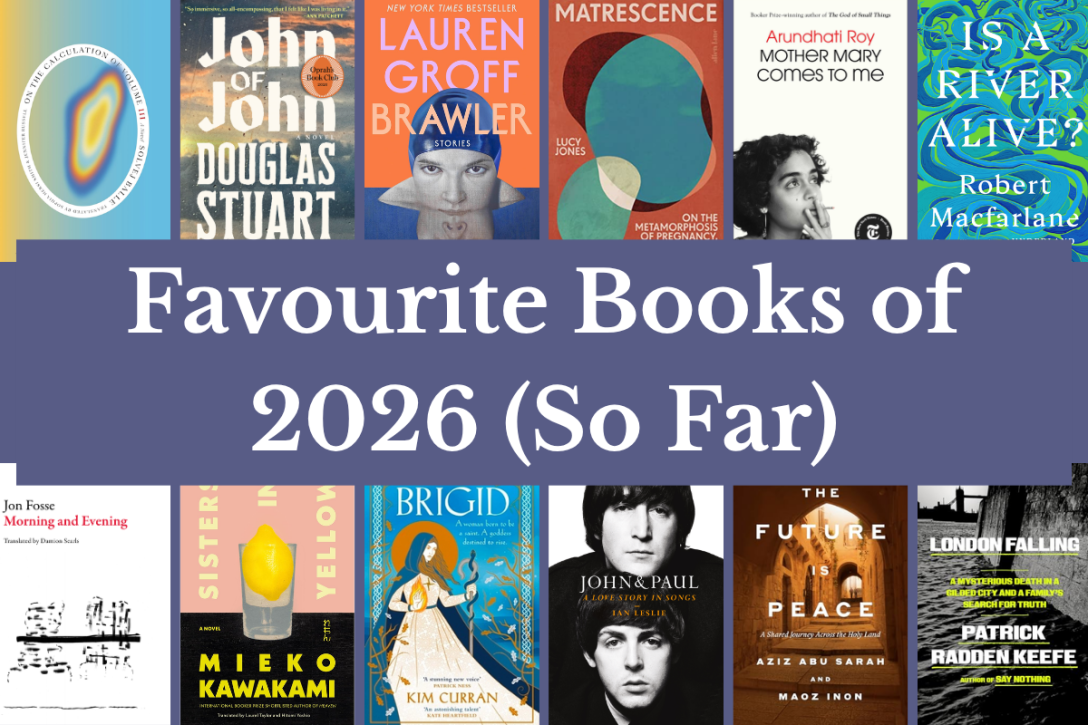
“I have to have something to show at the end of this life. If I’m for hell, then I deserve a love that was worth it.”
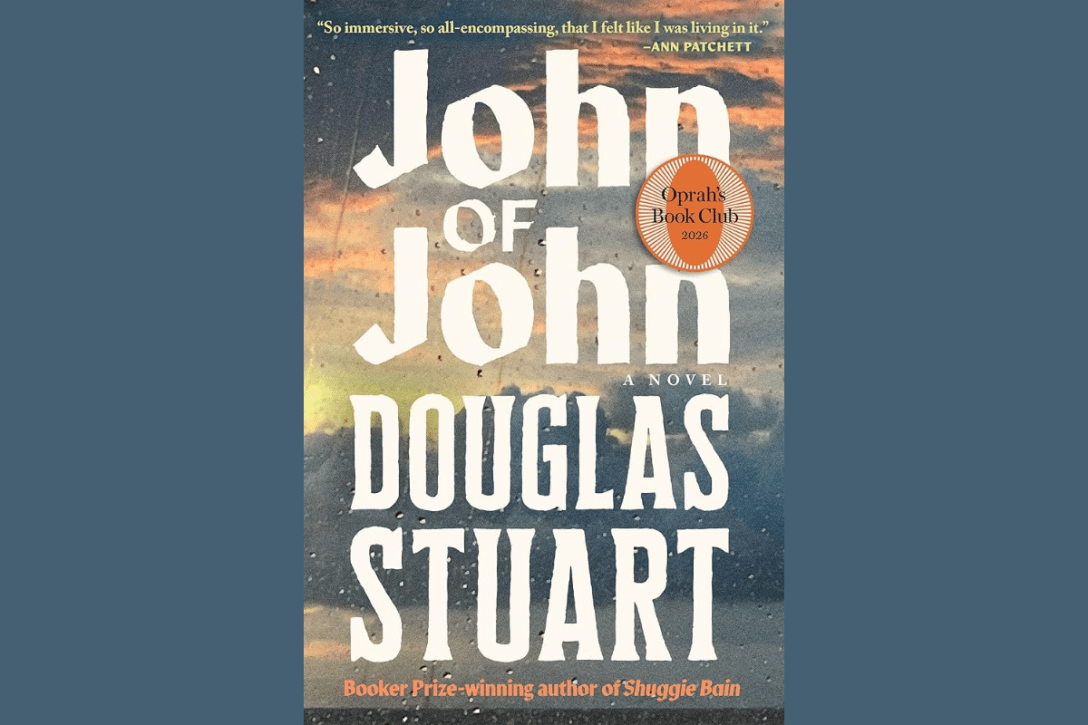
Were it not for the fact that I have a half dozen novels borrowed from the library with impending due dates (plus the new books by Doireann ní Ghríofa and Maggie O’Farrell waiting to me on my bookshelf), I might’ve finished John of John and then started it right over again. I loved both of Douglas Stuart’s previous novels, but this one is a real masterpiece.
In John of John, Douglas Stuart whisks us away from the gritty Glasgow streets that served as the setting for Shuggie Bain and Young Mungo and takes us to the Outer Hebrides. The book is set in the late 90s (or early 2000s?), but the Isle of Harris feels like it is in a world at least two decades earlier thanks to the decline of the weaving trade that has mired many of its residents into seemingly unshakeable rural poverty. Even if they’re accurately topical, mentions of Charles and Diana’s divorce and the growing popularity of email feel anachronistic on this lonely island.
Cal and his father John are two of the island’s residents. In some ways, the two men couldn’t be more different — Cal returns after doing a degree in textiles at an art college and being unsuccessful in finding work that will keep him on the mainland, but he dreams of more than the island on which he was raised. John is a crofter, a weaver, and a devoutly religious man who feels, for better or worse, deeply rooted in the fabric of his rural, strictly Presbyterian community.
In one important way, they couldn’t be more similar, although neither of them knows it about each other. Both are gay, with Cal hoping that a life outside of Harris might allow him to live this truth openly, and with John carrying on a decades-long clandestine romance with his neighbor Innes. This dual-secrecy drives the relationship between father and son, although of course they don’t know that this shared trait has such an impact on their lives as individuals and as a family.
You may have noticed that my blog was dormant for the last few months. I’m still trying to figure out what exactly I want to do with it — more on that to come, hopefully.
By the way, I did finally do something I’ve been talking about for years, which is to make an instagram account specifically for talking about books: soleofareader. I still prefer long-form writing to pithy instagram captions (and definitely to any sort of video content), but I wanted a place where I could chit-chat a little more about what I’m reading, so give it a follow if you like.
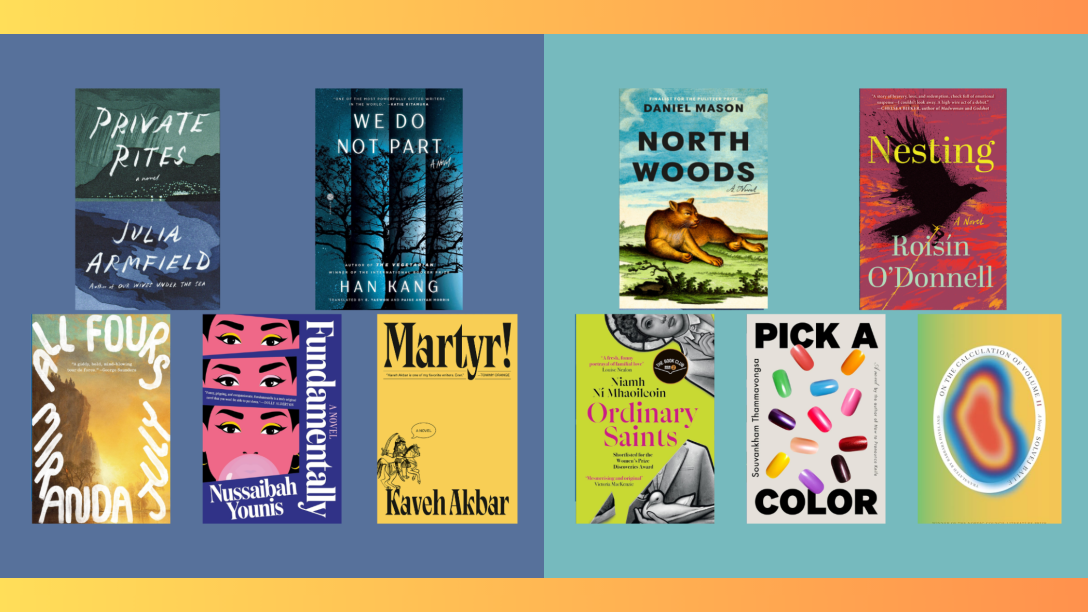
In the meantime, I had to bring it back at least for one my annual post in the lead up to the Women’s Prize announcement! One of my favourite literary awards, I always make sure to read the full shortlist for the fiction prize before the winner is announced.
My thoughts on previous years’ shortlists: 2025; 2024; 2022; 2021
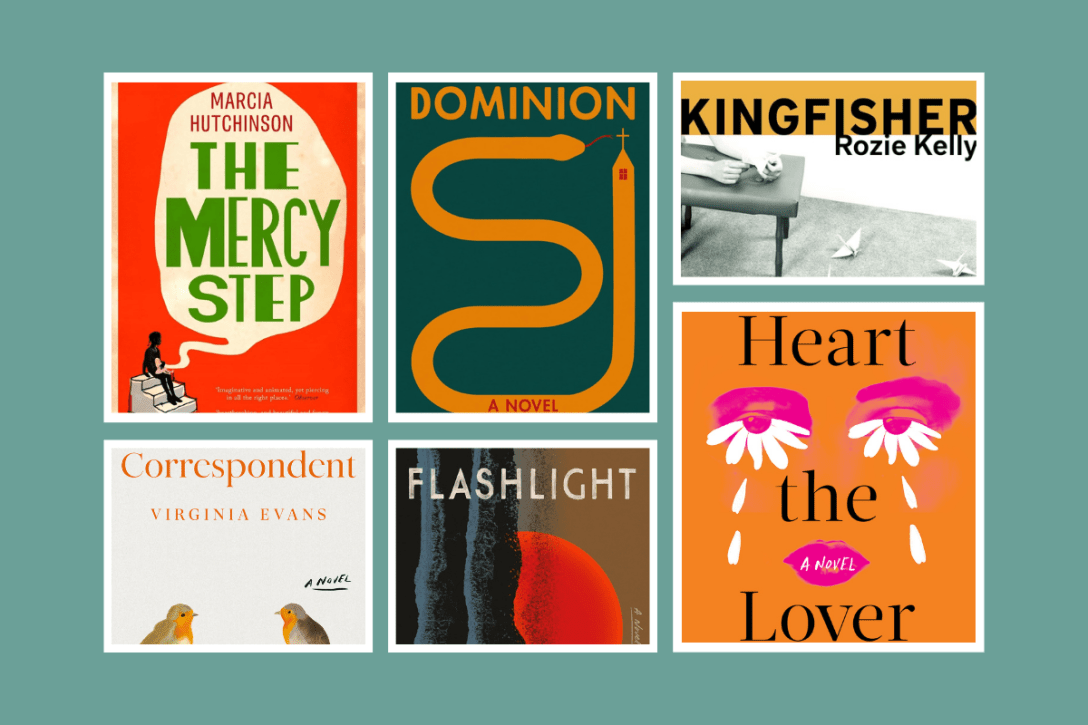
This year of the six shortlisted novels, I had only read one prior to the shortlist being announced. So I was excited to dive in to the other five over the last couple of months. Overall, it’s a strong shortlist. There were four novels I loved, one that didn’t quite hit for me but that had a lot to recommend about it, and only one that I unfortunately didn’t connect with. Find my reviews and ranking below, and make sure to look out for the winner announcement on June 10!
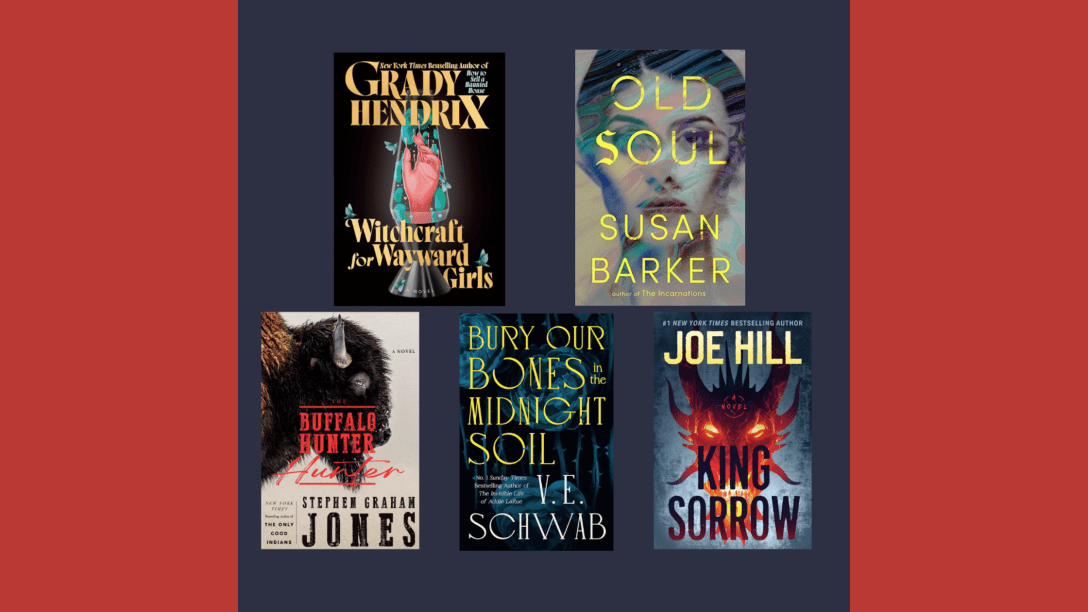
I’m a horror girlie every month of every year, but in 2025 I really outdid myself. I read 52 works of horror fiction and 6 works of horror nonfiction, plus 5 rereads. Most of them (aside from the rereads) were published new in 2025. I blame the excellent Jump Scares by Emily C. Hughes, which features a list of upcoming horror releases that is both fantastic and devastating to my to-read list.
While I’m planning to spend more time focusing on the back catalogue in 2026 instead of chasing new releases, 2025 did have some serious heavy-hitters in the genre. I’ve somehow narrowed down my top 5, so here are my horror favourites of the year:
I read so many good books in 2025, it has taken me a few days to narrow down my absolute favourites. While, as I mentioned the other day, I’m hoping to read fewer books in 2026 and spend more time with each story, I definitely can’t complain about the quality of the work I read last year.
I tallied it up and I wrote about 40,000 words worth of book reviews on Goodreads in 2025, so if you want my full rundown on everything I read and loved (or didn’t love!) last year you should follow me there (for now… I’m trialling some non-amazon-owned alternatives to see if I can find a new bookish home in 2026), but here’s an overview of my 2025 fiction (non horror — they’ll get their own post!) faves:
Happy publication day to Blood on Her Tongue! Johanna van Veen’s My Darling Dreadful Thing was one of my favourite horror debuts I’ve read in a while — delightfully gothic and romantic and gruesome — so to say that I was excited about snagging an advance reader’s copy of Blood on Her Tongue may be an understatement. Thanks very much to the author, Netgalley, and Poisoned Pen Press for an ARC in exchange for an honest review.
Where does one end and another begin? This is the question this novel asks repeatedly. Where does Lucy end and her twin sister Sarah begin? Where does Sarah end and the thing she has become begin? And where does love end, where does family end, where does duty and morality and desire and… where does the horror begin?
I went in expecting a vampire story thanks to the Dracula epigraphs, the protagonist’s name, etc. and Blood on Her Tongue does certainly have vampiric elements. But it’s also much more, an intriguing blend of horror elements from the natural horror of death and decay to something decidedly supernatural. I loved the super evocative imagery, gruesome often to the point of grossness (the pen! the eyes!), and as someone who lives in rural Ireland I found it easy to call to mind the smell of the peat and the sucking thickness of the bogs, but I think even if you’re not familiar I think you would be able to imagine it based on van Veen’s writing.
Lucy is a fascinating protagonist. She’s not a nice person; she’s obsessive and greedy and haughty and her relationship with her sister is nothing short of toxic, and yet she’s so compelling. Sarah, too, is equally riveting. Even though so much of the action in the first half of the novel takes place around her, her presence is key and her perspective, as told through her letters and journal entries, rounds out the setting and the wonderfully creepy gothic atmosphere so well. And when she (or someone) starts to really take the stage, well. It takes talent to do a good exposition scene, and there’s one around halfway through this novel that’s particularly good, managing to build the tension while delivering a lot of information about the nature of the being that has gotten its grips into Sarah.
There are some great layers to the plot that also help to build the overall world of this 19th Century Dutch manor and its inhabitants. Early on, the men in the novel are quick to dismiss the sisters’ fears as mistakes or madness, and although the women’s violent actions in the latter half of the book certainly aren’t out of any sort of feminist intentions, Arthur’s and Michael’s paternalistic mindsets do bring an interesting element to the story, although as characters they are far less developed than Lucy, Sarah, or even some of the other minor characters such as Magda the serving woman.
Overall, I think I enjoyed this even more than My Darling Dreadful Thing (although I seriously loved that one as well). Toxic codependence will always be a favourite horror trope of mine, especially when it leads to devastating consequences, and it’s so well executed here along with an exquisitely-crafted story that grows the creeping, unsettling tension to a truly disturbing climax. Van Veen has quickly been added to my list of the authors whose work I will eagerly devour (ha) as soon as I see it.
Apparently all I want to do is write book reviews, but I’m just going to go ahead on keep on doing it. This is a book I received as an ARC late last year, but it was just published on Tuesday so I wanted to share my review here in case you’re looking for a solid non-fiction book to pick up this week. Support your favourite indie bookstore!
When a demon inhabits a body, it takes ownership of a person, a monster is temporarily housed inside of its victim, our body invaded, repossessed. The ghost does the same with s house: it breaks into it, takes possession of what is yours, and you can no longer trust the place you trusted the most. What’s more frightening than your own home turning against you?
A look at the haunted house in both fiction and non-fiction, Sick Houses by Leila Taylor is an interesting exploration of what happens when the place that, by definition, we feel most at home in becomes something Other, something not quite right. Each chapter looks at a different kind of house, from houses of witchcraft (real or alleged) to houses in miniature, dollhouses or dioramas that reflect or influence their life-size counterparts.
First of all, I appreciated the parameters that the author put on her subject. She says in the introduction that “I’m not talking about plantation houses because 1) fuck them, and 2) I don’t consider slave quarters homes,” and she avoids prisons and hotels as well. By offering a clear focus on homes and not just houses/buildings, it creates an immediate connection with the reader — we will of course consider our own homes, the feeling of safety and comfort we feel in them, and we will contemplate the horror we would feel if that sense of safety was pulled out from under us.
I was also very interested in her discussion of the contradictory nature of the ideals of the American Dream: “Manifest destiny told us to ‘go west, young man,’ but this part of the American ideology is in direct contradiction with the long-term mortgage that locks you not only to a city or state but to a specific property for decades.” This contrast relates to a tension that often appears in horror films — a family moves into a dream home and is loath to leave it even when the going gets bad, or a family moves into a home that turns out to be haunted, but they don’t necessarily have any other option other than to try to see it through — and the tying of classic horror movie tropes to broader societal concepts is always interesting, especially when laid out well and backed by solid examples, as is seen in this book.
Some chapters are more thorough than others — the Witch Houses chapter has many more references than the chapter on Brutalism, for example — but overall there is a good amount of evidence and a good balance between real-life and fictional examples. The chapter on houses in miniature was particularly interesting. The author writes about the dioramas in Ari Aster’s Hereditary, and the way that the film’s sets were built to evoke the feeling that the actors, too, are moving (or, more accurately, being moved) within a diorama. On the real-life side of things, the discussion of the Nutshell Studies of Unexplained Death, a diorama series of crime scenes used to improve forensic investigation, was fascinating.
I did have a few issues with the book. For one, the author spoils the ending of several films in instances where I don’t feel that it’s necessary to support her thesis. Obviously in some cases of books like this, you have to give away the major plot points of your examples in order for them to be relevant — if you’re discussing antagonistic father-son relationships you can’t really use Star Wars as an example unless you tell anyone in your audience who isn’t yet aware of the connection between Luke and Vader.
However, in this book, regarding films discussed like The Others and His House, I think that enough information about their plots could have been given to make the intended point while still leaving some mystery for those who haven’t seen them. I know that I often use this type of book as a way to add to my to-watch or to-read list, offering more examples of a trope I am interested in, so spoiling the endings of books or films I haven’t seen yet is frustrating.
It also felt in some places that more time was spent cataloguing the “contents” of the houses (i.e. the plots of the films set there or, in the case of the real life examples, the crimes committed there) than the houses themselves.
In particular, some of the examples focusing on true crime started to feel too tangental, straying away from the connection to the houses/homes and delving too much into the events themselves. For example, I understood what the author was going for in connecting the novel Room and the tragic real-life story of “feral child” Genie, but in the case of the latter there was little connection to the thesis of the book.
Furthermore, at the start of the book the authors understandably says she won’t include places like slave’s quarters because these were not “homes” to the enslaved people living there, but then it follows that surely a place of imprisonment for Genie (or, in fiction, for the kidnapped inhabitants of Room) was not a “home” to be discussed either.
From the second half of the subtitle, “the Architecture of Dread,” I was hoping for more on the design of houses themselves. While this aspect does certainly get coverage in some sections of the book, looking at architectural oddities on screen and in reality, the trope of architecture that is Not Quite Right — houses that are bigger on the inside, stairways that don’t lead where they’re supposed to — is one of my favorites and I would’ve liked a deeper dive into some of these given the supposed secondary premise of the book.
That said, the sections looking at strange and unusual architecture did have some good moments, most interestingly in dispelling myths about the Winchester Mystery House (no, Sarah Winchester wasn’t taking her orders from ghosts; she was just a hobby architect). On the fiction side of things, I enjoyed the brief foray into one of my favorite books of all time, Susannah Clarke’s Piranesi, as a particularly good example of both impossible architecture and a false home (although I found it odd that one of the other most well-known examples of these tropes, Mark Danielewski’s House of Leaves, did not get a mention).
This book is a catalog of houses that have gone wrong and the ways our built environment can evoke terror and dread. But more so this is a book about the home, and the idea of home, and how horror perverts and manipulates one of the most personal and intimate experiences we have as human beings.
I think that Sick Houses will appeal mostly to readers who already have an interest in the topic. At points it feels as though the author has cornered you at a party and is explaining her research project to you. For me, that’s fine, as it’s a long-standing interest of mine as well. But it may not work as well for readers who aren’t already fascinated by architectural horror or the unheimlich feeling of a haunted house.
But if the above quote draws you in, then this is definitely one to keep an eye out for. Many thanks to the author, publisher, and Netgalley for the advanced copy in exchange for an honest review.
Also, if this sort of book is right up your alley, you might also enjoy Feeding the Monster by Anna Bogutskaya (link to my review), American Scary by Jeremy Dauber (link to my review on Goodreads), and of course Danse Macabre by Stephen King.