Intro to the Uncanny Unit 3: The Uncanniness of Grief

the uncanniness of grief

This week, we’re reading about grief. “Grief horror” has been a popular trope in the last decade of so-called “Elevated horror” films, but it has always permeated the genre. Here are a few classic and contemporary picks (as well as a few non-horror-ish options).

Primary reading:

Pet Sematary by Stephen King – As I’ll explore in my essay tomorrow, everyone knows the story of the pet sematary. But the real horror of the novel isn’t just the fact that reanimated corpses come out of the ground, or even that they come back wrong; it’s the unsettling fact of how far characters will go in their grief, despite their logical instincts.

Our Wives Under the Sea by Julia Armfield – If you want a take on the grief over a loved one coming back wrong that isn’t outright scary like Pet Sematary, Julia Armfield’s literary novel is a beautiful, devastating choice. Miri’s wife Leah returns from a deep-sea research mission, but life doesn’t return to normal. So often, grief stories revolve around someone who has died or otherwise been lost, but this novel is particularly tragic because Miri is forced to grieve someone who is, technically, still there.

The Haunting of Hill House (dir. Mike Flanagan) – Both the original Shirley Jackson novel and Flanagan’s 2018 adaptation could easily fit on this list, but I’ve chosen to highlight the miniseries – in part because Jackson’s novel will get a mention next week, and in part because Flanagan’s version not only captures the tragic themes of the book but also features some of the most startling jump scares I’ve ever encountered. There’s one that I guarantee will make you scream.

The Babadook (dir. Jennifer Kent) – Perhaps the movie that kicked off the current popularity of “grief as horror / horror as grief” movies, The Babadook follows a woman and her child as they confront a monster in their home that may be a physical manifestation of their grief. While some horror fans may be growing weary of grief metaphors by this stage, the film is a cult classic for a reason.

Secondary reading:

Beloved by Toni Morrison – In the venn diagram of Great American Novels and horror books, Beloved fits in the middle, although not necessarily neatly. This brutal, powerful novel has elements of the horror genre, but it’s the depiction of trauma and grief that will really leave you feeling shaken, and it’s an intense and essential read for its writing style and the strength of its themes.

Next to Normal (stage musical) – A non-horror take on the “haunted by your grief” storyline, this 2008 rock musical left me reeling the first time I saw it. I know for some folks, musicals are their own sort of horror, but it’s a brilliant story about the way grief manifests and distorts itself from the known feeling of love into something more unsettling and uncanny.

Bring Her Back (dir. Danny & Michael Philippou) – If you think the lengths to which Louis Creed went to bring back his child were too far, they don’t hold a candle to the events of Bring Her Back. There are so many layers of grief in this film, and so many layers of horror. It’s incredibly gruesome and probably the most disturbing film on this whole curriculum, so viewer beware, but it’s also an intensely devastating depiction of grief, desperation, and an inability to let go.

In the Dream House by Carmen Maria Machado – Machado’s memoir about an abusive relationship takes many forms; each chapter is a different literary trope or style. The Dream House as choose-your-own-adventure, as unreliable narrator, as epiphany, as sci-fi thriller. The dream house is haunted by the ghost of the relationship and the scars it left. It’s not a horror book per se, but it’s the sort of story that will leave you feeling unsettled for a long time afterward.
Doppelgangers, Doubles, and the Uncanny Valley: The Stepford Wives by Ira Levin

Doppelgangers, Doubles, and the Uncanny Valley

One requirement of the uncanny is that it cannot be entirely removed from our realm of experience. Cosmic and existential horror are not uncanny, because they force us to reckon with things beyond our comprehension. The uncanny relies on the abjection of familiarity, something that feels as though we should be able to understand it, but which has an element we cannot recognise. 

Imagine a funhouse mirror, or better yet, imagine an Instagram filter. You’re looking at your own reflection, a face you know better than any other, but it is distorted. You can still recognise yourself, but it’s not you, not quite.

Unit 2: Doppelgängers, Doubles, and the Uncanny Valley Reading List

Continue reading “Doppelgangers, Doubles, and the Uncanny Valley: The Stepford Wives by Ira Levin” →

Intro to the Uncanny Unit 2: Doppelgangers, Doubles, and the Uncanny Valley

Doppelgangers, Doubles, and the Uncanny Valley

Last week I gave you a bit of an overview of what this spooky little curriculum is about with my Introduction to the Uncanny post. This week we’re really delving into it with Unit 2: Doppelgängers, Doubles, and the Uncanny Valley. Tomorrow I’ll share my thoughts on one of horror’s satirical classics, Ira Levin’s The Stepford Wives, and how it connects to our theme, but first, your reading list:

Primary reading: 

The Stepford Wives by Ira Levin – Ira Levin’s 1972 novel is the main topic of my essay for this unit, and I think most people are somewhat familiar with its plot anyway, so I won’t go into too much detail here. But it’s a classic of a number of genres: science fiction, feminist literature, and more, and a quick read to boot. A must read.

The Strange Case of Dr. Jekyll & Mr. Hyde by Robert Louis Stevenson – Often the “evil twin” is something that is forced on the protagonist without consent. But sometimes, as in Stevenson’s classic, it is a dark foil that allows a virtuous character to live out their most base and sinful desires. Of course, there are consequences. 

Us (dir. Jordan Peele) – Jordan Peele’s directorial debut Get Out draws influence from The Stepford Wives, but his second film Us offers a different take on the doppelgänger. Lupita Nyong’o is sympathetic as Adelaide and chilling as her “tethered” mirror image, Red. It feels like a classic horror story as the nice suburban family is terrorized by their evil twins. As the film goes on, the backstory of the “tethered” begins to be revealed, and Us forces us to alter our perspectives on which side of the mirror we’re on. 

Companion (dir. Drew Hancock) – A Stepford Wives for the modern age, Iris is the perfect girlfriend to her boyfriend Josh, because he made her that way. But unlike in Stepford, this is the beginning of the story rather than the finale. Iris’s survival depends on crossing the uncanny valley, seeming (and perhaps becoming) real. This film is gory in places but not overly scary, ideal for the horror-curious but jump scare-averse. 

Secondary reading: 

Doppelgänger: A Trip Into the Mirror World by Naomi Klein – Many people believe that everyone has a doppelgänger somewhere in the world. In some ways, Naomi Klein found hers, given the frequency with which she is confused with Naomi Wolf. To her chagrin, given that Wolf has descended from feminist commentary into unhinged conspiracy theory, while Klein continues to take a fact-based approach to her writing (remember this helpful rhyme: “If Naomi be Klein, you’re doing fine. If Naomi be Wolf, oh, buddy. Oof”). It’s a fascinating look at what Klein calls “the Mirror World” in a world beyond fiction. 

The Age of Instagram Face by Jia Tolentino for The New Yorker – Are we Stepford-ing ourselves? Culture writer Jia Tolentino’s article explores the way plastic surgery allows women to transform themselves into an uncanny valley, cyborgian amalgam of on-trend beauty standards, and how social media encourages them to create their own perfect doppelgängers through apps and filters. More horrifying than any horror novel. 

Black Swan (dir. Darren Aronovsky) – In Black Swan, rival ballerinas compete for the role of innocent Odette and sensuous Odile in Tchaikovsky’s Swan Lake, and each embodies the characteristics of one element of this dual role. But lines begin to blur as their relationship becomes tense (and sometimes erotic), and they — and we, the audience — begin to question where one dancer ends and the other begins. 

Klara & the Sun by Kazuo Ishiguro – The uncanny valley is usually unsettling; hence, its name. But in Ishiguro’s novel, Klara is the heroine, a sweet and loyal AF (Artificial Friend) companion to a young human girl. There is a dystopian element to the novel that goes beyond the existence of robots “living” amongst humans, but it makes the story melancholy rather than frightening. The novel is a good choice for a reader interested in themes appearing outside of the horror genre. 

My favourite books of 2025: Horror edition

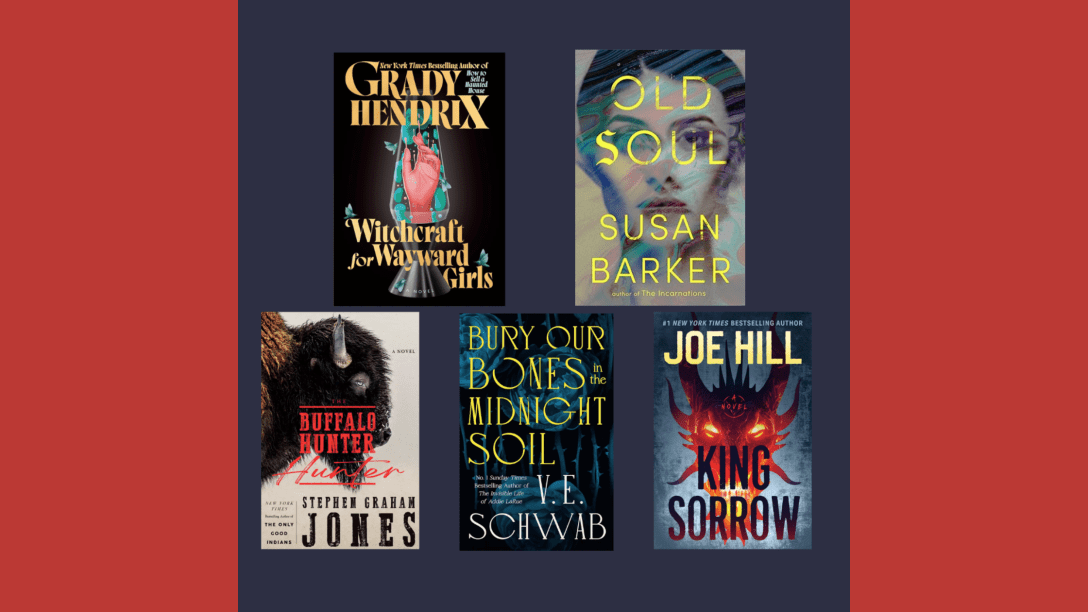
I’m a horror girlie every month of every year, but in 2025 I really outdid myself. I read 52 works of horror fiction and 6 works of horror nonfiction, plus 5 rereads. Most of them (aside from the rereads) were published new in 2025. I blame the excellent Jump Scares by Emily C. Hughes, which features a list of upcoming horror releases that is both fantastic and devastating to my to-read list.

While I’m planning to spend more time focusing on the back catalogue in 2026 instead of chasing new releases, 2025 did have some serious heavy-hitters in the genre. I’ve somehow narrowed down my top 5, so here are my horror favourites of the year:

Continue reading “My favourite books of 2025: Horror edition” →