

Kaixo to Basque Country!

Peine del Viento: The Wind Comb

This past weekend, while half of the students in my program were in Granada (I’m going this upcoming weekend!), and my roommate was in Paris, I took off on my own for the north: to Bilbao and San Sebastián. After deciding that Vueling is definitely my favourite low-cost airline (they let you have a carry-on and a purse! Anyone who has ever flown Ryanair knows what a big deal this is), I took a bus to San Sebastián and I immediately fell in love with the city! The walk from the bus station to the hostel was along a river and crossed a bridge just before it reached the ocean. The hostel I stayed in, Olga’s Place (highly recommended!) was just a block from the ocean. After I checked in, I decided to take a walk along the beach. La Playa de la Concha stretches in a curve around the edge of the city. Even though it was foggy and not particularly warm (a nice change from the heat in Sevilla, I must admit), that didn’t stop people from going to the beach. I saw so many people walking, playing with their dogs, even kayaking and surfing in the (freezing) water.
Continue reading “Kaixo to Basque Country!”

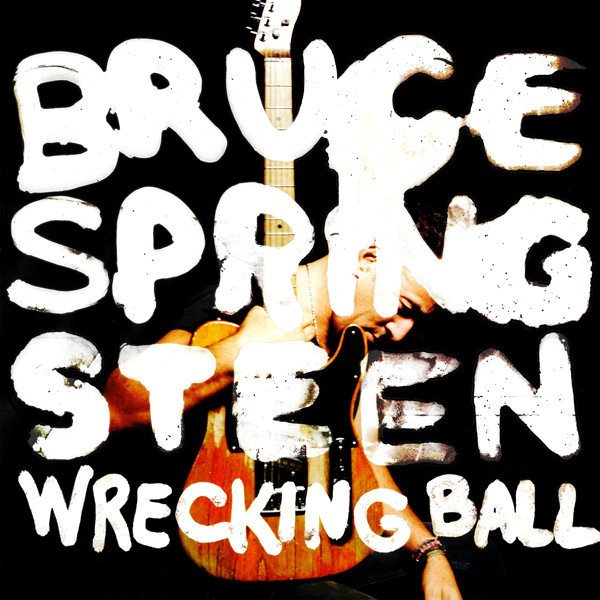
“Wrecking Ball,” Bruce Springsteen (2012): 4.5/5 stars

I haven’t listened to the album enough times to say for sure, but I think “Wrecking Ball” is Bruce Springsteen’s best since 2002’s “The Rising.” I’m sure there will be some who say it’s his best in even longer than that (one review I read called it his best since the 80s), but I just really, really love “The Rising.” Either way, Springsteen has had a lot on his plate lately; in his personal/musical life was the death of long-time friend and saxophone player Clarence Clemons last year, and in his professional life… well, as one of the most well-known protest singers of the last forty years, and with so much to protest lately, I’m sure I’m not the only one wondering what the Boss would have to say.

Continue reading ““Wrecking Ball,” Bruce Springsteen (2012): 4.5/5 stars”

Ten Thousand Saints by Eleanor Henderson (2011): 4.5/5 stars

I first picked up Ten Thousand Saints because I thought it was cool that it was written by an Ithaca College writing professor. That is cool, but the book is even cooler. The novel addresses drugs, sex, pregnancy, AIDS, love, loss, grief, death, and family set against and embedded in the 1980s straight edge scene in New York City.

When fifteen-year-old Teddy McNicholas dies of a drug overdose in a small town in Vermont at the end of 1987, teenage rebel Jude Keffy-Horn, Tedd’ys brother Johnny, and new acquaintance Eliza come together in the city to struggle with holding on and moving forward. Johnny introduces Jude to the hardcore straight edge culture, and Jude’s initiation into the vegan, celibate, drug free world is a sharp contrast to his previous life and the people in it. Meanwhile, all three characters’ lives are changed when Eliza discovers that she is pregnant.

Jude. Johnny. Eliza. Teddy. Les. Rooster. I was absolutely fascinated by every character in this novel, from the protagonists down to those who only had minor roles in a few scenes. Each one had a strong voice and motivations, and the interactions between the characters were honest and powerful. I was especially drawn to Johnny, the tattoo artist and musician who served as Jude’s guide into the scene with simultaneously coping with his own losses and secrets. I was somewhat worried that Eliza would be playing the role of Manic Pixie Dream Girl when she first showed up, brash and beautiful from the big city, ready to change the lives of our heroes, but over the course of the novel I really warmed to her. She had the vulnerability you would expect of someone her age in her situation, but an independence and strong willed personality that let her hold her own against parents, love interests, and her own fears. There are no heroes and no villains (except for maybe death and the beginning of the AIDS epidemic) in this story; each character’s flaws are on full display, but at their hearts they believe they are doing the best they can.

Henderson’s voice is as strong in her setting as it is in her characters. I know very little about the 80s punk, hardcore, or straight edge scenes in New York City. However, I imagine that the atmosphere of the time was full of the same intensity that electrifies this novel. Every page is bursting with description and emotion, so much that sometimes I felt like I didn’t know where to look or what to think. Occasionally this was overwhelming; even more occasionally it seemed unnecessary. But for the most part I was engrossed by this portrayal of a subculture rife with passionate ideals and equally passionate characters. I was fascinated by the politics and the religion, the sexual and sometimes homoerotic undertones of the culture, and the way that the people in it connect and break apart. All of this is relayed with vivid and intense description.

The novel’s “weak” point is in the plot itself, which is sometimes meandering, sometimes jagged, and mostly unresolved. At the same time, I put “weak” in quotation marks because this lack of a single focus or closed ending is fitting with the tone of the book and the characters in it. The novel captures a moment in time, and the characters go on beyond it, profoundly changed by their experiences but not stagnated within them. A more focused conclusion would artificially end their stories, when the realism of the novel dictates that they should go on. Overall, Ten Thousand Saints is a novel full of authentic characters and rich in its description of an intense, emotional era.

11/22/63 by Stephen King (2011): 5/5 stars

Yes, this is a book about a man going back in time to change the course of history. It’s not the first, and it won’t be the last. There is a plethora of media covering the alternate history that would have occurred had Hitler been killed before he could become the leader of Germany, and another plethora speculating the opposite: what if Hitler and the Nazis had won World War II? Some stories are more serious while others are more of Quentin Tarantino’s farcical Inglourious Basterds ilk. And Hitler’s rise to power is far from the only event altered in such stories. Harry Turtledove wrote a series in which the Confederacy won the Civil War, and Newt Gingrich one where the south at least won at Gettysburg. Alan Moore’s graphic novel Watchmen speculates on a United States that won the Vietnam War. Even fictional history has been changed, from Back to the Future to Doctor Who.

Continue reading “11/22/63 by Stephen King (2011): 5/5 stars”

“Nobody will know we made a mistake as long as none of you blog”

Colbert and his "somprayero"

Colbert and his "somprayero"

Yesterday I went into New York City to see The Colbert Report, my second time attending a live taping of the show (I’ve also seen The Daily Show twice). While it wasn’t as bitterly cold as it was when I went last January, it still wasn’t particularly pleasant to wait outside in line for almost an hour and a half. But the cold and the lines and the crowded waiting room are totally worth it once you get inside the studio.

The highlight of going to a taping is what comes before the actual show—after a stand-up comedian warms the crowd up, Stephen Colbert comes out to do an (out of character!) Q&A session. A lot of the questions are stupid, as they were last night (someone asked if there would ever be a Strangers with Candy film, to which Colbert joked “We clearly have a super fan up front here,” and someone else went on a long ramble about his mother once appearing in a segment on The Daily Show), but when they’re good, they’re great.

Continue reading ““Nobody will know we made a mistake as long as none of you blog””