Trekking Dreams: My Hiking Bucket List

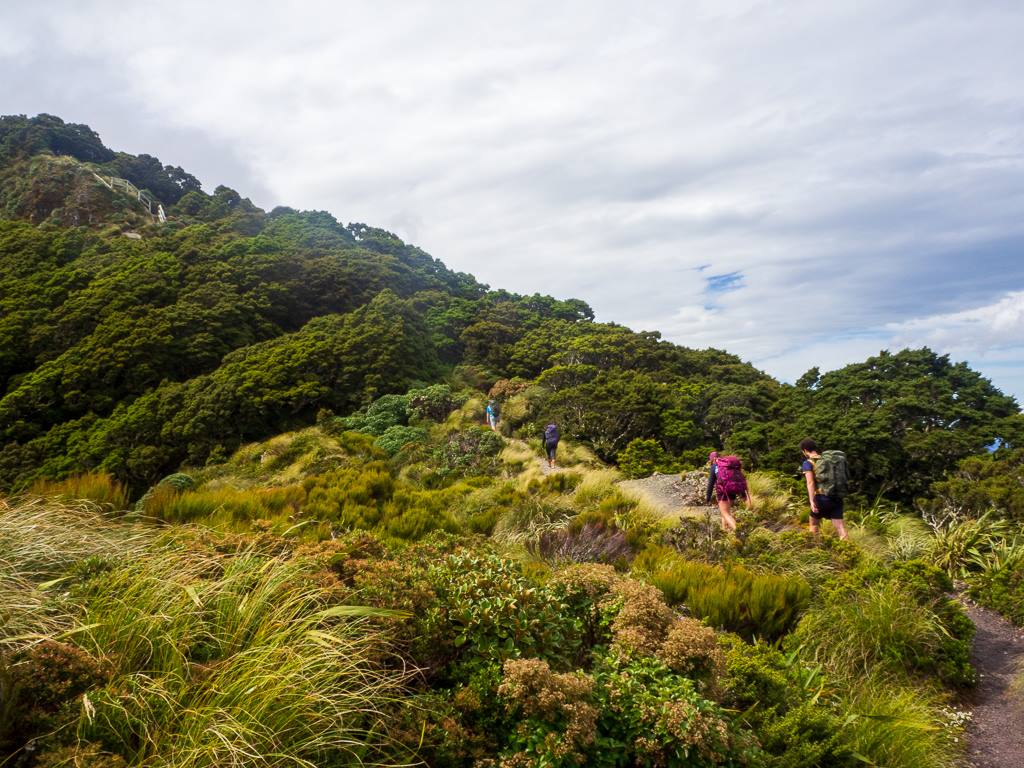
One of the things I love most about hiking is the solitude. For the most part, give me a peaceful trail with nobody else on it over a crowd any day. However, there is one big plus to doing a hike at the same time as a bunch of other people, and it’s that you’ll always find out about more hikes. When we hiked the Milford Track last year, a group of Australians in the huts at the same time as us offered heaps of recommendations when we said our next stop would be Melbourne. It’s because of them that we hiked Mount Kosciuszko, and it’s because of them that a hike I had never even heard of shot to the top of my hiking bucket list.

hike1
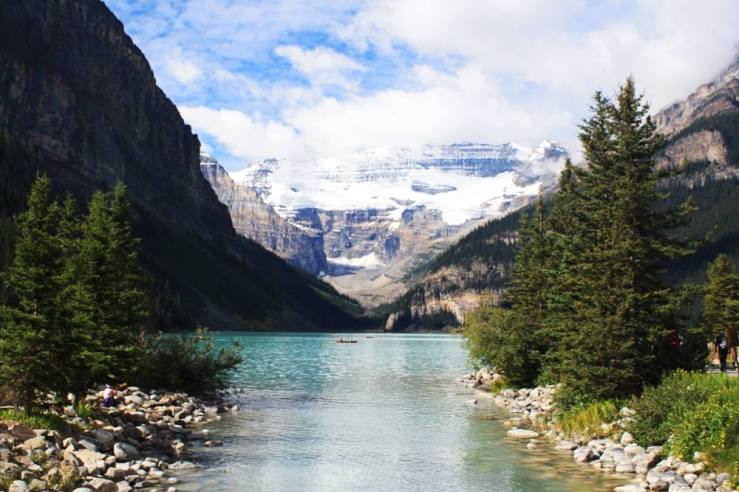
Hiking in Canada

The Overland Track is a 65-km, 6-7 day trek through the heart of the Tasmanian wilderness. While there are basic huts along the way, you have to carry everything from food to fuel to camping gear, meaning it’s a strenuous but rewarding undertaking. Steve and I have booked in to do it in early November just before we wrap up our time in Australia. Thanks to a Jetstar sale, we scored a great deal on our flights last week, and since then I’ve been both eagerly anticipating the hike just a few months away, and also thinking about other “dream hikes” I’d like to do in the future.

Continue reading “Trekking Dreams: My Hiking Bucket List”

A Working Holiday Visa Overview for Americans

Here’s the thing about visas: unless you have immigrated or seriously considered trying to immigrate, you probably don’t know how difficult the process is. There are options, of course—if you do have in-demand skills you can get sponsored by a company that will bring you to your desired country, you can move abroad as a student at a foreign university or as the spouse of a foreign citizen, or if you have a lot of money or a pension you can retire to some beach town in Spain or Guatemala. But if you don’t have a ton of work experience and you’re happy just to get out for a year or two and live somewhere new, your best option is a working holiday visa.

PC230072-2.jpg

Until I lived in Ireland, I had never heard of a working holiday. But when I got to Ireland, it seemed like everyone was abroad (so many Canadians!) or going abroad (to Canada, Australia, etc.) on this thing called a working holiday visa. Now, just about six years after I first arrived in Ireland, I’m on my second working holiday visa and I love the opportunity it’s given me to live abroad for a longer period of time. I think one of the reasons Americans aren’t as likely to do working holidays is that we have fewer options than other nationalities (for example, Canadians can go to over 30 countries, whereas Americans only have 5 options, and three of those require you to be a student or recent graduate), but I think another reason is that we just don’t know about them! So I wanted to write up a little guide to working holiday visas available to Americans.

Note: Obviously, nothing I say here is legal or official advice in anyway. I will be providing links to the relevant government websites and I suggest you utilise them. Also, while requirements are often similar for folks from other countries, there are some differences so make sure to look up your respective country’s visa options if you are not from the States.


P4210008.jpg

Why get a Working Holiday visa? 

Let’s start with the big question: why apply for a working holiday visa rather than just going on vacation? For one thing, the visa lets you stay much longer than the regular tourist allowance. Generally, you get 12 months, and for Australia you can even get a whole extra year if you do 3 months of work in a rural area during your first year. And oh yeah, you’re allowed to work. Much easier to fund your travels without depleting all your savings if you’re allowed to have a job. The great thing about the working holiday visa is that you don’t have to be sponsored by a company, so you don’t have to have a job ahead of time and you can also do jobs that wouldn’t normally be eligible for a high-demand, high-skills work visa, like hospitality or admin work. It’s a great way to get to really explore a country and keep some money in your bank account as you go.

P4080344.jpg

The easiest options: Australia and New Zealand

To get a working holiday visa to Australia or New Zealand, pretty much the only thing you need is to be aged 18 to 30. Places in the Australian and New Zealand working holiday programs are unlimited for Americans, and to apply for the New Zealand visa is even free (for Australia it’s about 350USD). The visa comes through quickly (for NZ it took a couple days and for Australia only a couple of minutes) and then you can head off on your great adventure! You will need to be able show a couple thousand dollars in savings—although nobody I know has ever actually been asked for this at immigration, it’s still a good idea to have until you can get set up with an apartment, a job, and so on.

So which one should you do? Well of course, my recommendation is both! But if you feel like you can’t escape the real world for too long or you’re on the edge of 30 and only have time to squeeze one in before you age out, I would definitely go for New Zealand. I’ll write a longer post about this soon though, so stay tuned.
P2150163-2.jpg

For students and new grads: Ireland, Singapore, and South Korea

I didn’t technically do the Ireland working holiday visa because I went to grad school in Ireland and so the visa I got after I finished was a “postgraduate visa” rather than a “working holiday visa,” but in essence, it was the same. One of the great things about the Irish WHV is that there is no age limit, as long as you are a current college or grad student, or have graduated in the last 12 months. On the other hand, for most of us who went to college straight out of high school, that timeframe has long since passed. However, if you are still in school or thinking of going back, it’s a great option to keep in mind!

To be honest, I don’t know a ton about the Singapore and Korea working holidays. For both, you must be a student/recent grad, and for Singapore your school must be ranked in the top 200 globally. There’s also an age requirement of 18-30 for Korea and 18-25 for Singapore. So while it is possible, it’s definitely more limited, but I wanted to bring them up in case you’ve dreamed of going to Asia but aren’t interested in something like English teaching, and in case the parameters apply.

P4240402.jpg

The bottom line

A working holiday visa is generally only temporary (it can’t usually be extended and if you want to stay longer you have to find sponsorship for a different visa type), but it’s an amazing way to experience long-term travel in a different part of the world. You’ll meet locals and other travelers, mix work and adventure, and come back richer in life but not poorer in savings (at least not significantly poorer… hopefully). Obviously it does often mean putting career and other aspects of your life on hold, but I think it is 1000 percent worth the trade-off and I would recommend it to almost anyone if it is available to you. This is only a small overview of working holiday visas, but if you have any questions, please reach out! I love to share my experiences and advice.

Happy travels!

PC010300.jpg

Lost in the rain on the Grampians Peaks Trail

Photo 25-05-2019, 12 56 30
Very thankful for waterproofs

I love to hike in the shoulder season. The temperature is cooler, so you’re not dripping with sweat while you tote around your pack. There are fewer people, so it’s less likely that you’ll be stuck 10 feet behind some asshole who thinks everyone else on the trail wants to listen their shitty EDM playlist. And there’s just something about the misty, transitional weather that accompanies spring and autumn that makes hiking during that time feel like an otherworldly adventure.

Photo 25-05-2019, 11 50 04

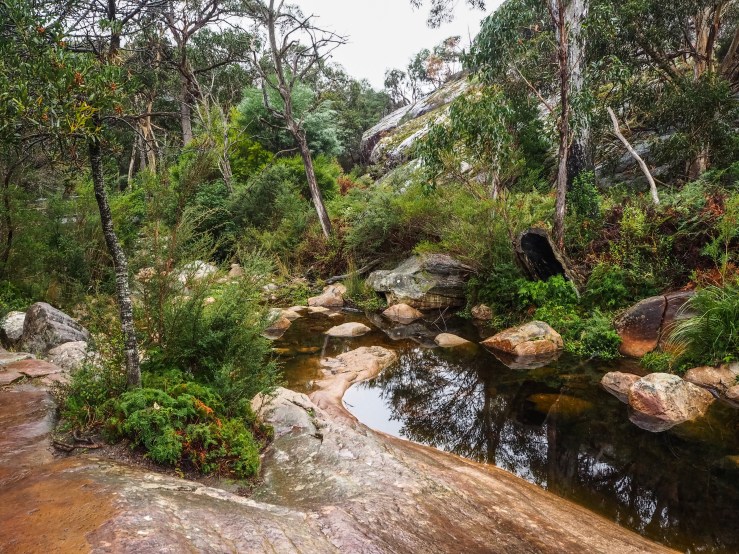
Of course, sometimes that adventure is more like a walk through Mordor than a trip into fairyland. A few weeks ago Steve and I went hiking in the Grampians, a national park about three hours’ drive from Melbourne. The weather during the week was decent but as the weekend approached the forecast looked worse and worse. 80%+ chance of rain is never what you want to see when you’re preparing to spend a few days in the great outdoors. Moreover, this would be our first time tent camping during a hike, spoiled as we’ve been with New Zealand’s amazing hut system.

Continue reading “Lost in the rain on the Grampians Peaks Trail”

My travel bucket list

This week marks six months in Melbourne, which means Steve and I are halfway through our visas here in Australia. While we still have plenty of time left for more exploring down under (trips to Cairns, Sydney, and Tasmania are in the works, as well as a few weeks in Japan during the Rugby World Cup), it’s also time to start thinking about our post-visa adventures. We’ll be heading to Ireland as our next long-term destination, but leaving Australia just as it’s coming into summer to head to cold, rainy Ireland in the dead of winter doesn’t sound like the the most fun.

As we begin to outline our plans (in a massive spreadsheet I’m having way too much fun making) for a couple of weeks hiking in New Zealand followed by a ramble through Southeast Asia, I’ve started thinking about my ultimate travel bucket list. I’m lucky enough to have already been on several trip-of-a-lifetime adventures, from a road trip across the USA a few years ago to a year living my best Lord of the Rings life in New Zealand, but the world is so big and there’s still so much more to see. Here are the other places and things I’m most hoping to experience someday.

Hike Mount Kilimanjaro

I bought Steve’s flights for Japan for his 30th birthday present, and I’ve already told him that when I turn 30 a few years from now, I want a ticket to Tanzania. While I’m not into mountaineering and I definitely don’t dream of ascending all seven summits, after Mount Kosciusko earlier this year I would like to see the top of one more. The tallest peak in Africa, Kilimanjaro is high but not overly technical, meaning that you have to account for altitude but don’t have to worry about plunging to your death off an icefall. The average trek takes about a week and a half, and sounds tough but so rewarding.

See the Northern Lights in Iceland

Steve and I talked about flying up to Yellowknife or Whitehorse in hopes of seeing the Aurora Borealis when we were living in Vancouver, but in the end the trip would have been extremely expensive and if we hadn’t gotten lucky enough to see the lights we would’ve felt like there wasn’t much to do in either town. In Iceland, even if you don’t see the lights you’re still treated to some of the world’s most beautiful waterfalls and cliffs. The northern lights would just be an amazing bonus.

Visit Patagonia

Aside from Antarctica, which is its own thing, South America is the one country I haven’t yet visited. When I do, I want my first stop to be Torres del Paine National Park in Chile. Mountains, glaciers and lakes create awe-inspiring landscapes. By the end of this year I’ll have plenty of overnight hiking experience and I’ll be prepared to take on hikes like the 7-day O trek, as well as many incredible day hikes around the area. And while mainly being an outdoor-focused trip, I also want to visit cities in villages in the area, like Ushuaia, the southernmost city at the end of the world.

Do a YTT abroad

I know that I want to undertake a yoga teacher training someday, more to deepen my own practice than necessarily to teach, and ideally if I can take the time to do so I’d much prefer an intensive version of the 200-hour course than one that is split up over nights and weekends, in order to fully dedicate myself to the training. And if I can go the immersion route, I’d love to do so in another country, where a new environment will help me leave behind the day-to-day and completely focus on learning and yoga.

Take a photography trip to the Scottish Highlands and the Isle of Skye

My friend Medb and I were planning to do this a few years ago and then she, a fellow adventure-lover, ended up taking off for New Zealand on short notice instead (and really, who could blame her?). However, I’d still love to do this someday and now that I’m heading back to Ireland for good(-ish) maybe we’ll even get to go together! I’ve only been to Edinburgh previously, and while it was a beautiful city I’d like to revisit, I really want to get out into the wilds of the moors and see the rugged beauty of the far north of the country.

Backpack Southeast Asia

This is the one that’s in the works. As I said, we’re hoping to skip out on Irish winter and spend a few months eating, hiking, and relaxing (but mostly eating) our way around SEA before arriving back to Ireland in early March (“Just before Paddy’s Day” – Steve). Right now our hope is to visit Indonesia, Singapore, Thailand, Laos, Cambodia, and Vietnam, and while we haven’t done much planning yet, thinking about this trip is my current favourite daydream. Anyone with recommendations, please share them!

Watching the world at Between Two Worlds

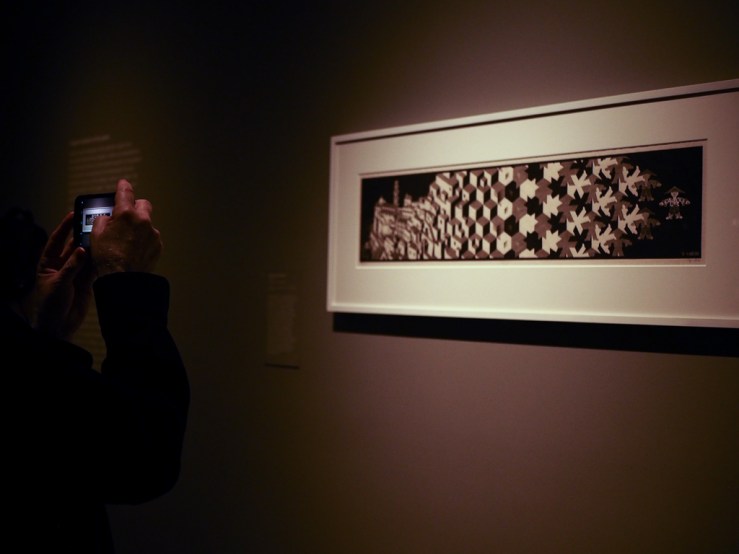
Yesterday I went to the National Gallery of Victoria to see their current special exhibition, Escher X nendo | Between Two Worlds, before it closes next week. First off, if you live in Melbourne and you have the time between now and 7 April, please do try to give it a visit. The fantastic show creates a dialogue between the work of Dutch artist M.C. Escher, most known for his fantastical optical illusion creations, and Japanese design house nendo, who drew inspiration from Escher’s art to create a series of interactive displays and installations that guide you through the exhibition and into a dreamy, yet high-contrast world of black and white geometry.


I brought my camera intending to take a few photos of works in the exhibition, but instead I found myself captivated by other people’s photos. Everywhere I looked, folks had their phones out, cameras on, capturing their own photos of the lithographs, prints, and installations. I was fascinated to get this glimpse into everyone else’s experiences of the show. It’s so rare that we get to see through someone else’s eyes in real time, our windows into their perspective coloured after the fact by the pictures they choose to share, the filters they use.


As I walked through the exhibit, I spent as much time looking at the other visitors as I did looking at the works of art. I loved seeing which pieces they connected with, which ones they wanted to remember. I liked seeing the way they chose to document the art they saw: did they faithfully capture the full work or try to put their own artistic spin on their photo by cropping a detail or including a companion? Did they photograph the information card as well, or were they content to divorce the image from its title and history?


With apologies to the people through whose viewfinders I creepily photographed, seeing the exhibit through multiple points of view added a new layer to my understanding and enjoyment of the art. Escher’s work is all about reflections and twisted perspectives, and looking at the photos that others took brought that fascinatingly distorted outlook to my own experience of the exhibit. I definitely recommend seeing Escher x nendo | Between Two Worlds at the NGV if you can, but whether you go to this exhibit or any art show in the future, look around at the other visitors and see what they see for a moment or two.

Kia kaha, Christchurch

It is a privilege to feel safe in the places you call home. It shouldn’t be, because what is home if it is not a place that is known and that is safe, but again and again we see places that should be known made unsafe by hate. Like the rest of the world, I was shocked and saddened to hear the news of the mass murder of Muslims at a mosque in Christchurch. New Zealand is the safest and most peaceful country I have ever been to or lived in, and yet a group of people decided that shouldn’t be the case for their victims.

New Zealanders haven’t had to grapple with a tragedy like this, whereas in America we are nearly desensitized to news of yet another mass shooting. Politicians send their thoughts and prayers, outraged is silenced with cries of “too soon,” The Onion reposts that too-accurate headline, and nothing changes. I was surprised and gladdened to hear that the New Zealand government’s immediate response was to promise a ban on semi-automatic weapons; imagine if our politicians had ever acted so quickly and decisively? How many schoolchildren, churchgoers, and others would still be with us?

The outpouring of support for the Muslim community in the wake of the tragedy is also heartening. Flowers cover mosques around the country. Vigil attendances number in the thousands. A givealittle page (New Zealand’s answer to Go Fund Me) for victim support has topped $5 million in donations. Kiwis and the world are coming together to echo Prime Minister Jacinda Ardern’s words about the victims: “They are us.”

At the same time, although for many New Zealand seemed like a utopia between its stunning natural beauty and its peaceful, unified society, the sad truth is that New Zealand is not immune from the influence of intolerance, white supremacy, and an environment where “casual” discrimination is given a blind eye rather than spotlighted and called out (and what does “casual” discrimination even mean? Is it a hobby? A side-hustle? Part-time racism?). Where alt-righters like Stefan Molyneux, Jordan Peterson, and Lauren Southern have eager audiences. Where stereotypes about Maori and other islanders flourish as “jokes.”

I am certainly not writing this as a sanctimonious outsider pointing out the flaws of another country; I, too, am certainly often guilty of not doing enough to call out intolerance when I see it. It’s particularly tragic to think that the murderers were likely inspired by the political climate of my own nation. And New Zealand is certainly a lot more welcoming than the United States (or Australia, by the way; wow, there is a lot of racism here, and not just from the Senator who made that awful statement after the mosque shooting, although you should enjoy this video of him getting egged by a teenager).

However, it is tempting to dismiss the murderers’ terrible actions as unrelated to anything else in New Zealand society, to identify solely with the victims. But without changing our own actions and stepping up every time to speak out against racism, discrimination, Islamophobia, intolerance, we are dishonouring the victims by allowing the murderers and those who think like them to find something to identify with in us (please read this powerful comic by Spinoff journalist Toby Morris for more).

It is important to carry the feelings of love and solidarity for the Muslim community, the immigrant community, the community as a whole, that are strongest and most present now in wake of this tragedy, and let them be a guideline going forward. We must cultivate an environment in which seeds of hate can not plant roots. And that means asking ourselves difficult questions, and being willing to ask difficult questions to others. Kia kaha, New Zealand. Stay strong and show your strength by protecting your whānau—Maori, pakeha, Muslim, and everyone else who is lucky enough to live in such a kind and beautiful country. Come together in love and action to ensure that everyone is safe in the places they call home.