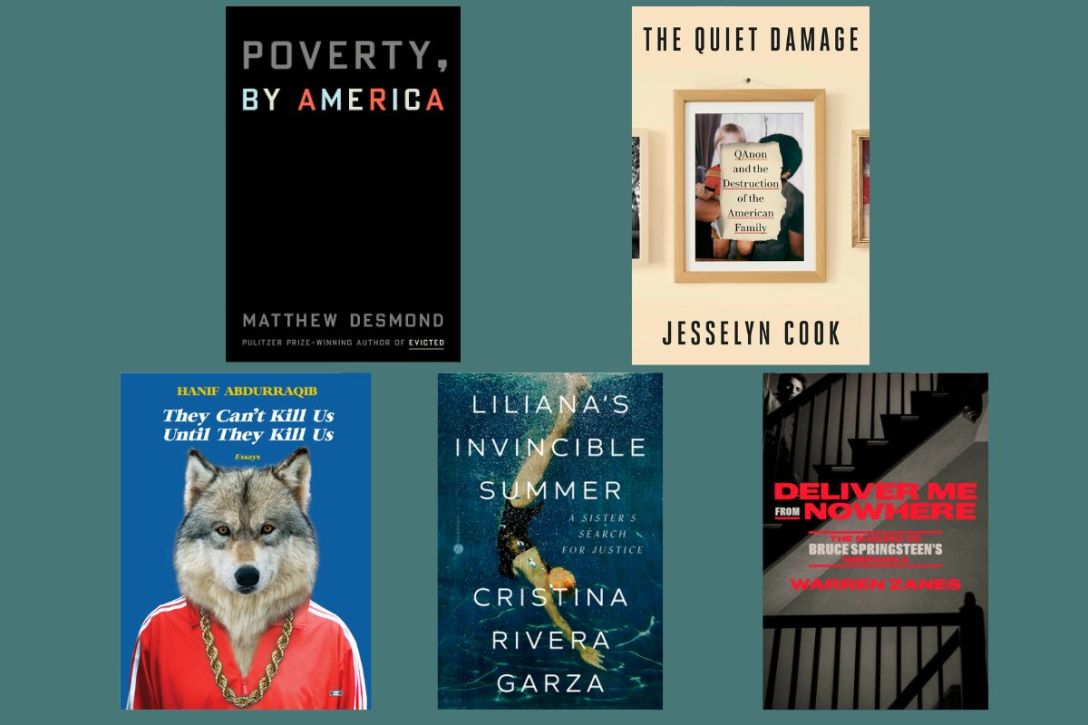
2024 was a great year for non-fiction — the majority of books on my non-fiction list are new releases, with a few from 2023 and a couple of older classics. I love listening to non-fiction on audiobook, so most of these books were ones I listened to, and there was some great narration as well (particularly for the first book on the list).
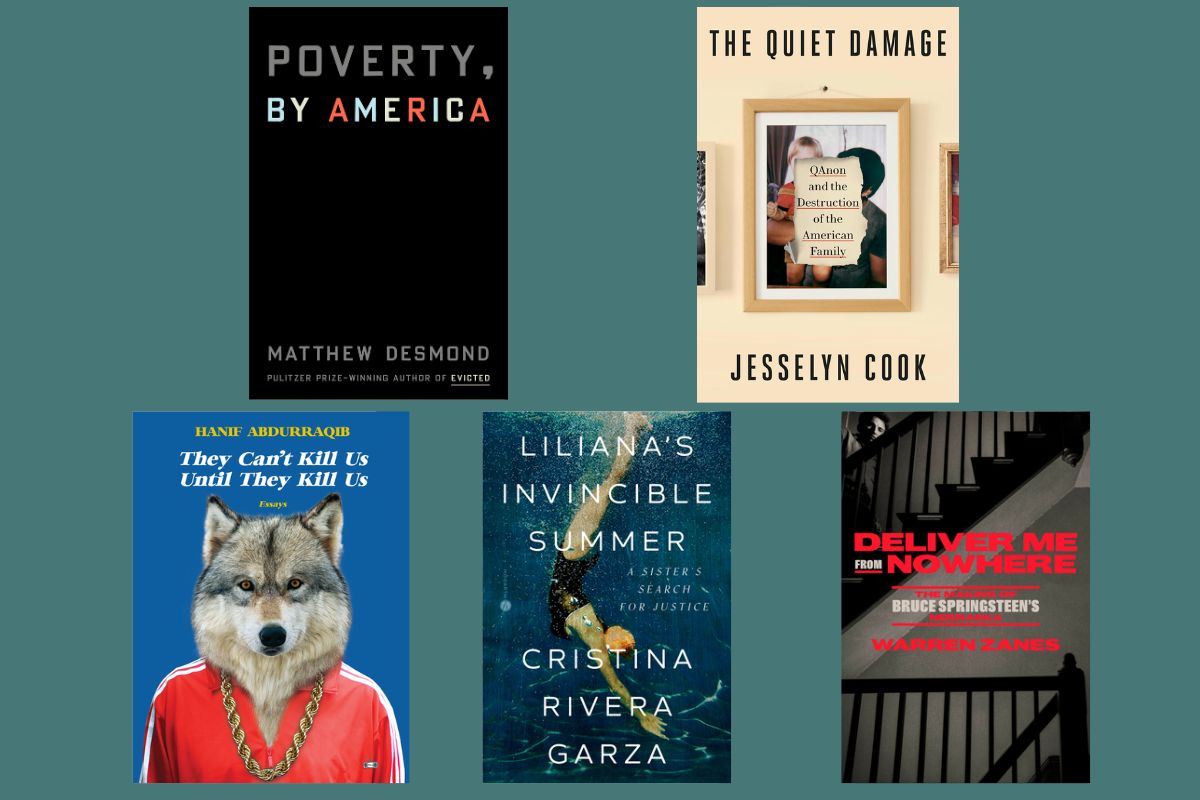
Poverty, by America by Matthew Desmond (2023)
I was so blown away by this book by writer and social scientist Matthew Desmond that I immediately went and found his previous book Evicted, which is only not also on this list to cover more ground. An accessible, impactful read that makes the searing case for the abolition of poverty in the United States, lays out how to do it, and explains why it benefits the ruling class not to do so. This reads more like a manifesto than anything else at times, but I think that’s appropriate considering the topic and its most workable solutions.
I also have to give a shoutout to the narrator of the audiobook, Dion Graham. Although he’s an incredibly prolific audiobook narrator, this was the first time I had encountered his wonderful voice, and now I’m always excited when I start an audiobook and hear that he’s reading it (he narrated several other books I listened to this year including Evicted, also by Matthew Desmond, and The Wager by David Grann).
The Quiet Damage: QAnon and the Destruction of the American Family by Jesselyn Cook (2024)
Some QAnon adherents are obvious suspects: lifelong conspiracy theorists who already believed every rumor in the book, devotees of certain political groups primed to believe everything their dear leaders tell them, etc. But some victims of this delusion are more unexpected, and its these subjects that Jesselyn Cook studies in her incredible book.
In The Quiet Damage, Cook looks at five families who have been torn apart by one member’s belief in the conspiracy, the vulnerabilities and rabbit holes that brought them there, and the effects on the relationships as a result. In some cases, the family manages to pull their loved one back from the ledge; in others, the conspiracist is still in too deep and the relationship is fractured irreparably.
For obvious reasons, I think this book is even more important now than it was on its publication date only six months ago. Cook’s research is in-depth and her writing is empathetic, both towards the believers and towards the loved ones their false beliefs affect. She also recognizes the environments that open people up to believing in conspiracy — the isolation of the pandemic, a misdiagnosis leading to mistrust of medical professionals — without ceding ground to the falsehood of their beliefs.
They Can’t Kill Us Until They Kill Us by Hanif Abdurraqib (2017)
I genuinely think that Hanif Abdurraqib may be the best writer alive, or at least right up there. From his essays to his poetry, I just can’t get enough of his words. I think that one mark of a great nonfiction writer is how much they can make you care about things you don’t otherwise care about, and there’s no one that could make me care about basketball, emo music, or Ohio like Abdurraqib. And the loves we do have in common— poetry, Bruce Springsteen, social justice, and soccer— when he writes about those things the essays pierce directly into my soul. I’m so moved about the way he writes of the experiences I am so far removed from, mainly being Black and growing up Muslim in America, and I’m so moved when he writes of the experiences I deeply relate to, the universal experiences like love and grief and music.
I loved listening to the audiobook of this collection, where Abdurraqib not only narrates but also intersperses a few recollections and commentaries on the essays in the collection. A few highlights for me were: “The Return of the Loneliest Boys in Town,” an essay on loving a particular band (in this case Cute is What We Aim For) and revisiting them later and recognising the elements of their lyrics that haven’t aged well (in this case, the misogyny); “Defiance, Ohio is the Name of a Band” a stunning poem of an essay about getting out of the place you came from and whether the place you came from ever gets out of you; and “Brief Notes On Staying // No One is Making Their Best Work When They Want to Die,” which contains a paragraph I will probably carry with me for the rest of my life:
But the way I think about grief is that it is the great tug-of-war, and sometimes the flag is on the side you don’t want it to be on. And sometimes, the game has exhausted all of its joy, and all that’s left is you on your knees. But, today, even though I am sad, my hands are still on the rope. I am making my best work when my hands are on the rope, even if I’m not puling back. Life is too long, despite the cliché. Too long, and sometimes too painful. But I imagine I have made it too far. I imagine, somewhere around the corner, the best part is still coming.
Liliana’s Invincible Summer: A Sister’s Search for Justice by Cristina Rivera Garza (2024)
Liliana Rivera Garza, an architecture student in Mexico City, was murdered by her abusive ex-boyfriend in 1990. Her killer has never been brought to justice, and as corruption corrodes the criminal justice system and technology upgrades send old files into the void, her case was in danger of being lost to the sands of time. Unwilling to let this occur, Liliana’s sister Cristina Rivera Garza wrote this devastating and poetic memoir documenting her sister’s life and death, creating a record so beautiful and heart-wrenching that there is no way anyone who reads it will be able to forget Liliana.
Like her sister, Liliana was a writer, and Garza intersperses her own memories of her sister with Liliana’s letters and journal entries, detailing her hopes, her fears, her loves, her dreams, and creating a luminous portrait of a much-beloved sibling, and of the cruelty and complexity of the world around her. As tragic and terrible the reason why this memoir was written, it creates a beautiful portrait of a young woman and the sister who loves her.
Deliver Me from Nowhere: The Making of Bruce Springsteen’s Nebraska by Warren Zanes (2023)
Nebraska is one of my all-time favorite albums, and this book detailing its creation is almost as intimate and revelatory as the album it’s about. Before came The River and after came Born in the U.S.A., two albums that capture the essence of Bruce Springsteen and the E Street Band. But in between was Nebraska, a quiet, lonely, album made in a quiet, lonely way.
Deliver Me from Nowhere is not just a story of the album, but also a story of a man at a crossroads, and of the creative process, and all three elements are recounted in a conversational yet thoughtful way thanks to Zanes’ narration; the author’s background as a musician himself offers extra insight. A must-read for Springsteen fans, but I would recommend this book to anyone interested in art and creation.
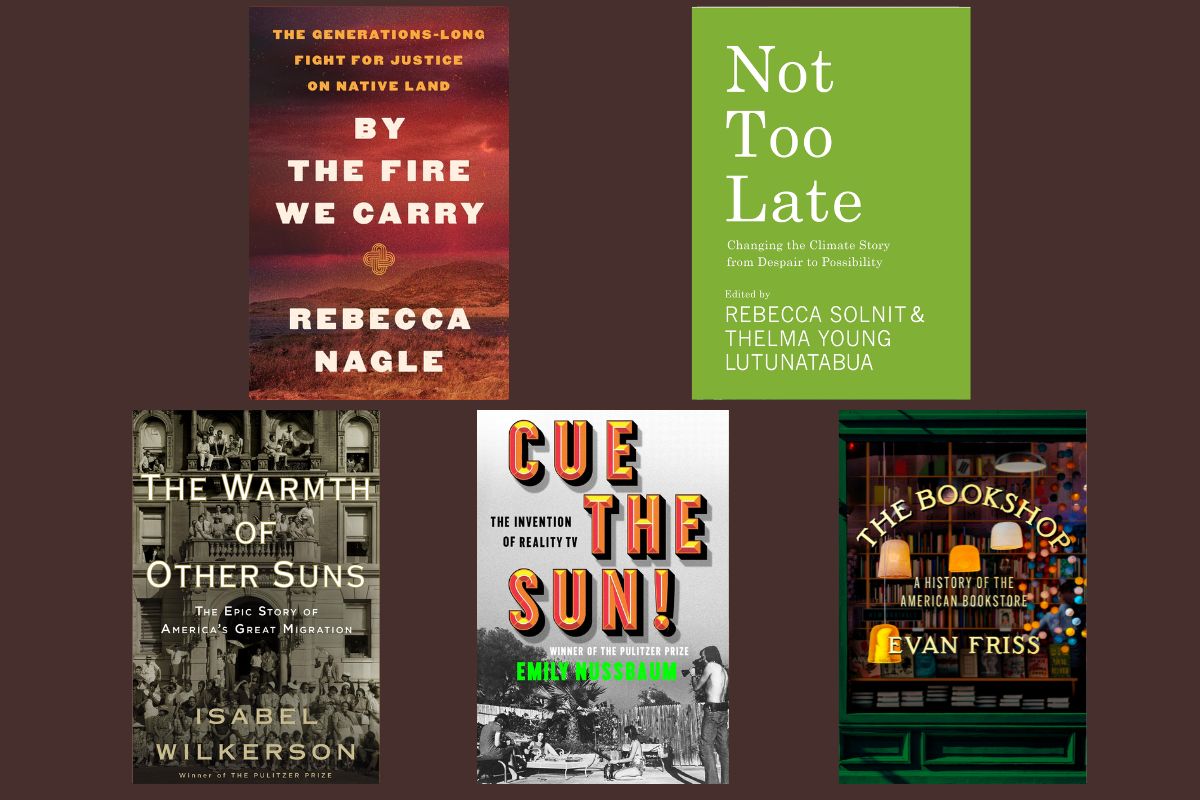
By the Fire We Carry: The Generations-Long Fight for Justice on Native Land by Rebecca Nagle (2024)
In this excellent and powerful book, Rebecca Nagle deftly connects threads both broad and intimate — the history of Native Americans’ forcible relocation by the U.S. government and their struggle for recognition and land rights, a number of specific legal cases that deal with jurisdiction and reservations, and aspects of her own family history — in a way that is accessible and very informative. Throughout the book, I was impressed by the way the author was able to contextualise and link all of the facets together without overwhelming the reader with too much legalese or too many disparate elements, while still giving a ton of information about all sides of this issue and the throughline that runs from pre-America to the present day.
One thing that really struck me is the importance of the fight for justice for all. In addition to the instances of obvious unfairness, in which an innocent had their land taken or their lives changed through no fault of their own and only the injustice of bigotry or the system, one of the key cases in the landmark ruling on tribal rights was that of a convicted murderer on death row. The appeal was not that the defendant was innocent, but one of jurisdiction; establishing the correct jurisdiction would help ensure Native rights over justice on their land. It was a reminder that we must fight for everyone’s rights, including those who have done great wrongs, to ensure fairness for all.
Not Too Late: Changing the Climate Story from Despair to Possibility edited by Rebecca Solnit and Thelma Young Lutunatabua (2023)
It’s easy to feel despair about the state of the world and the future of the environment; there’s a lot to despair about. But it’s also easy to get so caught up in hopelessness that it becomes a blockade — if we think that nothing can be done to improve our climate future, then nothing will be done. It also ignores the progress that climate activists have already made worldwide in pushing for a more sustainable future. Not Too Late is a balm for climate despair, with essays and interviews highlighting progress, forward thinking, and reasons to believe that it’s worth it to keep putting in the work.
This isn’t just a pollyanna book, though. Solnit and Lutunatabua and the contributors certainly don’t want you to put your head in the sand and think that everything is going to be okay. The facts in these essays aren’t all positive; the outlooks definitely aren’t all rosy. A better world is only possible if we fight for it, but Not Too Late proves that there is still a fight to be had, and almost single-handedly turned me away from climate doomerism and readied me to reengage.
The Warmth of Other Suns: The Epic Story of America’s Great Migration by Isabel Wilkerson (2010)
I went to MOMA last weekend, and one of the works that really struck me was a 1941 series of 61 paintings by Jacob Lawrence depicting the Great Migration of southern Black folks north in search of equality and economic opportunity. I immediately thought about Isabel Wilkerson’s landmark book The Warmth of Other Suns. This book is both vast and intimate, offering both an expansive look at the patterns of African Americans leaving the Jim Crow south for the north, west, and midwest, and intimate, focusing on the stories of three individuals who moved in the 1930s, 40s, and 50s.
For as in-depth and meticulously researched as this book is, it’s almost incredible how readable it is. Never feeling bogged down or slow, The Warmth of Other Suns is both a beautiful tribute to the resilience of the people it covers and an important record of the times. From the strife and injustice these migrants faced in their search for better lives, to the futures that lay ahead of them as they built their new communities, the book looks at every facet in a way that is both informative and compelling.
Cue the Sun! The Invention of Reality TV by Emily Nussbaum (2024)
Era by era, Emily Nussbaum’s book documents the rise and rise of reality TV. You don’t have to love reality TV (I don’t, if it’s not Top Chef) to love this book (I do). You just have to love engaging, thoroughly researched journalism and have a little bit of a voyeuristic streak when it comes to peeking behind the curtain of media production. How much of a certain decision came from the producers? Why did he get cast? Was that relationship real or “showmance”? Nussbaum’s reporting and interviews offer insight — and sometimes the people who wouldn’t provide a comment tell as much as those who do.
The first few chapters of the book are interesting as they cover the early days of reality TV as it transitions from radio and traditional gameshows to become more like the reality shows we know today. But where the story really picks up steam is the chapter covering the first season of Survivor, a juggernaut that impacted how every reality TV show is created, produced, and cast, and how every reality competition game is played by the best and most conniving contestants. Chapters covering Queer Eye and Big Brother were equally interesting. While there were a few iconic shows I felt were missing, I do understand that the breadth of reality tv is so large now that a book that kept every show in its scope would be never-ending. And on the whole, this is a fantastic dive into the genre that will leave you entertained and possibly despairing at its power.
The Bookshop: A History of the American Bookstore by Evan Friss (2024)
The Bookshop, despite its subtitle, is not an exhaustive history of the American bookstore. In some ways, it reads more like a series of essays, each chronicling a notable bookstore — the big (The Strand), the bigger (Barnes & Noble), and the small (sidewalk booksellers on the streets of New York City). It looks at bookstores notable not only for their wares but for their cultural influence, like the Oscar Wild Bookshop that sold LGBTQ literature and promoted activism in same, and those with much more sinister aims like the antisemitic Aryan Bookstore. And, of course, it looks at the impact of Amazon on indie and big box booksellers alike, and how the magic of physical bookstores still hopes to combat the pull of buy-it-now consumerism (usually with the assistance of some deep although-not-as-deep-as-Jeff-Bezos’ and far more altruistic pockets, as with Ann Patchett’s Parnassus bookshop).
I enjoyed this approach more than a strictly linear take on the history of bookselling. It was extremely engaging, and the bookshops selected to feature were a good cross-section of the different types of bookstores that have risen and fallen and risen again throughout America’s literary history. With plenty of trivia and stories woven in to the pages, The Bookshop is sure to appeal to fellow bookstore enthusiasts as much as it did me.

 thebestpossibletime