Trekking Dreams: My Hiking Bucket List

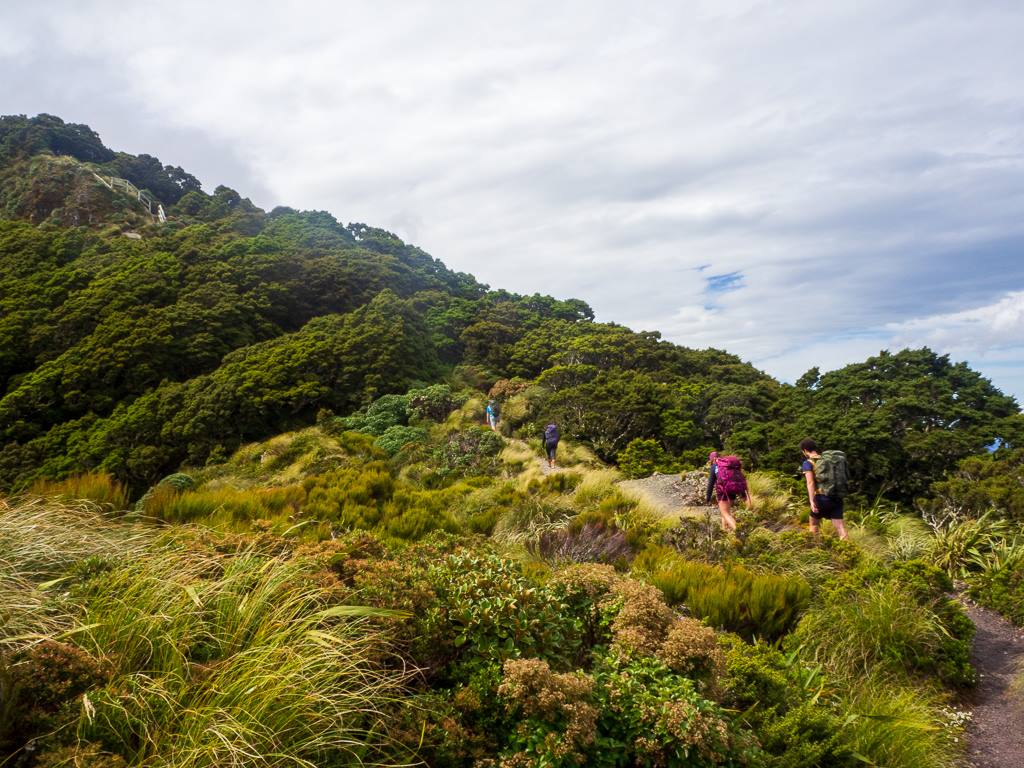
One of the things I love most about hiking is the solitude. For the most part, give me a peaceful trail with nobody else on it over a crowd any day. However, there is one big plus to doing a hike at the same time as a bunch of other people, and it’s that you’ll always find out about more hikes. When we hiked the Milford Track last year, a group of Australians in the huts at the same time as us offered heaps of recommendations when we said our next stop would be Melbourne. It’s because of them that we hiked Mount Kosciuszko, and it’s because of them that a hike I had never even heard of shot to the top of my hiking bucket list.

hike1
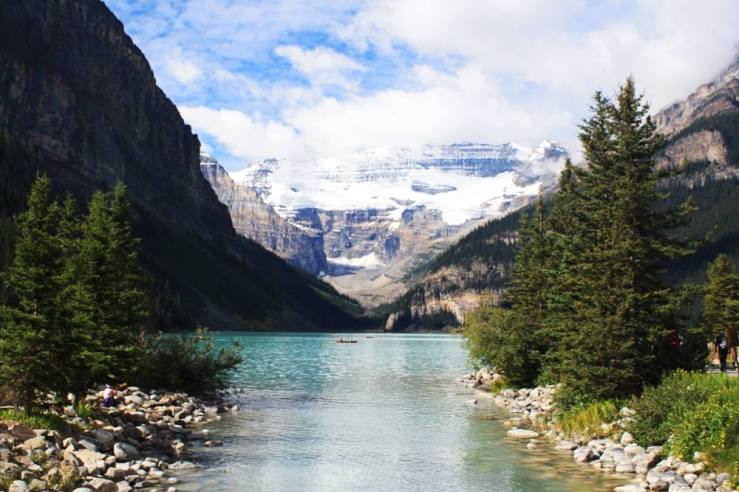
Hiking in Canada

The Overland Track is a 65-km, 6-7 day trek through the heart of the Tasmanian wilderness. While there are basic huts along the way, you have to carry everything from food to fuel to camping gear, meaning it’s a strenuous but rewarding undertaking. Steve and I have booked in to do it in early November just before we wrap up our time in Australia. Thanks to a Jetstar sale, we scored a great deal on our flights last week, and since then I’ve been both eagerly anticipating the hike just a few months away, and also thinking about other “dream hikes” I’d like to do in the future.

Continue reading “Trekking Dreams: My Hiking Bucket List”

What I learned from my fourth half-marathon

I guess these are a tradition now (although I never wrote one for the Wellington half-marathon, my third last year) and now that I’m just a few months out from running my first full marathon I think it’s even more important for me to take a look at my race and think about what I learned.

Yesterday I ran the half-marathon event at Run Melbourne in 1:54:21, beating my previous personal best by over two minutes. Apart from a shiny medal and tired quads, here’s what I took away from it:

EAiZNiaUwAA1iZF.jpg

Continue reading “What I learned from my fourth half-marathon”

A Working Holiday Visa Overview for Americans

Here’s the thing about visas: unless you have immigrated or seriously considered trying to immigrate, you probably don’t know how difficult the process is. There are options, of course—if you do have in-demand skills you can get sponsored by a company that will bring you to your desired country, you can move abroad as a student at a foreign university or as the spouse of a foreign citizen, or if you have a lot of money or a pension you can retire to some beach town in Spain or Guatemala. But if you don’t have a ton of work experience and you’re happy just to get out for a year or two and live somewhere new, your best option is a working holiday visa.

PC230072-2.jpg

Until I lived in Ireland, I had never heard of a working holiday. But when I got to Ireland, it seemed like everyone was abroad (so many Canadians!) or going abroad (to Canada, Australia, etc.) on this thing called a working holiday visa. Now, just about six years after I first arrived in Ireland, I’m on my second working holiday visa and I love the opportunity it’s given me to live abroad for a longer period of time. I think one of the reasons Americans aren’t as likely to do working holidays is that we have fewer options than other nationalities (for example, Canadians can go to over 30 countries, whereas Americans only have 5 options, and three of those require you to be a student or recent graduate), but I think another reason is that we just don’t know about them! So I wanted to write up a little guide to working holiday visas available to Americans.

Note: Obviously, nothing I say here is legal or official advice in anyway. I will be providing links to the relevant government websites and I suggest you utilise them. Also, while requirements are often similar for folks from other countries, there are some differences so make sure to look up your respective country’s visa options if you are not from the States.


P4210008.jpg

Why get a Working Holiday visa? 

Let’s start with the big question: why apply for a working holiday visa rather than just going on vacation? For one thing, the visa lets you stay much longer than the regular tourist allowance. Generally, you get 12 months, and for Australia you can even get a whole extra year if you do 3 months of work in a rural area during your first year. And oh yeah, you’re allowed to work. Much easier to fund your travels without depleting all your savings if you’re allowed to have a job. The great thing about the working holiday visa is that you don’t have to be sponsored by a company, so you don’t have to have a job ahead of time and you can also do jobs that wouldn’t normally be eligible for a high-demand, high-skills work visa, like hospitality or admin work. It’s a great way to get to really explore a country and keep some money in your bank account as you go.

P4080344.jpg

The easiest options: Australia and New Zealand

To get a working holiday visa to Australia or New Zealand, pretty much the only thing you need is to be aged 18 to 30. Places in the Australian and New Zealand working holiday programs are unlimited for Americans, and to apply for the New Zealand visa is even free (for Australia it’s about 350USD). The visa comes through quickly (for NZ it took a couple days and for Australia only a couple of minutes) and then you can head off on your great adventure! You will need to be able show a couple thousand dollars in savings—although nobody I know has ever actually been asked for this at immigration, it’s still a good idea to have until you can get set up with an apartment, a job, and so on.

So which one should you do? Well of course, my recommendation is both! But if you feel like you can’t escape the real world for too long or you’re on the edge of 30 and only have time to squeeze one in before you age out, I would definitely go for New Zealand. I’ll write a longer post about this soon though, so stay tuned.

P2150163-2.jpg

For students and new grads: Ireland, Singapore, and South Korea

I didn’t technically do the Ireland working holiday visa because I went to grad school in Ireland and so the visa I got after I finished was a “postgraduate visa” rather than a “working holiday visa,” but in essence, it was the same. One of the great things about the Irish WHV is that there is no age limit, as long as you are a current college or grad student, or have graduated in the last 12 months. On the other hand, for most of us who went to college straight out of high school, that timeframe has long since passed. However, if you are still in school or thinking of going back, it’s a great option to keep in mind!

To be honest, I don’t know a ton about the Singapore and Korea working holidays. For both, you must be a student/recent grad, and for Singapore your school must be ranked in the top 200 globally. There’s also an age requirement of 18-30 for Korea and 18-25 for Singapore. So while it is possible, it’s definitely more limited, but I wanted to bring them up in case you’ve dreamed of going to Asia but aren’t interested in something like English teaching, and in case the parameters apply.

P4240402.jpg

The bottom line

A working holiday visa is generally only temporary (it can’t usually be extended and if you want to stay longer you have to find sponsorship for a different visa type), but it’s an amazing way to experience long-term travel in a different part of the world. You’ll meet locals and other travelers, mix work and adventure, and come back richer in life but not poorer in savings (at least not significantly poorer… hopefully). Obviously it does often mean putting career and other aspects of your life on hold, but I think it is 1000 percent worth the trade-off and I would recommend it to almost anyone if it is available to you. This is only a small overview of working holiday visas, but if you have any questions, please reach out! I love to share my experiences and advice.

Happy travels!

PC010300.jpg

My Favourite Rabbit Holes

We all have them. Those internet rabbit holes you just can’t resist going down. Maybe it’s a topic that fascinates you, or one that infuriates you, or maybe it’s just one you know has enough content online that you can kill a bit of time when things are slow at work. Maybe you have a favourite topic that you check back on frequently in hopes of updates, even if the matter has been dormant for years. Maybe you and your friends share your findings back and forth, like my BFF and I do with bizarre advice column questions from sites like Ask a Manager and Dear Prudie.

Some rabbit holes are quite common: topics like unresolved true crime (who killed JonBenet Ramsey, who was Jack the Ripper) or cryptids (mythological—or potentially not mythological—beings like Bigfoot or the Loch Ness Monster) have always piqued our interest and our imagination. The internet has facilitated others: it’s easy to get lost scrolling through satellite images on Google Earth or idly planning a dream vacation or dinner on Instagram. Wikipedia is the biggest conduit, with its infinite hyper links making it easy to move through a series of innocuous topics until suddenly it’s three hours later and you’re deep into a world of conspiracy theories and oddities. “What is the best internet rabbit hole to get lost down?” is a common question on AskReddit, and Slate has an entire series based around the idea.

As someone who is Extremely Online, I probably go down the rabbit hole more often than most. Let me bring you down a few of my favourites:

Continue reading “My Favourite Rabbit Holes”

Lost in the rain on the Grampians Peaks Trail

Photo 25-05-2019, 12 56 30
Very thankful for waterproofs

I love to hike in the shoulder season. The temperature is cooler, so you’re not dripping with sweat while you tote around your pack. There are fewer people, so it’s less likely that you’ll be stuck 10 feet behind some asshole who thinks everyone else on the trail wants to listen their shitty EDM playlist. And there’s just something about the misty, transitional weather that accompanies spring and autumn that makes hiking during that time feel like an otherworldly adventure.

Photo 25-05-2019, 11 50 04

Of course, sometimes that adventure is more like a walk through Mordor than a trip into fairyland. A few weeks ago Steve and I went hiking in the Grampians, a national park about three hours’ drive from Melbourne. The weather during the week was decent but as the weekend approached the forecast looked worse and worse. 80%+ chance of rain is never what you want to see when you’re preparing to spend a few days in the great outdoors. Moreover, this would be our first time tent camping during a hike, spoiled as we’ve been with New Zealand’s amazing hut system.

Continue reading “Lost in the rain on the Grampians Peaks Trail”

My Queen in the North

If you haven’t been living under a (Casterly) rock you know that the final season of Game of Thrones was… divisive isn’t quite the right word, unless it refers to the divide between the showrunners and good storytelling. While we may see more of Westeros if George R. R. Martin ever finishes the series, for now its watch has ended and most of us who have followed it for so many years are reflecting on it.

I certainly have a lot of criticisms about the series finale, the final season, and the show (and book series) as a whole, but there’s one moment in the last episode that completes a storyline I have cared so deeply about throughout, and it’s the one I keep coming back to when I think about Game of Thrones’ place in the canon of fantasy. Spoilers for all of Game of Thrones from here on out: Continue reading “My Queen in the North”