Best Horror of 2024

Best Horror 2024

As with every year, I read so much good horror in 2024 that I had to give it its own best-of list rather than lumping it in with my Best Fiction I Read in 2024 list (or my best non-fiction list, although I read a couple of good non-fiction horror books, and non-fiction in general aka real life is pretty horrifying right now). All of the books on my list were published in 2024 bar one, which was published at the end of October 2023, so if you’re looking for good, recent horror, read on!

Bonus: I was lucky enough to get an ARC of a book being published later in 2025 that I think a lot of folks are going to really love, and one of my first reads of the year was a 2024 book that would absolutely have made my best-of list if I’d read it two weeks earlier, so I’m not going to save it all the way for my end-of-year lists.
Best Horror 2024

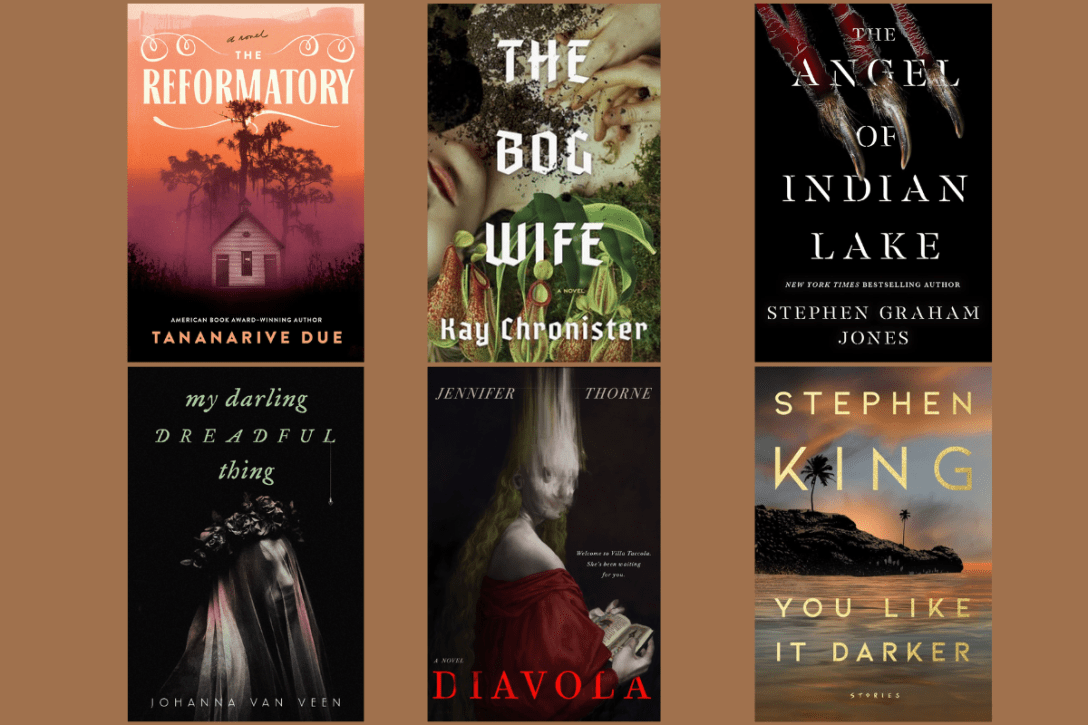
The Reformatory by Tananarive Due (2023)

I finished reading Tananarive Due’s The Reformatory on January 9, and on that early date I was willing to stake the claim that it would be the best horror book I’d read in the year. And you know what, I was absolutely right. Set in the Jim Crow south at a boy’s reform school and based true events including the life and unjust death one of Due’s own relatives, this novel is horrifying enough even before it is touched by the paranormal. But there are plenty of ghosts and premonitions as well for those who love a supernatural element in their horror novels. It’s a harrowing, haunting read, but it’s a masterpiece of horror, historical fiction, and fiction in general.

The Bog Wife by Kay Chronister (2024)

You can judge a book by its cover on this one. If you are immediately drawn in by the earthy color palette and eerie details of The Bog Wife‘s cover, then you’ll probably love the book, too. A rural gothic, the novel features an Appalachian family, isolated and co-dependent, who are gifted (or cursed) with a covenant that has run and been renewed by generations before them. When this time the pact seems to fail, each of the siblings react in their own ways to attempt to stitch it back together, or rend it further apart. I loved the writing style in this novel, so descriptive I could nearly smell the peat. Adding in a heavy helping of family trauma, plenty of folk horror, and a dash of climate anxiety, The Bog Wife hit all the notes for me.

The Angel of Indian Lake by Stephen Graham Jones (2024)

In my opinion, the Indian Lake trilogy is destined to be considered a modern horror classic. And this closing novel novel hits a perfect balance on every level — gory and violent without losing its emotional core, nostalgic and referential to the scores of horror classics that came before without getting too meta. Jade Daniels is a final girl for the ages; in this last installment we see the culmination of her growth and maturity, while still maintaining her edge and of course her encyclopedic knowledge of slasher films across all subgenres. The trilogy isn’t going to be for everyone — you might find yourself having to cast your mind back to remember a minor character who makes a sudden reappearance or do a bit of wikipedia-ing to understand one of Jade’s film references — but for those who will make the effort, it’s up there with the all-time greats.

My Darling Dreadful Thing by Johanna van Veen (2024)

Now this is gothic horror. It’s grotesque, unsettling, ambiguous, and romantic. Roos and her ghostly, ghastly companion Ruth are a fascinating duo, aiding Roos’s conniving mother in fake séances to con wealthy customers. Eventually, she is sent to live with a widow who offers a handsome sum for her companionship after Roos pretends to channel the woman’s dead husband, and Roos’s relationship with the bold yet mysterious Agness is equally compelling. The supporting characters are as complex and intriguing as the main characters, and excellent pacing and an eerie setting round out the novel and help to create a tense, thrilling story.

Diavola by Jennifer Marie Thorne (2024)

This quick horror read is tons of fun. Our protagonist, Anna, is the black sheep of her family, and her dry, sarcastic tone is perfect for narrating both the mundane drama that occurs as the family gets together at an AirBnB in Italy, and the paranormal horrors they experience there. She’s not a likable character, per se, but she is an enjoyable one, and probably a relatable one, too, ideal for a story like this. The scares are balanced out with the humor, and the blend offers a satisfying and sometimes satirical take on the classic haunted house novel. Maybe the true horror was the family vacations we took along the way, am I right (I’m kidding, I actually love family vacations, Steve and I are meeting my parents in Portugal for a holiday in March — hopefully sans hauntings).

You Like It Darker by Stephen King (2024)

Death, taxes, and a new Stephen King book. Some things are pretty much guaranteed, and it’s inevitable that a writer as prolific as King is going to have some peaks and valleys in his oeuvre. Luckily, his latest short story collection, You Like It Darker, is a definite high. There are a couple of so-so stories, but the good ones are beyond good, and a little bit of variance in short story quality is probably inevitable in a collection as well. “Danny Coughlin’s Bad Dream” is worth the price of admission alone, and I love when King dips into cosmic horror as he does in “The Dreamers.” “The Answer Man” is simple, classic, and just the right amount of melancholy, and Cujo pseudo-sequel “Rattlesnakes” is creepy as hell. A solid collection from the horror master.

Bonus:
blood on her tongue and she's always hungry

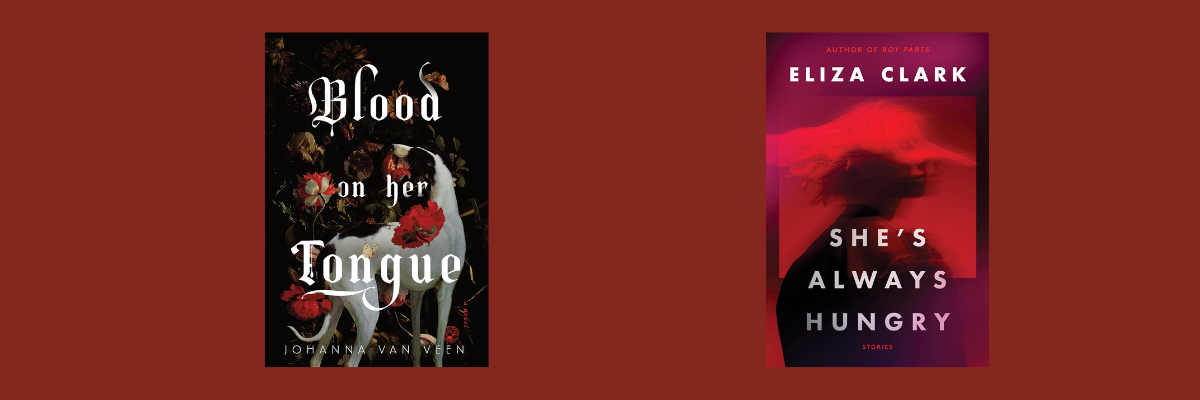
Blood on Her Tongue by Johanna van Veen (2025)

After reading My Darling Dreadful Thing, I instantly added Johanna van Veen to the list of authors whose work I will be sure to pick up, so I was thrilled to snag an ARC of her second novel, Blood on Her Tongue (thanks very much to the author, Netgalley, and Poisoned Pen Press). I’ll share more of my thoughts on the book closer to its publication date, but in short, I think I loved this novel even more than I loved van Veen’s debut. Toxic codependence will always be a favorite horror trope of mine, especially when it leads to devastating consequences, and it’s so well executed here along with an exquisitely-crafted story that grows the creeping, unsettling tension to a truly disturbing climax.

She’s Always Hungry by Eliza Clark (2024)

As I said above, I read this at the very start of 2025, but since it was only published in mid-November 2024 and since it’s so early in the year, I don’t want to save it all the way for my end-of-2025 reviews since I would absolutely have included it in my best-of-2024 list had I read it in time, and I want to recommend it to anyone who is looking for disturbing, outrageous, fucked up short stories to start their year. Some highlights: the spooky siren folklore title tale, the cannibal lady cosmic oddity “The King,” the nothing-paranormal-but-just-as-creepy “Goth GF” about a young man’s obsession with his coworker, the climate anxiety-tinged space/bio horror “Extinction Event,” and the absurd (and absurdly unsettling) “The Shadow Over Little Chitaly,” which is formatted as a series of meal delivery app reviews about a takeaway restaurant that’s Not Quite Right.
Best Non-Fiction Read in 2024

Best Non-Fiction Of 2024 Picks 1-5

2024 was a great year for non-fiction — the majority of books on my non-fiction list are new releases, with a few from 2023 and a couple of older classics. I love listening to non-fiction on audiobook, so most of these books were ones I listened to, and there was some great narration as well (particularly for the first book on the list).

My fiction best-of for 2024

Best Non-Fiction Of 2024 Picks 1-5

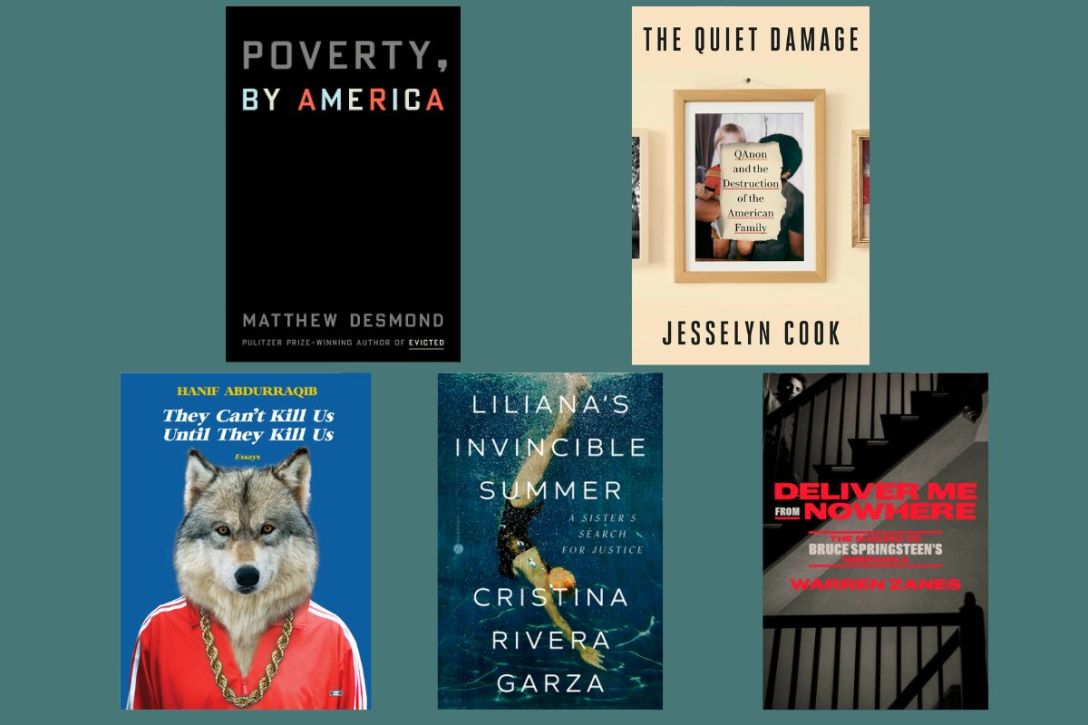
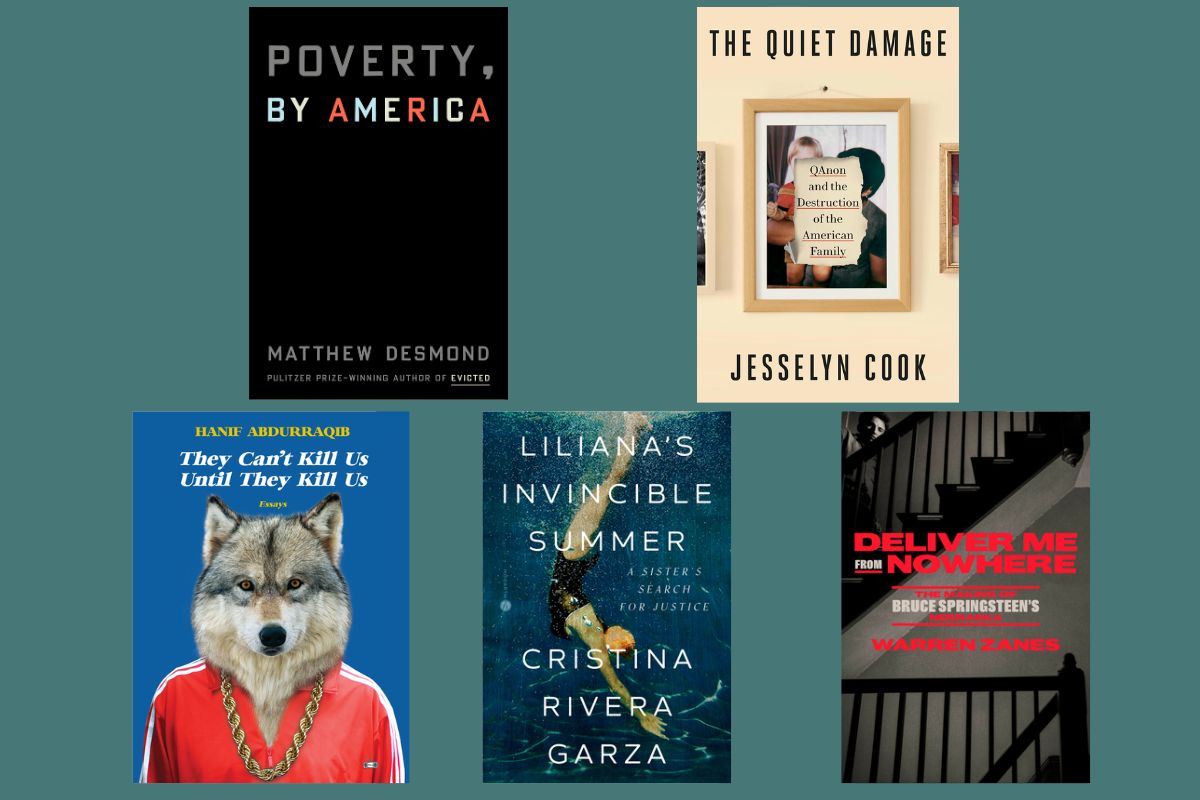
Poverty, by America by Matthew Desmond (2023)

I was so blown away by this book by writer and social scientist Matthew Desmond that I immediately went and found his previous book Evicted, which is only not also on this list to cover more ground. An accessible, impactful read that makes the searing case for the abolition of poverty in the United States, lays out how to do it, and explains why it benefits the ruling class not to do so. This reads more like a manifesto than anything else at times, but I think that’s appropriate considering the topic and its most workable solutions.

I also have to give a shoutout to the narrator of the audiobook, Dion Graham. Although he’s an incredibly prolific audiobook narrator, this was the first time I had encountered his wonderful voice, and now I’m always excited when I start an audiobook and hear that he’s reading it (he narrated several other books I listened to this year including Evicted, also by Matthew Desmond, and The Wager by David Grann).

The Quiet Damage: QAnon and the Destruction of the American Family by Jesselyn Cook (2024)

Some QAnon adherents are obvious suspects: lifelong conspiracy theorists who already believed every rumor in the book, devotees of certain political groups primed to believe everything their dear leaders tell them, etc. But some victims of this delusion are more unexpected, and its these subjects that Jesselyn Cook studies in her incredible book.

In The Quiet Damage, Cook looks at five families who have been torn apart by one member’s belief in the conspiracy, the vulnerabilities and rabbit holes that brought them there, and the effects on the relationships as a result. In some cases, the family manages to pull their loved one back from the ledge; in others, the conspiracist is still in too deep and the relationship is fractured irreparably.

For obvious reasons, I think this book is even more important now than it was on its publication date only six months ago. Cook’s research is in-depth and her writing is empathetic, both towards the believers and towards the loved ones their false beliefs affect. She also recognizes the environments that open people up to believing in conspiracy — the isolation of the pandemic, a misdiagnosis leading to mistrust of medical professionals — without ceding ground to the falsehood of their beliefs.

They Can’t Kill Us Until They Kill Us by Hanif Abdurraqib (2017)

I genuinely think that Hanif Abdurraqib may be the best writer alive, or at least right up there. From his essays to his poetry, I just can’t get enough of his words. I think that one mark of a great nonfiction writer is how much they can make you care about things you don’t otherwise care about, and there’s no one that could make me care about basketball, emo music, or Ohio like Abdurraqib. And the loves we do have in common— poetry, Bruce Springsteen, social justice, and soccer— when he writes about those things the essays pierce directly into my soul. I’m so moved about the way he writes of the experiences I am so far removed from, mainly being Black and growing up Muslim in America, and I’m so moved when he writes of the experiences I deeply relate to, the universal experiences like love and grief and music.

I loved listening to the audiobook of this collection, where Abdurraqib not only narrates but also intersperses a few recollections and commentaries on the essays in the collection. A few highlights for me were: “The Return of the Loneliest Boys in Town,” an essay on loving a particular band (in this case Cute is What We Aim For) and revisiting them later and recognising the elements of their lyrics that haven’t aged well (in this case, the misogyny); “Defiance, Ohio is the Name of a Band” a stunning poem of an essay about getting out of the place you came from and whether the place you came from ever gets out of you; and “Brief Notes On Staying // No One is Making Their Best Work When They Want to Die,” which contains a paragraph I will probably carry with me for the rest of my life:

But the way I think about grief is that it is the great tug-of-war, and sometimes the flag is on the side you don’t want it to be on. And sometimes, the game has exhausted all of its joy, and all that’s left is you on your knees. But, today, even though I am sad, my hands are still on the rope. I am making my best work when my hands are on the rope, even if I’m not puling back. Life is too long, despite the cliché. Too long, and sometimes too painful. But I imagine I have made it too far. I imagine, somewhere around the corner, the best part is still coming.

Liliana’s Invincible Summer: A Sister’s Search for Justice by Cristina Rivera Garza (2024)

Liliana Rivera Garza, an architecture student in Mexico City, was murdered by her abusive ex-boyfriend in 1990. Her killer has never been brought to justice, and as corruption corrodes the criminal justice system and technology upgrades send old files into the void, her case was in danger of being lost to the sands of time. Unwilling to let this occur, Liliana’s sister Cristina Rivera Garza wrote this devastating and poetic memoir documenting her sister’s life and death, creating a record so beautiful and heart-wrenching that there is no way anyone who reads it will be able to forget Liliana.

Like her sister, Liliana was a writer, and Garza intersperses her own memories of her sister with Liliana’s letters and journal entries, detailing her hopes, her fears, her loves, her dreams, and creating a luminous portrait of a much-beloved sibling, and of the cruelty and complexity of the world around her. As tragic and terrible the reason why this memoir was written, it creates a beautiful portrait of a young woman and the sister who loves her.

Deliver Me from Nowhere: The Making of Bruce Springsteen’s Nebraska by Warren Zanes (2023)

Nebraska is one of my all-time favorite albums, and this book detailing its creation is almost as intimate and revelatory as the album it’s about. Before came The River and after came Born in the U.S.A., two albums that capture the essence of Bruce Springsteen and the E Street Band. But in between was Nebraska, a quiet, lonely, album made in a quiet, lonely way.

Deliver Me from Nowhere is not just a story of the album, but also a story of a man at a crossroads, and of the creative process, and all three elements are recounted in a conversational yet thoughtful way thanks to Zanes’ narration; the author’s background as a musician himself offers extra insight. A must-read for Springsteen fans, but I would recommend this book to anyone interested in art and creation.

Best Non-Fiction Of 2024 Picks 6-10

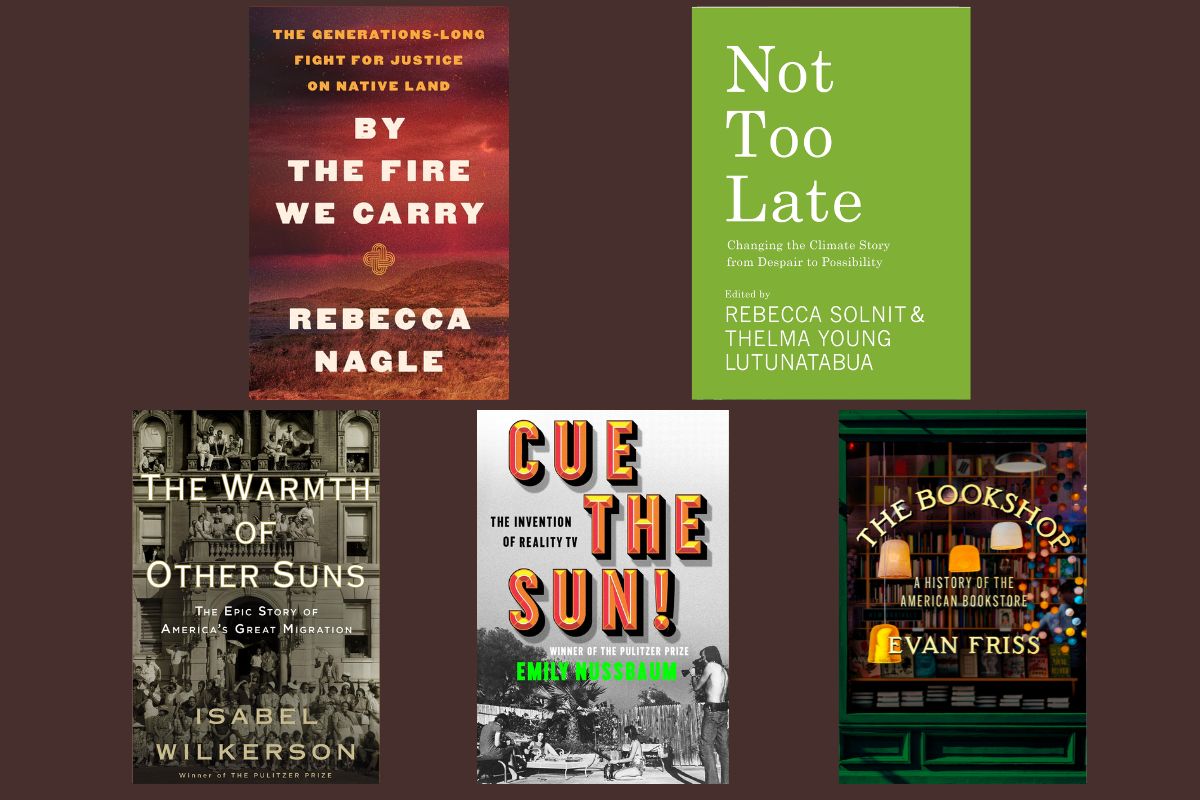
By the Fire We Carry: The Generations-Long Fight for Justice on Native Land by Rebecca Nagle (2024)

In this excellent and powerful book, Rebecca Nagle deftly connects threads both broad and intimate — the history of Native Americans’ forcible relocation by the U.S. government and their struggle for recognition and land rights, a number of specific legal cases that deal with jurisdiction and reservations, and aspects of her own family history — in a way that is accessible and very informative. Throughout the book, I was impressed by the way the author was able to contextualise and link all of the facets together without overwhelming the reader with too much legalese or too many disparate elements, while still giving a ton of information about all sides of this issue and the throughline that runs from pre-America to the present day.

One thing that really struck me is the importance of the fight for justice for all. In addition to the instances of obvious unfairness, in which an innocent had their land taken or their lives changed through no fault of their own and only the injustice of bigotry or the system, one of the key cases in the landmark ruling on tribal rights was that of a convicted murderer on death row. The appeal was not that the defendant was innocent, but one of jurisdiction; establishing the correct jurisdiction would help ensure Native rights over justice on their land. It was a reminder that we must fight for everyone’s rights, including those who have done great wrongs, to ensure fairness for all.

Not Too Late: Changing the Climate Story from Despair to Possibility edited by Rebecca Solnit and Thelma Young Lutunatabua (2023)

It’s easy to feel despair about the state of the world and the future of the environment; there’s a lot to despair about. But it’s also easy to get so caught up in hopelessness that it becomes a blockade — if we think that nothing can be done to improve our climate future, then nothing will be done. It also ignores the progress that climate activists have already made worldwide in pushing for a more sustainable future. Not Too Late is a balm for climate despair, with essays and interviews highlighting progress, forward thinking, and reasons to believe that it’s worth it to keep putting in the work.

This isn’t just a pollyanna book, though. Solnit and Lutunatabua and the contributors certainly don’t want you to put your head in the sand and think that everything is going to be okay. The facts in these essays aren’t all positive; the outlooks definitely aren’t all rosy. A better world is only possible if we fight for it, but Not Too Late proves that there is still a fight to be had, and almost single-handedly turned me away from climate doomerism and readied me to reengage.

The Warmth of Other Suns: The Epic Story of America’s Great Migration by Isabel Wilkerson (2010)

I went to MOMA last weekend, and one of the works that really struck me was a 1941 series of 61 paintings by Jacob Lawrence depicting the Great Migration of southern Black folks north in search of equality and economic opportunity. I immediately thought about Isabel Wilkerson’s landmark book The Warmth of Other Suns. This book is both vast and intimate, offering both an expansive look at the patterns of African Americans leaving the Jim Crow south for the north, west, and midwest, and intimate, focusing on the stories of three individuals who moved in the 1930s, 40s, and 50s.

For as in-depth and meticulously researched as this book is, it’s almost incredible how readable it is. Never feeling bogged down or slow, The Warmth of Other Suns is both a beautiful tribute to the resilience of the people it covers and an important record of the times. From the strife and injustice these migrants faced in their search for better lives, to the futures that lay ahead of them as they built their new communities, the book looks at every facet in a way that is both informative and compelling.

Cue the Sun! The Invention of Reality TV by Emily Nussbaum (2024)

Era by era, Emily Nussbaum’s book documents the rise and rise of reality TV. You don’t have to love reality TV (I don’t, if it’s not Top Chef) to love this book (I do). You just have to love engaging, thoroughly researched journalism and have a little bit of a voyeuristic streak when it comes to peeking behind the curtain of media production. How much of a certain decision came from the producers? Why did he get cast? Was that relationship real or “showmance”? Nussbaum’s reporting and interviews offer insight — and sometimes the people who wouldn’t provide a comment tell as much as those who do.

The first few chapters of the book are interesting as they cover the early days of reality TV as it transitions from radio and traditional gameshows to become more like the reality shows we know today. But where the story really picks up steam is the chapter covering the first season of Survivor, a juggernaut that impacted how every reality TV show is created, produced, and cast, and how every reality competition game is played by the best and most conniving contestants. Chapters covering Queer Eye and Big Brother were equally interesting. While there were a few iconic shows I felt were missing, I do understand that the breadth of reality tv is so large now that a book that kept every show in its scope would be never-ending. And on the whole, this is a fantastic dive into the genre that will leave you entertained and possibly despairing at its power.

The Bookshop: A History of the American Bookstore by Evan Friss (2024)

The Bookshop, despite its subtitle, is not an exhaustive history of the American bookstore. In some ways, it reads more like a series of essays, each chronicling a notable bookstore — the big (The Strand), the bigger (Barnes & Noble), and the small (sidewalk booksellers on the streets of New York City). It looks at bookstores notable not only for their wares but for their cultural influence, like the Oscar Wild Bookshop that sold LGBTQ literature and promoted activism in same, and those with much more sinister aims like the antisemitic Aryan Bookstore. And, of course, it looks at the impact of Amazon on indie and big box booksellers alike, and how the magic of physical bookstores still hopes to combat the pull of buy-it-now consumerism (usually with the assistance of some deep although-not-as-deep-as-Jeff-Bezos’ and far more altruistic pockets, as with Ann Patchett’s Parnassus bookshop). 

I enjoyed this approach more than a strictly linear take on the history of bookselling. It was extremely engaging, and the bookshops selected to feature were a good cross-section of the different types of bookstores that have risen and fallen and risen again throughout America’s literary history. With plenty of trivia and stories woven in to the pages, The Bookshop is sure to appeal to fellow bookstore enthusiasts as much as it did me.

Best Fiction (Read in) 2024

Book covers of the first five books on the list

I usually hate to crown my favorite reads of the year until the next year actually begins, just in case I happen to find a new fave in whatever I’m reading during the final hours of the New Year’s Eve countdown.

This year, I’m calling it a few hours early, mainly because I figure I can get a head start on my New Year’s resolution to resurrect this blog by writing out a few posts to put up over the next few days. I don’t know if people still really read blogs anymore, but I do, and I miss writing them, and I’m certainly not going to make a TikTok, so here we are.

These are my 10 favorite fiction reads of the year. The majority were published in 2023 or 2024; my list will probably be mostly older books next year since one of my other resolutions is to spend less time with my kindle and more time with my “back catalogue” (aka all the books bought from used bookstores that are weighing down every flat surface).

If you know me, you’ll also notice that one genre is conspicuously absent. I read so many good horror books this year that they’re getting their own post in the next few days.

So if you’re building your TBR for 2025, read on for some of my 2024 favorite that deserve a place on your list:

Book covers of the first five books on the list

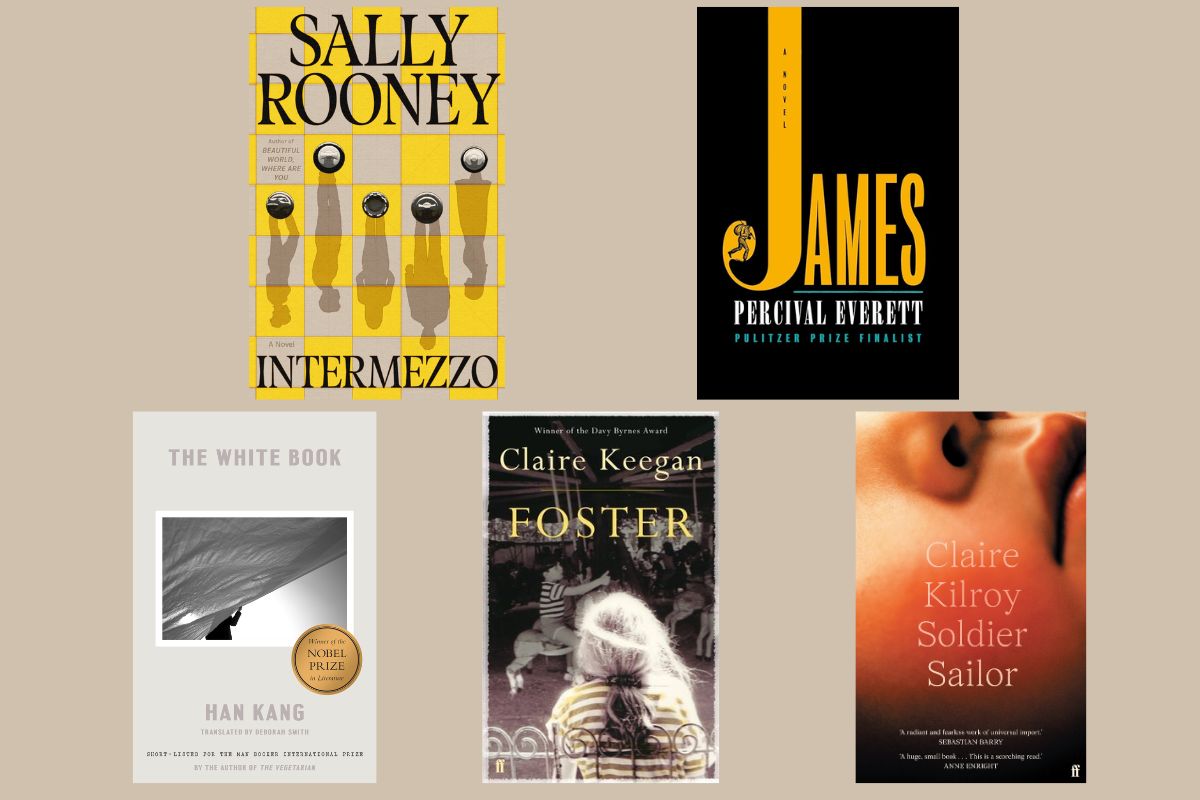
Intermezzo by Sally Rooney (2024)

In my goodreads review of this novel, I wrote: “I don’t know if this is my favorite Sally Rooney novel, but I think it is her best.” A month later, I do know. This is my favorite Sally Rooney novel, and it is her best. The literary world’s most anticipated novel of the year, as well as the one I was personally most excited for, and for me it lived up to every expectation.

In Intermezzo, Rooney takes all of the hallmarks of her previous writing — sharp and revealing dialogue, exploration of romantic and platonic relationships, and beautiful depictions of the mundanities of life — and gives them a more creative, more mature element that elevates her writing beyond what she has done before.

In the way I often think of Normal People‘s Connell and Marianne as though they are old acquaintances I’d like to check in on and see how they’re doing, I know I will be thinking of Ivan, Peter, and the others (especially Margaret) in this novel the same way.

James by Percival Everett (2024)

Another 2024 novel that hardly needs an introduction from me. If you’ve been tuned in to literature at all this year, then you’ve heard about James. Percival Everett’s clever, satirical take on The Adventures of Huckleberry Finn has been everywhere, and for good reason.

Retellings of books and stories are popular across genres, from contemporized versions of classic horror to feminist retellings of Greek myths, but sometimes these updates don’t offer enough to justify why they should be read in addition to the original tales.

James not only justifies it existence but also, I would argue, deserves to be read as a companion to Huck Finn by almost everyone who picks up Twain’s classic novel. Smart, well-crafted, and imbued with a satirical bent that offers an ideal dialogue with the original text, this is a masterful example of a retelling that will become a classic in its own right.

The White Book by Han Kang (2016)

I’ve been a fan of Han Kang’s since my former book club read The Vegetarian, and I was delighted when the South Korean author won the Nobel Prize for Literature this year. In addition to The Vegetarian, I’d already read Human Acts, but I hadn’t yet picked up this one of her translated works.

This is an extraordinarily beautiful novel (also huge credit to Han Kang’s translator Deborah Smith for her outstanding work in reflecting the artistry of the author’s Korean prose in English). In a series of prose-poetry vignettes, the unnamed narrator reflects on love and grief while on a writing retreat through meditations on the color white — as pale skin, clouds of breath on a winter’s day, and the blank page ready to be filled with words.

Foster by Claire Keegan (2010)

In general, I try to read a book before I see the film adapted from it, but in this case I only read Foster this year after seeing the magnificent adaptation, An Cailín Ciúin, a few years ago. It was after seeing another wonderful and heartwrenching adaptation of Keegan’s work, Small Things Like These, that I realized I had never read Foster and decided it was time to pick it up.

An Cailín Ciúin translates in English to “the quiet girl,” so imagine my surprise when I began the novel and discovered it was written in first person! This is a little gem, not even a hundred pages long, and every word of narration and dialogue holds so much meaning. Enchanting and heartwarming, a perfect story.

Soldier Sailor by Claire Kilroy (2023)

If there’s one tradition I can manage to maintain on this blog, it’s reviewing the Women’s Prize shortlisted novels, and for 2024 two of the shortlisted books have also made it onto my favorites list (and the winner of the new Women’s Prize for Nonfiction, Naomi Klein’s Doppelganger, was a fave of last year, too). Although I did enjoy the eventual winner (Brotherless Night by V.V. Ganesthananthan), Claire Kilroy’s Soldier Sailor would have been my personal pick. My review:

My one-word review of this novel is oof. The narrator is a new mother talking to her son about how she loves him so much she would kill and/or die for him, about her loneliness, about taking on unequal weight in her marriage, about looking forward to their years together as he grows up. The dramas in the book are mostly minor — losing track of him in IKEA for a few minutes, a small fever — but the writing is so raw. Heart-wrenching and often funny as well, I absolutely loved this one. If I was giving the prize it would be to this instant classic.

Book covers for books 6-10 on Best Fiction of 2024

Enter Ghost by Isabella Hammad (2023)

My other favorite from the Women’s Prize shortlist. I first encountered Hammad’s words in this excellent conversation with Sally Rooney. Her literary work is just as powerful. In Enter Ghost, a British-Palestinian woman goes back to her homeland after many years to visit her sister and gets roped in to a production of Hamlet. Fittingly, this one felt almost theatrical in a way; I could really picture everything so well, and the prose sometimes reverts to a script format during rehearsal scenes.

I also loved the protagonist. She’s quite prickly at times, but very complex and interesting. The various elements of the plot — the protagonist’s relationship with her family and identity, her life back in the UK versus her time in Palestine, the theatre production and the ongoing conflict it is staged in the midst of — weave together in such a satisfying and compelling way.

The History of Sound by Ben Shattuck (2024)

This was a last-minute browsing grab from the library when I was worried I wouldn’t have enough books for my trip back to the States, and it’s books like this that are the reason I don’t determine my year-end best-of until the last minute. The stories in The History of Sound, from the uplifting to the tragic, capture the perfect tone of bittersweet melancholy that is perfect for the season.

Not to be all Harry Styles “it feels like a real go to the theatre film movie” about it, but I love when a short story collection feels like a short story collection. The stories in this collection go together, interconnect, reference each other, and share space even in a world that spans three centuries and countless lives. They’re wistful and nostalgic, some full of what could be and some with what could have been, and although they feature such disparate concepts as a colonial-era tale and the transcript of a Radiolab episode, they weave together exquisitely.

Family Meal by Bryan Washington (2023)

I don’t know what it is about Family Meal. It didn’t stay with me the way some of the books on this list did, and yet when I was deciding which novels were my favorites of the year, this one immediately came to mind. And as soon as I started thinking about it, it did all come flooding back, this story of a young man set adrift by the death of his partner, who returns to his hometown to try to find some grounding.

I love how unapologetic this novel is. It’s full of the things pearl-clutchers in goodreads reviews love to complain about: swear words, explicit sex scenes, and no quotations marks. This novel doesn’t care if you like it, and you’ll love it all the same.

The Vaster Wilds by Lauren Groff (2023)

I read one of Lauren Groff’s novels ages ago and didn’t love it, so I didn’t pick up any more of her work until 2021’s Matrix. If that novel proved that I was wrong about her, and that she’s a killer writer, particularly of historical fiction, The Vaster Wilds definitely cemented it for me.

Visceral and at times grotesque, this colonial-set novel about a young woman who flees the Jamestown colony and is must try to sustain herself in the harsh wilderness is as thrilling as any survivalist tv show or documentary. Groff’s prose is intense and the imagery so rich that you feel as though you’re using every sense in experiencing the story.

The Other Valley by Scott Alexander Howard (2024)

This was one of a few speculative fiction novels that had serious mainstream popularity this year. While I’ve enjoyed some of the other heavy-hitters — Kaliane Bradley’s The Ministry of Time, which both my sci-fi and non-sci-fi loving friends raved about, and Samantha Harvey’s Orbital, which won the Booker and which I am actually reading right now — The Other Valley is the one that has really stuck with me through the year.

The premise of the novel seems so simple yet so unique: in one valley lies a town. The same town exists in each of the neighboring valleys, twenty years in the past on one side, twenty years to the future on the other. Similarly, the book is divided. In the first half, the teenage protagonist competes for a coveted job authorizing the rare and highly-regulated travel between the valleys. In the second half, she is an adult, living the butterfly effect-like consequences of an unexpected event and her actions as a result. This novel broaches a lot of philosophical themes and, although I read it early in 2024, I am still considering them now as the year draws to a close.


Check back later this week for my favorite non-fiction and horror books of the year, and let me know what’s on your TBR for 2025!