Book Review: Sick Houses by Leila Taylor

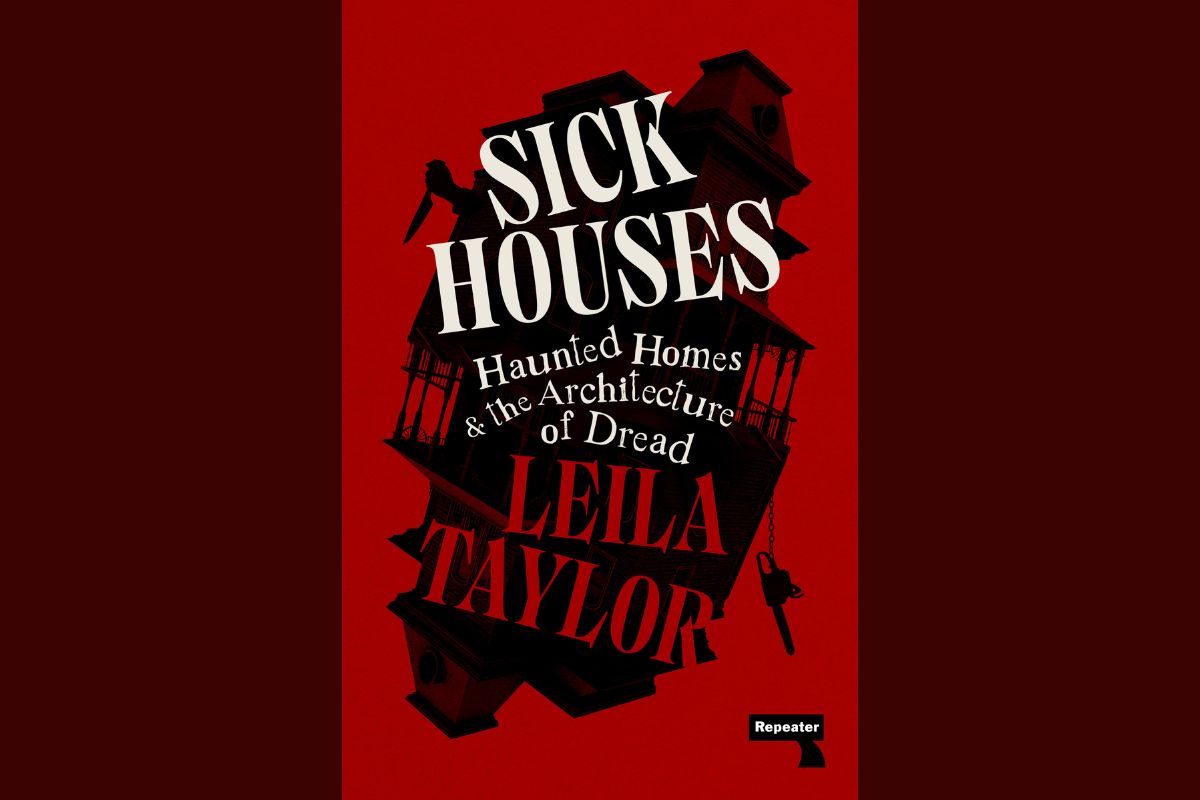
Sick Houses

Apparently all I want to do is write book reviews, but I’m just going to go ahead on keep on doing it. This is a book I received as an ARC late last year, but it was just published on Tuesday so I wanted to share my review here in case you’re looking for a solid non-fiction book to pick up this week. Support your favourite indie bookstore!

Sick Houses

When a demon inhabits a body, it takes ownership of a person, a monster is temporarily housed inside of its victim, our body invaded, repossessed. The ghost does the same with s house: it breaks into it, takes possession of what is yours, and you can no longer trust the place you trusted the most. What’s more frightening than your own home turning against you?

A look at the haunted house in both fiction and non-fiction, Sick Houses by Leila Taylor is an interesting exploration of what happens when the place that, by definition, we feel most at home in becomes something Other, something not quite right. Each chapter looks at a different kind of house, from houses of witchcraft (real or alleged) to houses in miniature, dollhouses or dioramas that reflect or influence their life-size counterparts.

First of all, I appreciated the parameters that the author put on her subject. She says in the introduction that “I’m not talking about plantation houses because 1) fuck them, and 2) I don’t consider slave quarters homes,” and she avoids prisons and hotels as well. By offering a clear focus on homes and not just houses/buildings, it creates an immediate connection with the reader — we will of course consider our own homes, the feeling of safety and comfort we feel in them, and we will contemplate the horror we would feel if that sense of safety was pulled out from under us.

I was also very interested in her discussion of the contradictory nature of the ideals of the American Dream: “Manifest destiny told us to ‘go west, young man,’ but this part of the American ideology is in direct contradiction with the long-term mortgage that locks you not only to a city or state but to a specific property for decades.” This contrast relates to a tension that often appears in horror films — a family moves into a dream home and is loath to leave it even when the going gets bad, or a family moves into a home that turns out to be haunted, but they don’t necessarily have any other option other than to try to see it through — and the tying of classic horror movie tropes to broader societal concepts is always interesting, especially when laid out well and backed by solid examples, as is seen in this book.

Some chapters are more thorough than others — the Witch Houses chapter has many more references than the chapter on Brutalism, for example — but overall there is a good amount of evidence and a good balance between real-life and fictional examples. The chapter on houses in miniature was particularly interesting. The author writes about the dioramas in Ari Aster’s Hereditary, and the way that the film’s sets were built to evoke the feeling that the actors, too, are moving (or, more accurately, being moved) within a diorama. On the real-life side of things, the discussion of the Nutshell Studies of Unexplained Death, a diorama series of crime scenes used to improve forensic investigation, was fascinating.

I did have a few issues with the book. For one, the author spoils the ending of several films in instances where I don’t feel that it’s necessary to support her thesis. Obviously in some cases of books like this, you have to give away the major plot points of your examples in order for them to be relevant — if you’re discussing antagonistic father-son relationships you can’t really use Star Wars as an example unless you tell anyone in your audience who isn’t yet aware of the connection between Luke and Vader.

However, in this book, regarding films discussed like The Others and His House, I think that enough information about their plots could have been given to make the intended point while still leaving some mystery for those who haven’t seen them. I know that I often use this type of book as a way to add to my to-watch or to-read list, offering more examples of a trope I am interested in, so spoiling the endings of books or films I haven’t seen yet is frustrating.

It also felt in some places that more time was spent cataloguing the “contents” of the houses (i.e. the plots of the films set there or, in the case of the real life examples, the crimes committed there) than the houses themselves.

In particular, some of the examples focusing on true crime started to feel too tangental, straying away from the connection to the houses/homes and delving too much into the events themselves. For example, I understood what the author was going for in connecting the novel Room and the tragic real-life story of “feral child” Genie, but in the case of the latter there was little connection to the thesis of the book.

Furthermore, at the start of the book the authors understandably says she won’t include places like slave’s quarters because these were not “homes” to the enslaved people living there, but then it follows that surely a place of imprisonment for Genie (or, in fiction, for the kidnapped inhabitants of Room) was not a “home” to be discussed either.

From the second half of the subtitle, “the Architecture of Dread,” I was hoping for more on the design of houses themselves. While this aspect does certainly get coverage in some sections of the book, looking at architectural oddities on screen and in reality, the trope of architecture that is Not Quite Right — houses that are bigger on the inside, stairways that don’t lead where they’re supposed to — is one of my favorites and I would’ve liked a deeper dive into some of these given the supposed secondary premise of the book.

That said, the sections looking at strange and unusual architecture did have some good moments, most interestingly in dispelling myths about the Winchester Mystery House (no, Sarah Winchester wasn’t taking her orders from ghosts; she was just a hobby architect). On the fiction side of things, I enjoyed the brief foray into one of my favorite books of all time, Susannah Clarke’s Piranesi, as a particularly good example of both impossible architecture and a false home (although I found it odd that one of the other most well-known examples of these tropes, Mark Danielewski’s House of Leaves, did not get a mention).

This book is a catalog of houses that have gone wrong and the ways our built environment can evoke terror and dread. But more so this is a book about the home, and the idea of home, and how horror perverts and manipulates one of the most personal and intimate experiences we have as human beings.

I think that Sick Houses will appeal mostly to readers who already have an interest in the topic. At points it feels as though the author has cornered you at a party and is explaining her research project to you. For me, that’s fine, as it’s a long-standing interest of mine as well. But it may not work as well for readers who aren’t already fascinated by architectural horror or the unheimlich feeling of a haunted house.

But if the above quote draws you in, then this is definitely one to keep an eye out for. Many thanks to the author, publisher, and Netgalley for the advanced copy in exchange for an honest review.

Also, if this sort of book is right up your alley, you might also enjoy Feeding the Monster by Anna Bogutskaya (link to my review), American Scary by Jeremy Dauber (link to my review on Goodreads), and of course Danse Macabre by Stephen King.

Book Review: We Do Not Part by Han Kang

We Do Not Part

“I had not reconciled with life, but I had to resume living.”

We Do Not Part will probably be a lot of folks’ introduction to Han Kang, being that it is her first new release in translation since she won the Nobel Prize for Literature last year. And I think that this haunting novel is a perfectly fitting place to start. 

We Do Not Part

We Do Not Part encapsulates all of the things I have come to expect from Han’s writing — gorgeously poetic prose (this time translated from Korean by Emily Yah Won and Paige Aniyah Morris rather than her usual translator Deborah Smith), eeriness bordering on (and sometimes tipping over) the edge of horror, and unflinching references to the darkest parts of Korean history (in this case the 1948-49 Jeju massacre). 

I didn’t realize until reading the lecture that Han Kang gave as part of the Nobel prize ceremony how often she incorporates elements of her own life in her work. I know very little about her personal life, and apparently few others do either — her husband, a literary critic, was referenced in a number of biographical articles of the author around the time of her Nobel win, but she then revealed that they have actually been divorced for many years. 

Of course you don’t need to know much about an author to enjoy their work, and in particular it’s not necessarily any of our business how much of themselves an author does or does not put into their stories (and I’ve written before how frustrating it is that people often assume women’s novels are autobiographical in a way that they never do for men). 

However, in this case it does seem that there are key elements of some of Han’s stories that were inspired by real moments in her life. In her Nobel lecture, she says that, like the unnamed narrator of the stunning The White Book, she too had an older sister who lived for only a few hours after birth. As in Human Acts, she happened on a book with photos of the Gwangju massacre that inspired her writing the novel. 

And the dream in We Do Not Part, the dream of black tree stumps that served as markers for a mass grave by the sea, that dream was shared by the author and her protagonist (and the protagonist, like the author, is a novelist who wrote a 2014 novel about Gwangju in an effort to shake its hold on her, only to find herself further haunted). 

While of course many authors have similar moments of inspiration that they draw from their own lives and insert, overtly or covertly, into their writing, in Han’s case these elements serve to further blend reality and unreality in a way that she does masterfully across her work. 

In We Do Not Part, the protagonist Kyungha is called on by her friend and artistic partner Inseon to travel to Jeju and look after her pet bird while she is in hospital. What begins as a straightforward journey turns surreal when Kyungha finds herself in the midst of a snowstorm as she attempts to reach Inseon’s home. 

And in the second half of the novel, as dreams permeate the waking hours, as ghosts visit the living, as past and present meld, the story gains further depth both in plot and in emotion. While the specific atrocity of the Jeju massacre is the main focus, broader themes of mourning and memory fill the pages.

In her Nobel lecture, Han Kang says:

I think the questions I was asking were these: To what extent can we love? Where is our limit? To what degree must we love in order to remain human to the end?

I feel that these questions are present not only in We Do Not Part but across all of Han Kang’s work, and that there is no more adept writer to ask and attempt to answer them. Her Nobel is extremely well deserved, and if this is the book by which new audiences are introduced to her work, then I think it is a poetic, poignant choice. 

Book Review: Private Rites by Julia Armfield

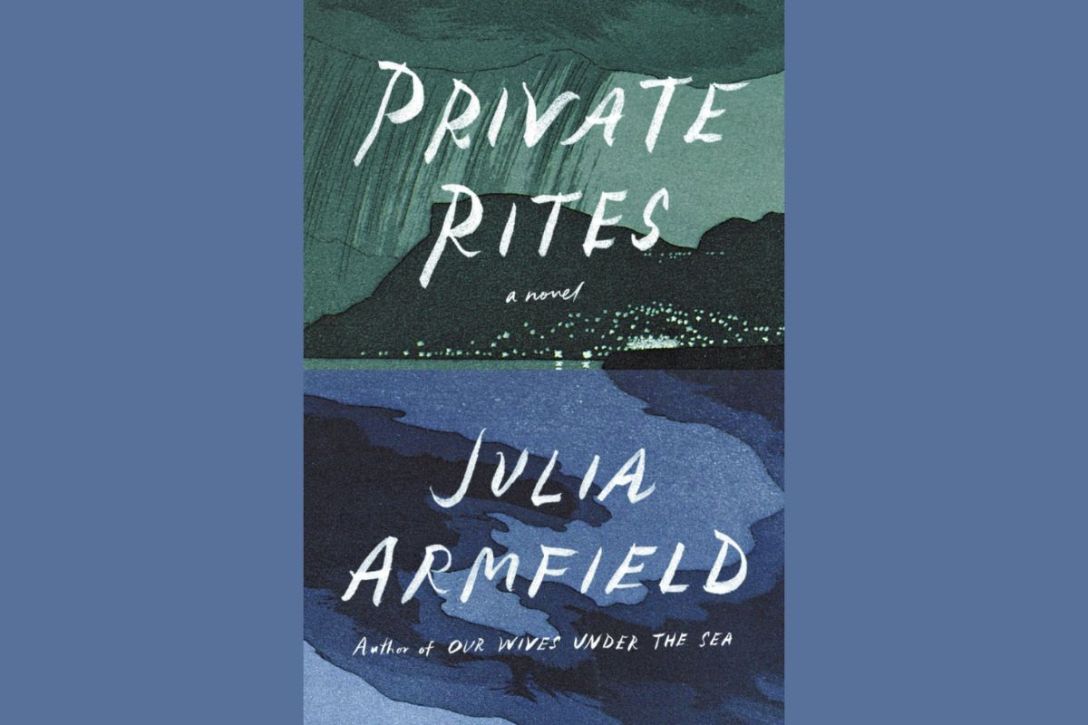
Private Rites

When I read Julia Armfield’s debut novel, Our Wives Under the Sea, I wanted to immediately call her one of my favorite authors, but it seemed silly to do so after only reading one of her books. When I read Salt Slow, the short story collection that preceded it, the feeling only grew. After reading Private Rites I’m completely confident in adding her to my list of favorites. 

Private Rites

Did you ever, she once said to Isla, apropos of goodness knows what, read any of the weird shit that actually goes on in Revelations? In the Book of Revelations, I mean. People think it’s just hellfire and brimstone four horsemen and out, but actually the end times go on and on and on.

This is the way the world ends under capitalism, not with a bang but with a routine. When the seas rise so much that most of the population is forced to move to dilapidated urban centres in order to live in the high rises that are the only safe havens (unless you are rich enough to build your home high above the flood waters, of course). When the rain so rarely ceases that workers go about their days in a constant, sodden gloom (but they still go to work). 

In the background, there is the creeping growth of uncanniness — strange practices, odd interactions, doomsday cults gaining membership — but for most people there is only the wet rot of monotony and misery as the world decays. 

It is in this world— maybe, probably, a future vision of our world— that Private Rites takes place. It’s a serious slow-burner of a book, but with an explosive ending. This is the wrong genre Agnes thinks, but it’s only the wrong genre if you haven’t been paying attention. Like a river rushing up against a dam, the intensity builds and builds, and when the dam breaks, boy does it break. 

Drawing inspiration from King Lear, the novel follows three sisters, held together and torn apart by the death of their wealthy but abusive father, as they struggle to find some sort of balance in their relationships and themselves in this world set adrift. 

Isla, Irene, and Agnes are my favorite type of character — difficult to like but easy to love. At times, each one is frustrating, infuriating, endearing, enchanting. They live in this world of external and internal trauma that shapes them in some ways so differently and in some ways the same. I think Irene was my favorite of the three, but I loved each of them in their own way. I could have spent a lifetime with them. 

The prose is exquisite, rich yet intimate, encompassing the overwhelmingness of the climate crisis as well as as the deeply personal moments between the sisters, their lovers, and the now-deceased patriarch of their family. The story crosses genres from family drama to speculative fiction to outright horror and creates a gradient that offers a full spectrum of everything in between. A truly fantastic novel that just further cements the fact that I’ll be waiting with bated breath on everything that Julia Armfield writes (and in the meantime, recommending her work to everyone who will listen). 

Book Review: Feeding the Monster by Anna Bogutskaya

Feeding the Monster

Everyone has a foundational horror. It’s the image that seeps under our psyche and won’t let go, transforming the film and the image of horror itself into an avatar for our biggest fear. Take a moment and remember yours. – Anna Bogutskaya, Feeding the Monster

Feeding the Monster

My love of horror stems from two sources. One, you will not be surprised to hear, was Stephen King. I would suspect that at least 70% of horror enthusiasts came to their love of the genre by picking up a Stephen King novel at an inappropriately young age. For me, it was The Dark Half

My other formative horror experience was Friday the 13th. I didn’t see it in full at the time; I certainly wasn’t allowed to watch it. I was about ten years old, at my friend’s house, getting ready to go out to dinner with her family. But then her sister accidentally slammed her fingers in the car door, and so instead of a trip to a restaurant it was a trip to the hospital, and a hastily-engaged babysitter arriving to the house to look after my friend and me. The babysitter decided to watch Friday the 13th, and so did we, hiding behind the couch and running out of the room every time she caught us. 

One of the things I love about horror is how personal it is. Something that terrifies one person can leave another completely unmoved. For years I refused to sleep in a room with a mirror I could look into from my bed, an unnamed fear I could not explain but which mystified my best friend, although she kindly agreed to reposition the furniture to accommodate me.

But equally true, horror is universal. There are certain fears that are found across eras, across cultures, and if there’s something you are afraid of it is certain that there is someone else in the world who shares the same fear. 

In Feeding the Monster: Why Horror Has a Hold on Us, Anna Bogutskaya looks at the past decade in horror film, television, and literature, exploring why so many of us love the genre so much. She divides the book into five categories: fear, hunger, anxiety, pain, and power. Some aspects offer examples of our worries, and some explanations for our enjoyment. 

The book is less dense than similar deep dives like King’s classic Danse Macabre or the recent American Scary by Jeremy Dauber and instead offers a more conversational take on the subject. But this doesn’t take away from its overall thesis. It’s full of academic and cultural analysis, and rife with examples, augmented with casual, often humorous footnotes: 

*Would I eat human flesh if Mads Mikkelsen, clad in a tailored velvet suit, with his sleeves rolled up, served it to me on an elegant, dark porcelain platter, adorned with radishes and romaine lettuce? I don’t know! It’s all very confusing! Don’t look at me. – Anna Bogutskaya, Feeding the Monster

Much has been said about the way vampire stories always seem to experience a renaissance during economic recessions, and there are obvious reasons that there have been a plethora of films about the horror of unwanted pregnancies released over the past few years, but Bogutskaya also makes strong arguments in terms of placing the popularity of other horror tropes into our current cultural context. How cannibalism, for example — from Hannibal to Bones and All to Yellowjackets, often reflects the loneliness and isolation of modern life, as well as the anxieties of capitalism and class struggle. Do we eat the rich? Or do the rich eat us?  

Do be warned, as the author makes clear in the introduction, that this book contains copious spoilers for the media she uses as evidence for her arguments. However, I think that she does a solid job of writing about the books, films, and tv shows in a way that does not damper my enthusiasm for reading or watching the the ones I haven’t yet. I didn’t find the amount of spoilers overwhelming, as mostly they teased rather than revealing all. 

(I did think it was funny that the only spoiler Bogutskaya redacts is one for Game of Thrones, a show whose cultural cache has sunk so much following its final season that I doubt most people who haven’t seen it yet would care). 

While there were a few omissions that I thought deserved a mention (as other reviews have pointed out, for example, it’s surprising not to see Tender is the Flesh by Augustina Bazterrica included in examining the current popularity of cannibalism stories), overall I found this to be a solid exploration of contemporary horror and why we love it. Feeding the Monster is an ideal pick for those looking for a fresh and readable work that still offers a strong academic thesis on our fears and our favorite fearful fictions. 

Best Horror of 2024

Best Horror 2024

As with every year, I read so much good horror in 2024 that I had to give it its own best-of list rather than lumping it in with my Best Fiction I Read in 2024 list (or my best non-fiction list, although I read a couple of good non-fiction horror books, and non-fiction in general aka real life is pretty horrifying right now). All of the books on my list were published in 2024 bar one, which was published at the end of October 2023, so if you’re looking for good, recent horror, read on!

Bonus: I was lucky enough to get an ARC of a book being published later in 2025 that I think a lot of folks are going to really love, and one of my first reads of the year was a 2024 book that would absolutely have made my best-of list if I’d read it two weeks earlier, so I’m not going to save it all the way for my end-of-year lists.

Best Horror 2024

The Reformatory by Tananarive Due (2023)

I finished reading Tananarive Due’s The Reformatory on January 9, and on that early date I was willing to stake the claim that it would be the best horror book I’d read in the year. And you know what, I was absolutely right. Set in the Jim Crow south at a boy’s reform school and based true events including the life and unjust death one of Due’s own relatives, this novel is horrifying enough even before it is touched by the paranormal. But there are plenty of ghosts and premonitions as well for those who love a supernatural element in their horror novels. It’s a harrowing, haunting read, but it’s a masterpiece of horror, historical fiction, and fiction in general.

The Bog Wife by Kay Chronister (2024)

You can judge a book by its cover on this one. If you are immediately drawn in by the earthy color palette and eerie details of The Bog Wife‘s cover, then you’ll probably love the book, too. A rural gothic, the novel features an Appalachian family, isolated and co-dependent, who are gifted (or cursed) with a covenant that has run and been renewed by generations before them. When this time the pact seems to fail, each of the siblings react in their own ways to attempt to stitch it back together, or rend it further apart. I loved the writing style in this novel, so descriptive I could nearly smell the peat. Adding in a heavy helping of family trauma, plenty of folk horror, and a dash of climate anxiety, The Bog Wife hit all the notes for me.

The Angel of Indian Lake by Stephen Graham Jones (2024)

In my opinion, the Indian Lake trilogy is destined to be considered a modern horror classic. And this closing novel novel hits a perfect balance on every level — gory and violent without losing its emotional core, nostalgic and referential to the scores of horror classics that came before without getting too meta. Jade Daniels is a final girl for the ages; in this last installment we see the culmination of her growth and maturity, while still maintaining her edge and of course her encyclopedic knowledge of slasher films across all subgenres. The trilogy isn’t going to be for everyone — you might find yourself having to cast your mind back to remember a minor character who makes a sudden reappearance or do a bit of wikipedia-ing to understand one of Jade’s film references — but for those who will make the effort, it’s up there with the all-time greats.

My Darling Dreadful Thing by Johanna van Veen (2024)

Now this is gothic horror. It’s grotesque, unsettling, ambiguous, and romantic. Roos and her ghostly, ghastly companion Ruth are a fascinating duo, aiding Roos’s conniving mother in fake séances to con wealthy customers. Eventually, she is sent to live with a widow who offers a handsome sum for her companionship after Roos pretends to channel the woman’s dead husband, and Roos’s relationship with the bold yet mysterious Agness is equally compelling. The supporting characters are as complex and intriguing as the main characters, and excellent pacing and an eerie setting round out the novel and help to create a tense, thrilling story.

Diavola by Jennifer Marie Thorne (2024)

This quick horror read is tons of fun. Our protagonist, Anna, is the black sheep of her family, and her dry, sarcastic tone is perfect for narrating both the mundane drama that occurs as the family gets together at an AirBnB in Italy, and the paranormal horrors they experience there. She’s not a likable character, per se, but she is an enjoyable one, and probably a relatable one, too, ideal for a story like this. The scares are balanced out with the humor, and the blend offers a satisfying and sometimes satirical take on the classic haunted house novel. Maybe the true horror was the family vacations we took along the way, am I right (I’m kidding, I actually love family vacations, Steve and I are meeting my parents in Portugal for a holiday in March — hopefully sans hauntings).

You Like It Darker by Stephen King (2024)

Death, taxes, and a new Stephen King book. Some things are pretty much guaranteed, and it’s inevitable that a writer as prolific as King is going to have some peaks and valleys in his oeuvre. Luckily, his latest short story collection, You Like It Darker, is a definite high. There are a couple of so-so stories, but the good ones are beyond good, and a little bit of variance in short story quality is probably inevitable in a collection as well. “Danny Coughlin’s Bad Dream” is worth the price of admission alone, and I love when King dips into cosmic horror as he does in “The Dreamers.” “The Answer Man” is simple, classic, and just the right amount of melancholy, and Cujo pseudo-sequel “Rattlesnakes” is creepy as hell. A solid collection from the horror master.

Bonus:

blood on her tongue and she's always hungry

Blood on Her Tongue by Johanna van Veen (2025)

After reading My Darling Dreadful Thing, I instantly added Johanna van Veen to the list of authors whose work I will be sure to pick up, so I was thrilled to snag an ARC of her second novel, Blood on Her Tongue (thanks very much to the author, Netgalley, and Poisoned Pen Press). I’ll share more of my thoughts on the book closer to its publication date, but in short, I think I loved this novel even more than I loved van Veen’s debut. Toxic codependence will always be a favorite horror trope of mine, especially when it leads to devastating consequences, and it’s so well executed here along with an exquisitely-crafted story that grows the creeping, unsettling tension to a truly disturbing climax.

She’s Always Hungry by Eliza Clark (2024)

As I said above, I read this at the very start of 2025, but since it was only published in mid-November 2024 and since it’s so early in the year, I don’t want to save it all the way for my end-of-2025 reviews since I would absolutely have included it in my best-of-2024 list had I read it in time, and I want to recommend it to anyone who is looking for disturbing, outrageous, fucked up short stories to start their year. Some highlights: the spooky siren folklore title tale, the cannibal lady cosmic oddity “The King,” the nothing-paranormal-but-just-as-creepy “Goth GF” about a young man’s obsession with his coworker, the climate anxiety-tinged space/bio horror “Extinction Event,” and the absurd (and absurdly unsettling) “The Shadow Over Little Chitaly,” which is formatted as a series of meal delivery app reviews about a takeaway restaurant that’s Not Quite Right.

Best Non-Fiction Read in 2024

Best Non-Fiction Of 2024 Picks 1-5

2024 was a great year for non-fiction — the majority of books on my non-fiction list are new releases, with a few from 2023 and a couple of older classics. I love listening to non-fiction on audiobook, so most of these books were ones I listened to, and there was some great narration as well (particularly for the first book on the list).

My fiction best-of for 2024

Best Non-Fiction Of 2024 Picks 1-5

Poverty, by America by Matthew Desmond (2023)

I was so blown away by this book by writer and social scientist Matthew Desmond that I immediately went and found his previous book Evicted, which is only not also on this list to cover more ground. An accessible, impactful read that makes the searing case for the abolition of poverty in the United States, lays out how to do it, and explains why it benefits the ruling class not to do so. This reads more like a manifesto than anything else at times, but I think that’s appropriate considering the topic and its most workable solutions.

I also have to give a shoutout to the narrator of the audiobook, Dion Graham. Although he’s an incredibly prolific audiobook narrator, this was the first time I had encountered his wonderful voice, and now I’m always excited when I start an audiobook and hear that he’s reading it (he narrated several other books I listened to this year including Evicted, also by Matthew Desmond, and The Wager by David Grann).

The Quiet Damage: QAnon and the Destruction of the American Family by Jesselyn Cook (2024)

Some QAnon adherents are obvious suspects: lifelong conspiracy theorists who already believed every rumor in the book, devotees of certain political groups primed to believe everything their dear leaders tell them, etc. But some victims of this delusion are more unexpected, and its these subjects that Jesselyn Cook studies in her incredible book.

In The Quiet Damage, Cook looks at five families who have been torn apart by one member’s belief in the conspiracy, the vulnerabilities and rabbit holes that brought them there, and the effects on the relationships as a result. In some cases, the family manages to pull their loved one back from the ledge; in others, the conspiracist is still in too deep and the relationship is fractured irreparably.

For obvious reasons, I think this book is even more important now than it was on its publication date only six months ago. Cook’s research is in-depth and her writing is empathetic, both towards the believers and towards the loved ones their false beliefs affect. She also recognizes the environments that open people up to believing in conspiracy — the isolation of the pandemic, a misdiagnosis leading to mistrust of medical professionals — without ceding ground to the falsehood of their beliefs.

They Can’t Kill Us Until They Kill Us by Hanif Abdurraqib (2017)

I genuinely think that Hanif Abdurraqib may be the best writer alive, or at least right up there. From his essays to his poetry, I just can’t get enough of his words. I think that one mark of a great nonfiction writer is how much they can make you care about things you don’t otherwise care about, and there’s no one that could make me care about basketball, emo music, or Ohio like Abdurraqib. And the loves we do have in common— poetry, Bruce Springsteen, social justice, and soccer— when he writes about those things the essays pierce directly into my soul. I’m so moved about the way he writes of the experiences I am so far removed from, mainly being Black and growing up Muslim in America, and I’m so moved when he writes of the experiences I deeply relate to, the universal experiences like love and grief and music.

I loved listening to the audiobook of this collection, where Abdurraqib not only narrates but also intersperses a few recollections and commentaries on the essays in the collection. A few highlights for me were: “The Return of the Loneliest Boys in Town,” an essay on loving a particular band (in this case Cute is What We Aim For) and revisiting them later and recognising the elements of their lyrics that haven’t aged well (in this case, the misogyny); “Defiance, Ohio is the Name of a Band” a stunning poem of an essay about getting out of the place you came from and whether the place you came from ever gets out of you; and “Brief Notes On Staying // No One is Making Their Best Work When They Want to Die,” which contains a paragraph I will probably carry with me for the rest of my life:

But the way I think about grief is that it is the great tug-of-war, and sometimes the flag is on the side you don’t want it to be on. And sometimes, the game has exhausted all of its joy, and all that’s left is you on your knees. But, today, even though I am sad, my hands are still on the rope. I am making my best work when my hands are on the rope, even if I’m not puling back. Life is too long, despite the cliché. Too long, and sometimes too painful. But I imagine I have made it too far. I imagine, somewhere around the corner, the best part is still coming.

Liliana’s Invincible Summer: A Sister’s Search for Justice by Cristina Rivera Garza (2024)

Liliana Rivera Garza, an architecture student in Mexico City, was murdered by her abusive ex-boyfriend in 1990. Her killer has never been brought to justice, and as corruption corrodes the criminal justice system and technology upgrades send old files into the void, her case was in danger of being lost to the sands of time. Unwilling to let this occur, Liliana’s sister Cristina Rivera Garza wrote this devastating and poetic memoir documenting her sister’s life and death, creating a record so beautiful and heart-wrenching that there is no way anyone who reads it will be able to forget Liliana.

Like her sister, Liliana was a writer, and Garza intersperses her own memories of her sister with Liliana’s letters and journal entries, detailing her hopes, her fears, her loves, her dreams, and creating a luminous portrait of a much-beloved sibling, and of the cruelty and complexity of the world around her. As tragic and terrible the reason why this memoir was written, it creates a beautiful portrait of a young woman and the sister who loves her.

Deliver Me from Nowhere: The Making of Bruce Springsteen’s Nebraska by Warren Zanes (2023)

Nebraska is one of my all-time favorite albums, and this book detailing its creation is almost as intimate and revelatory as the album it’s about. Before came The River and after came Born in the U.S.A., two albums that capture the essence of Bruce Springsteen and the E Street Band. But in between was Nebraska, a quiet, lonely, album made in a quiet, lonely way.

Deliver Me from Nowhere is not just a story of the album, but also a story of a man at a crossroads, and of the creative process, and all three elements are recounted in a conversational yet thoughtful way thanks to Zanes’ narration; the author’s background as a musician himself offers extra insight. A must-read for Springsteen fans, but I would recommend this book to anyone interested in art and creation.

Best Non-Fiction Of 2024 Picks 6-10

By the Fire We Carry: The Generations-Long Fight for Justice on Native Land by Rebecca Nagle (2024)

In this excellent and powerful book, Rebecca Nagle deftly connects threads both broad and intimate — the history of Native Americans’ forcible relocation by the U.S. government and their struggle for recognition and land rights, a number of specific legal cases that deal with jurisdiction and reservations, and aspects of her own family history — in a way that is accessible and very informative. Throughout the book, I was impressed by the way the author was able to contextualise and link all of the facets together without overwhelming the reader with too much legalese or too many disparate elements, while still giving a ton of information about all sides of this issue and the throughline that runs from pre-America to the present day.

One thing that really struck me is the importance of the fight for justice for all. In addition to the instances of obvious unfairness, in which an innocent had their land taken or their lives changed through no fault of their own and only the injustice of bigotry or the system, one of the key cases in the landmark ruling on tribal rights was that of a convicted murderer on death row. The appeal was not that the defendant was innocent, but one of jurisdiction; establishing the correct jurisdiction would help ensure Native rights over justice on their land. It was a reminder that we must fight for everyone’s rights, including those who have done great wrongs, to ensure fairness for all.

Not Too Late: Changing the Climate Story from Despair to Possibility edited by Rebecca Solnit and Thelma Young Lutunatabua (2023)

It’s easy to feel despair about the state of the world and the future of the environment; there’s a lot to despair about. But it’s also easy to get so caught up in hopelessness that it becomes a blockade — if we think that nothing can be done to improve our climate future, then nothing will be done. It also ignores the progress that climate activists have already made worldwide in pushing for a more sustainable future. Not Too Late is a balm for climate despair, with essays and interviews highlighting progress, forward thinking, and reasons to believe that it’s worth it to keep putting in the work.

This isn’t just a pollyanna book, though. Solnit and Lutunatabua and the contributors certainly don’t want you to put your head in the sand and think that everything is going to be okay. The facts in these essays aren’t all positive; the outlooks definitely aren’t all rosy. A better world is only possible if we fight for it, but Not Too Late proves that there is still a fight to be had, and almost single-handedly turned me away from climate doomerism and readied me to reengage.

The Warmth of Other Suns: The Epic Story of America’s Great Migration by Isabel Wilkerson (2010)

I went to MOMA last weekend, and one of the works that really struck me was a 1941 series of 61 paintings by Jacob Lawrence depicting the Great Migration of southern Black folks north in search of equality and economic opportunity. I immediately thought about Isabel Wilkerson’s landmark book The Warmth of Other Suns. This book is both vast and intimate, offering both an expansive look at the patterns of African Americans leaving the Jim Crow south for the north, west, and midwest, and intimate, focusing on the stories of three individuals who moved in the 1930s, 40s, and 50s.

For as in-depth and meticulously researched as this book is, it’s almost incredible how readable it is. Never feeling bogged down or slow, The Warmth of Other Suns is both a beautiful tribute to the resilience of the people it covers and an important record of the times. From the strife and injustice these migrants faced in their search for better lives, to the futures that lay ahead of them as they built their new communities, the book looks at every facet in a way that is both informative and compelling.

Cue the Sun! The Invention of Reality TV by Emily Nussbaum (2024)

Era by era, Emily Nussbaum’s book documents the rise and rise of reality TV. You don’t have to love reality TV (I don’t, if it’s not Top Chef) to love this book (I do). You just have to love engaging, thoroughly researched journalism and have a little bit of a voyeuristic streak when it comes to peeking behind the curtain of media production. How much of a certain decision came from the producers? Why did he get cast? Was that relationship real or “showmance”? Nussbaum’s reporting and interviews offer insight — and sometimes the people who wouldn’t provide a comment tell as much as those who do.

The first few chapters of the book are interesting as they cover the early days of reality TV as it transitions from radio and traditional gameshows to become more like the reality shows we know today. But where the story really picks up steam is the chapter covering the first season of Survivor, a juggernaut that impacted how every reality TV show is created, produced, and cast, and how every reality competition game is played by the best and most conniving contestants. Chapters covering Queer Eye and Big Brother were equally interesting. While there were a few iconic shows I felt were missing, I do understand that the breadth of reality tv is so large now that a book that kept every show in its scope would be never-ending. And on the whole, this is a fantastic dive into the genre that will leave you entertained and possibly despairing at its power.

The Bookshop: A History of the American Bookstore by Evan Friss (2024)

The Bookshop, despite its subtitle, is not an exhaustive history of the American bookstore. In some ways, it reads more like a series of essays, each chronicling a notable bookstore — the big (The Strand), the bigger (Barnes & Noble), and the small (sidewalk booksellers on the streets of New York City). It looks at bookstores notable not only for their wares but for their cultural influence, like the Oscar Wild Bookshop that sold LGBTQ literature and promoted activism in same, and those with much more sinister aims like the antisemitic Aryan Bookstore. And, of course, it looks at the impact of Amazon on indie and big box booksellers alike, and how the magic of physical bookstores still hopes to combat the pull of buy-it-now consumerism (usually with the assistance of some deep although-not-as-deep-as-Jeff-Bezos’ and far more altruistic pockets, as with Ann Patchett’s Parnassus bookshop). 

I enjoyed this approach more than a strictly linear take on the history of bookselling. It was extremely engaging, and the bookshops selected to feature were a good cross-section of the different types of bookstores that have risen and fallen and risen again throughout America’s literary history. With plenty of trivia and stories woven in to the pages, The Bookshop is sure to appeal to fellow bookstore enthusiasts as much as it did me.