I was thrilled to receive an ARC of Hungerstone by Kat Dunn back in January. It was published a few weeks ago and I strongly recommend picking up a copy at your favourite indie bookstore or local library!
“Who would I be if I was someone who wanted things?”
I only read J. Sheridan Le Fanu’s Carmilla a few years ago, and I can’t believe I hadn’t done so sooner. The 1870s vampire novella pre-dates Bram Stoker’s Dracula by several decades and is beloved for its enigmatic, seductive title character and her relationship to the young woman upon whose hospitality — and more — the vampire woman preys.
Although Carmilla is not explicitly queer, understandable given its era, there is an undeniable sexual tension simmering just beneath the surface of her friendship with Laura, and therefore it is no surprise that Kat Dunn’s Hungerstone is not the first overtly sapphic retelling of or novel inspired by the vampire classic. But, in my opinion, it belongs at the top of the list.
In Hungerstone, Laura is named Lenore, and she is not an innocent teenager living a solitary existence with her widower father, but the mistress of an estate purchased with her handsome businessman husband Henry. Something is rotten in the state of Nethershaw, however; Lenore is tasked with revitalizing the crumbling manor even as her marriage falls into a state of disrepair.
Theirs was a marriage of convenience, Lenore bringing to it a prestigious lineage but no wealth, Henry offering money but relying on his wife to build his reputation; of course, a heir is essential to solidify Henry’s new standing in society, and by a decade into their marriage it is clear that there will be no child added to their family.
Resentful of and resented by her husband, and yet believing that she must endure her unfulfilled existence in order to exist at all, Lenore might have continued on in this unhappy marriage were it not for the arrival — via a startling carriage accident — of Carmilla Kernstein.
Beautiful, mysterious, uninhibited — Carmilla immediately shakes up life at Nethershaw. As Carmilla draws her under her spell, Lenore is forced to confront her secrets, her fears, and, most importantly, her desires. In some ways, Carmilla acts as the embodiment of Lenore’s inner self, saying the rude yet true things that Lenore will not dare to say, criticizing that which should be criticized, and goading Lenore into indulging in her cravings. This is the story of an awakening in more ways than one, not only of Lenore’s sexuality but also of her independence.
“What is a monster but a creature of agency?” Lenore muses, as she begins to take her life into her own hands to secure her future. As the novel hurtles toward its horrifying, violent climax, the events going on at Nethershaw get more bizarre, more uncanny, Lenore begins to liberate herself from the expectations placed upon her and embrace the strangeness of the happenings, and the beguiling, dangerous woman who brought them there.
The writing in Hungerstone is excellent, perfectly suited to its premise and setting. Sex, violence, and hunger form a triumvirate of themes, with so much overlap between how they are described, and that melding of fears and desires is so fantastically and unsettlingly on display here. From the eerie way Carmilla haunts Lenore in both thought and body, to the gory, brutal scenes of carnage, the novel is full of vivid imagery and visceral feelings.
I love that Hungerstone feels like both a fresh take on a classic story and genre, and like a suitable tribute to the same. Equal parts revulsion and seduction, this is a novel I won’t soon be able to cast out of my mind, much as Lenore couldn’t banish Carmilla from hers.
Many, many thanks to Kat Dunn, Zando, and NetGalley for an ARC in exchange for an honest review; I feasted on this novel.
Final note: the line “I ate paprika on my tour, and I didn’t care for it” made me laugh. Despite their shared experiences in the company of vampires, Lenore definitely would not get along with my bestie Jonathan Harker.
I was up at a hotel just outside of Galway last Friday for a union meeting (join a union!) and because it was on a Friday and I was staying overnight anyway, I decided to book a second night at a B&B close to town and spend Saturday visiting some of my favorite places from when I used to live there. Luck was on my side and the Saturday was absolutely beautiful and sunny — and if you know Galway, you know just how lucky that is.
But if you’re taking a trip up, whether for Cúirt International Festival of Literature in April (and if you are, I’m jealous!) or just for a visit, you can have a great day whether it’s sunny and warm or windy and lashing rain, because you can spend your day exploring the wonderful bookshops (and pubs) of Galway. Here’s my recommended itinerary for a lovely and literary day in Galway city:
We’ll start the morning with a choose-your-own-adventure moment. If you’re staying east of the city, where many of the larger hotels are, then start your day at Kennys Bookshop. You can also walk out to Kennys from the city (about a 30 minute walk from Eyre Square, but if you have to hop in the car anyway, this is a good time for a visit as the walk isn’t particularly scenic — and if it’s sunny, you’ll want to save your steps for Salthill).
Kennys is my absolute favourite bookshop in Ireland, not only for the shop itself but also for its wonderful online store (which you can order from worldwide!). Featuring a mix of new and secondhand books, you can find pretty much anything you’re looking for here, including special editions, rare used books, and leabhair Ghaeilge.
One of my favourite things about Kennys is their special editions — whenever an Irish author I love announces a new novel, I always keep an eye out to see if Kennys will have a signed first edition to order, and they usually do. Often these editions have different covers, exclusive forwards, or some other special element. I have exclusive Kennys editions of Sally Rooney’s Intermezzo (which I pre-ordered literally within two minutes of them sending out the email), Long Island by Colm Tóibín, several Donal Ryan novels, and more. Actually the only reason I didn’t buy anything at Kennys on this trip is because I have two upcoming novels pre-ordered with them, Open, Heaven by Seán Hewitt and Eat the Ones You Love by Sarah Maria Griffin.
If you choose Kennys for your first stop, you’l probably want some breakfast afterward to fuel up for your next bookstore browse. I recommend driving to the other side of town and going for brunch at Ard Bia. It’s my fave place to eat in Galway and possibly all of Ireland, and the only place where I never regret going sweet instead of savory for brunch because their French toast is just so good. Also a great date-night dinner restaurant (or any occasion, really, and to keep this book-related they also have a wonderful cookbook).
On the other hand, if you’re saving your trip out for Kennys for later in the day, you’ll want to go for breakfast before you hit up bookshop number one, because you will need to queue at my other recommendation. I passed by Magpie Bakery around 11 on Saturday morning and there was a queue at least 15 people long. Curious but not peckish at the time, I decided to come back Sunday morning and check it out. Despite arriving about 15 minutes before it opened, there was already a queue!
I have to say, it was completely worth the wait. I had a vegan sausage roll, a morning bun, and bought a loaf of lemon poppyseed sourdough to take home. All were delicious, and there were so many other fabulous looking pastries in the glass display case. So my recommendation is to arrive a bit before opening and start your day with coffee and a pastry (or two).
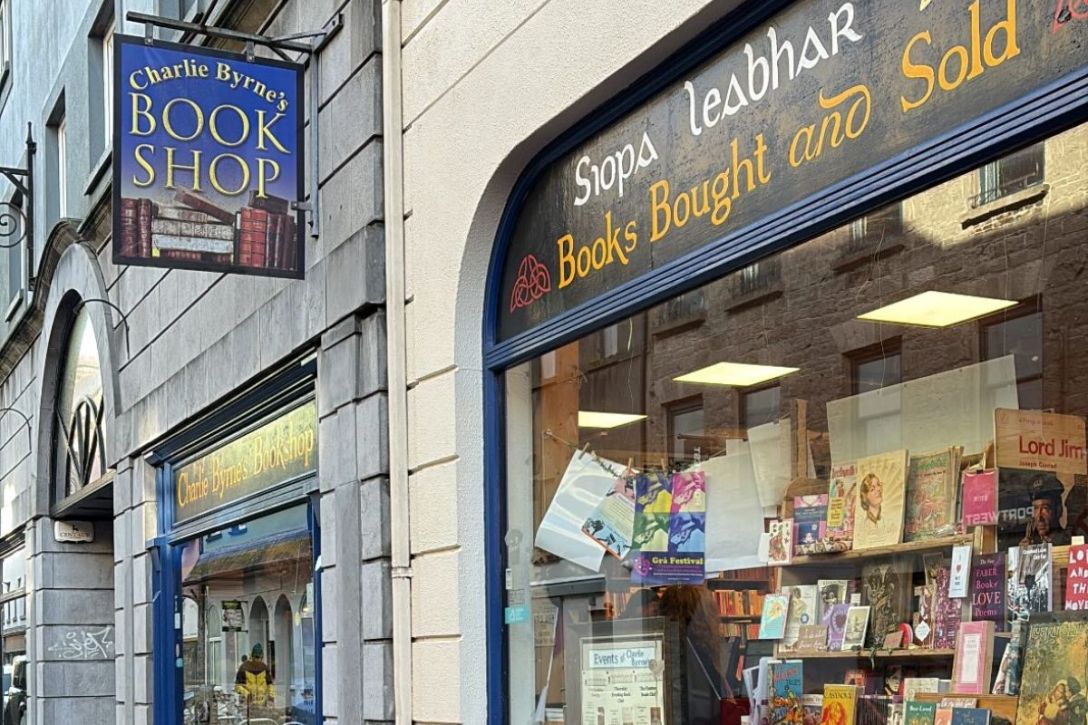
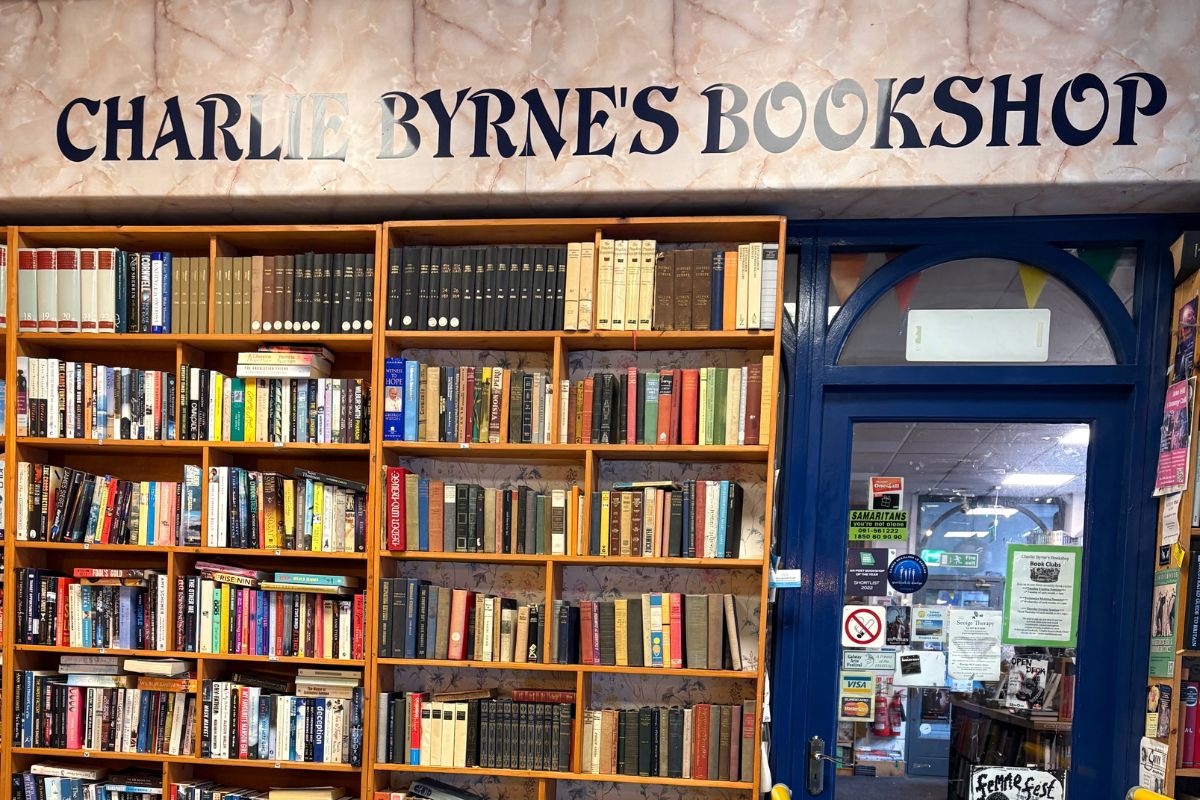
And, conveniently, Magpie Bakery is right next door to my other favourite bookshop in Galway/Ireland. Charlie Byrne’s is an institution in Galway. It’s got that classic bookshop feel — comfortably cluttered and packed from floor to ceiling with books (over a hundred thousand!) across a number of rooms. They’re also home to a host of events, with several book clubs every month, children’s story hours, and an array of book launches and readings.
Charlie Byrne’s also has a special place in my heart because the MA in Literature & Publishing at NUI Galway publishes a journal called Ropes every year and Charlie Byrne’s are always the first to agree to stock copies (although I do have to say that all of the bookshops in Galway are extremely support of of local work… and anyone is looking for my year’s edition of Ropes, I did see that Kennys happens to have a single 2014 copy on its shelves).
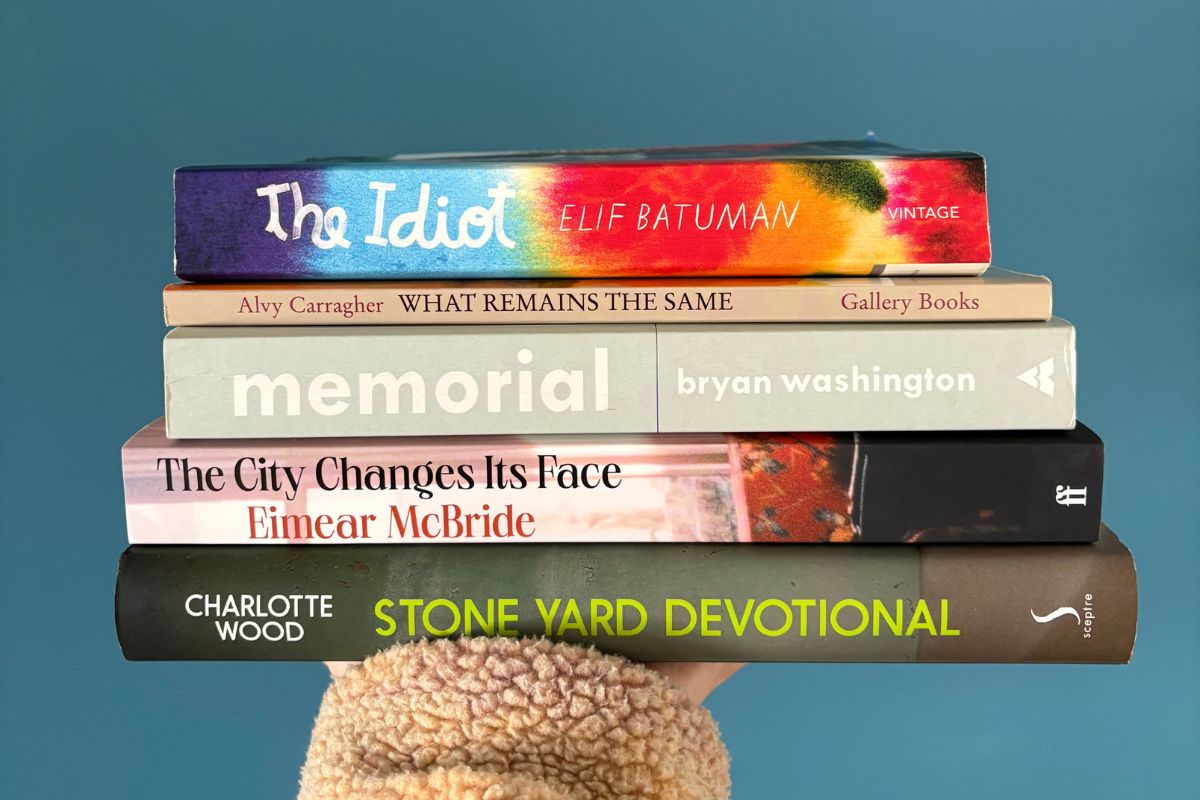
Unlike Kennys, I don’t tend to buy from Charlie Byrne’s online, so it would’ve been rude not to pick up a whole stack of books when I was there on Saturday, right? I bought three secondhand novels — Memorial by Bryan Washington, The Idiot by Elif Bautman, and Stone Yard Devotional by Charlotte Wood — Eimear McBride’s new novel The City Changes its Face, and a book of poetry by Alvy Carragher, who was doing her MA in Writing when I was doing mine in Publishing and whose poetry blew us away when she submitted it to Ropes so I’m delighted she went on to publish several collections.
Okay, now that you’ve bought a few books, it’s time to take a wander through town. If you need even more bookshops, you can call in to Eason and Dubray on Shop Street — even if they’re chains, they’re still local Irish chains and their Galway locations are worth a stop. At the top of Shop Street, you can also visit the statues of Irish writer Oscar Wilde and Estonian writer Eduard Vilde.
Otherwise, assuming you’re visiting on a weekend, you can wander down the street by St. Nicholas Church and check out the Galway Market, if it’s a sunny day you can stop for a pint and some people watching at Tigh Neachtain‘s, or you can call in to one of the jewellery shops and buy a Claddagh ring in the place of its origin.
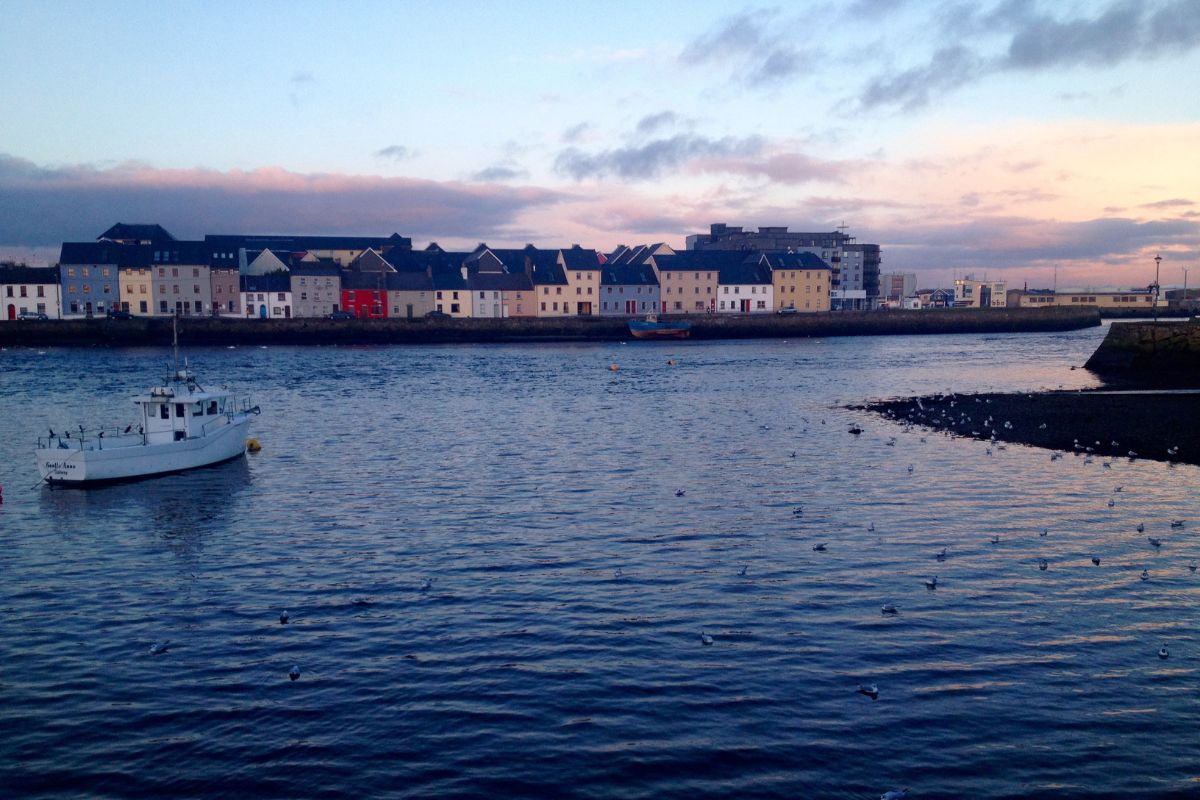
Now it’s time to head west. If you’re lucky enough to be blessed with a sunny day (or anything short of a downpour, really), I recommend a walk out to Salthill. Cross the bridge at the Spanish Arch and stick to the road along the river (for first-time visitors, this is also where you’ll get a great picture of the Long Walk and its colorful houses) and then the path along the coast. From here to the end of Salthill Prom is about three kilometres.
When you get back to town, stay on the Claddagh side of the harbour. If you’re thirsty for a(nother) pint at this point, the Salt House has long been a favourite of mine (I’m sure in part because when I lived in Galway I lived all of three-minutes’ walk away), with a nice selection of craft beer and always a good atmosphere that’s lively but not so loud that you can’t have a chat. If something non-alcoholic is more to your taste, the Secret Garden a lovely little spot for tea and, on the bookish side of things, apparently hosts a weekly silent book club. Described as “happy hour for introverts,” this group meets on Saturdays at 5:30 to read, together but quietly. I love this idea and I want one in Killarney!
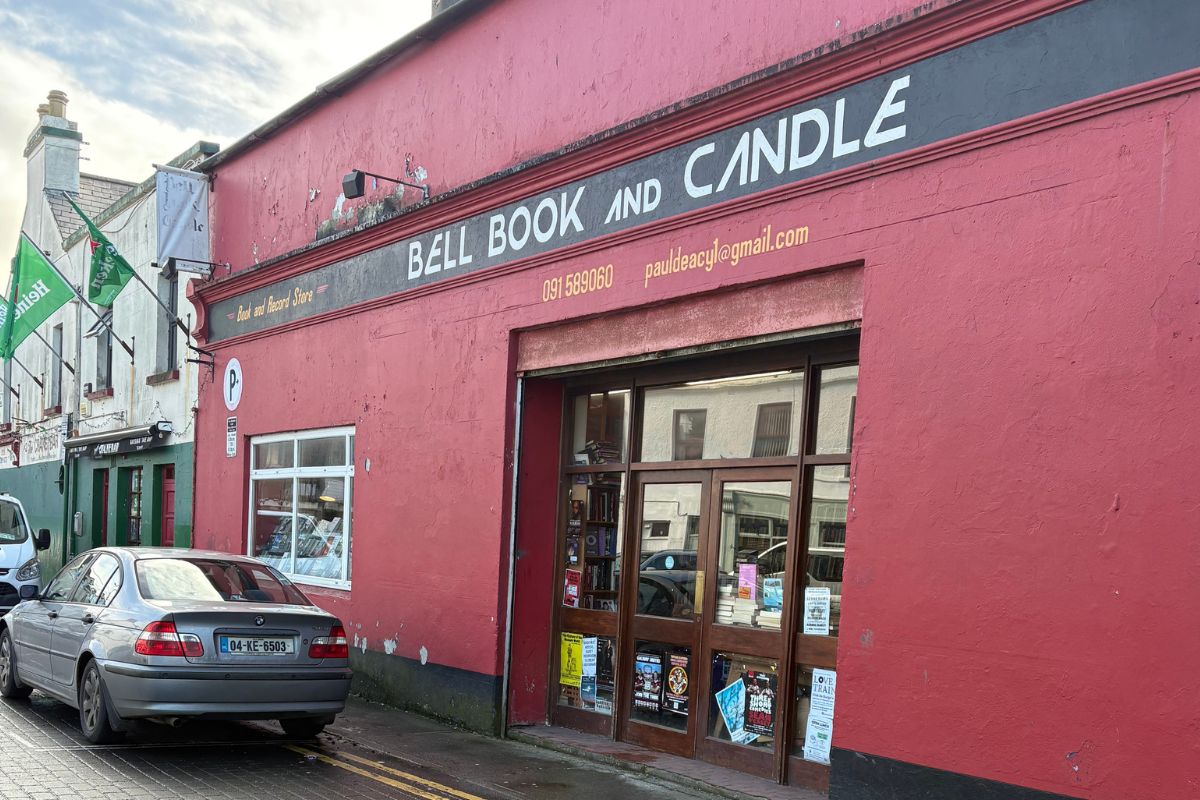
We’ve got one more bookshop on our little tour, and that’s Bell Book and Candle just up the street from the Secret Garden and next to the Crane Bar (which is the best spot for nightly trad music in Galway, by the way). It’s much smaller than the other bookshops in town, but it still has a great array of not only books but also records, cds, comics, and all sorts of other items, so it’s definitely worth a look.
We’ve come to the end of our bookish tour of Galway, but you’ve still got a whole evening ahead of you for good pints, food, and music — if you’re not just racing back to your hotel to read your new books!
“I had not reconciled with life, but I had to resume living.”
We Do Not Part will probably be a lot of folks’ introduction to Han Kang, being that it is her first new release in translation since she won the Nobel Prize for Literature last year. And I think that this haunting novel is a perfectly fitting place to start.
We Do Not Part encapsulates all of the things I have come to expect from Han’s writing — gorgeously poetic prose (this time translated from Korean by Emily Yah Won and Paige Aniyah Morris rather than her usual translator Deborah Smith), eeriness bordering on (and sometimes tipping over) the edge of horror, and unflinching references to the darkest parts of Korean history (in this case the 1948-49 Jeju massacre).
I didn’t realize until reading the lecture that Han Kang gave as part of the Nobel prize ceremony how often she incorporates elements of her own life in her work. I know very little about her personal life, and apparently few others do either — her husband, a literary critic, was referenced in a number of biographical articles of the author around the time of her Nobel win, but she then revealed that they have actually been divorced for many years.
Of course you don’t need to know much about an author to enjoy their work, and in particular it’s not necessarily any of our business how much of themselves an author does or does not put into their stories (and I’ve written before how frustrating it is that people often assume women’s novels are autobiographical in a way that they never do for men).
However, in this case it does seem that there are key elements of some of Han’s stories that were inspired by real moments in her life. In her Nobel lecture, she says that, like the unnamed narrator of the stunning The White Book, she too had an older sister who lived for only a few hours after birth. As in Human Acts, she happened on a book with photos of the Gwangju massacre that inspired her writing the novel.
And the dream in We Do Not Part, the dream of black tree stumps that served as markers for a mass grave by the sea, that dream was shared by the author and her protagonist (and the protagonist, like the author, is a novelist who wrote a 2014 novel about Gwangju in an effort to shake its hold on her, only to find herself further haunted).
While of course many authors have similar moments of inspiration that they draw from their own lives and insert, overtly or covertly, into their writing, in Han’s case these elements serve to further blend reality and unreality in a way that she does masterfully across her work.
In We Do Not Part, the protagonist Kyungha is called on by her friend and artistic partner Inseon to travel to Jeju and look after her pet bird while she is in hospital. What begins as a straightforward journey turns surreal when Kyungha finds herself in the midst of a snowstorm as she attempts to reach Inseon’s home.
And in the second half of the novel, as dreams permeate the waking hours, as ghosts visit the living, as past and present meld, the story gains further depth both in plot and in emotion. While the specific atrocity of the Jeju massacre is the main focus, broader themes of mourning and memory fill the pages.
In her Nobel lecture, Han Kang says:
I think the questions I was asking were these: To what extent can we love? Where is our limit? To what degree must we love in order to remain human to the end?
I feel that these questions are present not only in We Do Not Part but across all of Han Kang’s work, and that there is no more adept writer to ask and attempt to answer them. Her Nobel is extremely well deserved, and if this is the book by which new audiences are introduced to her work, then I think it is a poetic, poignant choice.
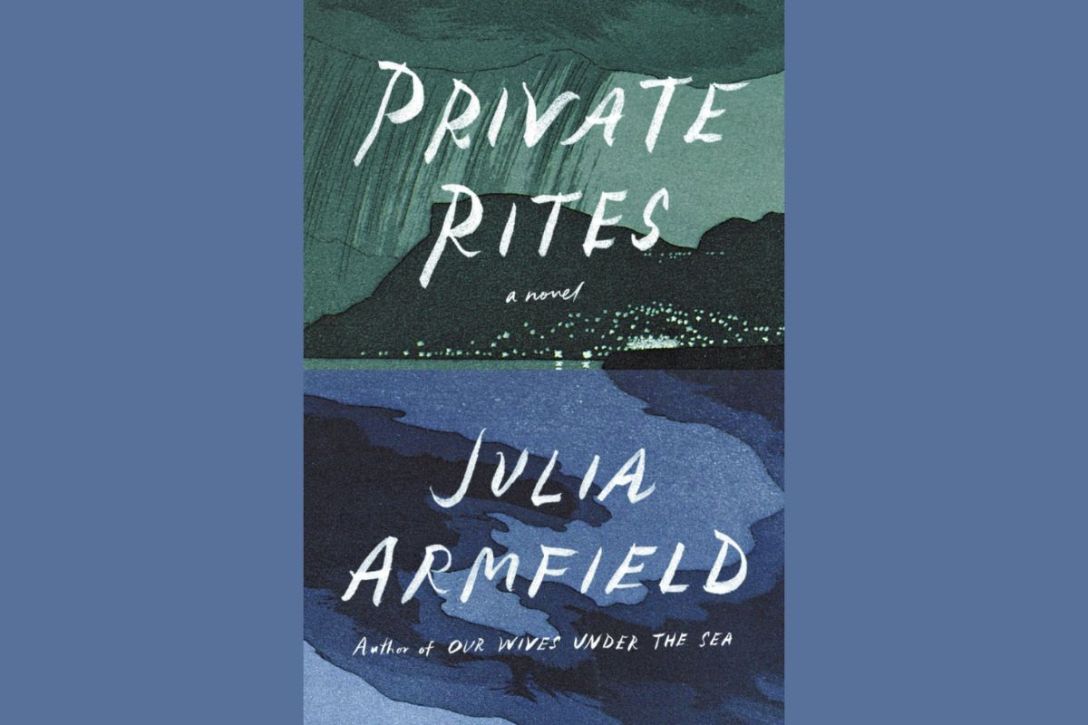
When I read Julia Armfield’s debut novel, Our Wives Under the Sea, I wanted to immediately call her one of my favorite authors, but it seemed silly to do so after only reading one of her books. When I read Salt Slow, the short story collection that preceded it, the feeling only grew. After reading Private Rites I’m completely confident in adding her to my list of favorites.
Did you ever, she once said to Isla, apropos of goodness knows what, read any of the weird shit that actually goes on in Revelations? In the Book of Revelations, I mean. People think it’s just hellfire and brimstone four horsemen and out, but actually the end times go on and on and on.
This is the way the world ends under capitalism, not with a bang but with a routine. When the seas rise so much that most of the population is forced to move to dilapidated urban centres in order to live in the high rises that are the only safe havens (unless you are rich enough to build your home high above the flood waters, of course). When the rain so rarely ceases that workers go about their days in a constant, sodden gloom (but they still go to work).
In the background, there is the creeping growth of uncanniness — strange practices, odd interactions, doomsday cults gaining membership — but for most people there is only the wet rot of monotony and misery as the world decays.
It is in this world— maybe, probably, a future vision of our world— that Private Rites takes place. It’s a serious slow-burner of a book, but with an explosive ending. This is the wrong genre Agnes thinks, but it’s only the wrong genre if you haven’t been paying attention. Like a river rushing up against a dam, the intensity builds and builds, and when the dam breaks, boy does it break.
Drawing inspiration from King Lear, the novel follows three sisters, held together and torn apart by the death of their wealthy but abusive father, as they struggle to find some sort of balance in their relationships and themselves in this world set adrift.
Isla, Irene, and Agnes are my favorite type of character — difficult to like but easy to love. At times, each one is frustrating, infuriating, endearing, enchanting. They live in this world of external and internal trauma that shapes them in some ways so differently and in some ways the same. I think Irene was my favorite of the three, but I loved each of them in their own way. I could have spent a lifetime with them.
The prose is exquisite, rich yet intimate, encompassing the overwhelmingness of the climate crisis as well as as the deeply personal moments between the sisters, their lovers, and the now-deceased patriarch of their family. The story crosses genres from family drama to speculative fiction to outright horror and creates a gradient that offers a full spectrum of everything in between. A truly fantastic novel that just further cements the fact that I’ll be waiting with bated breath on everything that Julia Armfield writes (and in the meantime, recommending her work to everyone who will listen).
As with every year, I read so much good horror in 2024 that I had to give it its own best-of list rather than lumping it in with my Best Fiction I Read in 2024 list (or my best non-fiction list, although I read a couple of good non-fiction horror books, and non-fiction in general aka real life is pretty horrifying right now). All of the books on my list were published in 2024 bar one, which was published at the end of October 2023, so if you’re looking for good, recent horror, read on!
Bonus: I was lucky enough to get an ARC of a book being published later in 2025 that I think a lot of folks are going to really love, and one of my first reads of the year was a 2024 book that would absolutely have made my best-of list if I’d read it two weeks earlier, so I’m not going to save it all the way for my end-of-year lists.
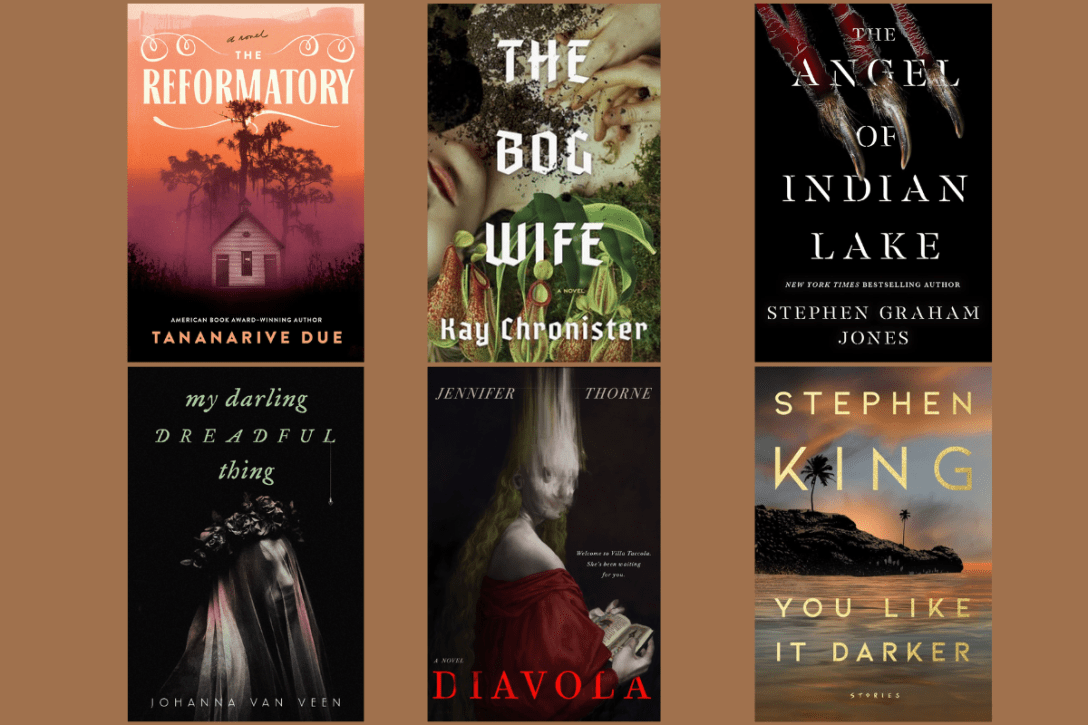
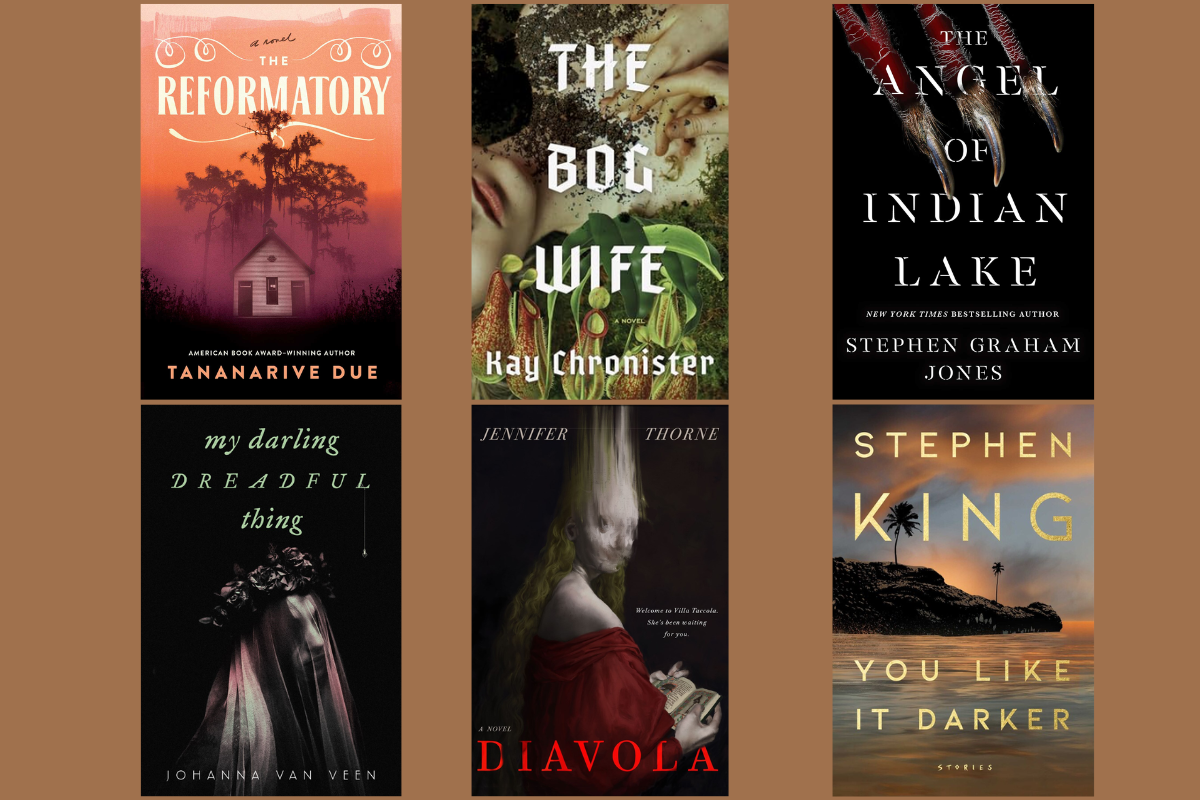
The Reformatory by Tananarive Due (2023)
I finished reading Tananarive Due’s The Reformatory on January 9, and on that early date I was willing to stake the claim that it would be the best horror book I’d read in the year. And you know what, I was absolutely right. Set in the Jim Crow south at a boy’s reform school and based true events including the life and unjust death one of Due’s own relatives, this novel is horrifying enough even before it is touched by the paranormal. But there are plenty of ghosts and premonitions as well for those who love a supernatural element in their horror novels. It’s a harrowing, haunting read, but it’s a masterpiece of horror, historical fiction, and fiction in general.
The Bog Wife by Kay Chronister (2024)
You can judge a book by its cover on this one. If you are immediately drawn in by the earthy color palette and eerie details of The Bog Wife‘s cover, then you’ll probably love the book, too. A rural gothic, the novel features an Appalachian family, isolated and co-dependent, who are gifted (or cursed) with a covenant that has run and been renewed by generations before them. When this time the pact seems to fail, each of the siblings react in their own ways to attempt to stitch it back together, or rend it further apart. I loved the writing style in this novel, so descriptive I could nearly smell the peat. Adding in a heavy helping of family trauma, plenty of folk horror, and a dash of climate anxiety, The Bog Wife hit all the notes for me.
The Angel of Indian Lake by Stephen Graham Jones (2024)
In my opinion, the Indian Lake trilogy is destined to be considered a modern horror classic. And this closing novel novel hits a perfect balance on every level — gory and violent without losing its emotional core, nostalgic and referential to the scores of horror classics that came before without getting too meta. Jade Daniels is a final girl for the ages; in this last installment we see the culmination of her growth and maturity, while still maintaining her edge and of course her encyclopedic knowledge of slasher films across all subgenres. The trilogy isn’t going to be for everyone — you might find yourself having to cast your mind back to remember a minor character who makes a sudden reappearance or do a bit of wikipedia-ing to understand one of Jade’s film references — but for those who will make the effort, it’s up there with the all-time greats.
My Darling Dreadful Thing by Johanna van Veen (2024)
Now this is gothic horror. It’s grotesque, unsettling, ambiguous, and romantic. Roos and her ghostly, ghastly companion Ruth are a fascinating duo, aiding Roos’s conniving mother in fake séances to con wealthy customers. Eventually, she is sent to live with a widow who offers a handsome sum for her companionship after Roos pretends to channel the woman’s dead husband, and Roos’s relationship with the bold yet mysterious Agness is equally compelling. The supporting characters are as complex and intriguing as the main characters, and excellent pacing and an eerie setting round out the novel and help to create a tense, thrilling story.
Diavola by Jennifer Marie Thorne (2024)
This quick horror read is tons of fun. Our protagonist, Anna, is the black sheep of her family, and her dry, sarcastic tone is perfect for narrating both the mundane drama that occurs as the family gets together at an AirBnB in Italy, and the paranormal horrors they experience there. She’s not a likable character, per se, but she is an enjoyable one, and probably a relatable one, too, ideal for a story like this. The scares are balanced out with the humor, and the blend offers a satisfying and sometimes satirical take on the classic haunted house novel. Maybe the true horror was the family vacations we took along the way, am I right (I’m kidding, I actually love family vacations, Steve and I are meeting my parents in Portugal for a holiday in March — hopefully sans hauntings).
You Like It Darker by Stephen King (2024)
Death, taxes, and a new Stephen King book. Some things are pretty much guaranteed, and it’s inevitable that a writer as prolific as King is going to have some peaks and valleys in his oeuvre. Luckily, his latest short story collection, You Like It Darker, is a definite high. There are a couple of so-so stories, but the good ones are beyond good, and a little bit of variance in short story quality is probably inevitable in a collection as well. “Danny Coughlin’s Bad Dream” is worth the price of admission alone, and I love when King dips into cosmic horror as he does in “The Dreamers.” “The Answer Man” is simple, classic, and just the right amount of melancholy, and Cujo pseudo-sequel “Rattlesnakes” is creepy as hell. A solid collection from the horror master.
Bonus:
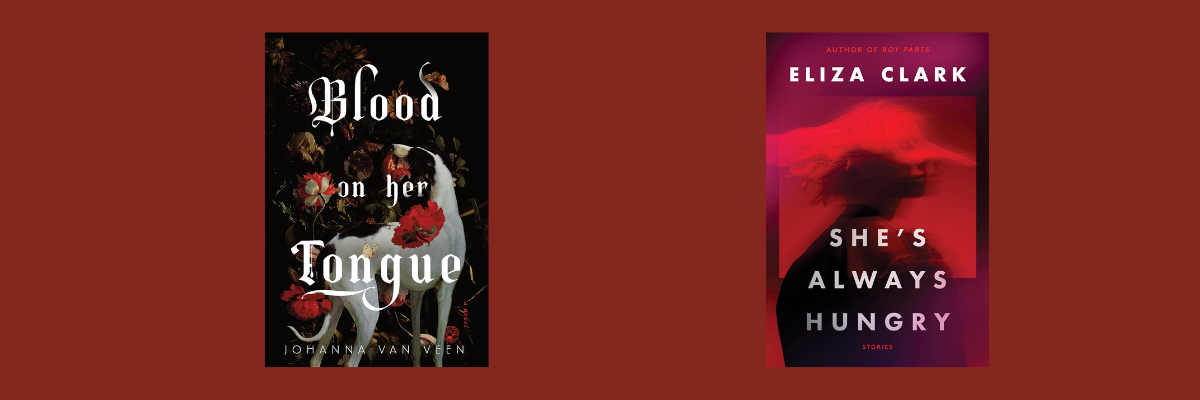
Blood on Her Tongue by Johanna van Veen (2025)
After reading My Darling Dreadful Thing, I instantly added Johanna van Veen to the list of authors whose work I will be sure to pick up, so I was thrilled to snag an ARC of her second novel, Blood on Her Tongue (thanks very much to the author, Netgalley, and Poisoned Pen Press). I’ll share more of my thoughts on the book closer to its publication date, but in short, I think I loved this novel even more than I loved van Veen’s debut. Toxic codependence will always be a favorite horror trope of mine, especially when it leads to devastating consequences, and it’s so well executed here along with an exquisitely-crafted story that grows the creeping, unsettling tension to a truly disturbing climax.
She’s Always Hungry by Eliza Clark (2024)
As I said above, I read this at the very start of 2025, but since it was only published in mid-November 2024 and since it’s so early in the year, I don’t want to save it all the way for my end-of-2025 reviews since I would absolutely have included it in my best-of-2024 list had I read it in time, and I want to recommend it to anyone who is looking for disturbing, outrageous, fucked up short stories to start their year. Some highlights: the spooky siren folklore title tale, the cannibal lady cosmic oddity “The King,” the nothing-paranormal-but-just-as-creepy “Goth GF” about a young man’s obsession with his coworker, the climate anxiety-tinged space/bio horror “Extinction Event,” and the absurd (and absurdly unsettling) “The Shadow Over Little Chitaly,” which is formatted as a series of meal delivery app reviews about a takeaway restaurant that’s Not Quite Right.
I usually hate to crown my favorite reads of the year until the next year actually begins, just in case I happen to find a new fave in whatever I’m reading during the final hours of the New Year’s Eve countdown.
This year, I’m calling it a few hours early, mainly because I figure I can get a head start on my New Year’s resolution to resurrect this blog by writing out a few posts to put up over the next few days. I don’t know if people still really read blogs anymore, but I do, and I miss writing them, and I’m certainly not going to make a TikTok, so here we are.
These are my 10 favorite fiction reads of the year. The majority were published in 2023 or 2024; my list will probably be mostly older books next year since one of my other resolutions is to spend less time with my kindle and more time with my “back catalogue” (aka all the books bought from used bookstores that are weighing down every flat surface).
If you know me, you’ll also notice that one genre is conspicuously absent. I read so many good horror books this year that they’re getting their own post in the next few days.
So if you’re building your TBR for 2025, read on for some of my 2024 favorite that deserve a place on your list:
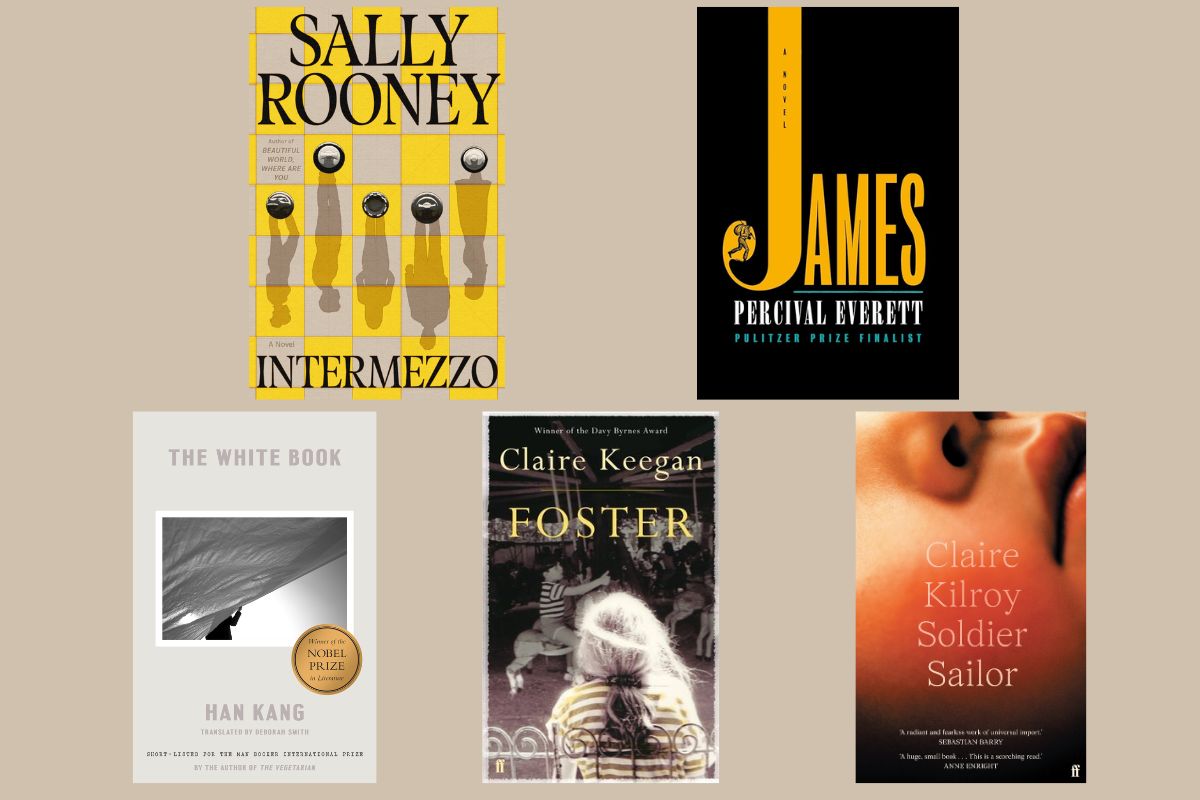
Intermezzo by Sally Rooney (2024)
In my goodreads review of this novel, I wrote: “I don’t know if this is my favorite Sally Rooney novel, but I think it is her best.” A month later, I do know. This is my favorite Sally Rooney novel, and it is her best. The literary world’s most anticipated novel of the year, as well as the one I was personally most excited for, and for me it lived up to every expectation.
In Intermezzo, Rooney takes all of the hallmarks of her previous writing — sharp and revealing dialogue, exploration of romantic and platonic relationships, and beautiful depictions of the mundanities of life — and gives them a more creative, more mature element that elevates her writing beyond what she has done before.
In the way I often think of Normal People‘s Connell and Marianne as though they are old acquaintances I’d like to check in on and see how they’re doing, I know I will be thinking of Ivan, Peter, and the others (especially Margaret) in this novel the same way.
James by Percival Everett (2024)
Another 2024 novel that hardly needs an introduction from me. If you’ve been tuned in to literature at all this year, then you’ve heard about James. Percival Everett’s clever, satirical take on The Adventures of Huckleberry Finn has been everywhere, and for good reason.
Retellings of books and stories are popular across genres, from contemporized versions of classic horror to feminist retellings of Greek myths, but sometimes these updates don’t offer enough to justify why they should be read in addition to the original tales.
James not only justifies it existence but also, I would argue, deserves to be read as a companion to Huck Finn by almost everyone who picks up Twain’s classic novel. Smart, well-crafted, and imbued with a satirical bent that offers an ideal dialogue with the original text, this is a masterful example of a retelling that will become a classic in its own right.
The White Bookby Han Kang (2016)
I’ve been a fan of Han Kang’s since my former book club read The Vegetarian, and I was delighted when the South Korean author won the Nobel Prize for Literature this year. In addition to The Vegetarian, I’d already read Human Acts, but I hadn’t yet picked up this one of her translated works.
This is an extraordinarily beautiful novel (also huge credit to Han Kang’s translator Deborah Smith for her outstanding work in reflecting the artistry of the author’s Korean prose in English). In a series of prose-poetry vignettes, the unnamed narrator reflects on love and grief while on a writing retreat through meditations on the color white — as pale skin, clouds of breath on a winter’s day, and the blank page ready to be filled with words.
Foster by Claire Keegan (2010)
In general, I try to read a book before I see the film adapted from it, but in this case I only read Foster this year after seeing the magnificent adaptation, An Cailín Ciúin, a few years ago. It was after seeing another wonderful and heartwrenching adaptation of Keegan’s work, Small Things Like These, that I realized I had never read Foster and decided it was time to pick it up.
An Cailín Ciúin translates in English to “the quiet girl,” so imagine my surprise when I began the novel and discovered it was written in first person! This is a little gem, not even a hundred pages long, and every word of narration and dialogue holds so much meaning. Enchanting and heartwarming, a perfect story.
Soldier Sailor by Claire Kilroy (2023)
If there’s one tradition I can manage to maintain on this blog, it’s reviewing the Women’s Prize shortlisted novels, and for 2024 two of the shortlisted books have also made it onto my favorites list (and the winner of the new Women’s Prize for Nonfiction, Naomi Klein’s Doppelganger, was a fave of last year, too). Although I did enjoy the eventual winner (Brotherless Night by V.V. Ganesthananthan), Claire Kilroy’s Soldier Sailor would have been my personal pick. My review:
My one-word review of this novel is oof. The narrator is a new mother talking to her son about how she loves him so much she would kill and/or die for him, about her loneliness, about taking on unequal weight in her marriage, about looking forward to their years together as he grows up. The dramas in the book are mostly minor — losing track of him in IKEA for a few minutes, a small fever — but the writing is so raw. Heart-wrenching and often funny as well, I absolutely loved this one. If I was giving the prize it would be to this instant classic.
Enter Ghost by Isabella Hammad (2023)
My other favorite from the Women’s Prize shortlist. I first encountered Hammad’s words in this excellent conversation with Sally Rooney. Her literary work is just as powerful. In Enter Ghost, a British-Palestinian woman goes back to her homeland after many years to visit her sister and gets roped in to a production of Hamlet. Fittingly, this one felt almost theatrical in a way; I could really picture everything so well, and the prose sometimes reverts to a script format during rehearsal scenes.
I also loved the protagonist. She’s quite prickly at times, but very complex and interesting. The various elements of the plot — the protagonist’s relationship with her family and identity, her life back in the UK versus her time in Palestine, the theatre production and the ongoing conflict it is staged in the midst of — weave together in such a satisfying and compelling way.
The History of Sound by Ben Shattuck (2024)
This was a last-minute browsing grab from the library when I was worried I wouldn’t have enough books for my trip back to the States, and it’s books like this that are the reason I don’t determine my year-end best-of until the last minute. The stories in The History of Sound, from the uplifting to the tragic, capture the perfect tone of bittersweet melancholy that is perfect for the season.
Not to be all Harry Styles “it feels like a real go to the theatre film movie” about it, but I love when a short story collection feels like a short story collection. The stories in this collection go together, interconnect, reference each other, and share space even in a world that spans three centuries and countless lives. They’re wistful and nostalgic, some full of what could be and some with what could have been, and although they feature such disparate concepts as a colonial-era tale and the transcript of a Radiolab episode, they weave together exquisitely.
Family Meal by Bryan Washington (2023)
I don’t know what it is about Family Meal. It didn’t stay with me the way some of the books on this list did, and yet when I was deciding which novels were my favorites of the year, this one immediately came to mind. And as soon as I started thinking about it, it did all come flooding back, this story of a young man set adrift by the death of his partner, who returns to his hometown to try to find some grounding.
I love how unapologetic this novel is. It’s full of the things pearl-clutchers in goodreads reviews love to complain about: swear words, explicit sex scenes, and no quotations marks. This novel doesn’t care if you like it, and you’ll love it all the same.
The Vaster Wilds by Lauren Groff (2023)
I read one of Lauren Groff’s novels ages ago and didn’t love it, so I didn’t pick up any more of her work until 2021’s Matrix. If that novel proved that I was wrong about her, and that she’s a killer writer, particularly of historical fiction, The Vaster Wilds definitely cemented it for me.
Visceral and at times grotesque, this colonial-set novel about a young woman who flees the Jamestown colony and is must try to sustain herself in the harsh wilderness is as thrilling as any survivalist tv show or documentary. Groff’s prose is intense and the imagery so rich that you feel as though you’re using every sense in experiencing the story.
The Other Valley by Scott Alexander Howard (2024)
This was one of a few speculative fiction novels that had serious mainstream popularity this year. While I’ve enjoyed some of the other heavy-hitters — Kaliane Bradley’s The Ministry of Time, which both my sci-fi and non-sci-fi loving friends raved about, and Samantha Harvey’s Orbital, which won the Booker and which I am actually reading right now — The Other Valley is the one that has really stuck with me through the year.
The premise of the novel seems so simple yet so unique: in one valley lies a town. The same town exists in each of the neighboring valleys, twenty years in the past on one side, twenty years to the future on the other. Similarly, the book is divided. In the first half, the teenage protagonist competes for a coveted job authorizing the rare and highly-regulated travel between the valleys. In the second half, she is an adult, living the butterfly effect-like consequences of an unexpected event and her actions as a result. This novel broaches a lot of philosophical themes and, although I read it early in 2024, I am still considering them now as the year draws to a close.
Check back later this week for my favorite non-fiction and horror books of the year, and let me know what’s on your TBR for 2025!










 thebestpossibletime