I’m a horror girlie every month of every year, but in 2025 I really outdid myself. I read 52 works of horror fiction and 6 works of horror nonfiction, plus 5 rereads. Most of them (aside from the rereads) were published new in 2025. I blame the excellent Jump Scares by Emily C. Hughes, which features a list of upcoming horror releases that is both fantastic and devastating to my to-read list.
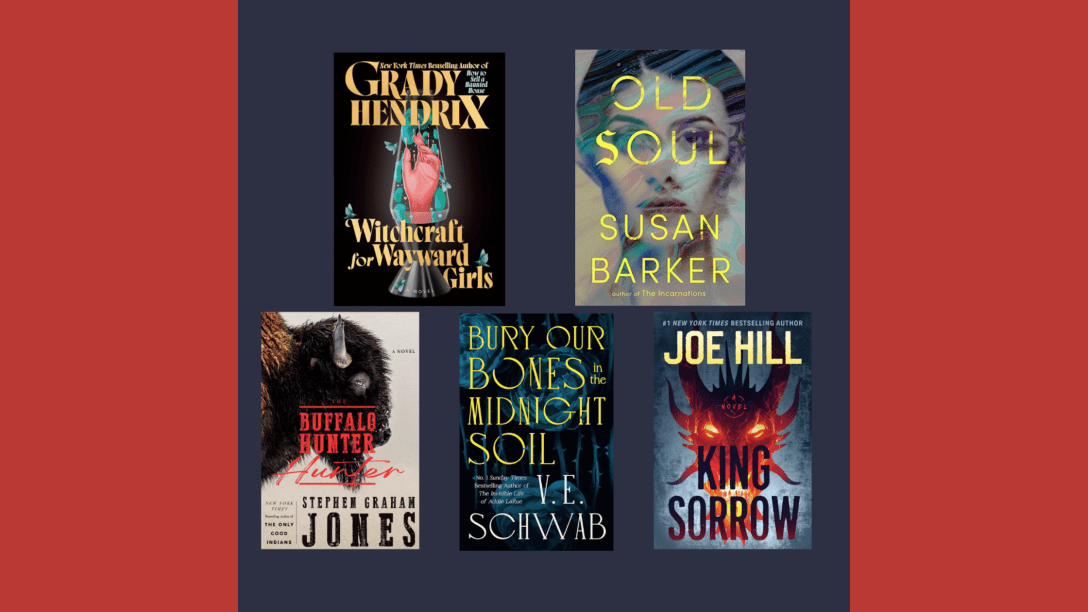
While I’m planning to spend more time focusing on the back catalogue in 2026 instead of chasing new releases, 2025 did have some serious heavy-hitters in the genre. I’ve somehow narrowed down my top 5, so here are my horror favourites of the year:
I read so many good books in 2025, it has taken me a few days to narrow down my absolute favourites. While, as I mentioned the other day, I’m hoping to read fewer books in 2026 and spend more time with each story, I definitely can’t complain about the quality of the work I read last year.
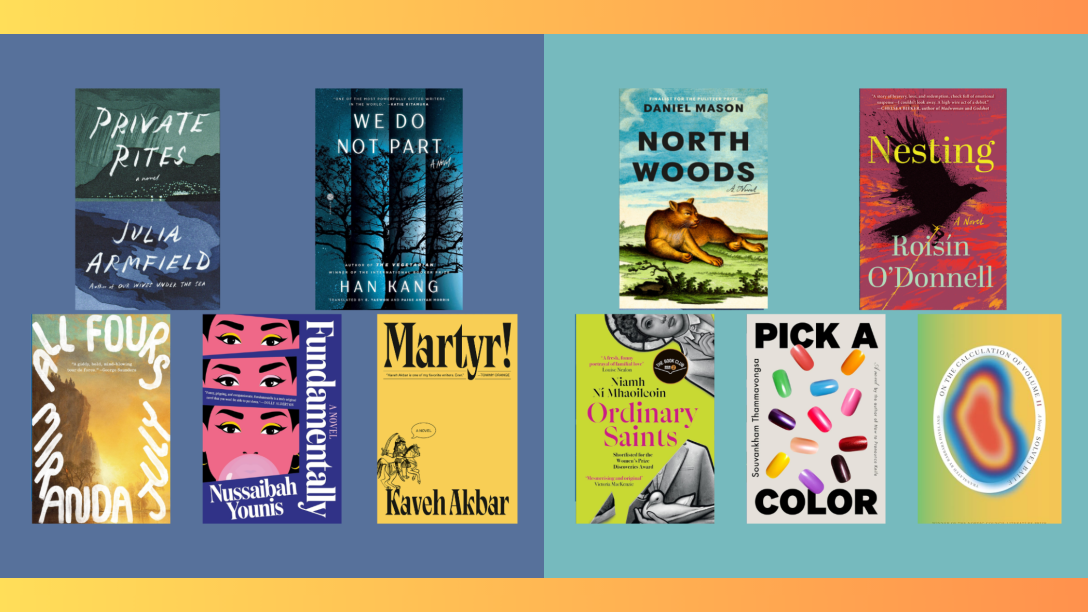
I tallied it up and I wrote about 40,000 words worth of book reviews on Goodreads in 2025, so if you want my full rundown on everything I read and loved (or didn’t love!) last year you should follow me there (for now… I’m trialling some non-amazon-owned alternatives to see if I can find a new bookish home in 2026), but here’s an overview of my 2025 fiction (non horror — they’ll get their own post!) faves:
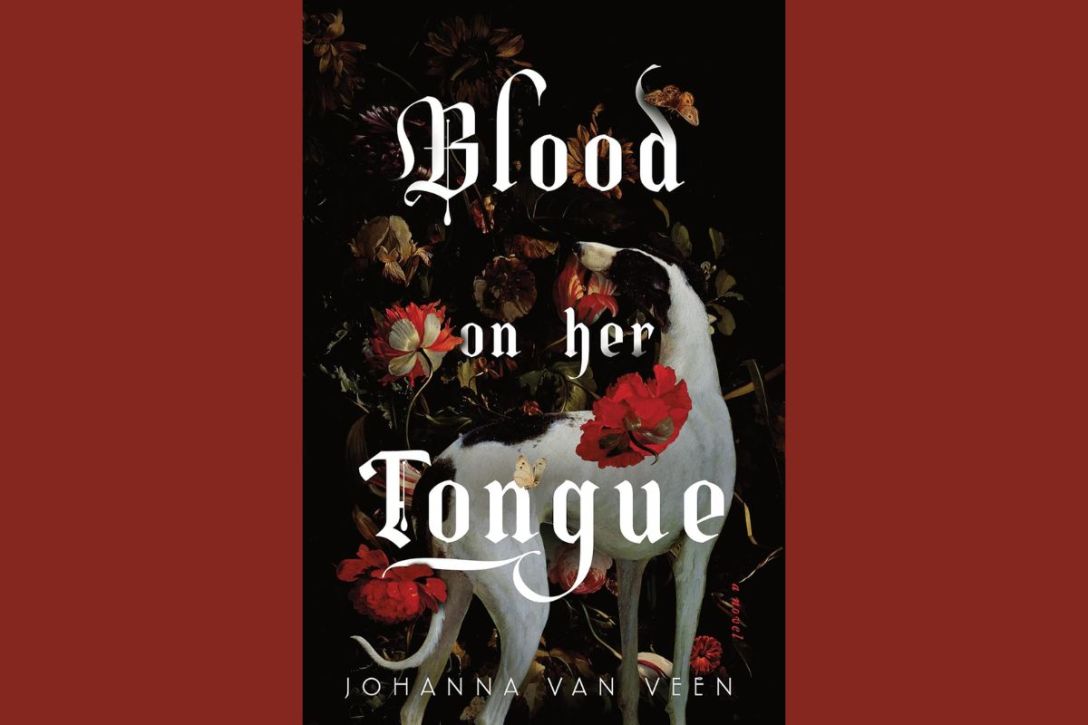
Happy publication day to Blood on Her Tongue! Johanna van Veen’s My Darling Dreadful Thing was one of my favourite horror debuts I’ve read in a while — delightfully gothic and romantic and gruesome — so to say that I was excited about snagging an advance reader’s copy of Blood on Her Tongue may be an understatement. Thanks very much to the author, Netgalley, and Poisoned Pen Press for an ARC in exchange for an honest review.
Where does one end and another begin? This is the question this novel asks repeatedly. Where does Lucy end and her twin sister Sarah begin? Where does Sarah end and the thing she has become begin? And where does love end, where does family end, where does duty and morality and desire and… where does the horror begin?
I went in expecting a vampire story thanks to the Dracula epigraphs, the protagonist’s name, etc. and Blood on Her Tongue does certainly have vampiric elements. But it’s also much more, an intriguing blend of horror elements from the natural horror of death and decay to something decidedly supernatural. I loved the super evocative imagery, gruesome often to the point of grossness (the pen! the eyes!), and as someone who lives in rural Ireland I found it easy to call to mind the smell of the peat and the sucking thickness of the bogs, but I think even if you’re not familiar I think you would be able to imagine it based on van Veen’s writing.
Lucy is a fascinating protagonist. She’s not a nice person; she’s obsessive and greedy and haughty and her relationship with her sister is nothing short of toxic, and yet she’s so compelling. Sarah, too, is equally riveting. Even though so much of the action in the first half of the novel takes place around her, her presence is key and her perspective, as told through her letters and journal entries, rounds out the setting and the wonderfully creepy gothic atmosphere so well. And when she (or someone) starts to really take the stage, well. It takes talent to do a good exposition scene, and there’s one around halfway through this novel that’s particularly good, managing to build the tension while delivering a lot of information about the nature of the being that has gotten its grips into Sarah.
There are some great layers to the plot that also help to build the overall world of this 19th Century Dutch manor and its inhabitants. Early on, the men in the novel are quick to dismiss the sisters’ fears as mistakes or madness, and although the women’s violent actions in the latter half of the book certainly aren’t out of any sort of feminist intentions, Arthur’s and Michael’s paternalistic mindsets do bring an interesting element to the story, although as characters they are far less developed than Lucy, Sarah, or even some of the other minor characters such as Magda the serving woman.
Overall, I think I enjoyed this even more than My Darling Dreadful Thing (although I seriously loved that one as well). Toxic codependence will always be a favourite horror trope of mine, especially when it leads to devastating consequences, and it’s so well executed here along with an exquisitely-crafted story that grows the creeping, unsettling tension to a truly disturbing climax. Van Veen has quickly been added to my list of the authors whose work I will eagerly devour (ha) as soon as I see it.
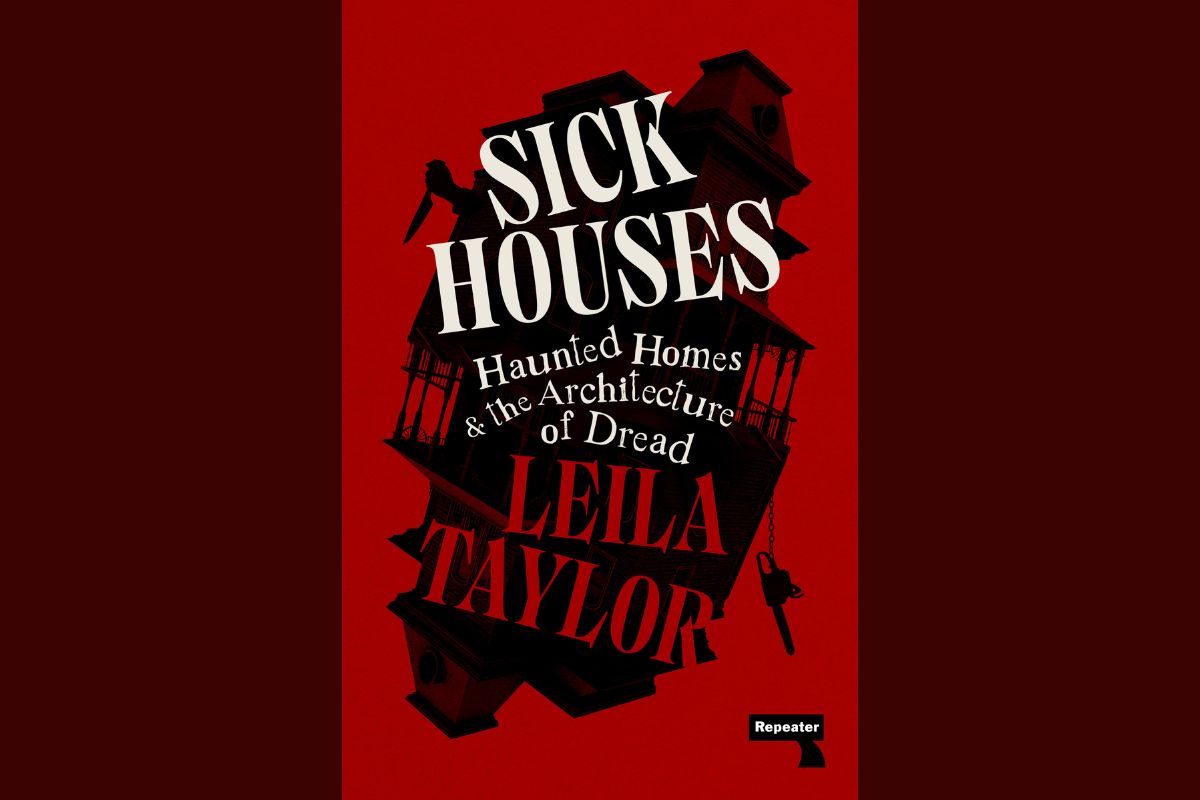
Apparently all I want to do is write book reviews, but I’m just going to go ahead on keep on doing it. This is a book I received as an ARC late last year, but it was just published on Tuesday so I wanted to share my review here in case you’re looking for a solid non-fiction book to pick up this week. Support your favourite indie bookstore!
When a demon inhabits a body, it takes ownership of a person, a monster is temporarily housed inside of its victim, our body invaded, repossessed. The ghost does the same with s house: it breaks into it, takes possession of what is yours, and you can no longer trust the place you trusted the most. What’s more frightening than your own home turning against you?
A look at the haunted house in both fiction and non-fiction, Sick Houses by Leila Taylor is an interesting exploration of what happens when the place that, by definition, we feel most at home in becomes something Other, something not quite right. Each chapter looks at a different kind of house, from houses of witchcraft (real or alleged) to houses in miniature, dollhouses or dioramas that reflect or influence their life-size counterparts.
First of all, I appreciated the parameters that the author put on her subject. She says in the introduction that “I’m not talking about plantation houses because 1) fuck them, and 2) I don’t consider slave quarters homes,” and she avoids prisons and hotels as well. By offering a clear focus on homes and not just houses/buildings, it creates an immediate connection with the reader — we will of course consider our own homes, the feeling of safety and comfort we feel in them, and we will contemplate the horror we would feel if that sense of safety was pulled out from under us.
I was also very interested in her discussion of the contradictory nature of the ideals of the American Dream: “Manifest destiny told us to ‘go west, young man,’ but this part of the American ideology is in direct contradiction with the long-term mortgage that locks you not only to a city or state but to a specific property for decades.” This contrast relates to a tension that often appears in horror films — a family moves into a dream home and is loath to leave it even when the going gets bad, or a family moves into a home that turns out to be haunted, but they don’t necessarily have any other option other than to try to see it through — and the tying of classic horror movie tropes to broader societal concepts is always interesting, especially when laid out well and backed by solid examples, as is seen in this book.
Some chapters are more thorough than others — the Witch Houses chapter has many more references than the chapter on Brutalism, for example — but overall there is a good amount of evidence and a good balance between real-life and fictional examples. The chapter on houses in miniature was particularly interesting. The author writes about the dioramas in Ari Aster’s Hereditary, and the way that the film’s sets were built to evoke the feeling that the actors, too, are moving (or, more accurately, being moved) within a diorama. On the real-life side of things, the discussion of the Nutshell Studies of Unexplained Death, a diorama series of crime scenes used to improve forensic investigation, was fascinating.
I did have a few issues with the book. For one, the author spoils the ending of several films in instances where I don’t feel that it’s necessary to support her thesis. Obviously in some cases of books like this, you have to give away the major plot points of your examples in order for them to be relevant — if you’re discussing antagonistic father-son relationships you can’t really use Star Wars as an example unless you tell anyone in your audience who isn’t yet aware of the connection between Luke and Vader.
However, in this book, regarding films discussed like The Others and His House, I think that enough information about their plots could have been given to make the intended point while still leaving some mystery for those who haven’t seen them. I know that I often use this type of book as a way to add to my to-watch or to-read list, offering more examples of a trope I am interested in, so spoiling the endings of books or films I haven’t seen yet is frustrating.
It also felt in some places that more time was spent cataloguing the “contents” of the houses (i.e. the plots of the films set there or, in the case of the real life examples, the crimes committed there) than the houses themselves.
In particular, some of the examples focusing on true crime started to feel too tangental, straying away from the connection to the houses/homes and delving too much into the events themselves. For example, I understood what the author was going for in connecting the novel Room and the tragic real-life story of “feral child” Genie, but in the case of the latter there was little connection to the thesis of the book.
Furthermore, at the start of the book the authors understandably says she won’t include places like slave’s quarters because these were not “homes” to the enslaved people living there, but then it follows that surely a place of imprisonment for Genie (or, in fiction, for the kidnapped inhabitants of Room) was not a “home” to be discussed either.
From the second half of the subtitle, “the Architecture of Dread,” I was hoping for more on the design of houses themselves. While this aspect does certainly get coverage in some sections of the book, looking at architectural oddities on screen and in reality, the trope of architecture that is Not Quite Right — houses that are bigger on the inside, stairways that don’t lead where they’re supposed to — is one of my favorites and I would’ve liked a deeper dive into some of these given the supposed secondary premise of the book.
That said, the sections looking at strange and unusual architecture did have some good moments, most interestingly in dispelling myths about the Winchester Mystery House (no, Sarah Winchester wasn’t taking her orders from ghosts; she was just a hobby architect). On the fiction side of things, I enjoyed the brief foray into one of my favorite books of all time, Susannah Clarke’s Piranesi, as a particularly good example of both impossible architecture and a false home (although I found it odd that one of the other most well-known examples of these tropes, Mark Danielewski’s House of Leaves, did not get a mention).
This book is a catalog of houses that have gone wrong and the ways our built environment can evoke terror and dread. But more so this is a book about the home, and the idea of home, and how horror perverts and manipulates one of the most personal and intimate experiences we have as human beings.
I think that Sick Houses will appeal mostly to readers who already have an interest in the topic. At points it feels as though the author has cornered you at a party and is explaining her research project to you. For me, that’s fine, as it’s a long-standing interest of mine as well. But it may not work as well for readers who aren’t already fascinated by architectural horror or the unheimlich feeling of a haunted house.
But if the above quote draws you in, then this is definitely one to keep an eye out for. Many thanks to the author, publisher, and Netgalley for the advanced copy in exchange for an honest review.
Also, if this sort of book is right up your alley, you might also enjoy Feeding the Monster by Anna Bogutskaya (link to my review), American Scary by Jeremy Dauber (link to my review on Goodreads), and of course Danse Macabre by Stephen King.
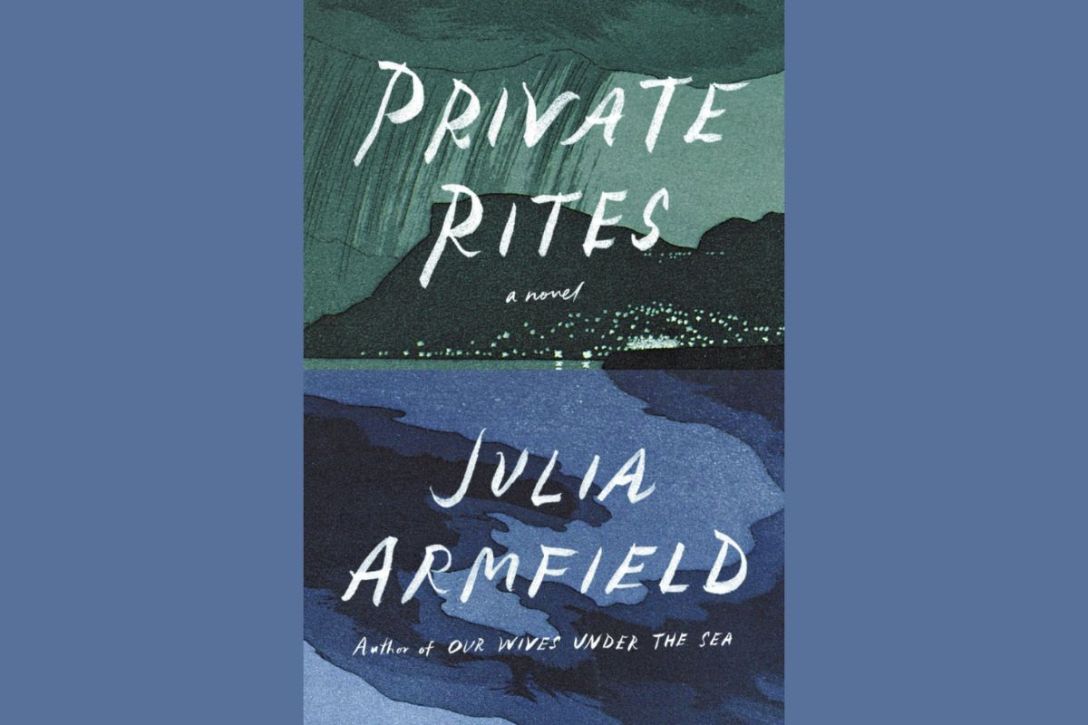
When I read Julia Armfield’s debut novel, Our Wives Under the Sea, I wanted to immediately call her one of my favorite authors, but it seemed silly to do so after only reading one of her books. When I read Salt Slow, the short story collection that preceded it, the feeling only grew. After reading Private Rites I’m completely confident in adding her to my list of favorites.
Did you ever, she once said to Isla, apropos of goodness knows what, read any of the weird shit that actually goes on in Revelations? In the Book of Revelations, I mean. People think it’s just hellfire and brimstone four horsemen and out, but actually the end times go on and on and on.
This is the way the world ends under capitalism, not with a bang but with a routine. When the seas rise so much that most of the population is forced to move to dilapidated urban centres in order to live in the high rises that are the only safe havens (unless you are rich enough to build your home high above the flood waters, of course). When the rain so rarely ceases that workers go about their days in a constant, sodden gloom (but they still go to work).
In the background, there is the creeping growth of uncanniness — strange practices, odd interactions, doomsday cults gaining membership — but for most people there is only the wet rot of monotony and misery as the world decays.
It is in this world— maybe, probably, a future vision of our world— that Private Rites takes place. It’s a serious slow-burner of a book, but with an explosive ending. This is the wrong genre Agnes thinks, but it’s only the wrong genre if you haven’t been paying attention. Like a river rushing up against a dam, the intensity builds and builds, and when the dam breaks, boy does it break.
Drawing inspiration from King Lear, the novel follows three sisters, held together and torn apart by the death of their wealthy but abusive father, as they struggle to find some sort of balance in their relationships and themselves in this world set adrift.
Isla, Irene, and Agnes are my favorite type of character — difficult to like but easy to love. At times, each one is frustrating, infuriating, endearing, enchanting. They live in this world of external and internal trauma that shapes them in some ways so differently and in some ways the same. I think Irene was my favorite of the three, but I loved each of them in their own way. I could have spent a lifetime with them.
The prose is exquisite, rich yet intimate, encompassing the overwhelmingness of the climate crisis as well as as the deeply personal moments between the sisters, their lovers, and the now-deceased patriarch of their family. The story crosses genres from family drama to speculative fiction to outright horror and creates a gradient that offers a full spectrum of everything in between. A truly fantastic novel that just further cements the fact that I’ll be waiting with bated breath on everything that Julia Armfield writes (and in the meantime, recommending her work to everyone who will listen).
As with every year, I read so much good horror in 2024 that I had to give it its own best-of list rather than lumping it in with my Best Fiction I Read in 2024 list (or my best non-fiction list, although I read a couple of good non-fiction horror books, and non-fiction in general aka real life is pretty horrifying right now). All of the books on my list were published in 2024 bar one, which was published at the end of October 2023, so if you’re looking for good, recent horror, read on!
Bonus: I was lucky enough to get an ARC of a book being published later in 2025 that I think a lot of folks are going to really love, and one of my first reads of the year was a 2024 book that would absolutely have made my best-of list if I’d read it two weeks earlier, so I’m not going to save it all the way for my end-of-year lists.
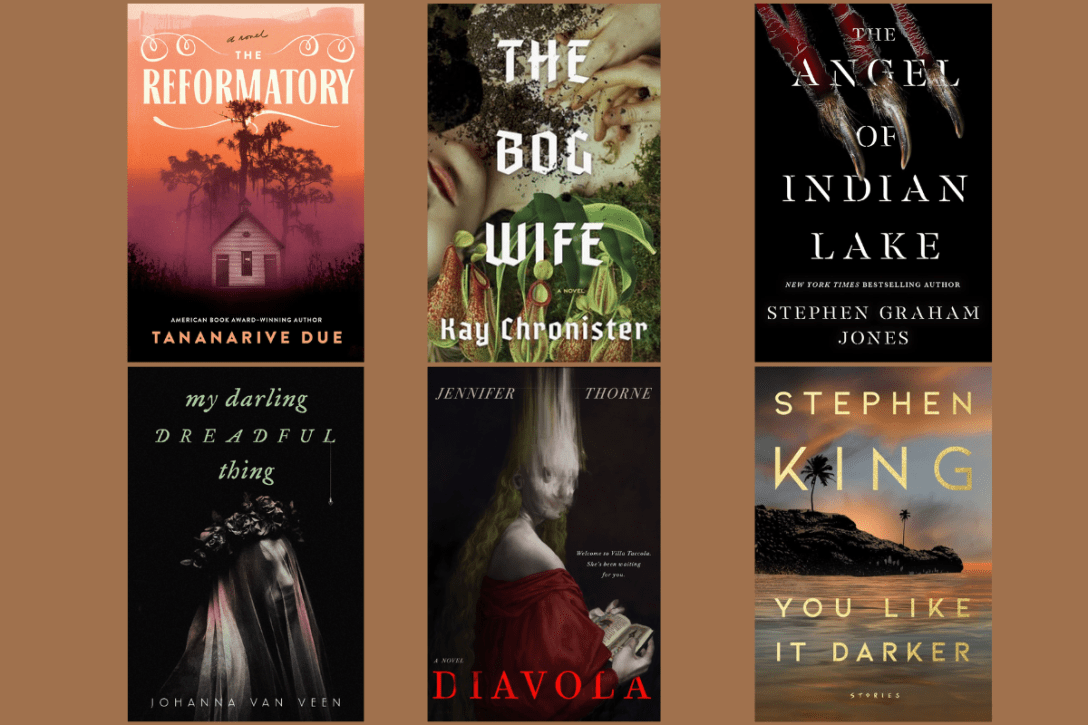
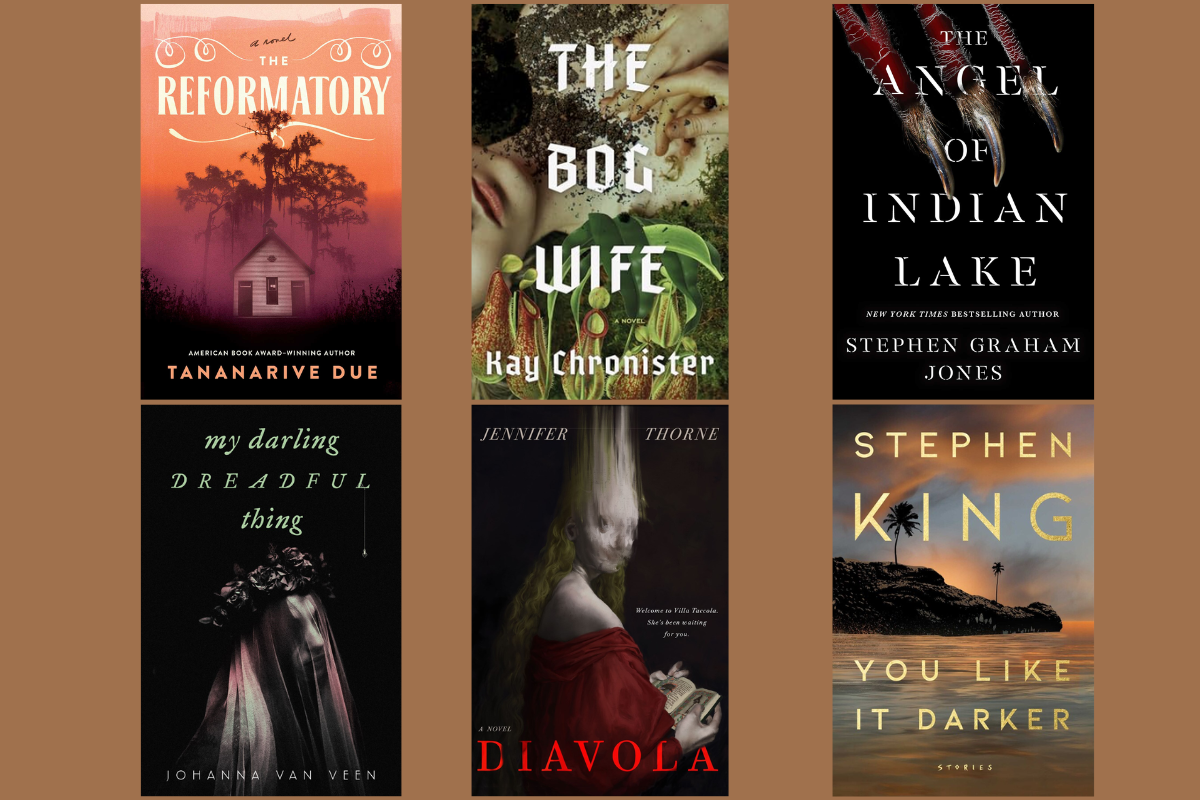
The Reformatory by Tananarive Due (2023)
I finished reading Tananarive Due’s The Reformatory on January 9, and on that early date I was willing to stake the claim that it would be the best horror book I’d read in the year. And you know what, I was absolutely right. Set in the Jim Crow south at a boy’s reform school and based true events including the life and unjust death one of Due’s own relatives, this novel is horrifying enough even before it is touched by the paranormal. But there are plenty of ghosts and premonitions as well for those who love a supernatural element in their horror novels. It’s a harrowing, haunting read, but it’s a masterpiece of horror, historical fiction, and fiction in general.
The Bog Wife by Kay Chronister (2024)
You can judge a book by its cover on this one. If you are immediately drawn in by the earthy color palette and eerie details of The Bog Wife‘s cover, then you’ll probably love the book, too. A rural gothic, the novel features an Appalachian family, isolated and co-dependent, who are gifted (or cursed) with a covenant that has run and been renewed by generations before them. When this time the pact seems to fail, each of the siblings react in their own ways to attempt to stitch it back together, or rend it further apart. I loved the writing style in this novel, so descriptive I could nearly smell the peat. Adding in a heavy helping of family trauma, plenty of folk horror, and a dash of climate anxiety, The Bog Wife hit all the notes for me.
The Angel of Indian Lake by Stephen Graham Jones (2024)
In my opinion, the Indian Lake trilogy is destined to be considered a modern horror classic. And this closing novel novel hits a perfect balance on every level — gory and violent without losing its emotional core, nostalgic and referential to the scores of horror classics that came before without getting too meta. Jade Daniels is a final girl for the ages; in this last installment we see the culmination of her growth and maturity, while still maintaining her edge and of course her encyclopedic knowledge of slasher films across all subgenres. The trilogy isn’t going to be for everyone — you might find yourself having to cast your mind back to remember a minor character who makes a sudden reappearance or do a bit of wikipedia-ing to understand one of Jade’s film references — but for those who will make the effort, it’s up there with the all-time greats.
My Darling Dreadful Thing by Johanna van Veen (2024)
Now this is gothic horror. It’s grotesque, unsettling, ambiguous, and romantic. Roos and her ghostly, ghastly companion Ruth are a fascinating duo, aiding Roos’s conniving mother in fake séances to con wealthy customers. Eventually, she is sent to live with a widow who offers a handsome sum for her companionship after Roos pretends to channel the woman’s dead husband, and Roos’s relationship with the bold yet mysterious Agness is equally compelling. The supporting characters are as complex and intriguing as the main characters, and excellent pacing and an eerie setting round out the novel and help to create a tense, thrilling story.
Diavola by Jennifer Marie Thorne (2024)
This quick horror read is tons of fun. Our protagonist, Anna, is the black sheep of her family, and her dry, sarcastic tone is perfect for narrating both the mundane drama that occurs as the family gets together at an AirBnB in Italy, and the paranormal horrors they experience there. She’s not a likable character, per se, but she is an enjoyable one, and probably a relatable one, too, ideal for a story like this. The scares are balanced out with the humor, and the blend offers a satisfying and sometimes satirical take on the classic haunted house novel. Maybe the true horror was the family vacations we took along the way, am I right (I’m kidding, I actually love family vacations, Steve and I are meeting my parents in Portugal for a holiday in March — hopefully sans hauntings).
You Like It Darker by Stephen King (2024)
Death, taxes, and a new Stephen King book. Some things are pretty much guaranteed, and it’s inevitable that a writer as prolific as King is going to have some peaks and valleys in his oeuvre. Luckily, his latest short story collection, You Like It Darker, is a definite high. There are a couple of so-so stories, but the good ones are beyond good, and a little bit of variance in short story quality is probably inevitable in a collection as well. “Danny Coughlin’s Bad Dream” is worth the price of admission alone, and I love when King dips into cosmic horror as he does in “The Dreamers.” “The Answer Man” is simple, classic, and just the right amount of melancholy, and Cujo pseudo-sequel “Rattlesnakes” is creepy as hell. A solid collection from the horror master.
Bonus:
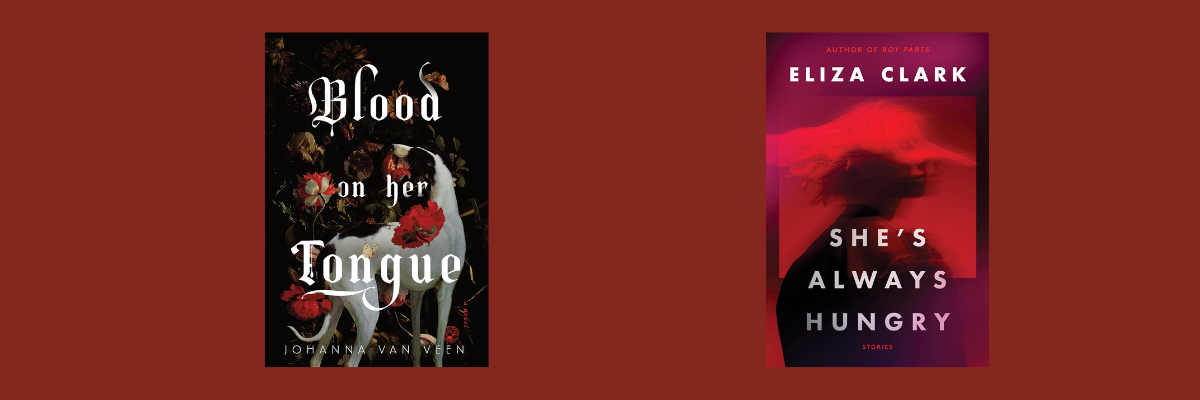
Blood on Her Tongue by Johanna van Veen (2025)
After reading My Darling Dreadful Thing, I instantly added Johanna van Veen to the list of authors whose work I will be sure to pick up, so I was thrilled to snag an ARC of her second novel, Blood on Her Tongue (thanks very much to the author, Netgalley, and Poisoned Pen Press). I’ll share more of my thoughts on the book closer to its publication date, but in short, I think I loved this novel even more than I loved van Veen’s debut. Toxic codependence will always be a favorite horror trope of mine, especially when it leads to devastating consequences, and it’s so well executed here along with an exquisitely-crafted story that grows the creeping, unsettling tension to a truly disturbing climax.
She’s Always Hungry by Eliza Clark (2024)
As I said above, I read this at the very start of 2025, but since it was only published in mid-November 2024 and since it’s so early in the year, I don’t want to save it all the way for my end-of-2025 reviews since I would absolutely have included it in my best-of-2024 list had I read it in time, and I want to recommend it to anyone who is looking for disturbing, outrageous, fucked up short stories to start their year. Some highlights: the spooky siren folklore title tale, the cannibal lady cosmic oddity “The King,” the nothing-paranormal-but-just-as-creepy “Goth GF” about a young man’s obsession with his coworker, the climate anxiety-tinged space/bio horror “Extinction Event,” and the absurd (and absurdly unsettling) “The Shadow Over Little Chitaly,” which is formatted as a series of meal delivery app reviews about a takeaway restaurant that’s Not Quite Right.



 thebestpossibletime