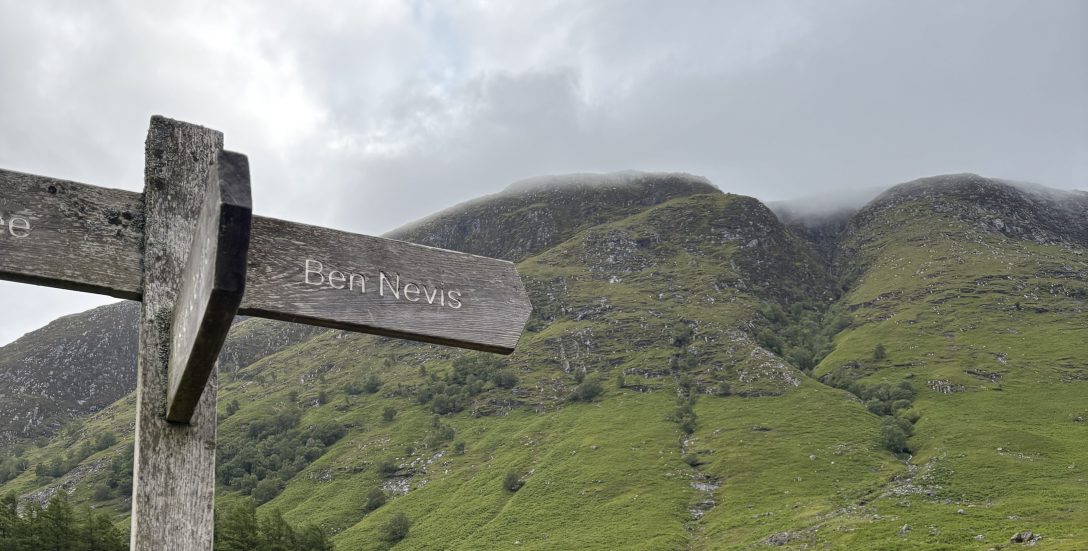
A couple of weeks ago Steve and I met up with our friend Tom for a long weekend in Scotland. We were supposed to be seeing Billy Joel (or, if you’re Irish, Billy Jo-el for some reason) but with the gig cancelled and our flights were already booked, we turned our attention from Bill to Ben and set out to take a hike up Scotland’s highest mountain.
Scotland’s mountains over 3,000 ft (914.4 m) are called Munros, after the man who made the first list of these hills and mountains, and Ben Nevis (Beinn Nibheis) is the tallest at 4411 ft or 1345 m. Side note: this is 306.4 metres higher than Ireland’s highest, Carrauntoohil, but who’s counting?
Hiking up one of these mountains is called “bagging” a Munro, and there plenty of folks that have made it their mission to bag the whole lot (all 282 of them). We’ll start with this one, anyway, but given how much I absolutely loved my short time in the Highlands (I’d only ever been to Scotland once before, on a brief weekend trip to Edinburgh when I was studying in London years ago), I’m sure it won’t be the last.
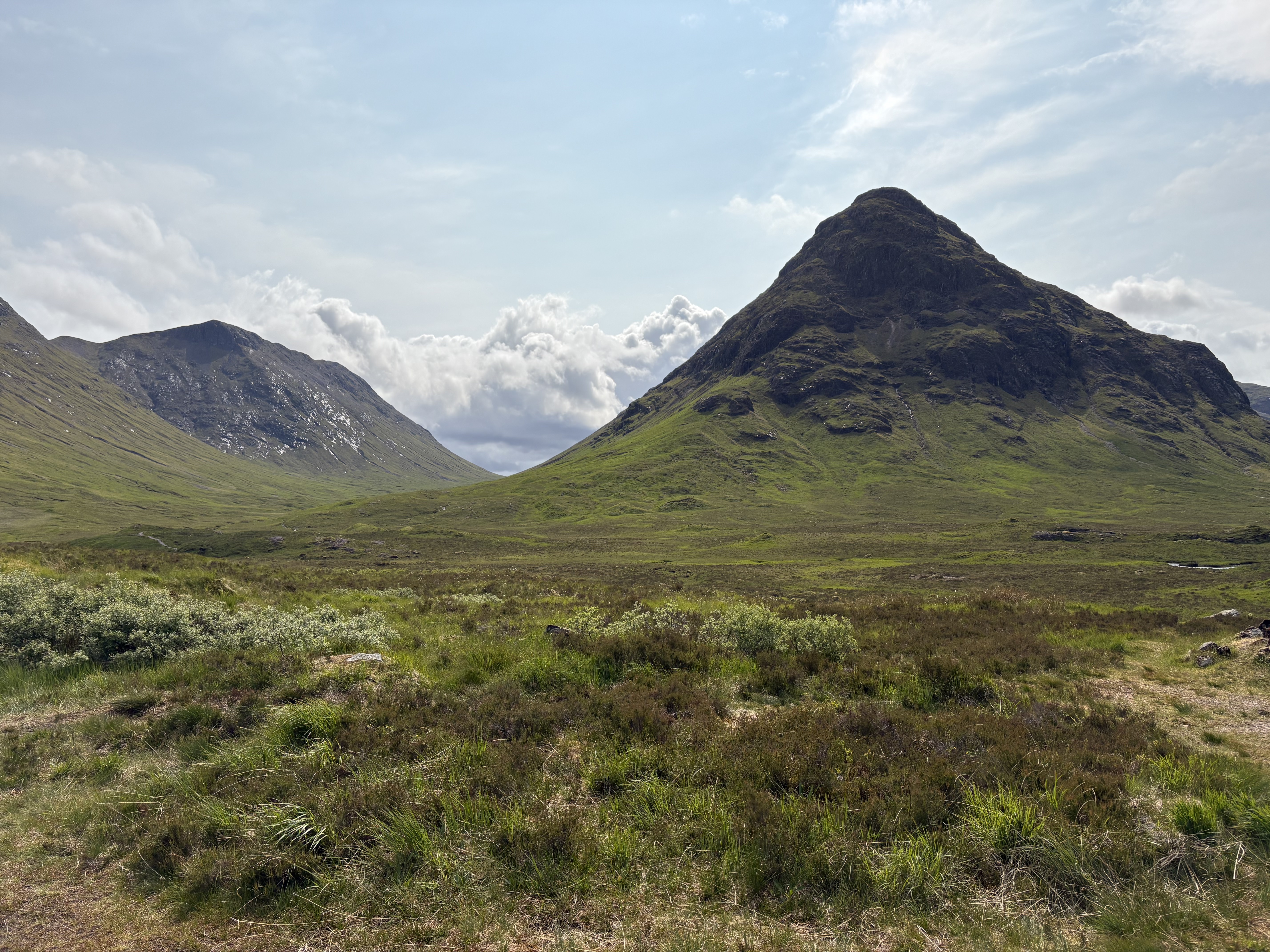
After picking up our rental car at Edinburgh airport, we started on the drive up to our base of Fort William. Although google maps will tell you that this should take three hours, if you’re following this route you’ll want to give yourself an entire day, as we did, for stops at the lovely Ben Lomond, the gorgeous Glencoe, and every random beautiful pull-off and viewing point in between.
The next morning we started bright and early on our trek, driving a quick ten minutes from our accommodation to the visitor’s centre and trailhead (parking £6 for the day — there’s space for about 80 cars but it was already filling up quickly when we arrived just before 9am on a Friday morning).
The path is wide and well-marked throughout; while it’s always important to be well prepared and it’s good to have some orienteering skills in case of low visibility, it’d be a difficult one to get lost on, especially given that there were a decent number of fellow hikers throughout the journey.
The hike is fairly cruisey at the start, taking you up past some farmers’ fields and a few turnoffs to hostels and guesthouses for those who want to stay super close to the mountain the night before. But after a kilometer it starts snaking its way up the side of neighboring mountain Meall an t-Suidhe. The weather was beautiful for us at this point, a mix of clouds and sun but dry and with a light breeze that kept things cool even as we began to climb.
I’d read prior that Ben Nevis only gets an average of 14 clear days on the summit per year, though, so I kept my expectations low. Similar to Carrauntoohil, I figured the top of the mountain would likely have its own little microclimate, meaning you could have clear skies and sun on the way up, and the complete opposite as you reached the top.
Around 3.5 km in, we passed a small and beautiful lake and then turned up on to Ben Nevis proper. Another kilometer took us to the halfway point, according to the map at the trailhead that said however long it took you to reach the stream crossing at Red Burn you’d spend the same time again reaching the summit (and then approximately 3/4ths of that time descending).
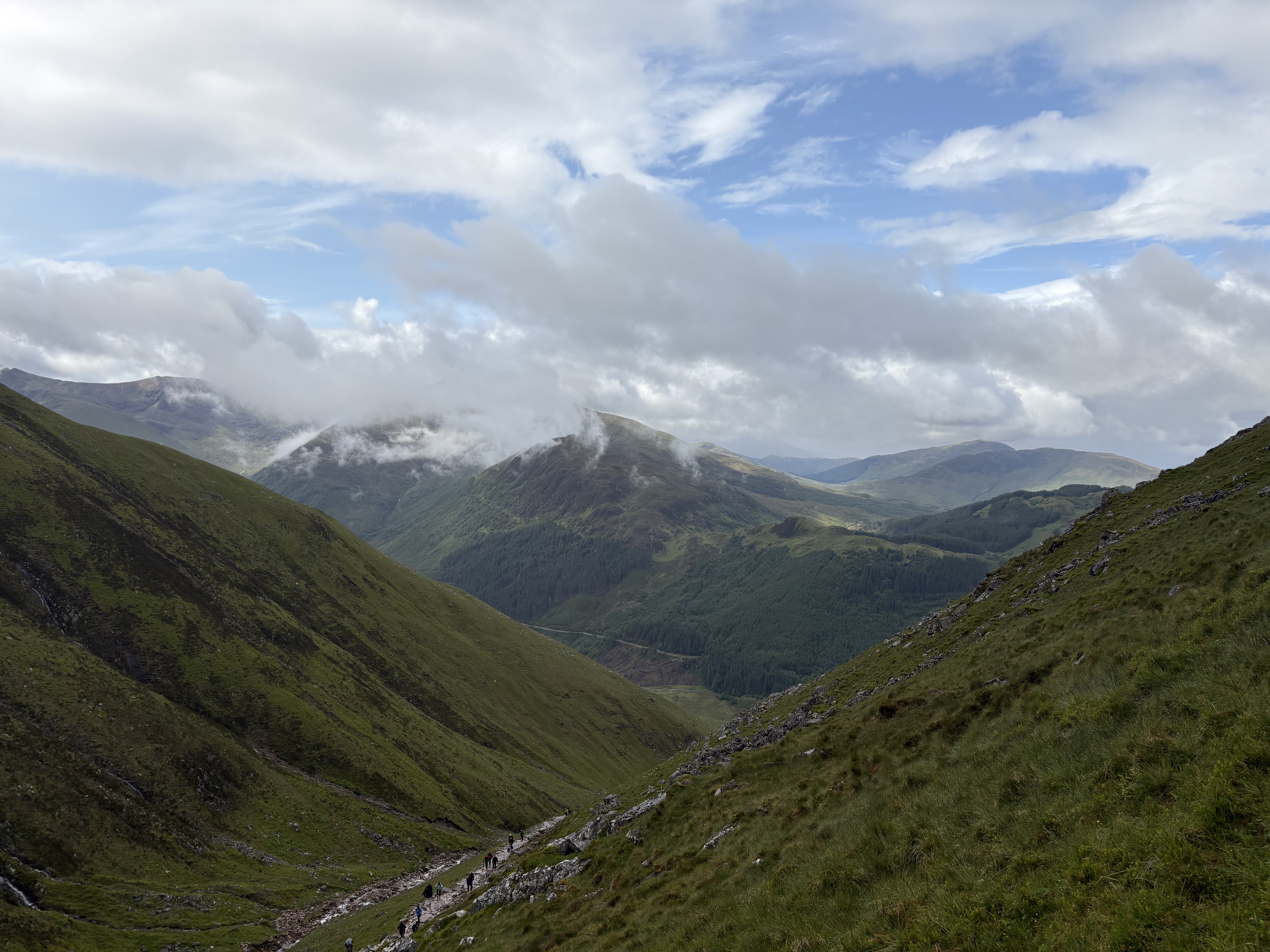
From here it started to get tougher, with a series of switchbacks heading up through the rocks and scree. And the weather started to change as well, with the clouds thickening into a misty fog and the visibility ahead lessening into a haze of grey and white. We spotted the first patches of snow on the ground as well, apparently leftover from a heavier fall a few nights before. This was only a few weeks ago, in June, remember.
Around 7.5 kms, near the summit, when the snowfall on the ground was thicker and the hikers ahead of and behind us quickly disappeared into the whiteout conditions, we passed a couple of steep gullies — slightly unsettling given the low visibility. You wouldn’t want to stray too far off the path here. But a series of rock cairns built up along the route kept us in check, and just past 8 kms we reached the summit!
The trek back down takes you the same way, and as we descended the skies began to clear and the air began to warm again. True to the trailhead map’s guidance, the hike that took just over 3 hours on the way up took about three-quarters of that on the way down, and we found ourselves back at the trailhead in a bit under 6 hours total.
In terms of strenuousness, I would put Ben Nevis as being comparable to Carrauntoohil, despite being a bit higher. It was longer (~16km compared to ~14km) but there were a few flat(-ish) stretches near the top that gave a bit of a break compared to Carrauntoohil’s final push through a steep field of scree. While it was definitely tough on the knees and I wished that I had been able to bring my hiking poles (we were traveling carry-on only so it wasn’t an option), Steve and I did manage to shuffle through a slow 5km jog the next morning at Fort William parkrun, if that tells you anything.
After another night in Fort William, toasting our achievement over a few pints at Black Isle Brewing, we left for a drive up along Loch Ness to Inverness the next day, and then headed back to Edinburgh to fly out on the Sunday.
I’d been dreaming of visiting the Highlands since my small trip to Edinburgh 14 years ago, and between the things we knew we wouldn’t have time to do (namely the Isle of Skye) and the things I heard about while we were there or looked up since we’ve come home, I am eager to return again. Maybe to bag a few more Munros!
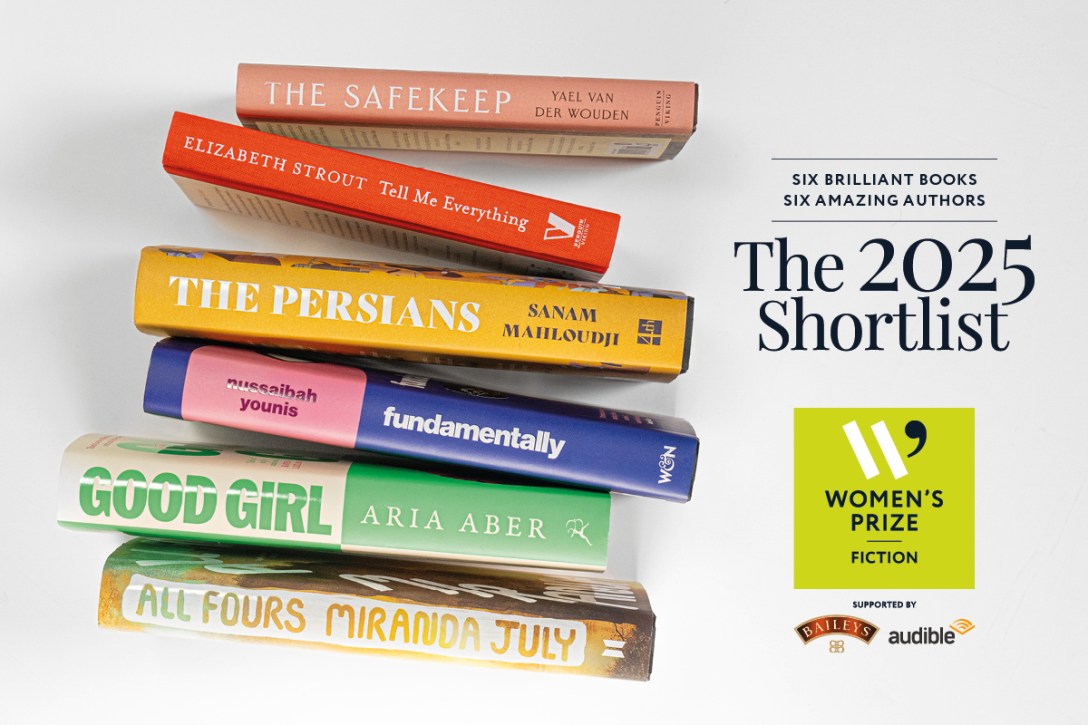
There’s only just over a week until this year’s Women’s Prize for Fiction winner is revealed! My favourite literary prize every year, I always make an effort to read the shortlist before the prize announcement. Many years, I’ve already read one or two of the books before the shortlist is revealed, but this year all six were new to me. This was pretty exciting as I got the chance to add six books to my to-read list (which, according to goodreads, now sits at over 400 books… oops, but also, no regrets). Now I’ve read them all, so here are my thoughts:
All Fours by Miranda July
I, like probably everyone but especially probably women, feel equally excited by and terrified of aging. While the last ten years of my life have been exponentially better on almost every metric than the ten years that preceded them (on a personal level, clearly; on a global level… you know), which I feel bodes well for the next ten years ahead, I can’t help but fear the advent of my late thirties, then the apparently-dreaded “over the hill,” and then, what?
Nobody really talks about what comes after. I guess women just become invisible, even to ourselves. The most chatter I ever hear about menopause is when my early-50s female coworker brings it up to annoy our late-20s male coworker.
Maiden and mother get plenty of airplay, but what about crone? NOT, to be clear, that someone ten years older than me, as is the protagonist of All Fours, is a crone. And she certainly doesn’t act like one either. Rather than withering, she is blossoming — sometimes into heretofore undiscovered alien flora rather than regular flowers, but still!
The protagonist reminds me a little bit of Jane from Danzy Senna’s excellent Colored Television. While they differ in that she has the level of semi-fame and certainly the amount of wealth to which Jane only aspires, they are the same in that I spent their narratives feeling engagingly horrified at the bafflingly bad decisions they make one spiraling from another. In a fun way.
I love the juxtaposition of how much we learn about the protagonist’s interior self versus how little we learn about the daily details of her life. Unless I missed it, I believe there is only even one fleeting reference to her name.
We never learn exactly where her fame and wealth came from — we know she writes, because a line from her work is licensed by a whiskey company, leading to a windfall that drives some of her wildest decisions, and later in the novel she publishes a book. But is she a novelist? A blogger? And there are hints that she works across various mediums, but we aren’t told exactly what they are.
From reading Miranda July’s wikipedia’s “Personal Life” section and seeing the similarities between herself and the protagonist, I imagine she is meant to have created a blend of visual, performing, and written arts like July, but I enjoy the way I felt allowed to create my own exterior vision of her, to compare and contrast with her interiority.
The protagonist falls into one of my favorite categories of characters: difficult to like but easy to love. She is narcissistic, melodramatic, a little bit deranged at times, and would be absolutely exhausting to know. But I couldn’t help but love her.
No matter what you think of her actions, which I won’t even begin to try to recap here because they are both more and less insane in the context of the novel, she is not someone who will allow herself to become invisible, although it seems like she may have been on the precipice of it. And in the protagonist’s journey of self-discovery, she also discovers a dawning era that she has not contemplated, maybe because most of us don’t contemplate it except with trepidation until we are in it.
After the appointment I sat in my car and did a quick round of open-sourcing, sending a group text to all the older women I knew. What’s the best thing about life after bleeding? I asked them. Just let me know when you get a minute! But the first response, from Sam’s old kindergarten teacher, didn’t even take a minute
I’ve never read anything by Miranda July before, but the way she writes about the interconnecting themes in this book — pregnancy and motherhood and menopause, relationships and monogamy and non monogamy and romance and sex and partnership, womanhood and queerness and gender, and more — rewired my brain a little bit.
While some of the protagonist’s experiences are not ones I will or want to have (spending twenty grand to redecorate a motel room, literally everything regarding all of her romantic relationships, although I did love all of her friendships), others are pretty much inevitable for all women as we age, and July perfectly captures the fact that this is beautiful and terrifying and somehow very funny. My favourite of the shortlist, and I hope to see it win on June 12.
Fundamentally by Nussaibah Younis
To be honest, in scrolling through the other reviews on goodreads, it seems like there are a lot of folks who really want this book to be something that it’s not. And I don’t mean that they think the book was trying to be something in particular and didn’t succeed; I mean that some reviewers seem to have made up a different book that they thought Fundamentally should be given the subject matter, and then got annoyed that it wasn’t trying to be.
Yes, it’s satirical, the tone is irreverent, and the protagonist makes a series of insane decisions. Those things are pretty obviously intentional on the author’s part. Have we strayed so far from media literacy’s light? With a decade in peacebuilding work on the deradicalisation of ISIS brides, author Nussaibah Younis could surely have written a serious and academic treatise, if that had been her aim.
For my part, I found the novel extremely successful, and extremely entertaining. For me, the incongruity of the subject (deradicalising ISIS brides) and the tone (more in line with a trashy beach read than a serious academic piece) brought such an interesting element to the novel.
In Fundamentally, protagonist Nadia agrees to take a role at an Iraqi refugee camp, spearheading a deradicalisation program for the UN. She quickly learns that, just as one of her primary motivations in the move was escaping the heartbreak of her girlfriend/flatmate/FWB dumping her, most of the other folks working there aren’t doing so with only the purest of motivations. Younis deftly skewers local and foreign governments and NGOs, aid workers and experts, including, I’m sure, herself.
Even the ISIS brides do not escape a bit of satire, although Younis offers a very empathetic narration here, looking at the complexities of their situations despite the choices that brought them to the refugee camp.
The star of the show is Sara, an English teenager of South Asian descent who had left to join the extremist movement at just 15 (in an obvious parallel to a real-life story). Nadia is immediately drawn to the young woman, seeing in Sara the endpoint of a path she herself could have gone down, had her circumstances been slightly different.
Her fixation drives the plot, and the depth of the two women’s similarities and differences bring a fascinating element to the story. When Sara finally opens up to Nadia around halfway through, it’s powerful and in some ways devastating; likewise when they have a heart-to-heart of sorts toward the end of the book.
Aside from Nadia and Sara’s, my favourite relationship in the book was between Nadia and her mother. Although it is a minor storyline, their rupture when Nadia came out as queer and has a crisis of faith and their gradual return to having each other in their lives felt both realistic and emotional.
The story throughout is about blinders, biases, and how they affect motivations and actions large and small, from top to bottom. The novel also forces us to confront our own preconceived notions, while still being entertaining, rather than lecturing.
My one complaint is that the part of the ending that concludes Sara’s storyline felt both slightly rushed and a too perfectly tied up. However, for me this was the second best of the Women’s Prize shortlist, and a shockingly fun novel and strong satire of a serious subject.
The Persians by Sanam Mahloudji
The Persians took me a little while to get into, but once I did I was hooked. This novel focused on a history and culture that I have to admit I know very little about.
The story is told from the perspective of women from several generations of a formerly-influential Iranian family, some of whom left Iran for the United States, and others who stayed. They no longer have their political power, but they still have their wealth. When one of the women finds herself in trouble with the law, the relatives are drawn together, and as they reconnect, for better or worse, their family history (and its secrets) are revealed.
The characters take some getting used to, being frequently over-the-top in their dramatics and often unlikeable. But Sanam Mahloudji does so beautifully with differentiating each of the women’s voices and offering their perspectives to the story that you come to understand each of them. The multiple POVs worked well for the structuring of the novel, and the later parts where the women spend more time together and interact solidified their distinct personalities and characters.
I feel like this would make a great miniseries, and it’s a strong addition to the Women’s Prize shortlist.
The Safekeep by Yael van der Wouden
“Isn’t that funny? No one ever knows anything in this country. No one knows where they live, who did what, who went where.”
I feel a bit torn about this book.
The writing was stunning, and each individual part of the book was very well plotted (aside from the sex scenes which I felt were, while also well-written, disproportionately long given the length of the novel without actually advancing the plot or revealing much about the participants’ characters, sex for sex’s sake that didn’t compare to the richness of the longing and metaphorical dance that came before).
The twist — I suppose you can call it a twist, although the way it reveals itself is not as a jump scare but as a realization that the horror has been lurking in the room throughout — is fantastic. The diary chapter is brilliant.
But the problem for me was that the “twist” and the shift in the narrative was so interesting that I ended up wondering why we had spent all of this time on the far less interesting narrative that had come before it.
And I found the ending frustrating. I felt that the ultimate resolution did not fully resolve the issue. Its success hinges on the stability of the characters’ relationships (saying what I can without spoilers) and I didn’t feel like that foundation was there, at least not to the level that would adequately lead to closure and happiness to the character who I felt most deserved it.
Whenever I read a debut novel I consider whether I’d read another by the author, even if I didn’t love the first, and in this case the writing was so good that I absolutely would. And as I said, I may return to reevaluate this one as well. But as it stands at the moment, I did feel like the book didn’t fully achieve its goals, but it did do what it could manage in a beautifully-written way.
Good Girl by Aria Aber
There are writers who can make stories about partying and doing drugs interesting and compelling, but there are also a lot of writers whose stories about doing drugs are interesting only to the participants, despite what they think. Unfortunately, this one is definitely the latter.
The element that is meant to save the novel from drowning in cliché is that the protagonist Nilab is the child of Afghan immigrants, but while the book’s only really moments of depth stems from this finding-identity-between-two-worlds narrative, they’re not enough to draw it out of the mire.
Despite being a woman author and even being shortlisted for the Woman’s Prize, and despite the protagonist obviously the protagonist also sharing much of her backstory with the author herself, if you’d told me that the author stand-in was not the protagonist but the douchey white American writerbro she’s in a boringly toxic relationship with, I’d nearly believe you.
There were some good lines in here, and again there were moments as Nilab grapples with her identity and with the expectations of her parents, her cultural background, and her life in an increasingly politicized and anti-immigrant Berlin that did strike me, but as a whole it mostly left me cold.
Tell Me Everything by Elizabeth Strout
This book is not last in my rankings, but separate. I find it hard to evaluate because I don’t think it was meant to be a reader’s first introduction to Elizabeth Strout, as it was for me.
I assumed that, because it was shortlisted for the Women’s Prize (the reason I read it), it would be a standalone novel even if it took place in the same universe as the author’s other works (similar to Marilynne Robinson’s Home, which I had no trouble reading independently despite not having read Gilead, and which won the Women’s Prize in 2009).
While this may technically be true in that the novel is another story in an existing universe rather than a sequel that directly follows the events of a previous book, from the number of reviews exclaiming joyfully about catching up with favorite characters like Olive Kitteridge, Lucy Barton, and Bob Burgess as though they are old friends, it is clear that the novel is far more meaningful to those who have already spent time with them and their town of Crosby.
That said, even without the backstory, there were some things I really loved about the novel. The writing was warm and inviting, not too soft or twee but gentle and genuine. I liked that most of the characters were older, a nice change from most novels being populated by people in their 20s and 30s. I loved how rich in detail the setting and characters both were, obviously bolstered by Strout having written about them many times before. It felt like there was so much going on in the background and the little moments that made it feel like a real place in which real people live, and I can see why readers would be delighted to visit with them again and again.
This past weekend I ran the 10k at Run Killarney. First of all, I want to say that this is a fantastic event. It’s probably the most well-organised of any of the Irish races I’ve done, the course is a gorgeous loop that takes you through the national park, and the weather always seems to cooperate. They also have the nicest medals!
My only complaint is that I think it’s weird there are no bananas at the finish line, but at least as of this year there are vegetarian and gluten free options for the post-run snack of a breakfast sandwich.
My time was 51:17, which is pretty much in line with my recent running. 51:17 works out to about 5.08 per kilometre, and I ran the Streets of Killarney 5 Mile a month ago in 41.28 (5.15 pace, in fairly heavy rain), and my last couple parkruns have all been in the range of a 4:58-5:10 pace.
It’s not my 10km personal best – that would go to a flukey 48:49 at Run Killarney a few years ago – but it was a solid effort. Before the race, I told Steve that I’d love to get between 50 and 52 minutes, although I thought 55 minutes might be more realistic. So not only was I much faster than my “realistic” 55 minutes, but I was right in the middle of the range I was hoping for.
I didn’t train too hard for Run Killarney, and one of the main reasons why is pretty silly. I have thick hair, and a lot if it, and it’s extremely slow to dry (and I hate using blow dryer). So the harder I run, and the more often, the more frequently I have to wash my hair. I just wasn’t in the mood for that the last few weeks. If my hair-washing laziness is more of a priority to me than my running speed, then it’s no surprise that I wasn’t breaking any personal records over the weekend.
And look, that’s part of life. I’m not an elite athlete; I’m not being paid to run (or to wash my hair). I’m just trying to stay fit and healthy, and not feel like crap when I go out for a jog. My big goal when I ran my last marathon was to maintain my running routine afterward – it’s so easy to “take a few weeks off” which somehow spirals into months and months. I managed to keep up a more-or-less twice-a-week habit of a Wednesday evening jog with my running group and a Saturday morning parkrun that felt like enough.
That said, even if I’m fairly content with my current running fitness, there are some elements I still struggle with. One thing is the natural peaking and dipping of my athletic performance. The women in my running group were talking about this the other week – how one week you might be flying effortlessly, while the next you’re huffing and puffing while going slower or for a shorter distance.
Sometimes it’s obvious why – tiredness or dehydration or spending hours walking around the Berlin Zoo the day before you run a marathon like I did – but sometimes the reason isn’t so clear. And while anyone can have an off day, women can be particularly affected due to our hormonal changes over the course of the month. And the annoying thing is, the points where your energy is likely to be the lowest are also the times when your emotions are likely to be the most sensitive, a double whammy of poorer performance + letting it get to you.
Now, I’ll be frank, I don’t track my menstrual cycle (and I haven’t gotten a period in years thanks to my IUD) so I couldn’t actually tell you when it’s the cause of my faster or slower runs. But sometimes you just know when, no matter how hard you push yourself, you’re not going to be getting any of those cute little medals when you upload your activity to Strava. Sometimes you know that you’re not running as fast as you can, but paradoxically you know that you can’t run any faster, at least not on that particular occasion.
I’ve digressed here, because I did feel pretty good during my Run Killarney 10k, and although I didn’t feel as though I was running as fast as I could, it also felt clear to me that the reasons were the overall lack of training and the hot, sunny day, rather than anything internal and undefinable.
But it’s a good reminder that these good and bad days will come and go, and you can’t always predict or explain why. And regardless of the result (which again, I was mostly happy with), it was a great day out on a gorgeous sunny day. And the pints afterward went down well, too!
This week I hit a milestone and ran my 50th parkrun. For those who don’t know, parkrun is a free, community/volunteer-run weekly 5k event that takes place every Saturday morning. Since the first event took place in London in 2004, parkrun has grown to encompass over 2000 locations in 23 countries.
I first started parkrunning at an event in Australia in 2019, and since then I’ve run at 10 different locations in three different countries. But most of my parkruns (38 out of the 50) have been at my local parkrun, Killarney House, a beautiful 3-and-a-bit lap looped run in the national park, and that’s where I ran my 50th on Saturday.
I’m a bit of a parkrun evangelist — if you mention that you’re thinking of getting into running, or that you’d like to get a bit more exercise, I’ll probably start singing parkrun’s praises. And I figure that my 50th parkrun means that it’s good timing to do that here as well. So here’s why I love parkrun and why you could, too.
fun fact: i have never looked good running in a photo ever 🙂
Anyone can join, anytime
Parkrun is completely free for participants and doesn’t require advance registration for any individual event — once you sign up once, you can run at any parkrun, anywhere. All you need to do is go to the parkrun website and register. Once you register, you’ll receive a barcode that you can print out or show on your phone to be scanned after you cross the finish line. That’s how your attendance at an event and your time are tracked.
It’s a great way to get involved
If you’re not a runner or walker, you can also get involved by volunteering! Parkrun depends on volunteers, so you can register to be a marshal, a barcode scanner, a timekeeper, or a number of other roles and become a part of this great and welcoming community. It’s definitely encouraged for runners to volunteer occasionally as well! I like to do the first timer’s briefing, where I explain the route to new participants or visitors and welcome them to our parkrun. As a bonus, it’s one of the volunteer roles where you still get to run as well.
Parkrun meets you where you are
One constant refrain at parkrun is that it’s an event, not a race. Whether you’re an Olympian or a couch-to-5k-er, you’re equally welcome and your participation is celebrated. At Killarney House, for example, finisher times usually range from just over 16 minutes to just under an hour. One of the most valued roles at parkrun is the tailwalker, whose job it is to be the final finisher, so you don’t have to worry that you’re “too slow” for parkrun. There’s also no pressure to maintain a certain pace; some weeks you might run, some you might walk, and sometimes you might do both.
You can meet parkrun where it is, too
There’s a whole group of people who are avid parkrun tourists, travelling to events around the world, whether just for the fun of it or to try to complete unofficial “challenges” like running a parkrun that starts with every letter of the alphabet. While one of the great things about parkrun for me is that I don’t have to travel far to reach my local event, which is convenient and better for my carbon footprint, I definitely like to check out the local parkrun if I’m visiting a new place anyway. Even if I’m not around on a Saturday morning, looking at the parkrun’s event page can be a nice way to find a fun, safe 5k route in a new town or city.
The stats are so satisfying
Because each individual parkrun event takes place on the same route, it can be fun to look back over your personal results and see how they change over time. If you’re on a fitness journey, you might enjoy seeing the times getting quicker as you go, or if you’re the kind of person who parkruns in all conditions (internal and external), it’s interesting to see the numbers go up and down week to week depending on the weather, how you’re feeling, etc. Less than a month ago, I ran my fastest parkrun in two years. This weekend, after two days of hiking, I was over a minute and a half slower. That’s the way it goes!
If you want to get involved, find your local parkrun HERE and sign up to run, jog, walk, or volunteer! As a note, there definitely are far fewer parkruns in the United States than in other countries that have the event, but numbers are growing all the time. And if you’re looking for an event that’s local to you, maybe it’s time to consider starting one!
Last month, I spent a week in Lisbon with my husband and my parents. It was a great way for us all to meet up, visit a new city, and for the most part (barring one two-hour torrential downpour) get a break from the dreariness of Irish winter.
It was also a GREAT place to eat — as we spent the week consuming our bodyweights in pastéis de nata, Lisbon quickly became one of my new favourite food cities. Here are some of my favourite dishes we had while we were there.
Two notes:
1. A lot of the restaurants in Lisbon are family-style, so it was nice that we were a group of four so that we could share and try more dishes. Likewise, it was nice for my husband that my dad also eats meat (my mom and I are both pescatarian) — while they were both willing to stick to fish and vegetarian dishes, they were able to try some of the meat dishes like the pica pau steak that they might’ve missed out on otherwise.
2. This is not a list of “hidden gems.” One of my travel content pet peeves is when someone goes to a place for the first time, and then comes back a week later claiming to have gotten “off the beaten path” and found the “hidden gems” where “only the locals go.” Is it possible? I guess. But if you’ve gotten your recommendations from No Reservations and Somebody Feed Phil and Instagram reels (as I did), then no, you probably didn’t. And that’s okay. Just be a tourist.
Pastéis on pastéis on pastéis
On our first day, Steve and I kicked things off with the most touristy place possible: the Time Out Market. This massive food hall is full of bars, restaurants, and kiosks selling all kinds of Portuguese foods (and other cuisines as well). When we went, we made a beeline for the pastéis de nata at Manteigaria, which pretty much set the tone for the trip (I don’t think there was a day that we didn’t eat at least one pastel).
Later in the week, we took a trip out to Belém, where pastéis originated. I think that the pastéis in Belém were crispier and slightly more eggy than the ones in the city, and I loved both in different ways. Mostly, I learned that the best way to eat them is fresh out of the oven and covered in cinnamon and powdered sugar.
Swimming in seafood
As a city on the water, Lisbon is famous for its seafood, and we certainly had no shortage of amazing fish and shellfish dishes. Here were a couple of standouts:
Carabineros shrimp at Ramiro
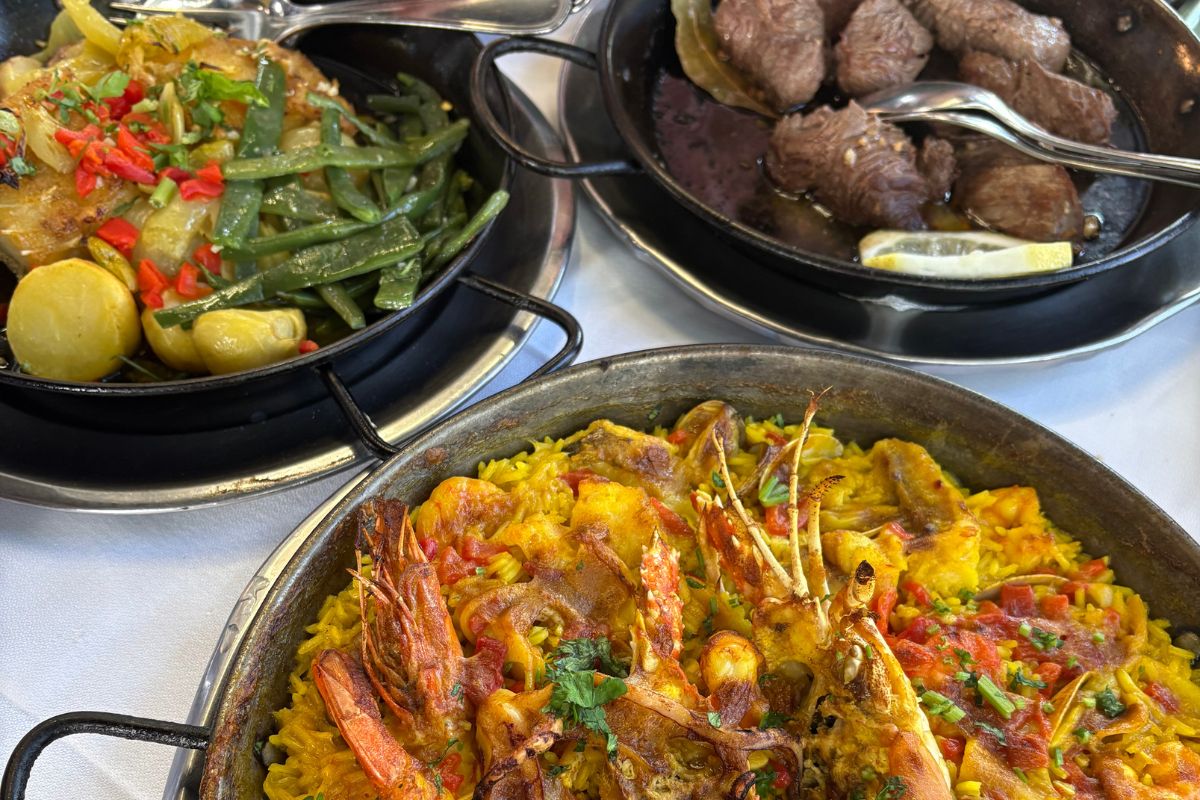
There was one restaurant that was mentioned in pretty much every guide to Lisbon food I read and watched in the lead up to our trip: Ramiro. I’d heard you need to prepare for a long wait, but we skipped lunch and to plan for an early dinner and were seated pretty much right away. When we asked the server what we should order in addition to our own picks, she suggested the scarlet shrimp. A giant, lobster-like crustacean that the server prepared at the table by cutting in half and mixing the meat with the creature’s brains, it sounds a bit gross but we quickly got over any squeamishness once we tasted how delicious it was.
Sardine toasts at Miguel Castro e Silva, Time Out Market
These sardine toasts were so good we got them two days in a row (my parents arrived a day after Steve and I, so we went back to Time Out Market on day 2 as well). Big, meaty chunks of sardines topped soft yet crusty bread rubbed with tomatoes, and the fish was covered with pickled vegetables and herbs. A simple, delicious snack that went perfectly with a glass of dry white wine.
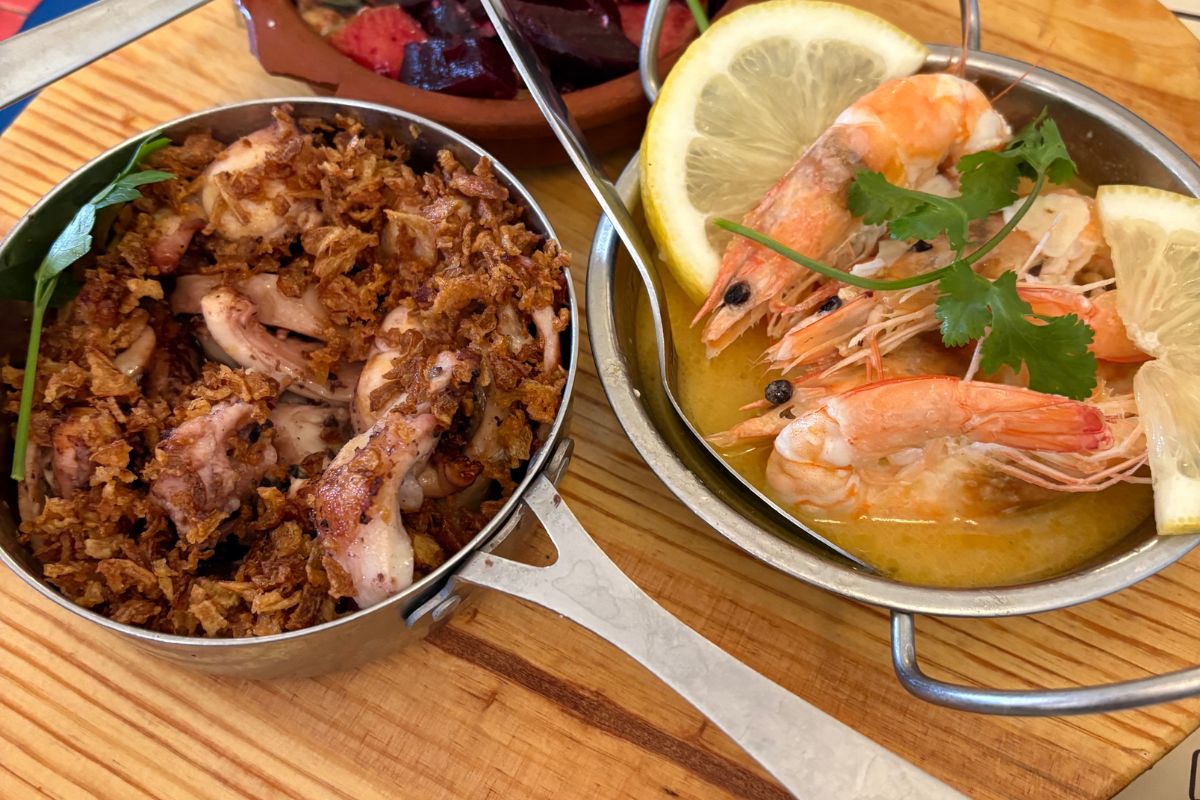
Laminas de polvo a lagariero at Tascatinga
I don’t eat octopus very often because I know it’s a very smart animal and I feel bad, but I couldn’t help ordering it as one of the tapas when we stopped for lunch in Sintra in between palaces. And if I don’t intend to eat octopus again for a long time (because of the aforementioned guilt and because of it not being widely available in Ireland), I’m glad this will be my most recent memory. It was perfectly cooked, mostly tender but with just the right amount of chewiness, and covered in fried onions that gave it some extra texture.
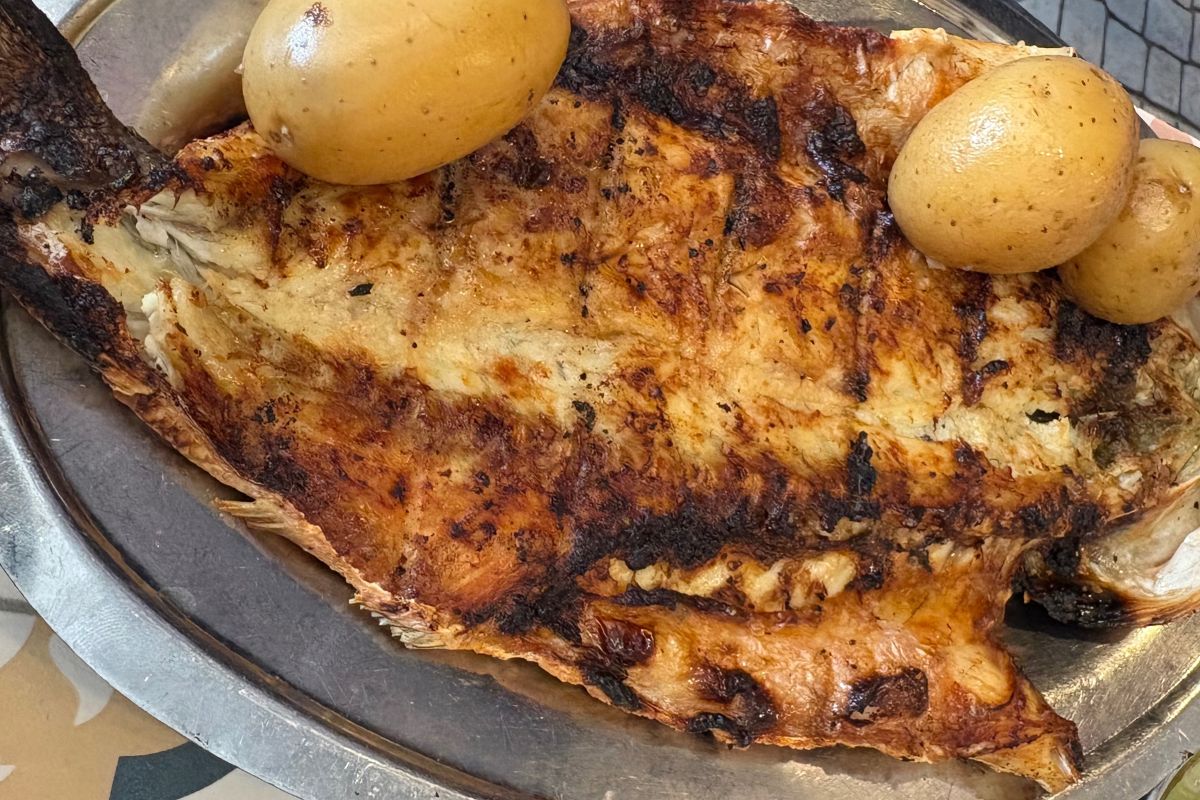
Grilled sea bream at Restaurante A Linete, Palmela
My family is not normally the guided tour type, but we did book one day tour on our trip, a wine tour down to the Setúbal region about an hour south of Lisbon. It was definitely worth having a knowledgable guide who could explain the history and traits of the wines we tasted, and of course to have a designated driver that meant we could all sample the vinhos. After our winery visits, we were taken to a restaurant in Palmela for lunch before our return to Lisbon, and on our guide’s recommendation we all ordered the grilled sea bream. I think the main hallmark of Portuguese cooking is simple food done well, and this dish was a perfect example of that.
More food porn
I could probably go on for hours talking about some of the other dishes I loved on our trip to Lisbon, but a picture’s worth a thousand words, right?
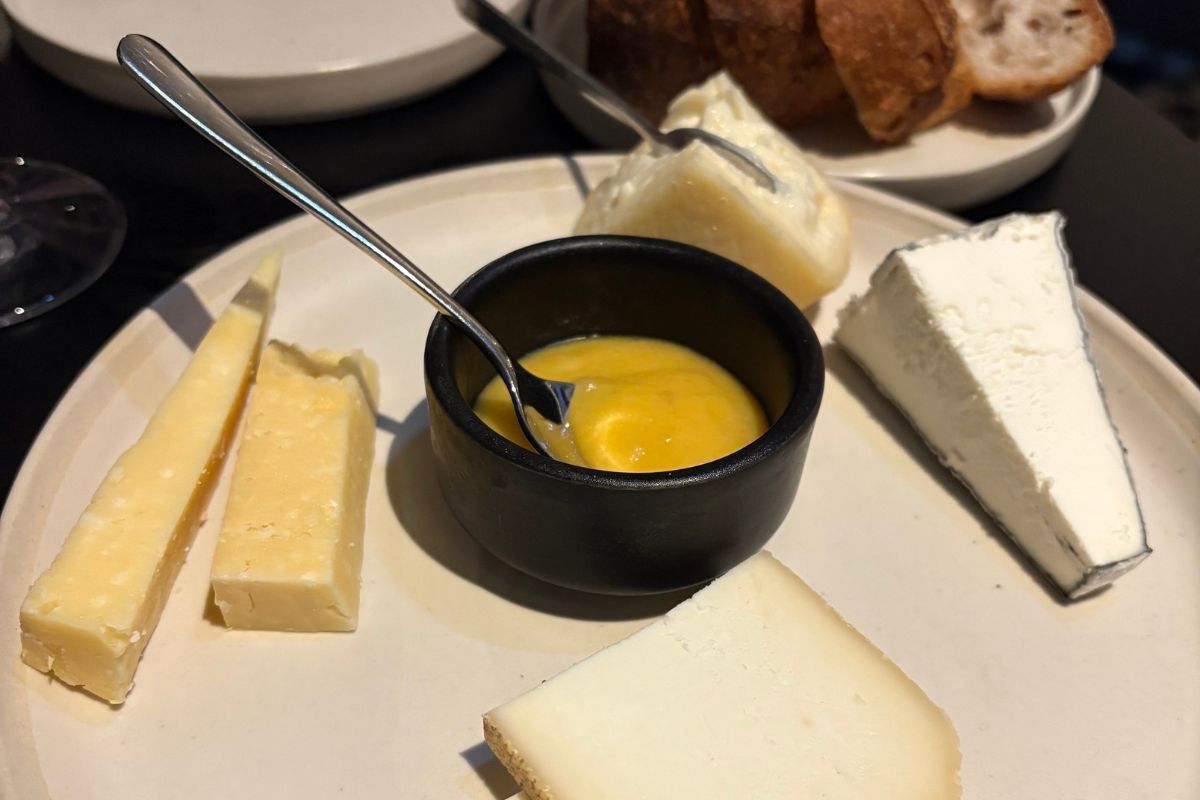
Cheese board, Prado wine bar — this lovely little wine bar was near our accommodation, and after a day spent grazing and snacking we were too full for a proper dinner. So this delicious cheese board (and a few glasses of amazing orange wine) was perfect. We also became obsessed with a raw sheep’s milk cheese called queijo de azeitão that just came from the local supermarket chain, Pingo Doce.
Barnacles (and scallops), Ramiro — a lot of the reviews of Ramiro mentioned the barnacles, so we figured we had to try them. Small and salty, they were a little bit of an acquired taste, but once we got the hang of opening them they were a delicious addition to the dinner and a fun thing to try. Also those scallops were amazing.
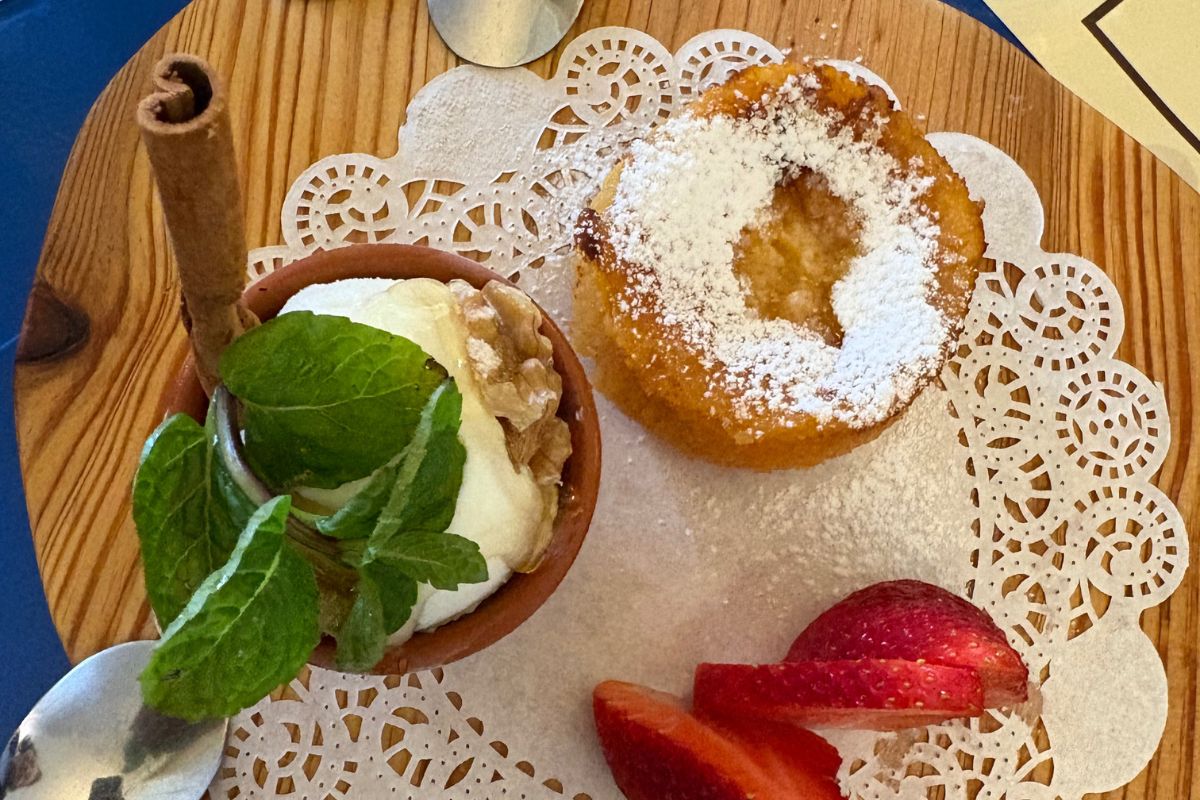
Pumpkin dessert, Tascatinga — another odd dish ordered based on rave reviews, I don’t even know quite how to describe this dessert. It was a bit like a lava cake, except that as soon as you put your spoon into it, it melts in to a warm and custardy mush. I have no idea if it’s a traditional Portuguese dish or a restaurant specialty, but I’m so glad I made room for dessert even after a large lunch.
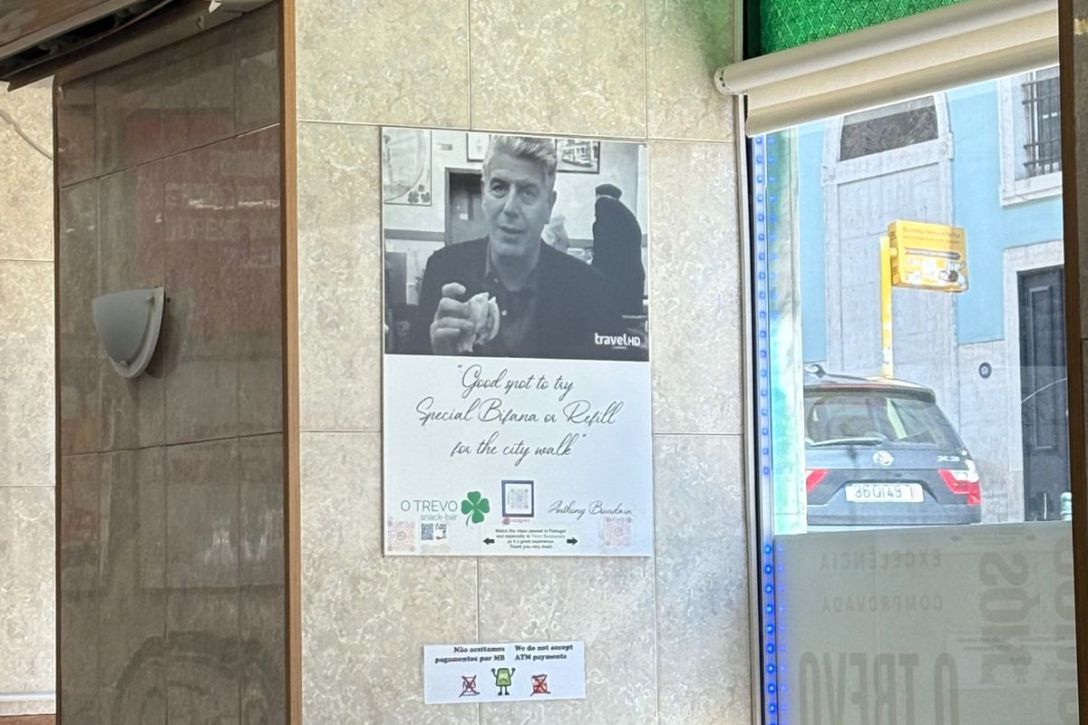
Bifana, O Trevo — Anthony Bourdain is Steve and my patron saint of good food, and we always try to visit some of his recommendations on any trip. In addition to Ramiro, A Ginjinha (a hole-in-the-wall bar counter serving sour cherry liqueur), and A Tasca do Chico (a tapas bar known for its traditional Fado music) we stopped into O Trevo so Steve could try a bifana. This marinated pork sandwich wouldn’t be my cup of tea, but judging by the number of people in high-vis at the tables in this small shop, it’s an ideal work lunch. The Super Bock stout was decent too… more on that later.
Fried sardine fillets at Maratimo, Cascais and various dishes at Pinóquio, Lisbon and seafood rice at Monte Mar, Time Out Market — okay I have to stop but here were a few other favourites. Happy eating!
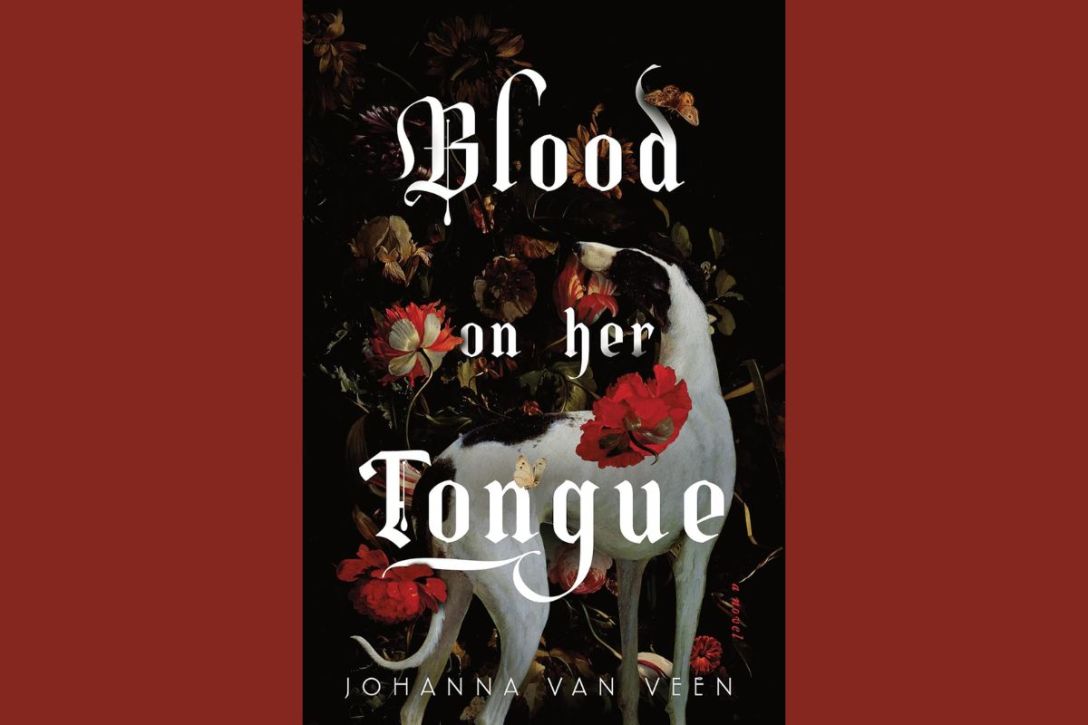
Happy publication day to Blood on Her Tongue! Johanna van Veen’s My Darling Dreadful Thing was one of my favourite horror debuts I’ve read in a while — delightfully gothic and romantic and gruesome — so to say that I was excited about snagging an advance reader’s copy of Blood on Her Tongue may be an understatement. Thanks very much to the author, Netgalley, and Poisoned Pen Press for an ARC in exchange for an honest review.
Where does one end and another begin? This is the question this novel asks repeatedly. Where does Lucy end and her twin sister Sarah begin? Where does Sarah end and the thing she has become begin? And where does love end, where does family end, where does duty and morality and desire and… where does the horror begin?
I went in expecting a vampire story thanks to the Dracula epigraphs, the protagonist’s name, etc. and Blood on Her Tongue does certainly have vampiric elements. But it’s also much more, an intriguing blend of horror elements from the natural horror of death and decay to something decidedly supernatural. I loved the super evocative imagery, gruesome often to the point of grossness (the pen! the eyes!), and as someone who lives in rural Ireland I found it easy to call to mind the smell of the peat and the sucking thickness of the bogs, but I think even if you’re not familiar I think you would be able to imagine it based on van Veen’s writing.
Lucy is a fascinating protagonist. She’s not a nice person; she’s obsessive and greedy and haughty and her relationship with her sister is nothing short of toxic, and yet she’s so compelling. Sarah, too, is equally riveting. Even though so much of the action in the first half of the novel takes place around her, her presence is key and her perspective, as told through her letters and journal entries, rounds out the setting and the wonderfully creepy gothic atmosphere so well. And when she (or someone) starts to really take the stage, well. It takes talent to do a good exposition scene, and there’s one around halfway through this novel that’s particularly good, managing to build the tension while delivering a lot of information about the nature of the being that has gotten its grips into Sarah.
There are some great layers to the plot that also help to build the overall world of this 19th Century Dutch manor and its inhabitants. Early on, the men in the novel are quick to dismiss the sisters’ fears as mistakes or madness, and although the women’s violent actions in the latter half of the book certainly aren’t out of any sort of feminist intentions, Arthur’s and Michael’s paternalistic mindsets do bring an interesting element to the story, although as characters they are far less developed than Lucy, Sarah, or even some of the other minor characters such as Magda the serving woman.
Overall, I think I enjoyed this even more than My Darling Dreadful Thing (although I seriously loved that one as well). Toxic codependence will always be a favourite horror trope of mine, especially when it leads to devastating consequences, and it’s so well executed here along with an exquisitely-crafted story that grows the creeping, unsettling tension to a truly disturbing climax. Van Veen has quickly been added to my list of the authors whose work I will eagerly devour (ha) as soon as I see it.














 thebestpossibletime