Thinking about the catharsis of the Hadestown gasp

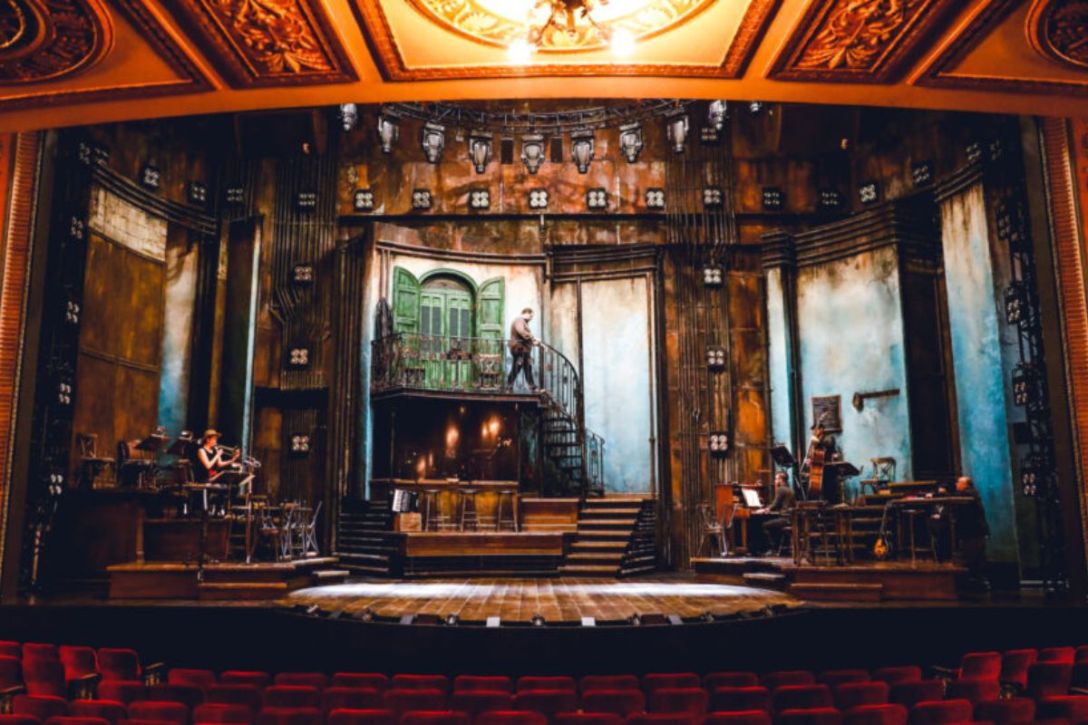
hadestown set

I was listening to Hadestown the other day (and feeling jealous of anyone who got to see the OBC on the West End this week… even though I also saw the OBC plus a few truly exceptional understudies a few years ago) and thinking about the Hadestown gasp. 

If you don’t know what the Hadestown gasp is, it’s — spoilers ahead for the show and the more-than-2000-year-old Greek myth — the audience reaction when Orpheus turns back to look for Eurydice as she follows him out of Hell, breaking the deal he made with Hades and dooming her to return to the underworld. 
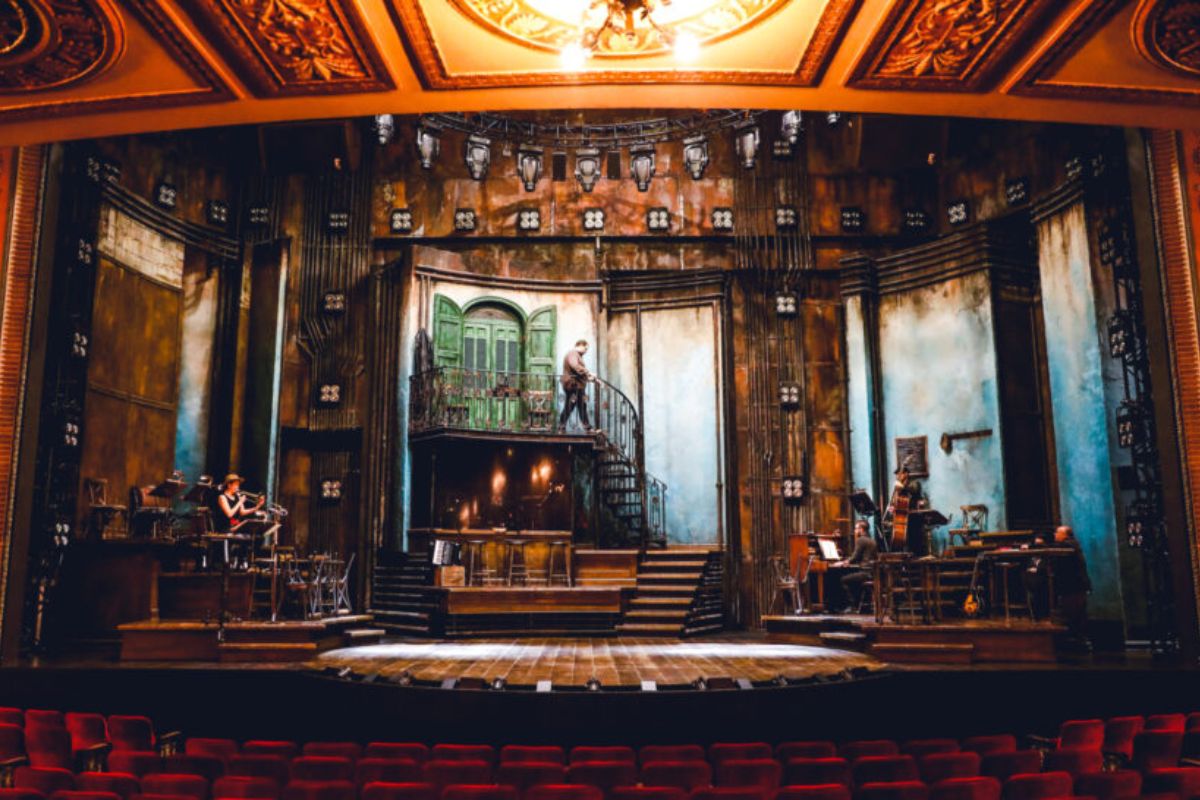
hadestown set

For those who don’t know the story, it’s a shocking moment in the musical, even though it is foreshadowed in the opening number: It’s a love song / (It’s a love song) / It’s a tale of love from long ago / It’s a sad song / (It’s a sad song) / But we’re gonna sing it even so. It’s inevitable that, at every performance, there is a gasp in the audience when Orpheus looks back. 

But it’s not just from first-timers, or for those who don’t know the story. I’ve only seen Hadestown once, but I knew the myth it was based on going in, and I still gasped. And even knowing this particular iteration of the story apparently isn’t defense enough when plenty of audience members who have seen the show multiple times have commented that they, too, still gasp every time. 

And when the reprise of the opening number comes near the end of the show, it comments on this, too: See, someone’s got to tell the tale / Whether or not it turns out well / Maybe it will turn out this time

There has to be an element of hope in tragedy or there’s no point. Romeo and Juliet isn’t one of the most performed plays of all time because we love to watch foolish teenagers die — some part of us has to believe that maybe, maybe they won’t be star-crossed and their their plot will work out just this once

To quote one of the title characters in my favorite play of all time, Tom Stoppard’s riff on another of Shakespeare’s oft-performed tragedies: “There must have been a moment, at the beginning, where we could have said—no. But somehow we missed it […] Well, we’ll know better next time.” 
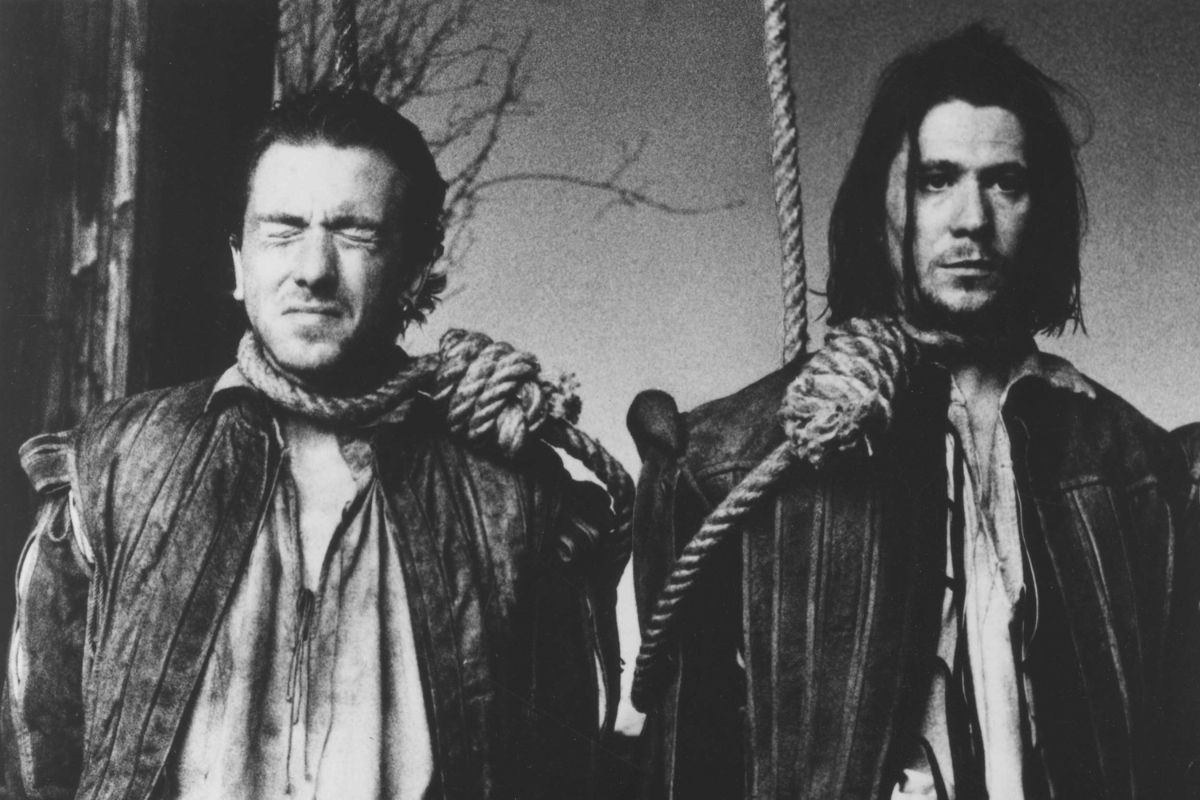
rosencrantz and guildenstern are dead

If you know Hamlet then of course you know that there is no next time for Guildenstern (or is it Rosencranz?) but there must have been a moment—no. But you have to believe there might be. A story can be unrelentingly miserable and still be a good piece of art, and some stories have no choice but to be hopeless, but these aren’t the ones we revisit over and over. 

It’s part of the catharsis that has been discussed as an element of theatrical tragedy since the Ancient Greek times that first birthed the Orpheus and Eurydice story. Those slivers of hope are what allow us to empathize with what we are watching on stage (or reading, or seeing on screen, as it is not solely limited to theatre). And our empathy allows us to vicariously feel our emotions through the story, and feel that catharsis through the tragedy. 

Kurt Vonnegut wrote in Slaughterhouse-Five about another age-old character who couldn’t help but look back when she wasn’t supposed to: “And Lot’s wife, of course, was told not to look back where all those people and their homes had been. But she did look back, and I love her for that, because it was so human.”

Maybe there’s a life lesson here, I don’t know, but what I do know is that Orpheus must look back, and we must be shocked. If ever there comes a time that no one reacts, then there is no point anymore to the story being told. But I don’t think that will happen, soon or ever. Someone, at least one person, will continue to hope, and he will continue to shatter that hope, through no fault of his own, but because that’s the way the story goes. 

It’s a sad song, and we’re gonna sing it again. 

Beginning and rebeginning

I’ve always thought of the new year as coming in two parts. There’s the first of January, obviously, and then because my birthday is also in January I think of it as the second part. The world’s new year, and my personal new year. 

Since moving to Ireland, I’ve also come to embrace Imbolc at the start of February (especially now that designating St Brigid’s day a bank holiday has given us an extra long weekend to break up the long, cold stretch between New Year’s and Paddy’s Day). Though as far as I know Imbolc was not the traditional start of the new year, it is considered the start of spring in the Irish calendar, and that in itself is a new beginning. 

I know not everyone likes new year resolutions, and I understand the argument against. If you want to make a change in your life, you don’t have to tie it to an arbitrary spot on the calendar. But for me, I love to set intentions across the period between New Year’s Day and my birthday, and now Imbolc — basically over the course of January, rather than deciding them on day one, I give myself time to turn them over in my mind, and let them develop. 

There’s a bit of ritual to the whole process, sure. I always light a candle, pull a few tarot cards, start a list in my bullet journal, and so on, but mostly it’s the thinking that’s the important part. 

At work, we talk about goals in terms of the SMART acronym: specific, measurable, achievable, relevant, time-bound. And some of my resolutions fall into these categories. I did parkrun 17 times last year; this year I’m trying for 20. It’s fun and satisfying to have things to check off the list (two parkruns down, 18 to go). 

But some of my resolutions don’t fit a single one of the SMART factors. There’s nothing specific about nourishing my creative soul or time-bound about deepening my relationship to nature. And achievable? How would I even know? 

On a similar note, most of my resolutions are the same year after year. Sometimes it’s because I’ve let them slip as the months go by — like the eager January gym-goers whose numbers thin out by April, sometimes life gets in the way. I mostly dropped out of my yoga practice last year, and I’ve updated my blog more times in the three weeks of this year than I did in all of 2024. Sometimes getting started again is as lovely and important as getting started the first time.

Likewise, the intentions that cannot be measured — cultivating creative energy, exploring spiritual growth (or “going full witch” as my best friend called it), striving for a better world — these are resolutions for every year, forever. These are lifelong journeys, not goals that can be completed.

And does it matter? Not a bit. Come next year, I’ll set the same intentions again. And in the time between, these things will begin and they’ll begin and they’ll grow and they’ll end and they’ll begin again, and we’ll see what happens. I look forward to it.

Scannáin na hÉireann

Long before I ever stepped foot in Ireland, I’ve loved Irish literature. When I was a kid, I had an audiobook on cassette tape with a number of classic ghost stories, including Oscar Wilde’s ‘The Canterville Ghost’, which I listened to incessantly. In college, I found a love for Irish plays as well, reading several (including Translations by Brian Friel, which became an all-time favourite) in a historically-focused theatre course. Naturally, this played into my motivations for applying to an MA in Literature & Publishing in Galway, and once I moved over I discovered so many wonderful contemporary Irish authors from Donal Ryan to, of course, Sally Rooney.

Ireland has an outsized cultural influence, with an incredible amount of internationally-acclaimed art in every medium considering the relatively small size of the country. Some of the world’s best poets, musicians, and more hail from the Emerald Isle. And as I’ve lived here I’ve gotten to know a lot of work by artists of different types.

But one medium that I feel has passed me personally by a bit for the most part is Irish cinema. I’ve seen a few of the most well-known Irish films across a number of genres — The Commitments, Once, The Wind that Shakes the Barley, The Quiet Man — but there are far more iconic Irish films that have passed me by. On this list, for example, I’ve only seen six.

Continue reading “Scannáin na hÉireann”

My favourite music, tv, and podcasts of 2020

Saying “what a strange year” is both such an understatement and so obvious that I’m sure it doesn’t need to be said, but I can’t help but say it anyway. What a strange, strange year. Mostly I turned to books to get me through it, but there were also plenty of standouts in other mediums that offered entertainment and escapism through the weirdness of 2020. Here are a few of my favourites from the year in music, tv, film*, and podcasts.

Continue reading “My favourite music, tv, and podcasts of 2020”

Watching the world at Between Two Worlds

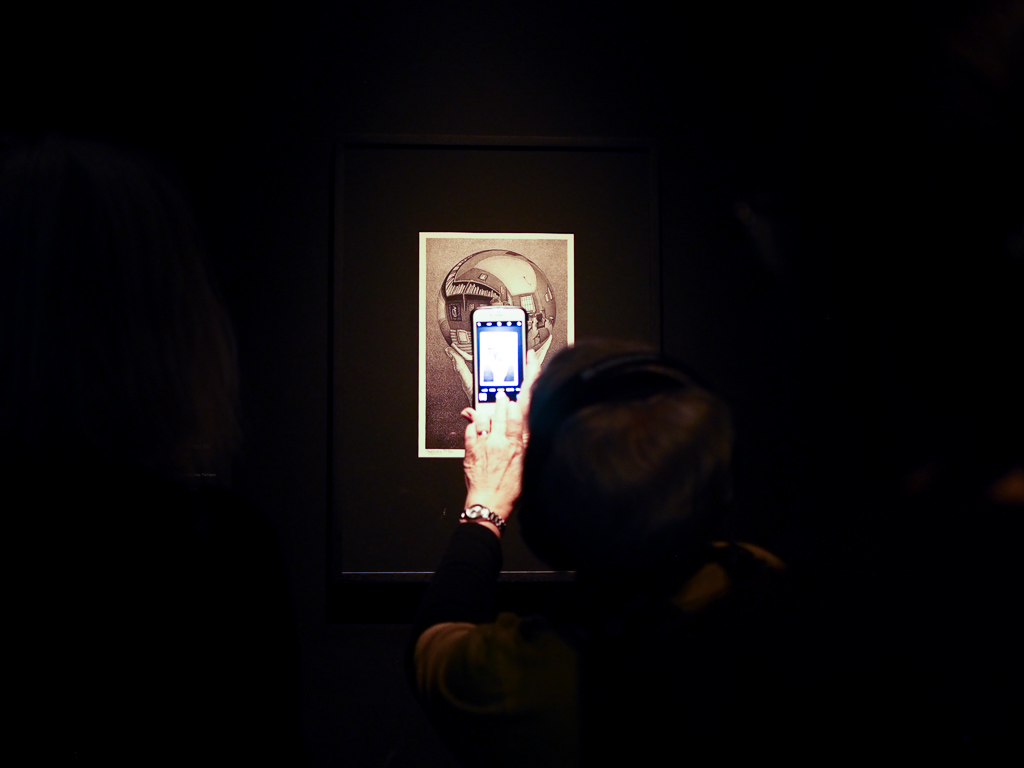
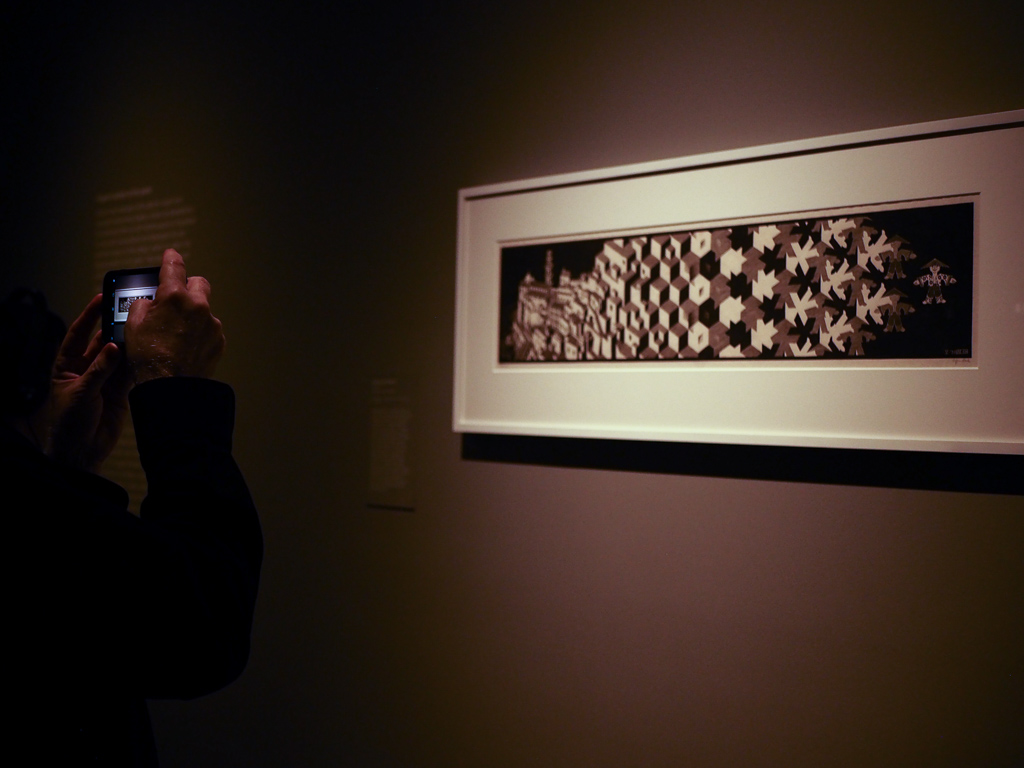
Yesterday I went to the National Gallery of Victoria to see their current special exhibition, Escher X nendo | Between Two Worlds, before it closes next week. First off, if you live in Melbourne and you have the time between now and 7 April, please do try to give it a visit. The fantastic show creates a dialogue between the work of Dutch artist M.C. Escher, most known for his fantastical optical illusion creations, and Japanese design house nendo, who drew inspiration from Escher’s art to create a series of interactive displays and installations that guide you through the exhibition and into a dreamy, yet high-contrast world of black and white geometry.


I brought my camera intending to take a few photos of works in the exhibition, but instead I found myself captivated by other people’s photos. Everywhere I looked, folks had their phones out, cameras on, capturing their own photos of the lithographs, prints, and installations. I was fascinated to get this glimpse into everyone else’s experiences of the show. It’s so rare that we get to see through someone else’s eyes in real time, our windows into their perspective coloured after the fact by the pictures they choose to share, the filters they use.


As I walked through the exhibit, I spent as much time looking at the other visitors as I did looking at the works of art. I loved seeing which pieces they connected with, which ones they wanted to remember. I liked seeing the way they chose to document the art they saw: did they faithfully capture the full work or try to put their own artistic spin on their photo by cropping a detail or including a companion? Did they photograph the information card as well, or were they content to divorce the image from its title and history?


With apologies to the people through whose viewfinders I creepily photographed, seeing the exhibit through multiple points of view added a new layer to my understanding and enjoyment of the art. Escher’s work is all about reflections and twisted perspectives, and looking at the photos that others took brought that fascinatingly distorted outlook to my own experience of the exhibit. I definitely recommend seeing Escher x nendo | Between Two Worlds at the NGV if you can, but whether you go to this exhibit or any art show in the future, look around at the other visitors and see what they see for a moment or two.

Finding creativity when you’re not feeling it

Nobody is self-deprecating like a writer. Partially it’s because we trade in words and so we’re good using those words to gently mock ourselves, partially it’s because it’s so easy to feel impostor syndrome when we’re infinitely connected via social media with other people publishing short stories and blogs and novels and journalism and fantastic work around the globe, mostly it’s because when we’re staring at a blank notebook or Scriviner page or Word document with nothing but the lyrics to Ariana Grande’s ‘7 Rings’ in our heads it’s easier to laugh than to cry.

I’ve written before about my experiences with creative burnout, but it’s not just burnout that sometimes makes it feel like putting a few words on a page is an insurmountable challenge. Sometimes it’s just good old writer’s block. We’ve all felt it. Even if you’re not a writer, you’ve probably felt it staring down a deadline for an essay in high school or college. Or you’ve felt the equivalent—photographer’s block or knitter’s block or baker’s block (are any of these real terms? doesn’t matter)—regarding your preferred creative outlet.

So what do you do when you feel like you’re never going to write another sentence, or draw another picture or play another song? Here are some ideas:

(note: I’m directing these ideas toward writers, but of course they can be adapted for any creative pursuit)

Take a walk.

I’ve come to realise that my creative drive is directly proportional with how much time I spend in nature. One thing I don’t love about living in Melbourne is that it’s much more difficult to get away from the city; it’s large and spread out and the parks are manicured and obviously man-made. Still, even just getting outside into one of these crafted green spaces and seeing something that isn’t streets and skyscrapers makes such a difference in how inspired I feel to write. When my imagination wanes, taking a moment to reconnect with nature kindles it again.

Steal some inspiration.

Writing exercises aren’t just for students. If your block is coming from a lack of ideas rather than a lack of words, let someone else guide you. There are countless places to find fiction and nonfiction writing prompts online, from dedicated communities on Reddit to a search for journaling prompts on Pinterest. Pick something that strikes your fancy and give it a whirl (or pick something that doesn’t and try to make it work). While realistically you probably won’t stick with it in the long-term, it’s another way to get over the writer’s block hurdle so you can work on something you really want.

Be shit at something new.

Shitty first drafts” from Anne Lamott’s Bird by Bird is practically a Biblical text to most writers. But nobody wants to feel like they’re not good at something important to them. Instead, try being bad at something else. If you’re a writer, grab a camera and take some shitty photographs. If you’re a photographer, paint a shitty painting. If you’re a painter, give a cake some shitty decorations. It’s easier to be okay with being bad at things that we don’t expect ourselves to be good at, and it’s still creative work that helps to get rid of the mental block.

Set the smallest goal. 

In On Writing, Stephen King said that he aims to write 2,000 words a day; sometimes it takes a few hours and sometimes nearly until sunset, but by setting a daily goal it forces you to push through the writer’s block and get the words out. In a perfect world, I would write 1,000 or so words per day. Sometimes that’s just not going to happen, though, so instead I set a goal that’s a minuscule percentage of that: 10 words. Just 10. One sentence, maybe two. Generally, once you start you’re not going to stop at 10, but even if you do you’re ending the day with 10 more words than you started with, and that’s something.

Start again.

We all tend to think that what we’re writing is trash while we’re writing it. It’s one of the reasons that NaNoWriMo exists, to force us to resist the urge to ruthlessly edit and cut and hack at our work whilst we’re writing until there’s nothing left. But sometimes what we’re writing is just not working. In these instances, set it aside and start something else. Pretend you’re done with that piece of crap story forever and put it in a folder named “trash”—don’t actually trash it, though. With some time away and the excitement of a new project in front of you, you’ll likely come back to that old, stagnant piece and realise it’s not half as bad as you thought.