Abel Tasman Almost All To Ourselves

Abel Tasman National Park is one of the busiest spots in New Zealand, with upwards of a quarter of a million visitors per year spending at least a day in the park in recent years. However, the vast majority of these visitors come in summer, to enjoy the beautiful golden sand beaches and warm water for kayaking and swimming. Last week, in late autumn, it was nearly empty, and it was a wonderfully peaceful way to experience one of New Zealand’s most stunning regions.

OLYMPUS DIGITAL CAMERA
View of Split Apple rock from the water taxi

Our trip started with a water taxi from Marahau to Totaranui Bay. We decided to go from north to south because it offered more flexibility; we could take the morning boat and when we got back to Marahau three and a half days later, we’d be back at our rental car and ready to return to Nelson. The water taxi trip was great, taking us to the famous Split Apple rock as well as to see baby seals playing in rock pools near an island just offshore.

OLYMPUS DIGITAL CAMERA
Baby seals getting curious about the boat

I already wrote plenty about our experience between Totaranui and Awaroa hut, but even though the rest of the trip wasn’t as dramatic, there was still so much to see and do. Abel Tasman is full of flora and fauna, beautiful vistas and lush forest, and to be there in such a quiet time (there were days when we didn’t see anyone from the time we left the first hut until the time we reached the next) was amazing.

P5230335.jpg
Fantails’ white eyebrows make them look like angry old men

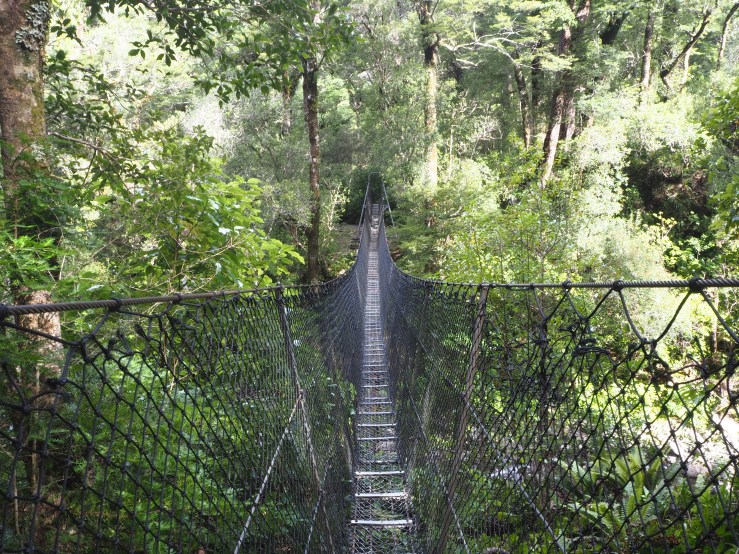
Our second day in the park took us 13.5km from Awaroa to Bark Bay. Unlike the previous afternoon, day two was warm and sunny. The trails in Abel Tasman are well-marked and don’t have much elevation climb, so the hike itself is not difficult and leaves plenty of time to enjoy the scenery. There are also a couple of fun bridges to cross over estuaries and streams.

OLYMPUS DIGITAL CAMERA
The high-tide bridge across Torrent Bay estuary

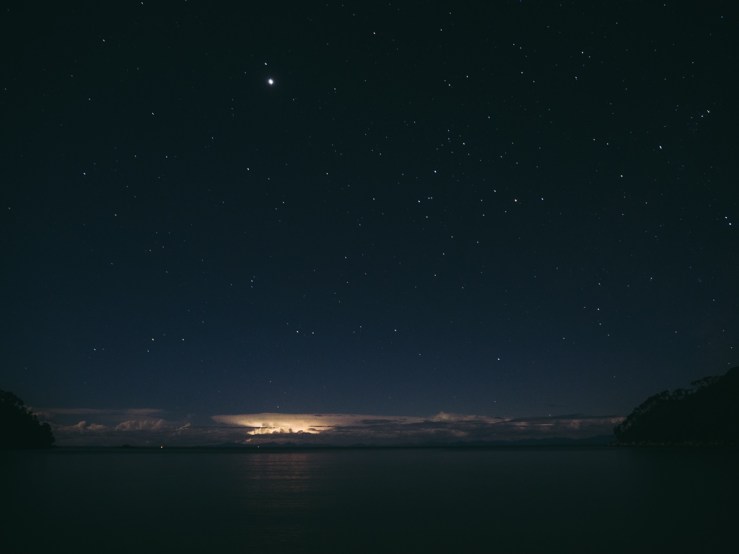
We arrived in Bark Bay to find a family had already arrived at the Bark Bay hut and started a fire in the stove, making the lovely space extra nice and cozy. After sunset, we walked out to the beach at Bark Bay to take some photos of the night sky using my camera and tripod. Across the Tasman Bay, in the distance, there was a thunderstorm and with a little luck and a lot of mistimed shots, I managed to capture it in one photo.
OLYMPUS DIGITAL CAMERA
Lighting across the Tasman Bay

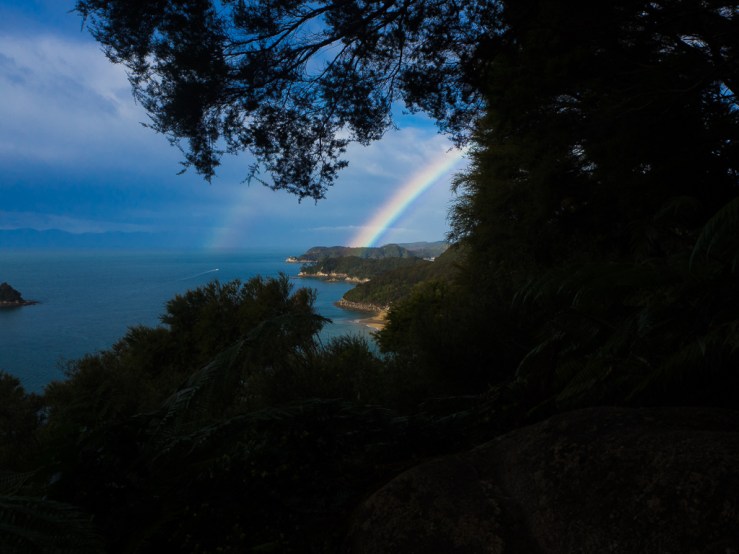
The start of our third day in the park was a bit grey and drizzly, but as the morning went on the weather cleared up and the sun hitting the last of the raindrops made for some beautiful rainbows.
OLYMPUS DIGITAL CAMERA
A quick side trip to a lookout near Bark Bay

Day three featured a couple of side trips as we hiked from Bark Bay to Anchorage. We climbed up a steep and less-traversed trail to visit Cascade Falls, as well as taking a much more leisurely ten-minute detour to Cleopatra’s Pool (which must be an amazing place to take a cool dip in the summer).

OLYMPUS DIGITAL CAMERA
Cleopatra’s pool

Anchorage Hut was the busiest and most well-outfitted of the locations we spent the night. Although none of the huts have cooking facilities, they do have flush toilets (although usually a short walk from the huts themselves) and Bark Bay and Anchorage both had a few solar-powered lights). This hut even had solar-powered mobile phone charging cables, which is something I never expected to see.

OLYMPUS DIGITAL CAMERA
Torrent Bay, on the way to Anchorage

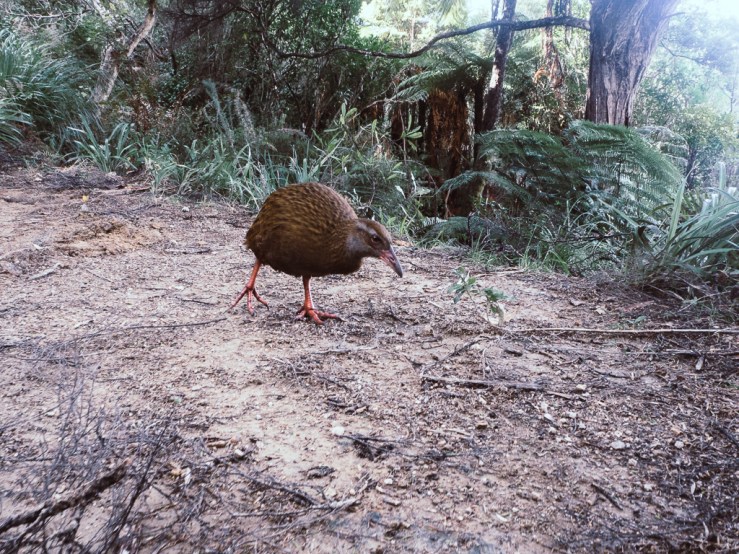
The final day, from Anchorage back to Marahau, was quick and easy, and we enjoyed burgers at The Fat Tui before heading off to Nelson for the night. A couple of weka, a kiwi-like bird that we had seen throughout the trip, tried very hard to steal our sandwiches.
OLYMPUS DIGITAL CAMERA
Weka are so cheeky

Having previously done an overnight hike only once before, four days and three nights in Abel Tasman was definitely a new adventure. And so worth it. If you’re okay with chilly weather and love tranquil solitude, I definitely recommend exploring a national park in the offseason. Not only is it easier to do (we booked our huts a few weeks ahead of time, whereas in the summer they fill up months in advance; on other trips such as our road trip we were able to take advantage of first-come-first-serve campsites in parks like Yosemite that become highly in-demand book-ahead sites during peak season), but it’s a great way to enjoy the beauty and power of the site without crowds of other people. And if you choose to go to Abel Tasman, you’ll surely be in awe of the wonder of the world that you encounter.

P5230319.jpg
One of the most beautiful places in the world for sure

Abel Tasman Adventures: Crossing Awaroa Inlet

Remember how in the Oregon Trail computer game when you reached a river you were always given a choice to ford it or not, and you always chose to ford it thinking “Yeah, it’ll probably be okay, and it’s so much faster,” and then you and/or your oxen always drowned? That choose-your-own-fate decision screen was at the forefront on my mind on the first night of last week’s tramp in Abel Tasman National Park. I’ll write about my whole four-day hiking adventure later this week, because it was one of the most amazing experiences I’ve had here in New Zealand, but there was one moment on the trip that is worthy of its own post as the most terrifying experience I’ve had while travelling to date.

For the most part, the Abel Tasman Coastal Track, one of New Zealand’s Great Walks, is a fairly relaxed hike, with well-defined paths and only a few hundred metres of elevation climb over it’s ~60km (we did about 50km due to our schedule and a slip that made the trail north of Anapai Bay inaccessible). However, there is one section that is far more than a leisurely walk in the park: the Awaroa inlet crossing.

OLYMPUS DIGITAL CAMERA
Anapai bay beach

Immediately to the north of Awaroa hut is a river mouth that can only be crossed two hours either side of low tide… unless you want to swim. I checked the tide tables for the day we were beginning our hike from Totaranui campsite, about 7km north of Awaroa, and believed that low tide was around 5pm, meaning we could cross sometime after 3pm. Unfortunately, I was informed by the water taxi operator who was transporting us from Marahau to the start of our tramp that I had actually misread the table; the low tide that day wasn’t until 9pm. No worries, we thought, we’d do a couple of side trails and when we reached the start of the crossing we could easily chill out for a few hours on the beach until it was time to cross.

At first, things went according to plan. We arrived in Totaranui and hiked north to Anapai beach. After returning to Totaranui and stopping for lunch, we continued on for two hours or so until we reached the Awaroa inlet shoreline around 4:30pm. When we arrived, we thoroughly understood why crossing before the allotted timeframe was not going to happen:

Continue reading “Abel Tasman Adventures: Crossing Awaroa Inlet”

How to hit the trail for a great day hike

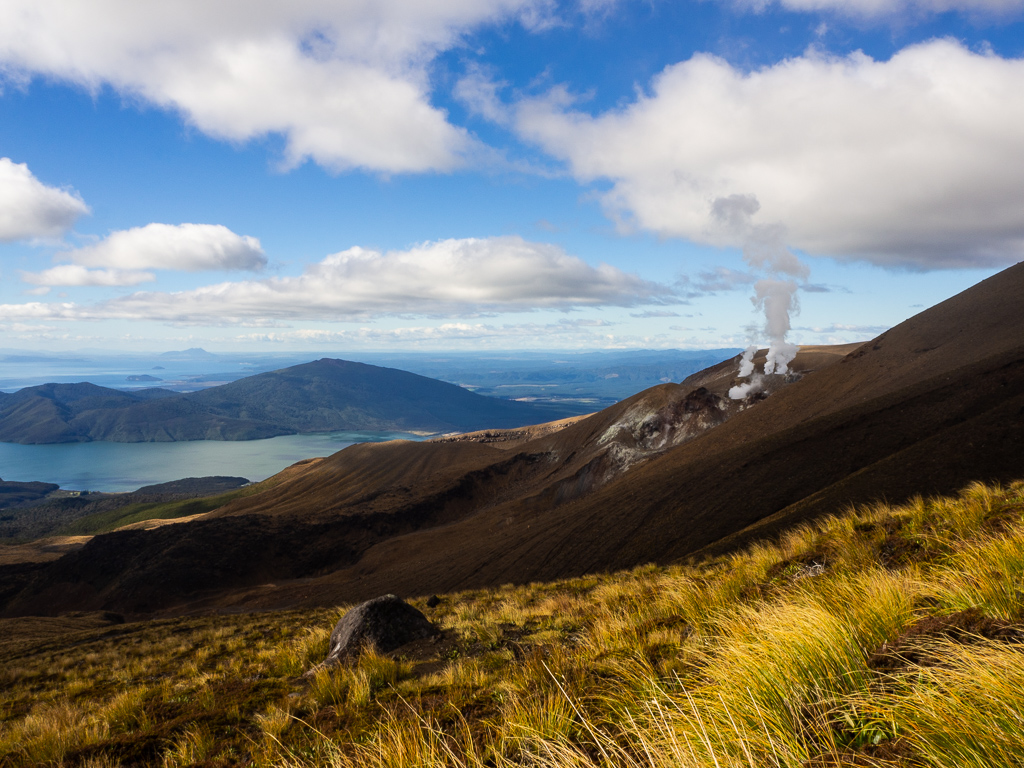
Earlier this week Steve and I headed a few hours north of Wellington to Tongariro to do the Tongariro alpine crossing. One of the highlights of the North Island, this 19-kilometre hike is known for some pretty epic natural formations including turquoise-tinted geothermal pools and the intimidating Mount Ngauruhoe—or as you might know it, Mount Doom. It’s also known for its changeable weather, especially this late in the season. When we arrived at our hostel, we were told by the owner that the shuttle hadn’t run for a few days, but that the forecast was good for the following day and she was optimistic we would be able to do the hike. The next morning, under an overcast sky, the shuttle operator told us that he would take us up but that he recommended we wait for a less ominous day. We decided to go anyway and luckily—after two hours of rain—the skies miraculously cleared up and we were rewarded with incredible views.

OLYMPUS DIGITAL CAMERA
Mount Doom in the distance after the clouds (mostly) moved on

Going on a holiday often means stepping out of your comfort zone. Sometimes it means trying new cuisine that kinda grosses you out, sometimes it means navigating a country where you don’t know a word of the language, and sometimes it means venturing into the great outdoors when you’d normally rather be at the mall. There were definitely a few people we saw doing the crossing  who weren’t particularly well prepared—like the folks on the shuttle with us who had to be driven to a local gear shop so they could rent rain jackets! While Steve and I only did our first overnight hike a few months ago, we’re experienced trampers and were ready for anything. If you’re thinking of exploring New Zealand or anywhere else known for its hiking, here are a few tips to help your tramping experience:

Continue reading “How to hit the trail for a great day hike”

On the Road: One Year Later, What I’d Do Next Time

One year ago today, Steve and I left our apartment in Vancouver, moved into a 2003 Ford Windstar, and began the most amazing experience of my life so far. After we convinced the US border officer that yes, even though Steve was arriving with no job, no visa, no ties to his home country, all his belongings, and his American girlfriend, he really *would* be leaving on the flight to Ireland he had booked for 88 days in the future (a few days short of the 90-day maximum to account for any potential flight delays), we began our three-month road trip around the United States.

Now, I’ve talked plenty about this trip, here and to pretty much anyone who will listen, and I’ll probably continue to do so for the rest of my life. Mostly I’ll be sharing the highlights–the amazing moment when we saw the Grand Canyon for the first time, the beautiful sunset we watched from a BLM campsite on a hill in northern California, how surprisingly nice and clean truck stops actually are–with a few of the lows (how inevitable it is that you’ll fight on the road, for one). Today, with the benefit of a year’s hindsight, I’ve been thinking about a few things that I’d do differently if I ever had the chance to embark on such an amazing journey again (and since we’re planning to go on the road in New Zealand at some point, I’m hoping to get to use these tips in the future).

Continue reading “On the Road: One Year Later, What I’d Do Next Time”

Underrated Visual Gems Across the United States

It’s been almost a year since Steve and I set out from Vancouver across the United States, and more than seven since our rusty, faithful-but-not-very reliable junker of a van landed, flat tire and all, in my parents’ driveway in Philadelphia, and our road trip is still something I think about every single day. As I’ve said before—and as everyone I’ve told about it has said—it was a once-in-a-lifetime experience and one of the most amazing opportunities of my life.

I’ve shared tons of photos on here, facebook, and instagram, and I’ve talked about plenty of the incredible things we saw, but I want to get specific about a few of my favourite locations for visual inspiration. However, let’s take a look at the ones that are a bit further off the beaten path—you don’t need me to tell you to go take photos at the Grand Canyon or the Golden Gate Bridge. Here are five locations where I had a ton of fun taking photos and that I would recommend for anyone looking to explore.

Cumberland Falls State Park

IMG_7723

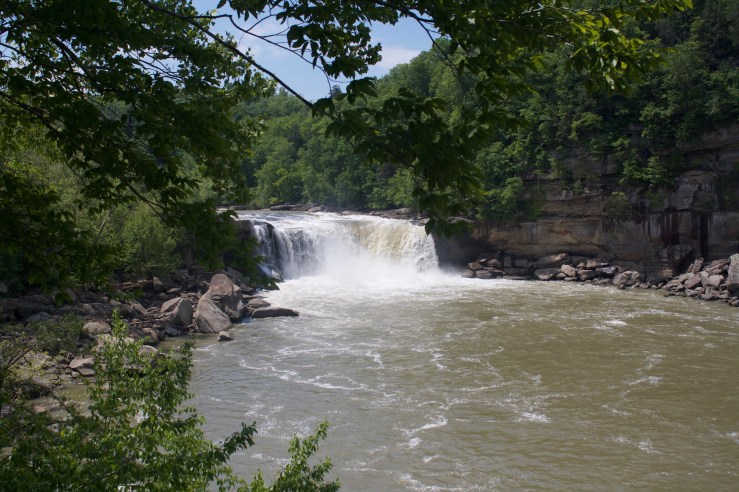
I love waterfalls. Big small, wide, narrow–whether it’s the rushing cascades of Niagara or little more than a ripple in the stream, they’re one of my favourite features in nature. Cumberland Falls is not the largest or most awe-inspiring waterfall you’ll ever see, even if it does call itself the Niagara of the South, but there’s something charming about it. Tucked away in a state park in a rural area of the state—the most notable town nearby is Corbin, known for being the birthplace of KFC—it’s a peaceful, relaxing place to hike and enjoy nature.

IMG_7739

Cumberland Falls is also the home of an amazing natural phenomenon: the moonbow. Similar to when sunlight passes through water and create a rainbow, a moonbow occurs when moonlight passes through water and creates an arc of light. While a moonbow can happen anywhere, there are only two waterfalls in the world where the angle and location are just right for the moonbow’s occurrences to be tracked. One is Victoria Falls in location, and the other is Cumberland Falls. We were lucky enough to be there for a full moon, when the moonbow was most likely to be visible. Although the early summer’s long daylight hours meant that the moonbow was incredibly low and faint, it was still an amazing thing to experience.

Continue reading “Underrated Visual Gems Across the United States”

Hiking Mount Holdsworth: My First (but not last!) Overnight Hike

OLYMPUS DIGITAL CAMERA

When I was a kid, I went camping with my Girl Scout troop. We spent a weekend in cabins, making crafts and reading Scary Stories to Tell in the Dark (that drawing of a woman with a half-skeletal face still haunts me). I remember it rained most of the weekend and the food was bad; it didn’t do much to encourage anyone’s love for the Great Outdoors. My only other camping experience until recently was a few nights my sister and I spent in a tent in the backyard–or, when the weather was bad, in a tent in the living room. Camping was never something I was specifically not interested in, but it wasn’t something I went out of my way to do until recently either. Why sleep in a sleeping bag if you could sleep in a bed?

OLYMPUS DIGITAL CAMERA

Living in the Pacific Northwest, I came to enjoy and look forward to camping. We camped in Tofino on Vancouver Island, in Olympic National Park, in Levenworth, WA, and in Banff. Camping was a chance to enjoy the beauty of nature close-up, as well as saving heaps of money on accomodations. Naturally, when Steve and I took our road trip camping became second nature, although we usually slept in our van rather than in a tent.
Still, as much camping and hiking as I’ve done the past few years, there was still one experience I’d yet to have until this past weekend: an overnight hike. In the USA and Canada, overnight hikes almost always mean backcountry camping, and the idea of bringing pack, tent, food, and everything standing between me and a bad time was daunting to me.

OLYMPUS DIGITAL CAMERA

However, in New Zealand, the popular hiking trails often have huts along the way, making an overnight hike a little less intimidating. The huts are designed to keep out the wind and rain (to an extent), provide toilets and potable water for your journey, and some even have cooking facilities in the form of gas burners so you don’t have to bring your camp stove and canisters.
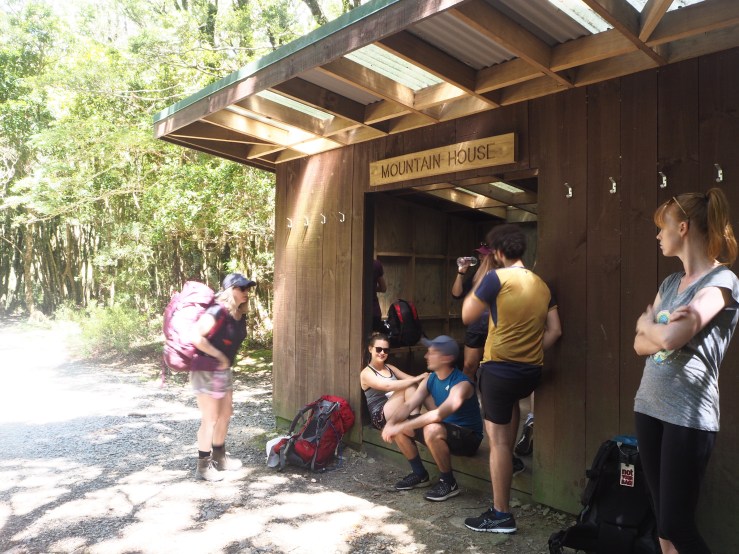
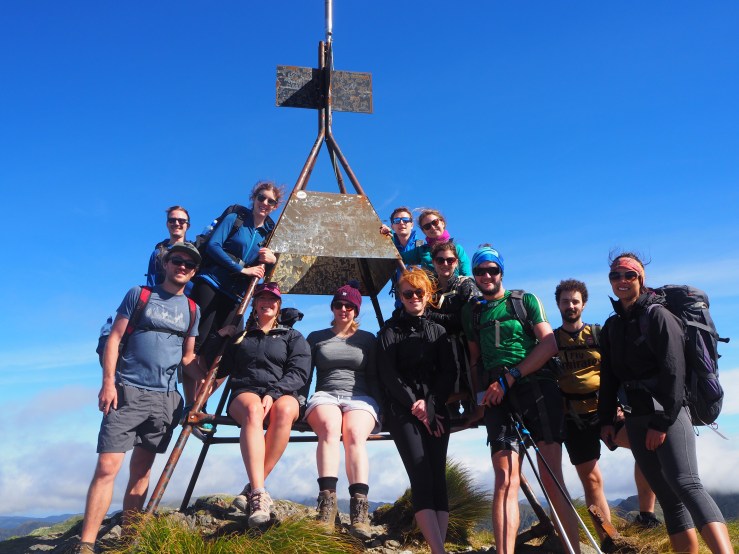
A few friends are spending a number of days on the Milford Track in a few weeks, so in preparation for them and in anticipation for us of wanting to do an extended hike in the future, we spend the Wellington Anniversary weekend at Mount Holdsworth in the Tararua range. Twelve of us set off in total, with only a few having done an overnight hike before (although one member of our group had walked the entirety of the South Island, so she was well-experienced in this sort of excursion).

OLYMPUS DIGITAL CAMERA

I packed up my trusty North Face backpack with two extra pairs of yoga pants, two spare shirts, clean underwear and socks, pajamas, a sleeping bag, a raincoat, a warm jacket, two water bottles, cutlery and a cool collapsing bowl, food (including plenty of snacks), wipes, paper towels, and plenty of sunscreen.
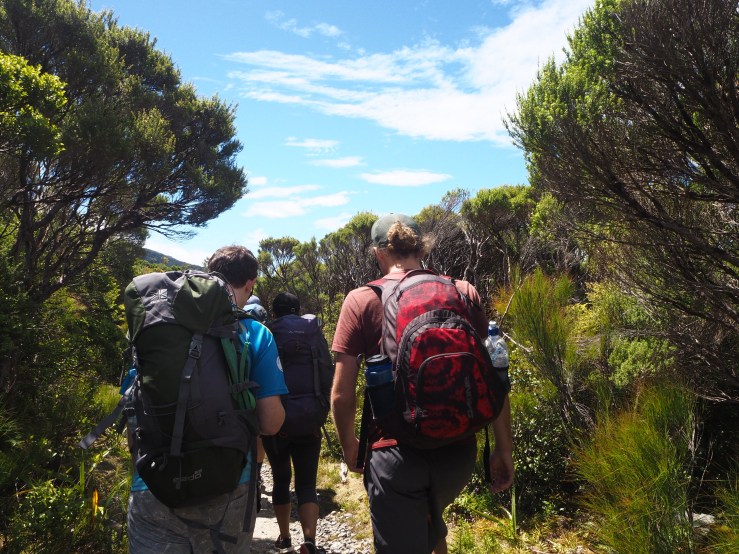
We aimed for an early start, leaving Wellington just after 9am and beginning the hike around noon. The hike up to Powell hut took about four and a half hours including breaks, ascending some 1200 metres through the bush and up the mountain.

OLYMPUS DIGITAL CAMERA

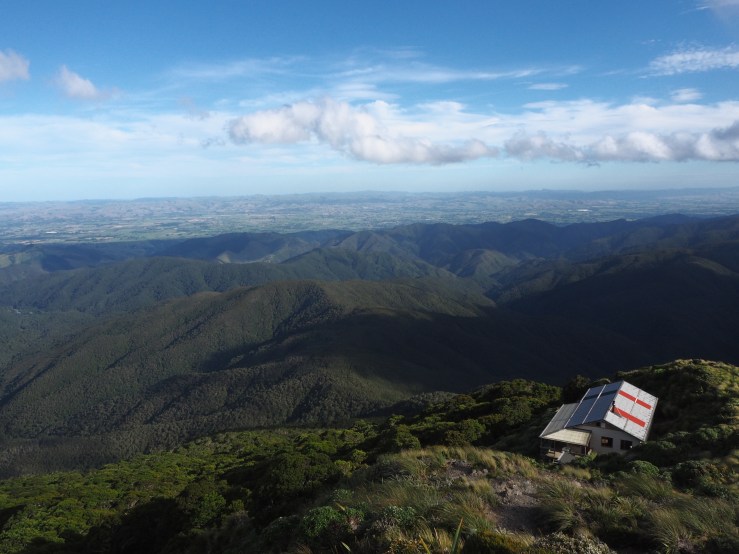
When we reached the hut, we joined 15+ others (the 28-person hut was completely booked due to it being a holiday weekend, and there were even a few people who had to kip on the kitchen floor) in stashing our bags next to the bunks, which were outfitted with “mattresses” resembling gymnastics tumbling mats.
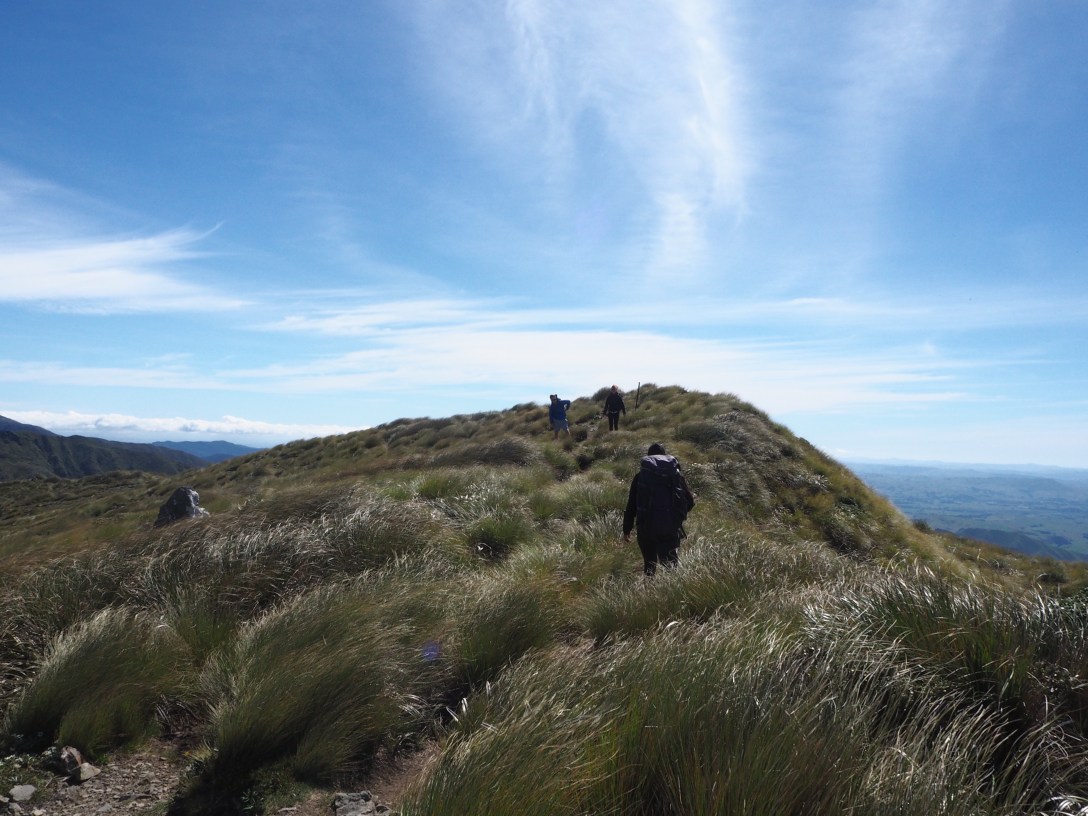
Fearing that the weather would be bad and the visibility low on our return hike the next day, a few of us decided to head to the summit a few kilometres further beyond the hut. High winds pushed against us and tried to knock us off course, but we made it to the top… and then almost immediately turned back because seriously, those winds were no joke.

OLYMPUS DIGITAL CAMERA

Sleeping in the hut was pretty much like sleeping in a hostel: folks bumbling around, turning on lights, generally being inconsiderate. Luckily, after eight kilometres of hiking with 10-15kg packs weighing us down, we were all pretty exhausted and ready to sleep anyway.
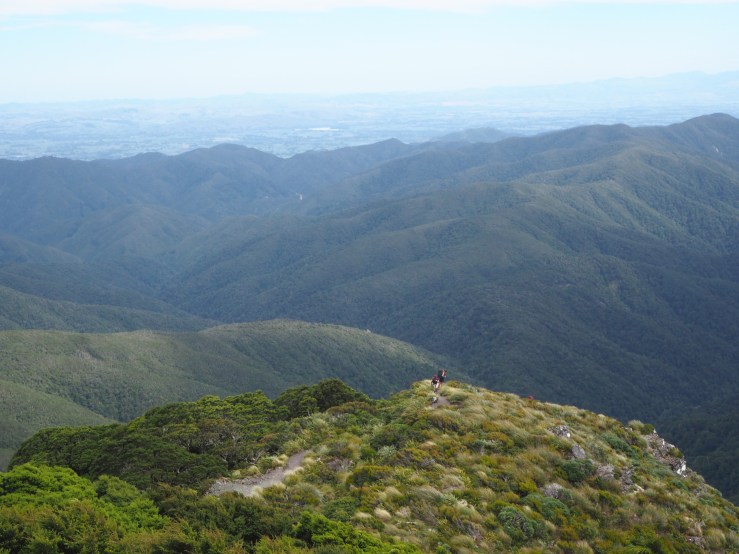
The next morning our group woke at various times between 5:30am and 7am, and we were packed up and ready to go by 9. This was important because our second day of hiking was much longer than the first; around 18 kilometres, so at least twice as long as Day One. However, the views made up for it with the first few hours of the day a trek back up to the summit and then along the ridgeline, above the trees and nearly level with the clouds.

OLYMPUS DIGITAL CAMERA

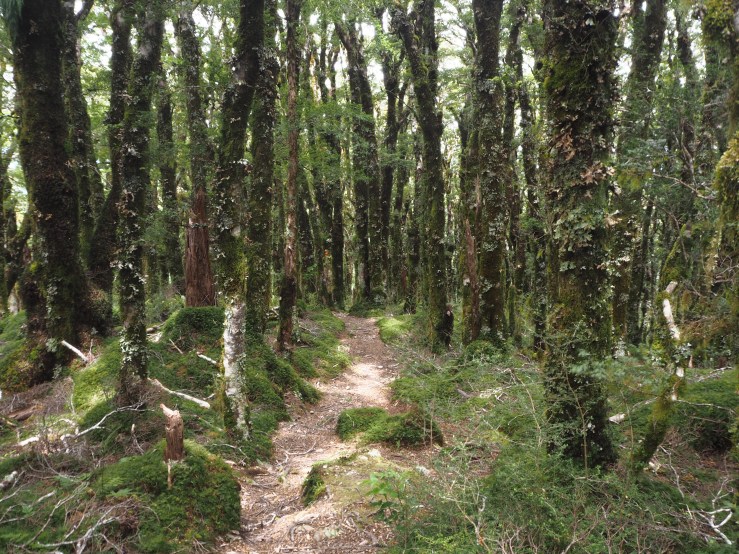
Unfortunately, one member of our party hurt her ankle, and she and her partner took a shorter route down the mountain, leaving us as a group of ten to follow the Jumbo route. After following the ridges, this path took us back into the bush and into a forest that was straight out of Lord of the Rings.

OLYMPUS DIGITAL CAMERA

Unlike the trail up to the Powell hut, which featured a number of overly large stairs but which was otherwise fairly easy to traverse, the Jumbo path was much more wild and we had to make our way carefully over a mess of tree roots and uneven ground, descending a steep slope for several hours until we finally reached the riverbed. Soaking our feet in the icy cold water at the bottom was a welcome relief.

OLYMPUS DIGITAL CAMERA

We reached the parking lot at 6pm, nine hours after we left the Powell hut. We had hiked some 24km, changed 3000m worth of elevation, and had completed our first (for most of us) overnight hike!

OLYMPUS DIGITAL CAMERA

Finishing the Mount Holdsworth trail definitely makes me want to do more overnight treks while I’m here in New Zealand and in the future. However, here are a few things that I learned for next time:
– I’ll need a bigger backpack if I want to go for longer hikes in the future. My North Face bag is only sized as a daypack, so I had to attach my sleeping bag to the outside and I couldn’t carry much more than a weekend’s worth of food. If I plan to go for longer, I’ll probably invest in a bigger Osprey bag.

OLYMPUS DIGITAL CAMERA

– Speaking of food, I brought a can of Mexican-style beans and some rice for dinner, and next time I’d probably pack food that doesn’t come in a tin. It saves space and it’s easier to carry the rubbish afterward if it’s a bag or packet that can be crumpled up. I’d also bring a few sweet snacks like M&Ms or other candies; they’re a great treat after a long day.
– Bring a tripod. Steve gave me a nice tripod for my camera for my birthday last week, and I haven’t got a chance to learn how to use it yet, but next time I go hiking I think it’ll definitely be worth the extra weight to lug along. The landscapes up on Mount Holdsworth were amazing and moments like the sunset could’ve been captured better with a steadier camera. Plus, a tripod is great for group photos (although friendly hikers and selfie skills did the trick this weekend).

OLYMPUS DIGITAL CAMERA

– Make a checklist. I’ve never been the sort of person to worry too much about packing. I have a pretty good idea of what I need, and if I forget something it’s not the end of the world. Of course, when you’re camping you can’t exactly just pop out to the shop to pick something up. Most of us forgot something that would’ve made our trip easier or better; having a list will help prevent that next time.
OLYMPUS DIGITAL CAMERA