The sounds of memories

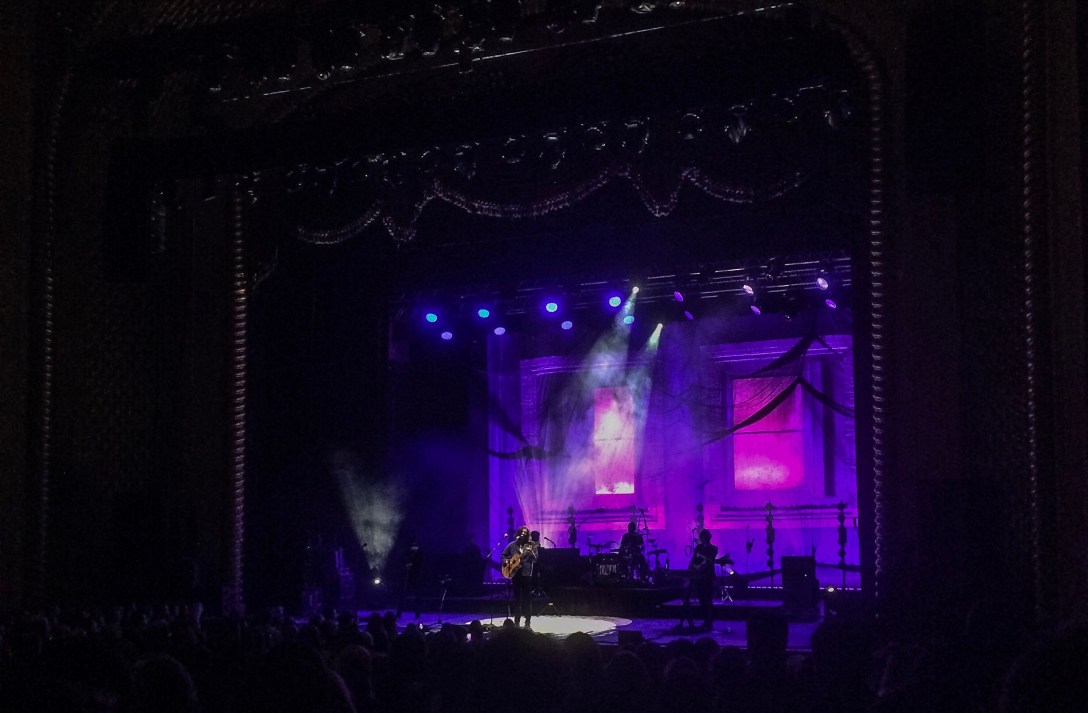
Last week I was lucky enough to see two gigs by artists I have loved and wanted to see live for a long time. I still remember exactly where I was when I first heard Shakey Graves—down to which song (‘Dearly Departed’) on which radio station (NPR) and even which street I was driving on when it came on the radio (Davisville Road in Southampton, PA). And Hozier is one of the few artists I can say I listened to before they got big, although that was only because I was living in Ireland and so ‘Take Me To Church’ was on everyone’s playlists for months there before it ever hit North American airwaves.

It got me thinking about how strongly tied to memory sound can be. There are so many songs that make me think of a certain time or place, down to minuscule details about where I was or what I was doing when I listened to them. Often music conjures up memories of people or moments as well, whether it’s a fond memory of childhood and your parent singing your favourite lullaby or a song that you can’t listen to anymore because it reminds you too much of your ex. Sound is unavoidable. It can sneak up on you, a song coming unexpectedly on the radio or in the grocery store.

Continue reading “The sounds of memories”

Six Months to Marathon

When I finished my first half-marathon, I thought “I’ll definitely do that again, but I’ll probably never run more than a half.” When I ran my second, I thought, “I could probably tack on a few more kms, but I’ll probably never run a full marathon.” After the third, when I had finally reached my sub-two-hour half-marathon goal (1:56:42), I found myself immediately thinking ahead to the next goal. But this time my goal isn’t just time (although I’m hoping to run <1:55 in my next half-marathon in a few months), but distance. I finally felt ready to take the plunge and sign up for a full marathon.

The first thing I had to decide was: which one? My first, obvious thought was the Melbourne marathon in October, as I knew that we would be moving over here after our time in Wellington had finished. However, we originally weren’t certain that we were going to stay in Australia for a full year, and I didn’t want to train for a marathon and then not run it (barring circumstances like injury that could obviously crop up wherever I am).

I started looking at the Gold Coast marathon in July, hearing that it was a flat course and figuring that the dead of winter would hopefully cool things down. After moving to Australia I quickly reassessed; the heat and humidity of summer in Melbourne has both made it very hard to run much, meaning I’d be very behind on my training if I was to run a marathon three months from now, and it showed me that I have no interest in going up to the notoriously-humid Gold Coast for a race. Luckily, by this point we had decided that we were going to see out our year in Australia, so Melbourne was back on the table.

The Melbourne marathon is on Sunday, 13 October, exactly six months from now, and I officially registered last night. I’ve decided to use a Hal Higdon plan based on the recommendation of… pretty much everybody, and I’m going with the Novice 2 plan because I want to push myself a little (I’ll drop back to the Novice 1 plan if needed but looking at the prerequisites I think I should be okay. It will be slightly modified as the plan has you running a half-marathon at the end of the ninth week and I am going to do Run Melbourne’s half-marathon event on 28 July, which is only seven weeks in, but for the most part I’m aiming to stick to the plan as closely as possible. It’s definitely going to be tough to stick to in points—namely just two weeks before the race, when we’re planning to be in Japan for the Rugby World Cup—but I’ll make the time to run and will luckily be tapering then anyway.

The plan runs for 18 weeks up until the marathon which means that I won’t actually be starting it officially until the second week of June, but in the meantime I’m taking advantage of the cooler weather (finally) and building mileage, strength, and endurance by running as much as I can in preparation. Running a full marathon six months from today is going to be the biggest fitness goal I have ever, and maybe will ever, achieve, and I’m planning to do it right. I’ll check in with updates on my training and progress as I go, for support and accountability, and on 13 October I’ll see you at the far side of 26.2.

Follow me on Strava if you want to keep up with my training!

Watching the world at Between Two Worlds

Yesterday I went to the National Gallery of Victoria to see their current special exhibition, Escher X nendo | Between Two Worlds, before it closes next week. First off, if you live in Melbourne and you have the time between now and 7 April, please do try to give it a visit. The fantastic show creates a dialogue between the work of Dutch artist M.C. Escher, most known for his fantastical optical illusion creations, and Japanese design house nendo, who drew inspiration from Escher’s art to create a series of interactive displays and installations that guide you through the exhibition and into a dreamy, yet high-contrast world of black and white geometry.


I brought my camera intending to take a few photos of works in the exhibition, but instead I found myself captivated by other people’s photos. Everywhere I looked, folks had their phones out, cameras on, capturing their own photos of the lithographs, prints, and installations. I was fascinated to get this glimpse into everyone else’s experiences of the show. It’s so rare that we get to see through someone else’s eyes in real time, our windows into their perspective coloured after the fact by the pictures they choose to share, the filters they use.


As I walked through the exhibit, I spent as much time looking at the other visitors as I did looking at the works of art. I loved seeing which pieces they connected with, which ones they wanted to remember. I liked seeing the way they chose to document the art they saw: did they faithfully capture the full work or try to put their own artistic spin on their photo by cropping a detail or including a companion? Did they photograph the information card as well, or were they content to divorce the image from its title and history?


With apologies to the people through whose viewfinders I creepily photographed, seeing the exhibit through multiple points of view added a new layer to my understanding and enjoyment of the art. Escher’s work is all about reflections and twisted perspectives, and looking at the photos that others took brought that fascinatingly distorted outlook to my own experience of the exhibit. I definitely recommend seeing Escher x nendo | Between Two Worlds at the NGV if you can, but whether you go to this exhibit or any art show in the future, look around at the other visitors and see what they see for a moment or two.

Finding creativity when you’re not feeling it

Nobody is self-deprecating like a writer. Partially it’s because we trade in words and so we’re good using those words to gently mock ourselves, partially it’s because it’s so easy to feel impostor syndrome when we’re infinitely connected via social media with other people publishing short stories and blogs and novels and journalism and fantastic work around the globe, mostly it’s because when we’re staring at a blank notebook or Scriviner page or Word document with nothing but the lyrics to Ariana Grande’s ‘7 Rings’ in our heads it’s easier to laugh than to cry.

I’ve written before about my experiences with creative burnout, but it’s not just burnout that sometimes makes it feel like putting a few words on a page is an insurmountable challenge. Sometimes it’s just good old writer’s block. We’ve all felt it. Even if you’re not a writer, you’ve probably felt it staring down a deadline for an essay in high school or college. Or you’ve felt the equivalent—photographer’s block or knitter’s block or baker’s block (are any of these real terms? doesn’t matter)—regarding your preferred creative outlet.

So what do you do when you feel like you’re never going to write another sentence, or draw another picture or play another song? Here are some ideas:

(note: I’m directing these ideas toward writers, but of course they can be adapted for any creative pursuit)

Take a walk.

I’ve come to realise that my creative drive is directly proportional with how much time I spend in nature. One thing I don’t love about living in Melbourne is that it’s much more difficult to get away from the city; it’s large and spread out and the parks are manicured and obviously man-made. Still, even just getting outside into one of these crafted green spaces and seeing something that isn’t streets and skyscrapers makes such a difference in how inspired I feel to write. When my imagination wanes, taking a moment to reconnect with nature kindles it again.

Steal some inspiration.

Writing exercises aren’t just for students. If your block is coming from a lack of ideas rather than a lack of words, let someone else guide you. There are countless places to find fiction and nonfiction writing prompts online, from dedicated communities on Reddit to a search for journaling prompts on Pinterest. Pick something that strikes your fancy and give it a whirl (or pick something that doesn’t and try to make it work). While realistically you probably won’t stick with it in the long-term, it’s another way to get over the writer’s block hurdle so you can work on something you really want.

Be shit at something new.

Shitty first drafts” from Anne Lamott’s Bird by Bird is practically a Biblical text to most writers. But nobody wants to feel like they’re not good at something important to them. Instead, try being bad at something else. If you’re a writer, grab a camera and take some shitty photographs. If you’re a photographer, paint a shitty painting. If you’re a painter, give a cake some shitty decorations. It’s easier to be okay with being bad at things that we don’t expect ourselves to be good at, and it’s still creative work that helps to get rid of the mental block.

Set the smallest goal. 

In On Writing, Stephen King said that he aims to write 2,000 words a day; sometimes it takes a few hours and sometimes nearly until sunset, but by setting a daily goal it forces you to push through the writer’s block and get the words out. In a perfect world, I would write 1,000 or so words per day. Sometimes that’s just not going to happen, though, so instead I set a goal that’s a minuscule percentage of that: 10 words. Just 10. One sentence, maybe two. Generally, once you start you’re not going to stop at 10, but even if you do you’re ending the day with 10 more words than you started with, and that’s something.

Start again.

We all tend to think that what we’re writing is trash while we’re writing it. It’s one of the reasons that NaNoWriMo exists, to force us to resist the urge to ruthlessly edit and cut and hack at our work whilst we’re writing until there’s nothing left. But sometimes what we’re writing is just not working. In these instances, set it aside and start something else. Pretend you’re done with that piece of crap story forever and put it in a folder named “trash”—don’t actually trash it, though. With some time away and the excitement of a new project in front of you, you’ll likely come back to that old, stagnant piece and realise it’s not half as bad as you thought.

Kia kaha, Christchurch

It is a privilege to feel safe in the places you call home. It shouldn’t be, because what is home if it is not a place that is known and that is safe, but again and again we see places that should be known made unsafe by hate. Like the rest of the world, I was shocked and saddened to hear the news of the mass murder of Muslims at a mosque in Christchurch. New Zealand is the safest and most peaceful country I have ever been to or lived in, and yet a group of people decided that shouldn’t be the case for their victims.

New Zealanders haven’t had to grapple with a tragedy like this, whereas in America we are nearly desensitized to news of yet another mass shooting. Politicians send their thoughts and prayers, outraged is silenced with cries of “too soon,” The Onion reposts that too-accurate headline, and nothing changes. I was surprised and gladdened to hear that the New Zealand government’s immediate response was to promise a ban on semi-automatic weapons; imagine if our politicians had ever acted so quickly and decisively? How many schoolchildren, churchgoers, and others would still be with us?

The outpouring of support for the Muslim community in the wake of the tragedy is also heartening. Flowers cover mosques around the country. Vigil attendances number in the thousands. A givealittle page (New Zealand’s answer to Go Fund Me) for victim support has topped $5 million in donations. Kiwis and the world are coming together to echo Prime Minister Jacinda Ardern’s words about the victims: “They are us.”

At the same time, although for many New Zealand seemed like a utopia between its stunning natural beauty and its peaceful, unified society, the sad truth is that New Zealand is not immune from the influence of intolerance, white supremacy, and an environment where “casual” discrimination is given a blind eye rather than spotlighted and called out (and what does “casual” discrimination even mean? Is it a hobby? A side-hustle? Part-time racism?). Where alt-righters like Stefan Molyneux, Jordan Peterson, and Lauren Southern have eager audiences. Where stereotypes about Maori and other islanders flourish as “jokes.”

I am certainly not writing this as a sanctimonious outsider pointing out the flaws of another country; I, too, am certainly often guilty of not doing enough to call out intolerance when I see it. It’s particularly tragic to think that the murderers were likely inspired by the political climate of my own nation. And New Zealand is certainly a lot more welcoming than the United States (or Australia, by the way; wow, there is a lot of racism here, and not just from the Senator who made that awful statement after the mosque shooting, although you should enjoy this video of him getting egged by a teenager).

However, it is tempting to dismiss the murderers’ terrible actions as unrelated to anything else in New Zealand society, to identify solely with the victims. But without changing our own actions and stepping up every time to speak out against racism, discrimination, Islamophobia, intolerance, we are dishonouring the victims by allowing the murderers and those who think like them to find something to identify with in us (please read this powerful comic by Spinoff journalist Toby Morris for more).

It is important to carry the feelings of love and solidarity for the Muslim community, the immigrant community, the community as a whole, that are strongest and most present now in wake of this tragedy, and let them be a guideline going forward. We must cultivate an environment in which seeds of hate can not plant roots. And that means asking ourselves difficult questions, and being willing to ask difficult questions to others. Kia kaha, New Zealand. Stay strong and show your strength by protecting your whānau—Maori, pakeha, Muslim, and everyone else who is lucky enough to live in such a kind and beautiful country. Come together in love and action to ensure that everyone is safe in the places they call home.

On Top of Down Under

The Seven Summits comprise the highest peak on each of the continents—Mount Everest, obviously, Denali in Alaska, Mount Kilimanjaro, and so on. For many, ascending each of these seven mountains is a lifelong dream. However, not all seven peaks are created equal. Obviously, Everest is the hardest not only for its technical difficulty but also for the tens of thousands of dollars cost of its permit, while Kilimanjaro is a multi-day but non-technical hike that can be accomplished by hikers without mountaineering experience.

Looking at Kosci from the start of the Main Range Track

Then there’s Mount Kosciuszko. At 2,228 metres, it is only a quarter of the height of Everest, and can be summited in a single day—or less, if you take the route that includes a chairlift ride most of the way to the top. Some rankings of the Seven Summits don’t even include Kosci, replacing it with Puncak Jaya in Indonesia by considering Australasia the continent rather than Australia. But since I don’t have any desire to ascend all seven summits (I’d like to do Kilimanjaro in a few years, but I don’t see myself ever tackling the others), I’m happy to consider Kosci among the peaks.

Steve and me at the start of the hike

Last week, Steve and I rented a car and drove seven hours from Melbourne to Mount Kosciuszko National Park in New South Wales to hike to the highest point in Australia. We stayed overnight in Jindabyne, about half an hour away, and got up bright and early on Friday morning to head up the mountain. In order to make it more of a hike, we forewent the Threadbo trail with its chairlift and headed around the other side to Charlotte Pass for a 22km loop trail that connected the Summit Road and the Main Range Track.

The first thing that surprised me was how beautiful it was. I was expecting a dry, sparse range based on the endless stretches of red dirt and leafless trees we had passed on the Hume Highway on the way up, but the views were actually mountainous and lovely. The track was also wonderfully peaceful. On our way up, we only encountered one other group—a pack of older folks kitted out with tramping poles and wide-brimmed hats, who kept up a solid pace even on the steeper sections. There was no one blasting shitty EDM off their cell phones for all to hear, thank christ.

On the way to the summit

The top was a bit busier because the three trails—Summit, Main Range, and Chairlift—converged (I’d guess most folks came up on the chairlift based on the lack of daypacks or hiking boots) but it was still very quiet compared to some of the hikes I’ve done in New Zealand and elsewhere. A surveying trig and elevation sign mark the summit, where we took a break for lunch before following the mild downward grade of the Summit Road back to our car.

At the top!

The hike took us just over six hours in total, lunch included, and was only strenuous in its length, but it was still a fun way to spend a few days (on the trip, we also drove up to Canberra to visit the NASA Deep Space Communications Centre and the National Gallery and Museum), and it’s fun to be able to say we’ve climbed one of the Seven Summits, no matter how small.

Surveying trig marker at the summit