Where we are now

On March 15 I was in a hotel in Hanoi, full of nervous energy and the fear that a staff member or another guest would exhibit symptoms of Coronavirus and the Vietnamese government would lock down the hotel until they could figure out the scope of the virus there, and Steve and I would miss our urgently-rescheduled flight back to the United States.

Of course, we had been monitoring the situation throughout our travels in Southeast Asia. The first cases of the virus had been reported in China shortly after we arrived in Indonesia, but it seemed unlikely to affect us. Apart from seeing a lot of locals wearing masks in Singapore and Thailand, something which is common practice in Asia anyway after the SARS outbreak, it was business as usual. We even went to a Lunar New Year in Bangkok’s Chinatown, and any fears of the virus were outnumbered by excitement for the holiday from both locals and tourists.

Continue reading “Where we are now”

Kia kaha, Christchurch

It is a privilege to feel safe in the places you call home. It shouldn’t be, because what is home if it is not a place that is known and that is safe, but again and again we see places that should be known made unsafe by hate. Like the rest of the world, I was shocked and saddened to hear the news of the mass murder of Muslims at a mosque in Christchurch. New Zealand is the safest and most peaceful country I have ever been to or lived in, and yet a group of people decided that shouldn’t be the case for their victims.

New Zealanders haven’t had to grapple with a tragedy like this, whereas in America we are nearly desensitized to news of yet another mass shooting. Politicians send their thoughts and prayers, outraged is silenced with cries of “too soon,” The Onion reposts that too-accurate headline, and nothing changes. I was surprised and gladdened to hear that the New Zealand government’s immediate response was to promise a ban on semi-automatic weapons; imagine if our politicians had ever acted so quickly and decisively? How many schoolchildren, churchgoers, and others would still be with us?

The outpouring of support for the Muslim community in the wake of the tragedy is also heartening. Flowers cover mosques around the country. Vigil attendances number in the thousands. A givealittle page (New Zealand’s answer to Go Fund Me) for victim support has topped $5 million in donations. Kiwis and the world are coming together to echo Prime Minister Jacinda Ardern’s words about the victims: “They are us.”

At the same time, although for many New Zealand seemed like a utopia between its stunning natural beauty and its peaceful, unified society, the sad truth is that New Zealand is not immune from the influence of intolerance, white supremacy, and an environment where “casual” discrimination is given a blind eye rather than spotlighted and called out (and what does “casual” discrimination even mean? Is it a hobby? A side-hustle? Part-time racism?). Where alt-righters like Stefan Molyneux, Jordan Peterson, and Lauren Southern have eager audiences. Where stereotypes about Maori and other islanders flourish as “jokes.”

I am certainly not writing this as a sanctimonious outsider pointing out the flaws of another country; I, too, am certainly often guilty of not doing enough to call out intolerance when I see it. It’s particularly tragic to think that the murderers were likely inspired by the political climate of my own nation. And New Zealand is certainly a lot more welcoming than the United States (or Australia, by the way; wow, there is a lot of racism here, and not just from the Senator who made that awful statement after the mosque shooting, although you should enjoy this video of him getting egged by a teenager).

However, it is tempting to dismiss the murderers’ terrible actions as unrelated to anything else in New Zealand society, to identify solely with the victims. But without changing our own actions and stepping up every time to speak out against racism, discrimination, Islamophobia, intolerance, we are dishonouring the victims by allowing the murderers and those who think like them to find something to identify with in us (please read this powerful comic by Spinoff journalist Toby Morris for more).

It is important to carry the feelings of love and solidarity for the Muslim community, the immigrant community, the community as a whole, that are strongest and most present now in wake of this tragedy, and let them be a guideline going forward. We must cultivate an environment in which seeds of hate can not plant roots. And that means asking ourselves difficult questions, and being willing to ask difficult questions to others. Kia kaha, New Zealand. Stay strong and show your strength by protecting your whānau—Maori, pakeha, Muslim, and everyone else who is lucky enough to live in such a kind and beautiful country. Come together in love and action to ensure that everyone is safe in the places they call home.
Girl, Accept Your Constructive Criticism

Being a woman in a patriarchal society is hard, but it doesn’t make you a feminist.

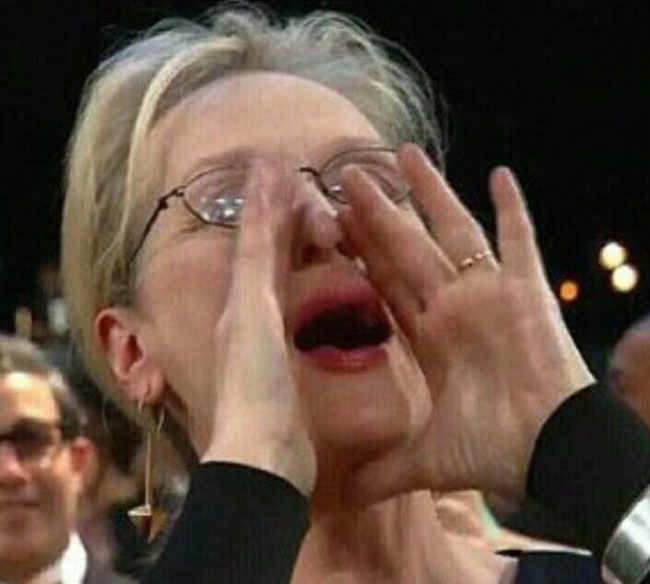
Let me say it louder for the people in the back.

C7NzCoiXgAE-PkA-920x585.jpg

BEING A WOMAN IN A PATRIARCHAL SOCIETY IS HARD, BUT IT DOESN’T MAKE YOU A FEMINIST.

Feminism is about beliefs and actions aimed at dismantling the patriarchy, the systematic inequality that inhibits people of all genders. Feminism doesn’t mean that everything a woman does is good or feminist, that women can’t be called out (including by other women), that any criticism of a woman is an act of misogyny, that all women must lift up all other women all the time.

I would say it louder for the people in the back but I don’t want you to have to read a whole paragraph of capslock.

Continue reading “Girl, Accept Your Constructive Criticism”

What voice should a brand have?

Corporations, despite continuing to not be people, have a lot of opinions. Usually that opinion is “buy our stuff,” but sometimes they try to sell us something deeper, something better. Gilette’s Super Bowl ad is the latest example of this, with a #MeToo era-themed comment on toxic masculinity and the harmful nature of the “boys will be boys” mindset.

The ad begins with men catcalling women, laughing at sexist jokes, and being forced to “toughen up” in response to bullying, while the actions, both those that harm others and those that cause them harm, are brushed off as “typical” male behaviour, locker room talk. Then the focus shifts, to strong fathers guiding their sons (and daughters) to resolve conflict, promote self-esteem, and learn how to “be a man,” in the best sense.

Continue reading “What voice should a brand have?”

National Parks During the Shutdown: Three Ways to Help

Whenever someone I meet in my travels asks me the best thing about the United States, the National Parks system is always the first thing that immediately comes to mind. There are plenty of places in the world that have incredible national parks, but the National Parks of the USA are special in their breadth and scope. Rock formations and rainforests, caves and canyons, islands and geysers and volcanoes and mountains… there’s something for everyone, representing the most incredible of Mother Nature’s offerings and welcoming over 300 million visitors per year.

Like everyone who love the National Parks system, I am heartbroken to read about the damage being caused to the parks by unsupervised visitors during the government shutdown. Trash overflows the rubbish bins, and let’s not even mention the toilets. Worse, there have been reports of vandals cutting the endangered namesake trees of Joshua Tree National Park in order to create access for their 4WD vehicles. Even during normal operating, there are many instances of graffiti and carved rocks from people who are too inconsiderate to follow Leave No Trace principles, so I can only imagine how much worse it is at the moment.

IMG_7057-2.jpg

If you are also devastated by the destruction these thoughtless visitors are doing to some of the world’s most stunning sites, here are some ways you can help:

Continue reading “National Parks During the Shutdown: Three Ways to Help”

Reality is dead; long live Reality

I always knew I wanted to be a writer, and I guess I was smart enough as a kid to realise that most fiction writers don’t immediately publish a bestselling novel and turn that into their day job, so I decided I wanted to be a journalist. Linda Ellerbee was my main inspiration for this, between her incredible educational news show Nick News and her Girl Reporter young adult book series.

I stopped wanting to be a journalist sometime in college. Although I loved my classes and my peers, and certain aspects of journalism like copyediting and researching are definitely right up my alley, and I do love the deadline-oriented nature of the job, I just couldn’t see myself doing it as a career. Sometimes I question that, especially when I look at the amazing work some fellow alums are doing, but for the most part I have no desire to step into a newsroom.

Still, I consider both Ellerbee’s work and my time at Ithaca College to have had a huge influence on shaping my life, but between them was something that was even more important: Reality.

Continue reading “Reality is dead; long live Reality”