The Future is Female (and so are the present and the past, because time is wibbly-wobbly like that)

There’s nothing I can say about my delight for the casting of Jodie Whittaker as the 13th Doctor on Doctor Who that hasn’t already been said. For an alien creature that can canonically change genders with their various regenerations, it’s beyond time for the Doctor to be female after a string of a dozen males. For one of the biggest science-fiction works in the history of sci-fi television, it’s a cool move to put a woman behind the wheel of the TARDIS (doubly so in conjunction with a new showrunner finally replacing the increasingly odious Stephen Moffat). And, unsurprisingly, it’s brought out the worst in internet trolling.

The Doctor is a Man. No, the Doctor is a Time Lord. Why does it need to be Politically Correct? Well, the probability of a coin coming up heads a thirteenth time after 12 in a row is pretty unlikely (unless you’re in a Tom Stoppard play), so it’s really more about being Scientifically Correct. And the classic: they’ve ruined my childhood! Look, I know the show is about time travel, but you know that’s just pretend, right? The Doctor can’t really go back to the ’70s and erase all your childhood memories of the colourful scarf and the celery lapel and the bad special effects.

Continue reading “The Future is Female (and so are the present and the past, because time is wibbly-wobbly like that)”

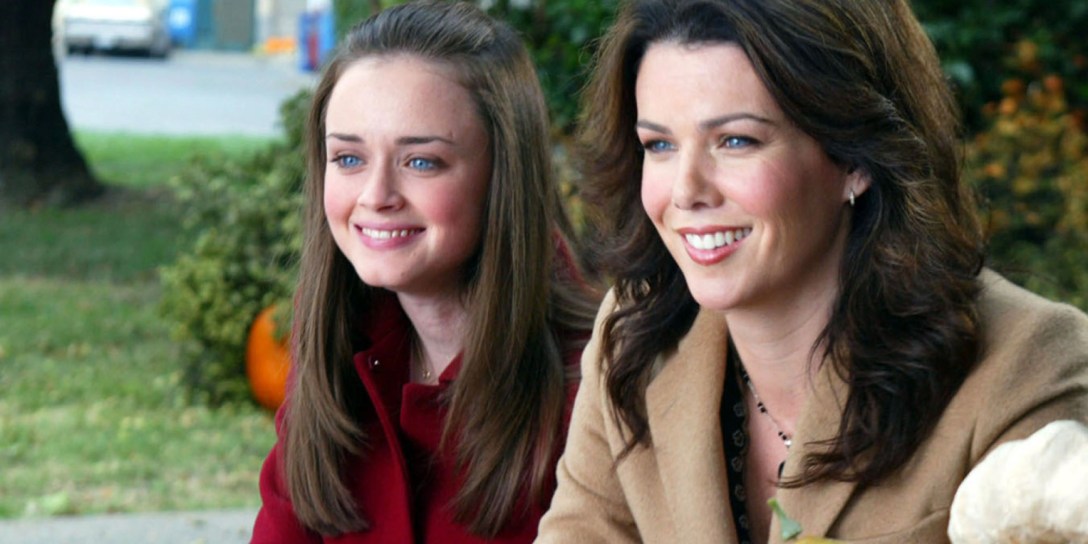
Anywhere that you tell me to, Gilmore Girls

When filmmakers want to retell a familiar story, it seems that they tend to turn to remakes or reboots, recreating a version of the original work with a new cast and crew, perhaps throwing in a cameo from the original star as a plot point or just a wink and nod to long-time fans. While there are occasional instances of many-years-later sequels, it seems that usually after a certain period of time filmmakers feel that audiences prefer to start fresh.

On the other hand, television seems to lend itself better to continuations of old stories, perhaps due to the ease of a next-generation series a la Girl Meets World or the upcoming Fuller House, or the procedural nature of a show like The X-Files (of which I have not yet watched any of the latest episodes because I’m saving them to binge watch all at once). Given that this tendency toward long-awaited continuations has led to Netflix confirming a four-part Gilmore Girls revival, I definitely can’t complain.

Like most book-obsessed, somewhat nerdy girls my age, my two fictional role models growing up were Hermione Granger and Rory Gilmore. We had so much in common: both of us always with a book in our hand, focused (sometimes overly so) on school—we even both studied journalism! Rory was smart, driven, and even if she wasn’t real, I looked up to her. I was devastated when her college years arrived and she turned off track (why did you steal that boat, Rory, why?!?!), and elated when she returned to college, with the finale sending her off on the campaign trail to report on Barack Obama.

Then there’s Lorelai. If Rory is who I was, then Lorelai is who I wanted (and still want) to be. Not the teen-pregnancy-with-awful-Christopher part or the terribly-strained-relationship-with-her-parents part, but pretty much everything else. She, too, was smart and driven, owning her own business and finding a perfect niche. She was witty as hell and enviably funny. She had great friendships in her town and an even greater relationship with her daughter. And our all-consuming coffee drinking habits are remarkably similar.

The minor characters are just as wonderful, with so many memorable supporting roles like Paris Gellar, Lane Kim, Luke Danes, and the only one of Rory’s boyfriends who really matters, Jess Mariano, but the titular Gilmore girls are by far the most important to me. When I was a kid I wasn’t much of a television watcher so most of my fictional heroes came from books—the aforementioned Hermione Grander, the Enchanted Forest Chronicles‘ Cimorene, and others, but Lorelai and Rory were the exception. To this day, I think that the more I am like them, the better.

In a way, this makes me nervous for the Netflix revival of the show. I remember my heartbreak when Rory “let me down” by stealing a boat and quitting my college, my devastation when Lorelai and Luke broke up. My diction may be slightly exaggerated here, but only slightly. What if Lorelai and Luke don’t get back together? What if Rory goes back to (ugh) Logan? More importantly, what if she’s not still writing? What if she’s changed? I mean, sure, I’ve changed too since 2007, but I’m a real person; I’m allowed. All revivals contain a certain amount of fan service; most creators aren’t as diabolical as to completely destroy everything their audience loved about the original, even in the name of progressing the story, and I’m totally okay with that when it means things turn out the way I want them to.

On the other hand, I do care about the story. Gilmore Girls wasn’t a generic show I watched for the eye candy. I cared  (still do) about the characters and their lives like they were people I knew in my own life. And so I’m willing to be disappointed in the name of good storytelling, if it comes to that. But, you know, ideally the storytelling is great and leads to Rory and Jess getting back together to write novels in Brooklyn. Regardless, as the theme song says, “Where you lead, [Gilmore Girls,] I will follow.”

Stories You Should Read This Week (4/2/16)

It’s time for the latest edition of Stories You Should Read This Week. I’ve got six links to awesome things I’ve read around the internet recently. Read them at work, read them on the bus, read them in bed. Tell me what you think, tell the authors what you think, tell everyone what you think.


Burgers, Bitches, and Bullshit by Bethany Cosentino (via Lenny Letter)

I generally like to avoid most-things-Lena-Dunham, but this essay by Best Coast’s front woman Bethany Cosentino on Dunham’s Lenny Letter site is a must-read. Not because her experiences–being told to smile, being lauded for her looks over her achievements–will be unfamiliar to many (most) women, nor because should come as a surprise that success may only increase these sexist instances, but because Cosentino rightly joins artists like Cvrches’ Lauren Mayberry in loudly and boldly calling these assholes out.


A Chat About Diversity in Publishing by Nicole Chung and Linda Z (via The Toast)

Like the interviewee, who works in my dream career of publishing, I fit the majority demographic of the publishing industry: female, white, straight, cisgender, able-bodied, and from an educated, middle-class background. Yet books about people in this demographic are still so often pigenholed as “Women’s lit” rather than just “lit,” and books by women who are minorities in other ways (non-white, LGBT, and so on) are even further marginalized on the shelves. The current cultural conversation is about another media format (see #OscarsSoWhite) but it’s just as relevant in books.


Marcia Clark On What Episode One of The People v. O.J. Simpson Got Right and Wrong by Maria Elena Fernandez (via Vulture)

I’m a little too young to really remember the O.J. Simpson trial, but I still remember and know that it was a major event if not the major event of the mid-90s, so of course I was excited for the start of this miniseries, even if it’s helmed by Ryan Murphy. In this interview, Marcia Clark talks about her reaction to the premiere episode.


An Invitation Into the Shadowy World of Match Fixing by Ben Rothenberg (via NY Times)

Match fixing conspiracies seem to abound whenever there’s an upset, or a lot of betting on a match, or pretty much any time a sport is played. But it does happen, sometimes obviously and sometimes not. Tennis is the sport currently embroiled in the scandal, but this fascinating read could surely occur in any sport.


Alternatives to Resting Bitch Face by Susan Harlan (via McSweeney’s)

I’ll just post an excerpt from this perfect list:

I Would Prefer Not To Face

A Smidge of Self-Awareness Would Not Go Amiss Face

The Situations Are Really Not Analogous Face

Please Tip a Bottle of Bourbon Down My Throat Immediately Face


Stop Trying To Out-Feminist Each Other by Maya Kachroo-Levine (via The Financial Diet)

I’ve been reading The Financial Diet recently since my fellow Ithaca journalism alumna Maya is a writer there, and I enjoyed this piece she wrote about your earning versus your partner’s earning and whether it matters as a feminist. She says, and I agree, that it doesn’t. If you earn less than—or more than! or the same as!—your SO, your partnership and everything else in your life can empower you as a woman and a feminist, and just because you don’t shout about it doesn’t mean people can tell you otherwise.

February Microreviews

January Microreviews

February books

BZc8JfJIQAAfNAY

Play it As it Lays by Joan Didion (1970): This is the second work by Didion I’ve read and I understand why everyone whose opinion I trust has been recommending her to me for so long. This novel is smart and bleak and some part of me is glad it was a quick read because I couldn’t put it down.

How Should a Person Be? by Sheila Heti (2010): At some points, I was annoyed by this book and it’s author. She’s petty, pretentious, probably watches Girls religiously. And yet in some ways I could relate, and it made me feel for her with all her insecurities and all her triumphs.

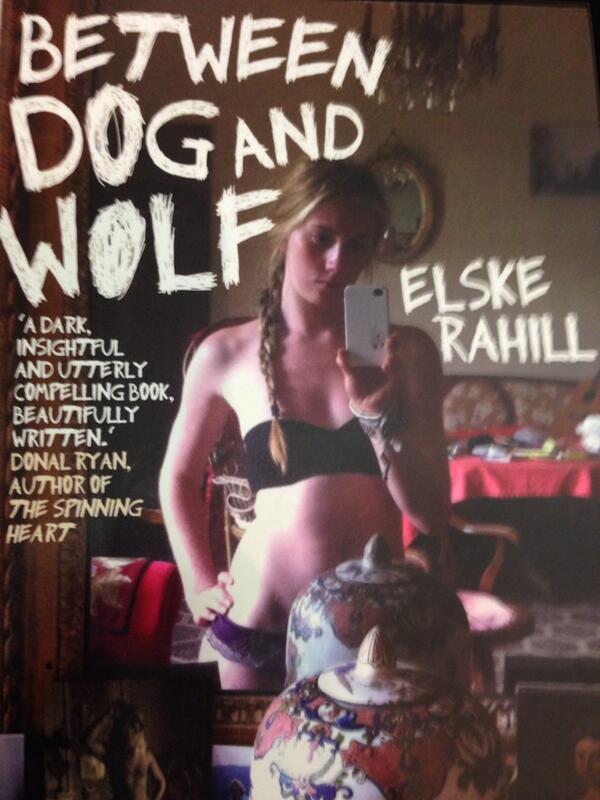
Between Dog and Wolf by Elske Rahill (2013): After seeing Rahill read at the Dublin Book Festival in the fall, I was intrigued by her novel. And it didn’t disappoint—although I admit I was turned off by the number of graphic sex scenes, the story overall is dark and compelling.

One More Thing by BJ Novak (2014): A funny but also bittersweet collection of short fiction. I wrote a full review HERE.

February films

Fruitvale-Station1

Fruitvale Station (2013): A harrowing film about the last day of a real-life young man killed by the police in California on New Year’s Day 2009. Michael B. Jordan is excellent as always as the protagonist—although I’m not going to lie, Chad Michael Murray’s appearance as one of the police officers pulled me out of the story somewhat.

Dallas Buyers Club (2014): This biographical film about a AIDS patient in Texas who goes up against the FDA when he starts a business selling unapproved medicines is has received both controversy and acclaim. I thought Matthew McConaughey’s performance was surprisingly excellent but overall I didn’t find the film to be that fantastic.

The Book Thief (2013): I was very disappointed in this film. It wasn’t bad; some of the cinematography was beautiful and the acting was good, particularly from the children playing Liesel and Rudy. However, I found the film lacked a lot of the emotional that made the book such a moving and powerful story.

Continue reading “February Microreviews”

January Microreviews

One of the goals on my 101 Things in 1001 Days project (2 goals complete and another 5 in progress so far!) is to start a blog dedicated to reviews. Unfortunately, at the moment I’m hardly seeing enough new films or reading enough new books or listening to enough new albums to make it worthwhile—it can be fun to read reviews of older works, but not fun enough to create a whole blog around it unless there’s some sort of theme other than “what I’ve read/seen/listened to.” However, in the meantime I’m going to do a microreview roundup each month of all the books, films, and anything else old or new that I’ve consumed (for the first time). Sure this month is a little late, but there’s still plenty of time before I’ll need to write February’s entry.

If you’re interested in seeing what pop culture I’m looking at as it happens, you can follow me on Goodreads or take a look at my 2014 scrapbook. What have you read, watched, or listened to in the last month? Tell me about it!

January books

51L3ktA41ZL

The Letters by Jack Kerouac and Allen Ginsberg (2012): A compilation of the correspondence between Kerouac and Ginsberg from 1944 to 1969, this book amazed me with the depth of the relationship between these two icons of the Beat generation. At times it is pretentious, of course, but in other instances there’s a rawness and sincerity that helps to explain the reason their writing still resonates so strongly.

While the Women are Sleeping by Javier Marías (1990): I’ve been wanting to read something by Marías for ages, but judging by the reviews on Goodreads for this collection, it’s not the one to choose as a first look at his work, and maybe that’s why I had trouble fully connecting with it. However, I did like the creepiness of the stories, whether it was due to a paranormal element or simply the weirdness of human nature.

A Farewell to Arms by Ernest Hemingway (1929): I see why Bradley Cooper’s character threw this novel out the window at the start of Silver Linings Playbook. While I enjoy Hemingway’s style so I liked the writing as much as I have in his other works, the unresolved nature of the plot, particularly the ending, made the book lack closure and feel almost unfinished.

Americanah, Chimamanda Ngozi Adichie (2013): Like a lot of people, I was introduced to Adichie’s work by Beyoncé’s ***Flawless, which samples one of her speeches. Americanah covers race, feminism, cultural and national identity, and does so through the wonderful character of Ifemelu. While some of the characters were somewhat one-dimensional, the protagonist was so compelling that I couldn’t set the book down.

Continue reading “January Microreviews”

Best of 2013 in books, films, albums & television

I know you are probably wondering what I’ve been getting up to in Ireland (New Year’s resolution: update at least every other week), but for right now, the requisite Best of 2013 post. Unlike all the music publications who put out their Best Albums of 2013 lists at the start of December and got egg on their faces when Bey caught them slippin’, I’ve waited until the very last day of the year to avoid any chance that I’ve missed the best of the best. And because I’ve been busy/am lazy, take your pick. Anyway, without further ado, my favourite book, film, album, and television show of 2013. And my first post since September; I’ll do better next year, promise.

By the way, if anyone out there feel like they’ve got a story (or poem, or play, or art piece) about “home” they’ve been dying to tell, the literary journal I’m working with, ROPES, has just extended its submissions deadline to January 10th. Find out more information at the ROPES Facebook page.

Book of 2013: The Goldfinch by Donna Tartt
Honourable mentions: Joyland by Stephen King, Red or Dead by David Peace

The_goldfinch_by_donna_tart

I don’t generally tend to read too many books in the year of their release, mainly because my to-read list is a mile long so I’m constantly catching up. Even when I’m excited about a book, like Joe Hill’s NOS4A2 this year or Michael Chabon’s Telegraph Avenue last year, they still have to take their place in line. But I did manage to read a couple new books this year, and it was just yesterday that I finished The Goldfinch by Donna Tartt. I had high expectations for it, since I read her novel The Secret History last year, loved it, and immediately recommended it to everyone I know, but The Goldfinch not only surpassed my expectations but absolutely left them in the dust.

This novel isn’t a light read; it’s dense, heavy, and while it doesn’t make as many obscure references to Greek and Latin as The Secret History, it’s not something you can just pick up and put down when you feel like it. Luckily, once you start reading it, you won’t want to put it down. If I hadn’t been reading it over the holidays where I had the occasional obligation not to be totally anti-social, I probably would’ve read the whole thing in one marathon sitting. As it is, the closer I got to the climax, the harder it was for me to stop reading to do minor things like eat and sleep. A friend said she thinks she read the last 150 pages without blinking; I’m pretty sure I read them without breathing.

But—and I may be acting a bit melodramatic here, but only a bit—who needs air when you have this perfectly crafted, emotionally devastating novel? It starts off like your typical tragic child novel—Theo’s mother dies in a terrorist attack in a museum in New York city—but takes a series of wild turns that completely changes the atmosphere and characters of the book. I bet the kid in that Jonathan Safran Foer novel about 9/11 doesn’t grow up anything like Theo Decker does. There’s corruption, scandal, art, and possibly one of my favourite supporting characters of all time in Theo’s partner in (usually literal) crime Boris Pavlikovsky.


Film of 2013: Before Midnight dir. Richard Linklater
Honourable mentions: Pacific Rim dir. Guillermo del Toro, Frozen dir. Chris Buck

before-midnight-poster1

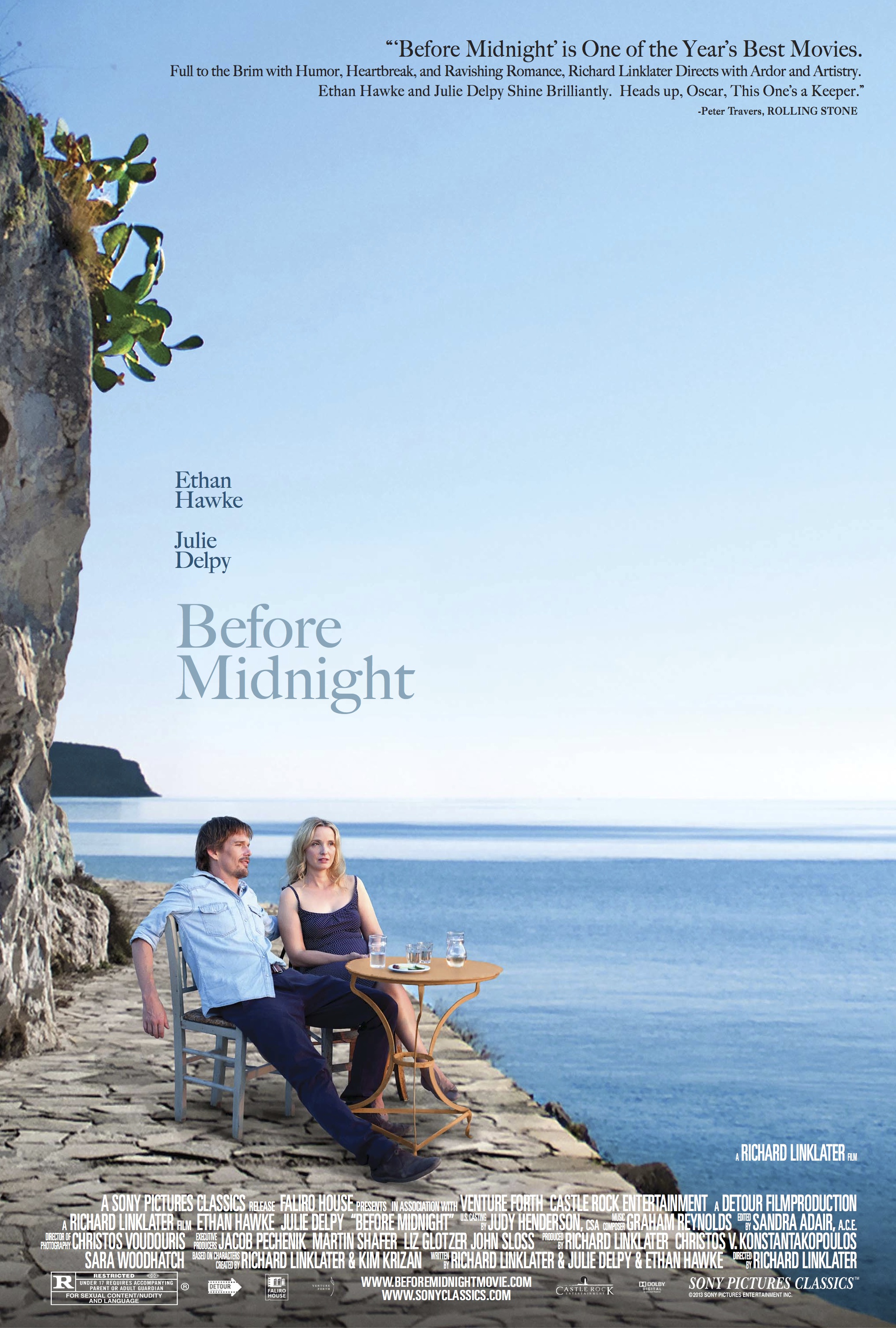
Maybe I’m too much of a cynic for movies, but usually those typical happy endings to films make me think “Yeah, okay, you’re in high school, I’m sure this relationship is going to last you until marriage/the rest of your lives.” That’s one reason I liked the first film in Richard Linklater’s trilogy: in Before Sunrise, Jesse and Celine don’t end up together; they spend the night talking and then go their separate ways. When they meet up again in Before Sunset, the coincidence is a bit unbelievable, but their relationship still plays out in a realistic way.

Released nine years after the second film and nearly two decades after Before Sunrise, I was definitely curious to see what had become of Jesse and Celine. In Before Midnight, they are married with children, but the realism of their relationship hasn’t changed. They still have long, deep conversations that are beautifully written (the stars of the film, Ethan Hawke and Julie Delpy, wrote the script with director Linklater). More importantly, their relationship isn’t perfect.

The cynical side of me always wondered if things could actually work out for two people who knew barely anything about each other. As it turns out, they have their fights and their issues, and Before Midnight is definitely a darker film than the previous two films. But it’s a beautiful movie about love and family, and a satisfying conclusion to one of my favourite trilogies. 


Album of 2013: AM by the Arctic Monkeys
Honourable mentions: BEYONCÉ by Beyoncé, Trouble Will Find Me by The National 

Arctic-Monkeys-AM

Picking honourable mentions for best album was difficult (I could’ve added Josh Ritter’s latest, the new One Direction album, and several others) but choosing a number one gave me no trouble at all. Since the Arctic Monkeys released their fifth studio album in September, my housemates can attest to the fact that I’ve listened to very little else. It’s the band’s best album since their debut, Whatever People Say I Am… (and I might even like it better), but it’s not the same style. The music is slightly more downbeat and the importance of production is a lot stronger—listen to the start of my favourite song on the album, “Do I Wanna Know?” and the hand claps/foot stomps digitally enhanced to create the beat.

AM is one of those albums where you think you know which songs you like the best but then you listen to one of the tracks you didn’t think you liked as much, and suddenly you have to reevaluate your ranking. Just the other day I was talking to a friend about it and I said that my favourite songs are “Do I Wanna Know?”, “Stop the World I Wanna Get Off with You” (even the b-sides are amazing), and “Snap Out of It,” then immediately realised I’d forgotten “Why’d You Only Call Me When You’re High?” Even right now, looking at the tracklisting, I’m not sure if I should’ve dropped one of those picks for “I Wanna Be Yours” or “Mad Sounds.” I didn’t think I loved “Knee Socks” originally, but I’ve been listening to it the most over the last few days.

Pretty much everything about this album is perfect. The lyrics are clever, the influences of every genre from Motown to rap are evident, and the rhythms of every song are the kind to get in your head and refuse to leave. I’ve listened to AM more than any other music this year, released in 2013 or otherwise. It’s my favourite album of 2013, but also one of my favourites in a long time.


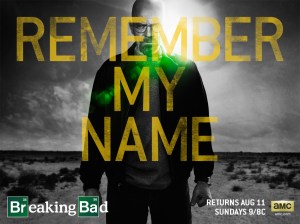
Television show of 2013: Breaking Bad, the final season
Honourable mentions: Orphan Black, season 1; Elementary, season 1-2
192wWs0

In any other year, Orphan Black would be the clear winner in this category on the strength of star Tatiana Maslany’s acting alone, but this year nothing was as important as finding out if Walter White was going to get what was coming to him. The series finale of Breaking Bad was the television event of the year (and judging by the internet’s reaction to it, possibly the event of the year for entertainment overall) but the entire final season was full of last-minute plot twists and turns that made every episode more thrilling than most shows’ sweeps week episodes.

There’s an episode a few before the finale in which the final scene was full of action and totally changed the direction the plot was going up until those last few minutes. When my neighbour came over the day after it aired and said she just had a few minutes to go in the episode, my roommate and I were incredulous that she managed to leave before it was finished. “Have you caught up on Breaking Bad?” was a common conversation starter among, oh, everyone I know.

This was for good reason. The season finale was one of the best and most satisfying final episodes of a television show I’ve ever seen, but the whole last season was pretty amazing. The writing was tight and well thought-out, and the acting, particularly from Aaron Paul as Jesse Pinkman, was fantastic. Add this to the joy of endless speculation about how it would end, and great moments like showrunner Vince Gilligan calling out internet misogynists for hating Skylar White, and there could be no other choice for tv show of 2013.