We all have them. Those internet rabbit holes you just can’t resist going down. Maybe it’s a topic that fascinates you, or one that infuriates you, or maybe it’s just one you know has enough content online that you can kill a bit of time when things are slow at work. Maybe you have a favourite topic that you check back on frequently in hopes of updates, even if the matter has been dormant for years. Maybe you and your friends share your findings back and forth, like my BFF and I do with bizarre advice column questions from sites like Ask a Manager and Dear Prudie.
Some rabbit holes are quite common: topics like unresolved true crime (who killed JonBenet Ramsey, who was Jack the Ripper) or cryptids (mythological—or potentially not mythological—beings like Bigfoot or the Loch Ness Monster) have always piqued our interest and our imagination. The internet has facilitated others: it’s easy to get lost scrolling through satellite images on Google Earth or idly planning a dream vacation or dinner on Instagram. Wikipedia is the biggest conduit, with its infinite hyper links making it easy to move through a series of innocuous topics until suddenly it’s three hours later and you’re deep into a world of conspiracy theories and oddities. “What is the best internet rabbit hole to get lost down?” is a common question on AskReddit, and Slate has an entire series based around the idea.
As someone who is Extremely Online, I probably go down the rabbit hole more often than most. Let me bring you down a few of my favourites:
I love to hike in the shoulder season. The temperature is cooler, so you’re not dripping with sweat while you tote around your pack. There are fewer people, so it’s less likely that you’ll be stuck 10 feet behind some asshole who thinks everyone else on the trail wants to listen their shitty EDM playlist. And there’s just something about the misty, transitional weather that accompanies spring and autumn that makes hiking during that time feel like an otherworldly adventure.
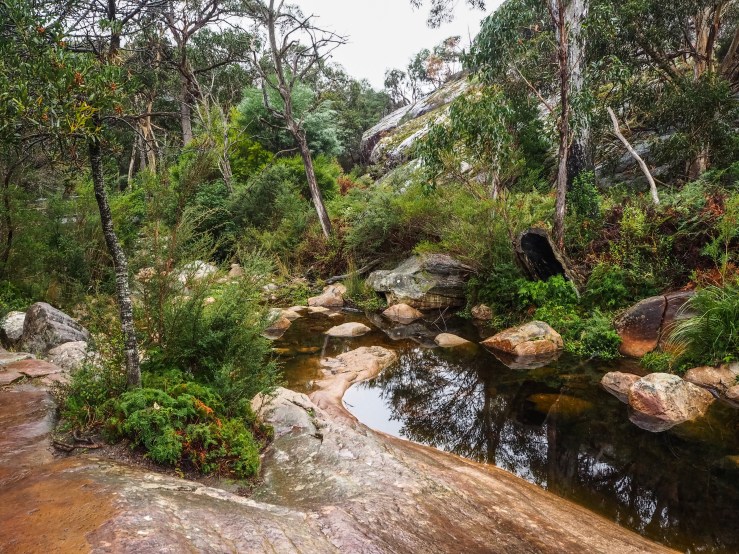
Of course, sometimes that adventure is more like a walk through Mordor than a trip into fairyland. A few weeks ago Steve and I went hiking in the Grampians, a national park about three hours’ drive from Melbourne. The weather during the week was decent but as the weekend approached the forecast looked worse and worse. 80%+ chance of rain is never what you want to see when you’re preparing to spend a few days in the great outdoors. Moreover, this would be our first time tent camping during a hike, spoiled as we’ve been with New Zealand’s amazing hut system.
When I finished my first half-marathon, I thought “I’ll definitely do that again, but I’ll probably never run more than a half.” When I ran my second, I thought, “I could probably tack on a few more kms, but I’ll probably never run a full marathon.” After the third, when I had finally reached my sub-two-hour half-marathon goal (1:56:42), I found myself immediately thinking ahead to the next goal. But this time my goal isn’t just time (although I’m hoping to run <1:55 in my next half-marathon in a few months), but distance. I finally felt ready to take the plunge and sign up for a full marathon.
The first thing I had to decide was: which one? My first, obvious thought was the Melbourne marathon in October, as I knew that we would be moving over here after our time in Wellington had finished. However, we originally weren’t certain that we were going to stay in Australia for a full year, and I didn’t want to train for a marathon and then not run it (barring circumstances like injury that could obviously crop up wherever I am).
I started looking at the Gold Coast marathon in July, hearing that it was a flat course and figuring that the dead of winter would hopefully cool things down. After moving to Australia I quickly reassessed; the heat and humidity of summer in Melbourne has both made it very hard to run much, meaning I’d be very behind on my training if I was to run a marathon three months from now, and it showed me that I have no interest in going up to the notoriously-humid Gold Coast for a race. Luckily, by this point we had decided that we were going to see out our year in Australia, so Melbourne was back on the table.
The Melbourne marathon is on Sunday, 13 October, exactly six months from now, and I officially registered last night. I’ve decided to use a Hal Higdon plan based on the recommendation of… pretty much everybody, and I’m going with the Novice 2 plan because I want to push myself a little (I’ll drop back to the Novice 1 plan if needed but looking at the prerequisites I think I should be okay. It will be slightly modified as the plan has you running a half-marathon at the end of the ninth week and I am going to do Run Melbourne’s half-marathon event on 28 July, which is only seven weeks in, but for the most part I’m aiming to stick to the plan as closely as possible. It’s definitely going to be tough to stick to in points—namely just two weeks before the race, when we’re planning to be in Japan for the Rugby World Cup—but I’ll make the time to run and will luckily be tapering then anyway.
The plan runs for 18 weeks up until the marathon which means that I won’t actually be starting it officially until the second week of June, but in the meantime I’m taking advantage of the cooler weather (finally) and building mileage, strength, and endurance by running as much as I can in preparation. Running a full marathon six months from today is going to be the biggest fitness goal I have ever, and maybe will ever, achieve, and I’m planning to do it right. I’ll check in with updates on my training and progress as I go, for support and accountability, and on 13 October I’ll see you at the far side of 26.2.
The Seven Summits comprise the highest peak on each of the continents—Mount Everest, obviously, Denali in Alaska, Mount Kilimanjaro, and so on. For many, ascending each of these seven mountains is a lifelong dream. However, not all seven peaks are created equal. Obviously, Everest is the hardest not only for its technical difficulty but also for the tens of thousands of dollars cost of its permit, while Kilimanjaro is a multi-day but non-technical hike that can be accomplished by hikers without mountaineering experience.
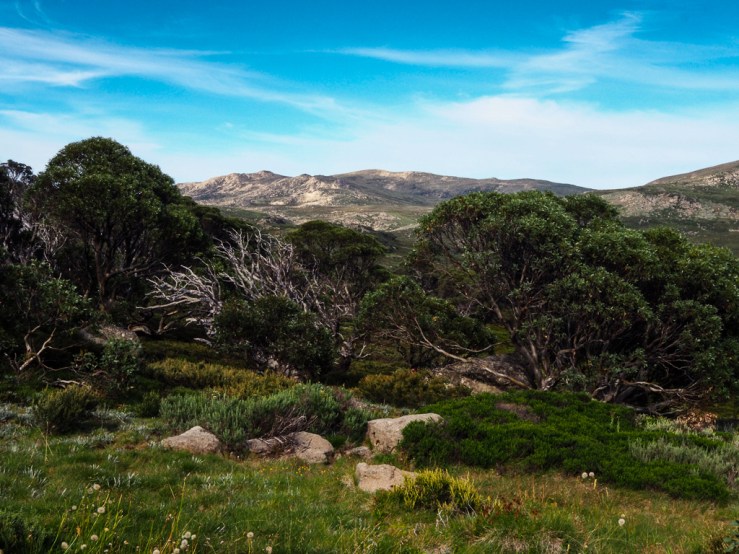
Looking at Kosci from the start of the Main Range Track
Then there’s Mount Kosciuszko. At 2,228 metres, it is only a quarter of the height of Everest, and can be summited in a single day—or less, if you take the route that includes a chairlift ride most of the way to the top. Some rankings of the Seven Summits don’t even include Kosci, replacing it with Puncak Jaya in Indonesia by considering Australasia the continent rather than Australia. But since I don’t have any desire to ascend all seven summits (I’d like to do Kilimanjaro in a few years, but I don’t see myself ever tackling the others), I’m happy to consider Kosci among the peaks.
Steve and me at the start of the hike
Last week, Steve and I rented a car and drove seven hours from Melbourne to Mount Kosciuszko National Park in New South Wales to hike to the highest point in Australia. We stayed overnight in Jindabyne, about half an hour away, and got up bright and early on Friday morning to head up the mountain. In order to make it more of a hike, we forewent the Threadbo trail with its chairlift and headed around the other side to Charlotte Pass for a 22km loop trail that connected the Summit Road and the Main Range Track.
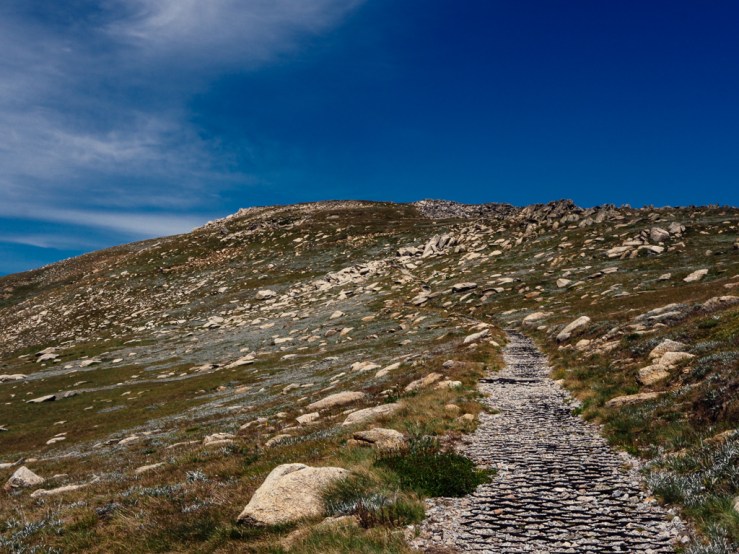
The first thing that surprised me was how beautiful it was. I was expecting a dry, sparse range based on the endless stretches of red dirt and leafless trees we had passed on the Hume Highway on the way up, but the views were actually mountainous and lovely. The track was also wonderfully peaceful. On our way up, we only encountered one other group—a pack of older folks kitted out with tramping poles and wide-brimmed hats, who kept up a solid pace even on the steeper sections. There was no one blasting shitty EDM off their cell phones for all to hear, thank christ.
On the way to the summit
The top was a bit busier because the three trails—Summit, Main Range, and Chairlift—converged (I’d guess most folks came up on the chairlift based on the lack of daypacks or hiking boots) but it was still very quiet compared to some of the hikes I’ve done in New Zealand and elsewhere. A surveying trig and elevation sign mark the summit, where we took a break for lunch before following the mild downward grade of the Summit Road back to our car.
At the top!
The hike took us just over six hours in total, lunch included, and was only strenuous in its length, but it was still a fun way to spend a few days (on the trip, we also drove up to Canberra to visit the NASA Deep Space Communications Centre and the National Gallery and Museum), and it’s fun to be able to say we’ve climbed one of the Seven Summits, no matter how small.
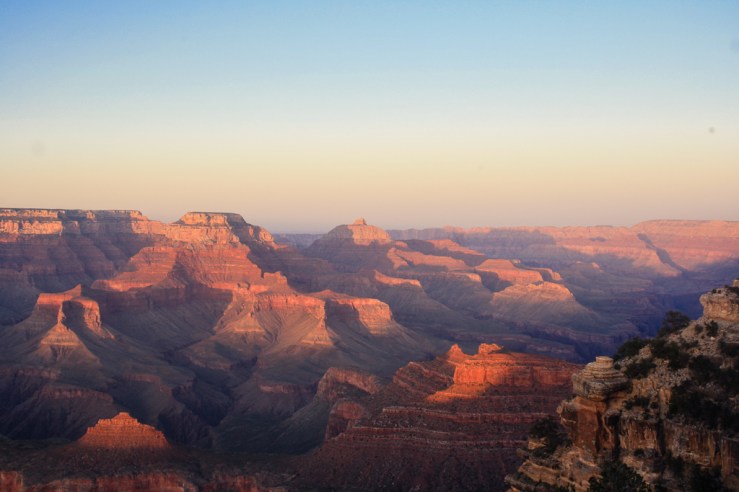
Whenever someone I meet in my travels asks me the best thing about the United States, the National Parks system is always the first thing that immediately comes to mind. There are plenty of places in the world that have incredible national parks, but the National Parks of the USA are special in their breadth and scope. Rock formations and rainforests, caves and canyons, islands and geysers and volcanoes and mountains… there’s something for everyone, representing the most incredible of Mother Nature’s offerings and welcoming over 300 million visitors per year.
Like everyone who love the National Parks system, I am heartbroken to read about the damage being caused to the parks by unsupervised visitors during the government shutdown. Trash overflows the rubbish bins, and let’s not even mention the toilets. Worse, there have been reports of vandals cutting the endangered namesake trees of Joshua Tree National Park in order to create access for their 4WD vehicles. Even during normal operating, there are many instances of graffiti and carved rocks from people who are too inconsiderate to follow Leave No Trace principles, so I can only imagine how much worse it is at the moment.
If you are also devastated by the destruction these thoughtless visitors are doing to some of the world’s most stunning sites, here are some ways you can help:
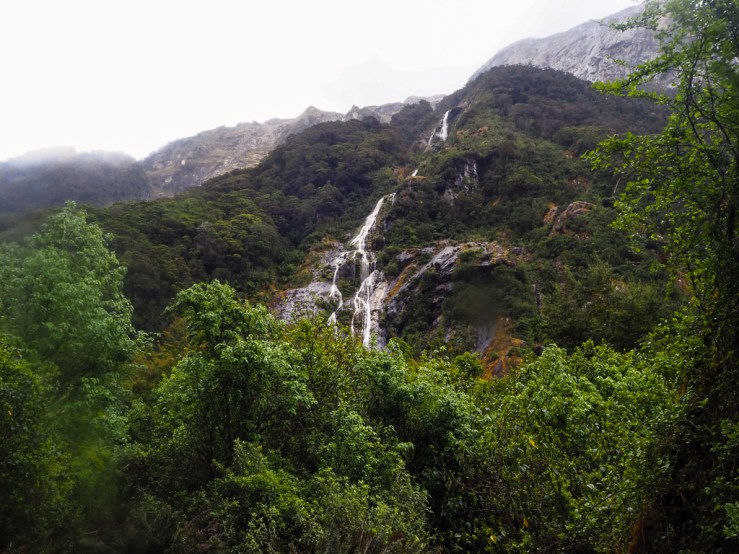
The Milford Track has often been called one of the finest walks in the world. One of New Zealand’s nine Great Walks, it consists of 53.3km of waterfalls, swing bridges, and some of the most beautiful views I’ve seen anywhere in the world. Being a four-day, three-night hike in which you stay at Department of Conservation huts and have to pack in and out most of your necessities (although the huts do have some amenities like gas cookers and even flush toilets), it’s a pretty big undertaking and therefore it’s good to have some guidance if you’re planning on doing the walk. Here are my dos and don’ts for a successful tramp along the Milford Track:










 thebestpossibletime