Body Positive Yoga for Insta-Inspiration

I’ve been doing yoga regularly for about a year now, and as someone who is still relatively new to the practice I often look at Instagram for inspiration and motivation. For example, I’m currently doing a 14-day “yoga challenge on IG that led to me trying a headstand yesterday for the first time!

While it’s amazing and inspiring to see the backbends and inversions these ladies (because, despite yoga having been a practice that was closed to women for a very long time, these days on the internet and in most yoga classes, the practitioners are a majority female) do, it only takes a few minutes of scrolling before you can’t help but notice that the most popular posters are thin, white, female, and decked out in the latest leggings from Lululemon or Alo.

Now, there’s nothing wrong with that, and being a fairly thin, definitely white woman who is currently waiting on Fedex to deliver a Lululemon order, it’s not that I can’t relate to these graceful women even if I don’t have a body that could be confused for a model’s. But it doesn’t reflect the yoga enthusiasts I’ve encountered in real life. In the yoga classes I attend, none of us have six-pack abs. Many students are beyond their early-to-mid 20s (my mom has started attending yoga classes recently, for example). Some are black, some are asian, some are men, some are children. Some practice chair yoga or have limitations due to disabilities or sorenesses.

That’s why reading Jessamyn Stanley’s book Every Body Yoga was such a breath of fresh air. Part yoga guide and part memoir, she describes her own journey to body acceptance and how we can balance our desire to emulate the cool asanas we see on social media with a practice that is kind to and loving toward our own bodies. What I love about the book is that she doesn’t say “Practice in your most tattered gym shorts and don’t even look at Instagram or you’re not a real yogi.” She totally acknowledges that buying brightly-patterned leggings and taking photos of yourself in your best dancer pose can be fun and even helpful. It’s just that you don’t have to do that, and you don’t have to look a certain way, and that your practice is yours to grow and embrace.

If you like to look at athletes or yoga practitioners on Instagram, then Jessamyn (@mynameisjessamyn) is a must-follow.

Here are some other Instagram accounts that offer body positive inspiration for your yoga journey:

Continue reading “Body Positive Yoga for Insta-Inspiration”

Let’s hear from the ladies

My job as a copywriter means that most of my day at work is spent typing away at a computer. And our department’s unhealthy obsession with Slack means that we don’t talk too much out loud (look, you can’t speak a giphy of a kitten), so I usually have my headphones in. And since there’s only so many times I can listen to the music from Hamilton*, I generally turn to podcasts.

One thing I really like about podcasts is that, like other maker-focused platforms such as YouTube, there is room for a hugely diverse array of voices. Not relying on traditional production/publishing means that you can find podcasts about any topic, created by any type of person. While I listen to podcasts ranging from the paranormal to the musical to the educational to the financial, one of my favourite things about podcasts is how many are female-created and female-focused. Here are a few of my top picks:

*just kidding, I could listen to it on repeat for forever


Stuff Mom Never Told You

Who hosts it: Cristen Conger and Caroline Ervin

What it’s about: How Stuff Works has a number of podcasts (another one shows up later on this list!) but Stuff Mom Never Told You is definitely my favourite. Some episodes focus on historical events or figures that may have been misrepresented or ignored in popular media and education; others explain common things  that often affect women like colorism, cuddling, and comics.

Check out this episode: Feminist Witchcraft

Continue reading “Let’s hear from the ladies”

Makeup Isn’t My Mask

There are a lot of sexist memes on the internet, which makes sense, it being the internet and all. Sexist memes combine two of the internet’s favourite things: memes and sexism. Most are some variety of the same theme, usually meant to explain that girls who pretend to like cool things are just lying liars who are only pretending to like cool things, most likely to attract boys. See: Fake Geek/Gamer Girl, the Bernie v. Hilary campaign positions sign, and about a hundred others.

When the denizens of this too-large corner of the internet are not talking about how horrible it is when girls like “boy” stuff, they’re talking about how horrible “girl” stuff is. For example, makeup and the “take her swimming on a first date”/”this is why men have trust issues” meme, which I find to be one of the most infuriating. You can see an example below, but basically it’s two pictures of a girl, one with and one without makeup. In the “with makeup” photo, her skin is flawless, eyebrows groomed, face all-around made up in a conventionally attractive way. In the “without makeup” photo she has sparse eyebrows, undereye circles, blemishes, maybe some hyperpigmentation, If she was the kind of girl to wear makeup every day, this picture would be the one of the day where everyone asks her “Are you sick?”

ugh
The fabulous Nikkitutorials

Apparently, it’s some sort of huge betrayal to a certain section of men on the internet for women to wear makeup because it’s a “lie”—as many women have so correctly pointed out, if these men think that winged black eyeliner is a natural feature, they deserve to feel hoodwinked—but there’s something about these memes that I find even more discomforting.

Continue reading “Makeup Isn’t My Mask”

5 Women Who Did More Than You Learned About In School

The more I learn about history, the more I learn how much I thought I knew was wrong. I’m lucky in that I’ve had a number of history teachers throughout my education who taught us about more than the America-rah-rah, white-upper-class-Christian-European-male-centric stories, but even so I’ve come to learn that there are so many stories I was never told, and so many stories that were so much more interesting and in-depth than I ever knew. So many of these stories are about women, either women whose accomplishments have been undeservedly forgotten in history, or women who are remembered in a too-superficial way, not celebrating the complexity of their lives and achievements. Here, for International Women’s Day, are five women you probably learned about in history class, but not the way you should have.

Helen Keller

bl1

I remember reading The Miracle Worker in middle school. The story of how Anne Sullivan helped Helen Keller learn to communicate is one of the most inspiring tales of perseverance and triumph I can think of. But that’s pretty much where things ended; we got a brief summary of Keller’s work as an adult, but as far as our education was concerned, she was forever a little girl learning to spell out words on her teacher’s palm .

But if Helen Keller’s childhood is an incredible story of determination, her adulthood is even moreso. Of course, she was a staunch advocate for people with disabilities (a cause that still often goes unrecognized in feminism today), but she was also a feminist, a pacifist, an anti-racist activist, and a socialist. Her writings on workers’ rights and equality are as powerful as her ability to overcome her physical obstacles, and tend to be overlooked in favour of telling her “miracle” story.

Continue reading “5 Women Who Did More Than You Learned About In School”

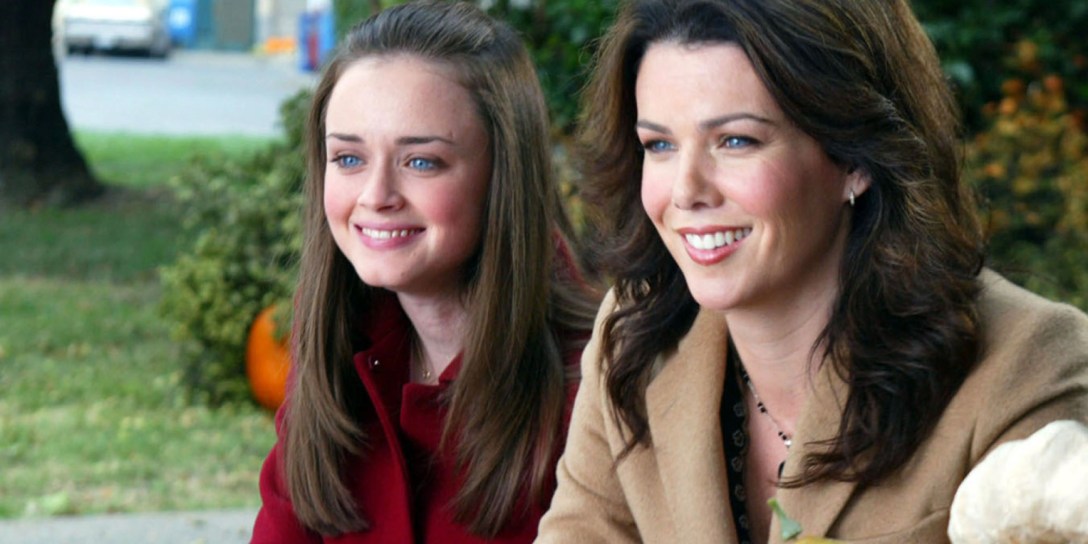
Anywhere that you tell me to, Gilmore Girls

When filmmakers want to retell a familiar story, it seems that they tend to turn to remakes or reboots, recreating a version of the original work with a new cast and crew, perhaps throwing in a cameo from the original star as a plot point or just a wink and nod to long-time fans. While there are occasional instances of many-years-later sequels, it seems that usually after a certain period of time filmmakers feel that audiences prefer to start fresh.

On the other hand, television seems to lend itself better to continuations of old stories, perhaps due to the ease of a next-generation series a la Girl Meets World or the upcoming Fuller House, or the procedural nature of a show like The X-Files (of which I have not yet watched any of the latest episodes because I’m saving them to binge watch all at once). Given that this tendency toward long-awaited continuations has led to Netflix confirming a four-part Gilmore Girls revival, I definitely can’t complain.

Like most book-obsessed, somewhat nerdy girls my age, my two fictional role models growing up were Hermione Granger and Rory Gilmore. We had so much in common: both of us always with a book in our hand, focused (sometimes overly so) on school—we even both studied journalism! Rory was smart, driven, and even if she wasn’t real, I looked up to her. I was devastated when her college years arrived and she turned off track (why did you steal that boat, Rory, why?!?!), and elated when she returned to college, with the finale sending her off on the campaign trail to report on Barack Obama.

Then there’s Lorelai. If Rory is who I was, then Lorelai is who I wanted (and still want) to be. Not the teen-pregnancy-with-awful-Christopher part or the terribly-strained-relationship-with-her-parents part, but pretty much everything else. She, too, was smart and driven, owning her own business and finding a perfect niche. She was witty as hell and enviably funny. She had great friendships in her town and an even greater relationship with her daughter. And our all-consuming coffee drinking habits are remarkably similar.

The minor characters are just as wonderful, with so many memorable supporting roles like Paris Gellar, Lane Kim, Luke Danes, and the only one of Rory’s boyfriends who really matters, Jess Mariano, but the titular Gilmore girls are by far the most important to me. When I was a kid I wasn’t much of a television watcher so most of my fictional heroes came from books—the aforementioned Hermione Grander, the Enchanted Forest Chronicles‘ Cimorene, and others, but Lorelai and Rory were the exception. To this day, I think that the more I am like them, the better.

In a way, this makes me nervous for the Netflix revival of the show. I remember my heartbreak when Rory “let me down” by stealing a boat and quitting my college, my devastation when Lorelai and Luke broke up. My diction may be slightly exaggerated here, but only slightly. What if Lorelai and Luke don’t get back together? What if Rory goes back to (ugh) Logan? More importantly, what if she’s not still writing? What if she’s changed? I mean, sure, I’ve changed too since 2007, but I’m a real person; I’m allowed. All revivals contain a certain amount of fan service; most creators aren’t as diabolical as to completely destroy everything their audience loved about the original, even in the name of progressing the story, and I’m totally okay with that when it means things turn out the way I want them to.

On the other hand, I do care about the story. Gilmore Girls wasn’t a generic show I watched for the eye candy. I cared  (still do) about the characters and their lives like they were people I knew in my own life. And so I’m willing to be disappointed in the name of good storytelling, if it comes to that. But, you know, ideally the storytelling is great and leads to Rory and Jess getting back together to write novels in Brooklyn. Regardless, as the theme song says, “Where you lead, [Gilmore Girls,] I will follow.”

Stories You Should Read This Week (4/2/16)

It’s time for the latest edition of Stories You Should Read This Week. I’ve got six links to awesome things I’ve read around the internet recently. Read them at work, read them on the bus, read them in bed. Tell me what you think, tell the authors what you think, tell everyone what you think.


Burgers, Bitches, and Bullshit by Bethany Cosentino (via Lenny Letter)

I generally like to avoid most-things-Lena-Dunham, but this essay by Best Coast’s front woman Bethany Cosentino on Dunham’s Lenny Letter site is a must-read. Not because her experiences–being told to smile, being lauded for her looks over her achievements–will be unfamiliar to many (most) women, nor because should come as a surprise that success may only increase these sexist instances, but because Cosentino rightly joins artists like Cvrches’ Lauren Mayberry in loudly and boldly calling these assholes out.


A Chat About Diversity in Publishing by Nicole Chung and Linda Z (via The Toast)

Like the interviewee, who works in my dream career of publishing, I fit the majority demographic of the publishing industry: female, white, straight, cisgender, able-bodied, and from an educated, middle-class background. Yet books about people in this demographic are still so often pigenholed as “Women’s lit” rather than just “lit,” and books by women who are minorities in other ways (non-white, LGBT, and so on) are even further marginalized on the shelves. The current cultural conversation is about another media format (see #OscarsSoWhite) but it’s just as relevant in books.


Marcia Clark On What Episode One of The People v. O.J. Simpson Got Right and Wrong by Maria Elena Fernandez (via Vulture)

I’m a little too young to really remember the O.J. Simpson trial, but I still remember and know that it was a major event if not the major event of the mid-90s, so of course I was excited for the start of this miniseries, even if it’s helmed by Ryan Murphy. In this interview, Marcia Clark talks about her reaction to the premiere episode.


An Invitation Into the Shadowy World of Match Fixing by Ben Rothenberg (via NY Times)

Match fixing conspiracies seem to abound whenever there’s an upset, or a lot of betting on a match, or pretty much any time a sport is played. But it does happen, sometimes obviously and sometimes not. Tennis is the sport currently embroiled in the scandal, but this fascinating read could surely occur in any sport.


Alternatives to Resting Bitch Face by Susan Harlan (via McSweeney’s)

I’ll just post an excerpt from this perfect list:

I Would Prefer Not To Face

A Smidge of Self-Awareness Would Not Go Amiss Face

The Situations Are Really Not Analogous Face

Please Tip a Bottle of Bourbon Down My Throat Immediately Face


Stop Trying To Out-Feminist Each Other by Maya Kachroo-Levine (via The Financial Diet)

I’ve been reading The Financial Diet recently since my fellow Ithaca journalism alumna Maya is a writer there, and I enjoyed this piece she wrote about your earning versus your partner’s earning and whether it matters as a feminist. She says, and I agree, that it doesn’t. If you earn less than—or more than! or the same as!—your SO, your partnership and everything else in your life can empower you as a woman and a feminist, and just because you don’t shout about it doesn’t mean people can tell you otherwise.