Being a Writer When You’re a Writer

“Being a writer” has a low bar to entry. It’s not like “being an engineer”—you don’t have to work as a writer or be trained as a writer or ever publish a word of your writing. You just have to write. Being a writer as a career obviously takes a little more effort. I am a writer by nature and by trade—for the last two years I’ve spent somewhere between two and ten hours a day, five days a week, writing. It’s not what people would consider “glamorous” writing, creating product copy for ecommerce websites; it’s not being a novelist or a features writer or any of my “dream” writing jobs, but it’s nice to be able to say that I pay my bills as a writer.

Plenty of writers have no interest or ability to write as a profession, and simply write in their free time as a hobby. Sometimes I envy that. Too often, after a full day of writing for work the last thing I want to do in my free time is open up Scrivener and start on my own projects. Even on weekends when I haven’t been writing all day, I feel as though I want a day off from this thing that I supposedly love and feel endlessly passionate about. This is where I admit that I haven’t finished so much as a short story in nearly a year. Heck, I’ve barely even started so much as a short story in that time. And you, dear readers, have seen how infrequently I manage to even update this blog.

Sometimes the self-doubt creeps in and I think that perhaps I’m not a writer. Maybe I’m a non-writer who just happens to write for a living. I know this is the kind of self-doubt that nearly every writer struggles with; twitter is full of jokes from amateur and professional writers about the trials and tribulations of putting words on the page.

The recipe is simple: to be a writer, you must write. You must write when you’re tired, or sad, or after you’ve written all day for work. You must especially write when you feel like every word that spews out is pure shit. Thriller writer Harlan Coben said, “You can alway fix bad pages. You can’t fix no pages.”

Stephen King said that he writes 2000 words each and every day. I know from several years’ experience participating in NaNoWriMo, where the daily average goal is 1667, words that writing 2000 words can take an hour or twelve, depending on the day. Obviously, that’s not feasible for everyone, whether they write for their job or not. But what I must learn to better remind myself is that ending a day having written a single word on a personal project leaves me with one more word than I started with, and sometimes that’s enough.

I won’t be participating in NaNo* this year—for most of November I’ll be visiting Ireland and toward the end Steve and I will be moving across the world to New Zealand where I’ll almost certainly be too preoccupied searching for housing and a job. I can’t commit to writing 2000 words a day, or maybe even 200. But I’m a writer, and so I must write.

* For the uninitiated: November is National Novel Writing Month, where thousands around the world attempt to write a 50,000 word novel in 30 days. Published novels that began as NaNo projects include The Night Circus by Erin Morganstern, Water for Elephants by Sara Gruen, and Fangirl by Rainbow Rowell. 

My Self-Improvement Summer

As most of you know, I’m back at my parents’ house for a few months between Steve and my epic three-month, cross-country road trip and reuniting with him in Ireland again before we head on to a working holiday in New Zealand. As my town is quite small and uneventful and my work doesn’t take up too much of my time, I decided that for the summer I would work on setting some habits, reaching some goals, and making it a summer of self-improvement.

I know that summer isn’t technically over, but I’m wearing a hoodie and drinking hot tea during the day for the first time in ages, so it definitely feels like fall and therefore I’m going to check in as I move into My Self-Improvement September. The eight things I wanted to work on this summer were: yoga, meditation, piano, guitar, Duolingo’s German course, running, dance and this blog. Let’s see how I did:

Continue reading “My Self-Improvement Summer” →

Buying Happiness: The Internet and Self Care Materialism

I read an interesting article on Buzzfeed yesterday discussing the way youtubers and influencers use the idea of “self care” to sell sponsored content. The article discusses influencers who shill products that allegedly help them when they’re feeling low, as well as influencers who post sponsored (i.e. paid to mention certain brands) videos with a self-care focus. It’s a good article and it got me thinking about the way we use and, yes, commodify self care.

“Self care” is of course not a new concept, but it seems like there’s a definite uptick in talking about it as of late (especially, for obvious reasons, after the 2016 election). From blog posts to YouTube videos talking about “10 things I do for Daily Self-Care,” “My Favourite Beauty-Related Self-Care Products,” and so on. There’s also been a lot of discussion about the concept of self-care in positive and critical ways, ranging from an acceptance for the need for self-care being beneficial in fighting the stigma surrounding mental health to the inequality of “self-care” being limited to those who have the time and resources to achieve it. 

The materialism often underlying self-care talk that’s examined in the Buzzfeed article is something that’s come up before, and I think it’s an interesting discussion. Part of this comes from the fact that some youtubers and bloggers who frequently talk about their self-care routines also gain emotional credibility from their audience through their openness about their struggles with mental health. While their efforts to work against the stigma of mental illness is admirable, there’s also a definite backlash against people equating “self-care” with a treatment for mental illness. There’s this whole history of people saying, “Oh you’re depressed? Just do something that makes you happy” that doesn’t acknowledge that mental health treatment often requires medical treatment because it’s a medical condition, not just a bad feeling, so the ire is understandable. 

Continue reading “Buying Happiness: The Internet and Self Care Materialism” →

The Museum of the American Revolution and other essential Philadelphia-area Revolutionary War historic sites

As a kid, it took me some time to realise that everyone in America didn’t grow up within minutes of important historical locations. I grew up in the suburbs of Philadelphia, so I would always say I was from “outside Philly” but whenever I need to give more specificity to people familiar with the area but who didn’t know my small town, I described it as “near Washington Crossing… as in Washington crossing the Delaware.” In addition to being just a few minutes’ drive from this historic location, the towns around mine are full of houses and buildings that date back to the colonial era, I used to work at a school that was owned by a doctor during the Revolutionary War (and is allegedly haunted by a Hessian soldier he operated on there), and, of course, the city of Philadelphia is only 40 minutes away.

603790_10153168766615960_3753087677858423150_n
The Artillery park at Valley Forge National Historic Parka

Yesterday I visited Philadelphia’s new Museum of the American Revolution. A few blocks away from Independence Hall and the Liberty Bell, the museum is the perfect addition to the area. Tracing the events leading up to, during, and through the aftermath of the Revolutionary War, this well-curated exhibit features artifacts from the time period and thorough explanations of significant happenings and people. Highlights include the excellent orientation video, the original tent Washington used as his personal office during the war, and one of the oldest preserved Revolutionary-era flags of the soon-to-be United States. Most of us are already familiar with the basic history due to years of primary education (is it just me, or did we learn about the Revolutionary War pretty much every year?) but the museum does a great job of providing a comprehensive overview while also delving deeper into lesser-known moments, people, and things.

Continue reading “The Museum of the American Revolution and other essential Philadelphia-area Revolutionary War historic sites” →

Long Listens for Long Drives

Everyone always talks about making the perfect “road trip playlist.” There are two reasons I don’t think this as important as millions of Spotify users make it out to be. One: you don’t need to make the perfect road trip playlist because it already exists and it’s called Born to Run by Bruce Springsteen. Two: while it’s true that driving down an empty highway with the windows down and the radio at full volume is a freeing, exciting feeling, listening to something that really grabs your attention is a better way to keep you alert and pass the time.

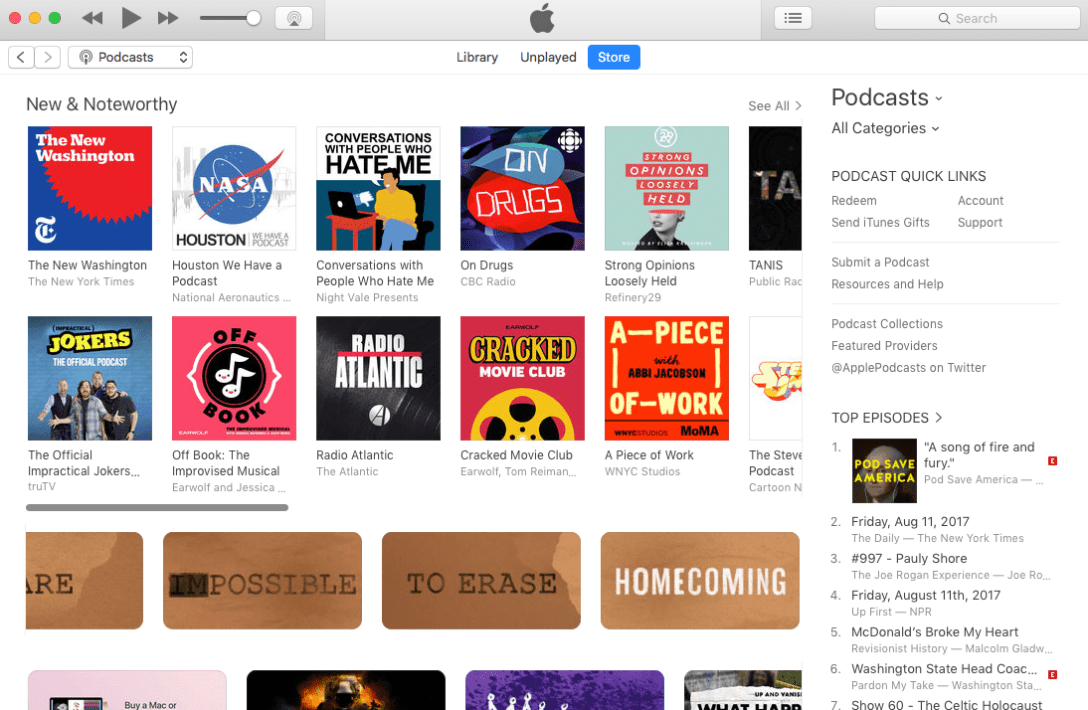
Some people enjoy listening to an audiobook while on the road; personally, I prefer podcasts. Steve and I started listening to podcasts on our road trip after we decided to check out NPR’s deservedly-hyped hit S-Town. We binged on all of the episodes over the course of several days, and then I learned that he had never listened to the first season of Serial. After that, it was the latest episodes of The Men in Blazers Show, the back episodes of Reply All, and more. Here are a few of my picks for longform listens to make the long hours on the road fly by in entertaining style.

Continue reading “Long Listens for Long Drives” →

Chihuly at the New York Botanical Garden

The Chihuly Garden and Glass exhibit at Seattle Center is one of the must-see attractions in the city, but in the year I lived in Seattle I foolishly never made the time to go and visit it. Therefore, I jumped at the opportunity to go to the New York Botanical Garden with my family yesterday to visit their Chihuly exhibit and to explore their beautiful gardens. The exhibit runs until October 29, and if you have the opportunity to go and check it out, I highly recommend it.

Here are a few photos I took yesterday. Click on each thumbnail to view the full image!