What’s the most daring thing you’ve ever done? Did you move to a new country? Go on a blind date? Quit your job? Jump out of a plane? As of last month, I can say I’ve done all of the above, thanks to my experience skydiving over the Remarkables mountain range in Queenstown.
I’ve always considered myself a relatively adventurous person. My living-in-four-countries-in-four-years (soon to be five-in-five) lifestyle bears that out, and I’ve never hesitated to try new things. Skydiving is something I’ve always wanted to try, and after hearing from so many people that Queenstown jumps have some of the best views in the world, it was firmly in my mind that when I went to Queenstown, I would skydive.
Steve and me on the way up
What I didn’t expect was that I wouldn’t be skydiving alone. I’m not referring to the tandem master, the skydiving pro who actually does most of the work—obviously I wouldn’t be jumping by myself—and I was pretty sure that I could convince Steve to give it a go. No, I was surprised that skydiving in Queenstown became a family event.
Yesterday, a group from the r/Wellington subreddit got together to clean up trash on Petone beach, on the Lower Hutt side of Wellington harbour. We spent an hour and a half (some intrepid redditors spent closer to two hours!) picking up small bits of plastic, cigarette butts, and what might have been a Pepsi bottle full of pee—ew.
I organised the event, which was amazingly simple thanks to the great community in Wellington and particularly r/Wellington. There’s always someone keen to meet up to do anything that someone else is interested in, so all it took was a quick post to the page and 20+ people expressed their interest (we didn’t end up having quite that many people on the day, because life gets in the way, but there was still a group of about 12 of us ready to do our part).
Abel Tasman National Park is one of the busiest spots in New Zealand, with upwards of a quarter of a million visitors per year spending at least a day in the park in recent years. However, the vast majority of these visitors come in summer, to enjoy the beautiful golden sand beaches and warm water for kayaking and swimming. Last week, in late autumn, it was nearly empty, and it was a wonderfully peaceful way to experience one of New Zealand’s most stunning regions.
View of Split Apple rock from the water taxi
Our trip started with a water taxi from Marahau to Totaranui Bay. We decided to go from north to south because it offered more flexibility; we could take the morning boat and when we got back to Marahau three and a half days later, we’d be back at our rental car and ready to return to Nelson. The water taxi trip was great, taking us to the famous Split Apple rock as well as to see baby seals playing in rock pools near an island just offshore.
Baby seals getting curious about the boat
I already wrote plenty about our experience between Totaranui and Awaroa hut, but even though the rest of the trip wasn’t as dramatic, there was still so much to see and do. Abel Tasman is full of flora and fauna, beautiful vistas and lush forest, and to be there in such a quiet time (there were days when we didn’t see anyone from the time we left the first hut until the time we reached the next) was amazing.
Fantails’ white eyebrows make them look like angry old men
Our second day in the park took us 13.5km from Awaroa to Bark Bay. Unlike the previous afternoon, day two was warm and sunny. The trails in Abel Tasman are well-marked and don’t have much elevation climb, so the hike itself is not difficult and leaves plenty of time to enjoy the scenery. There are also a couple of fun bridges to cross over estuaries and streams.
The high-tide bridge across Torrent Bay estuary
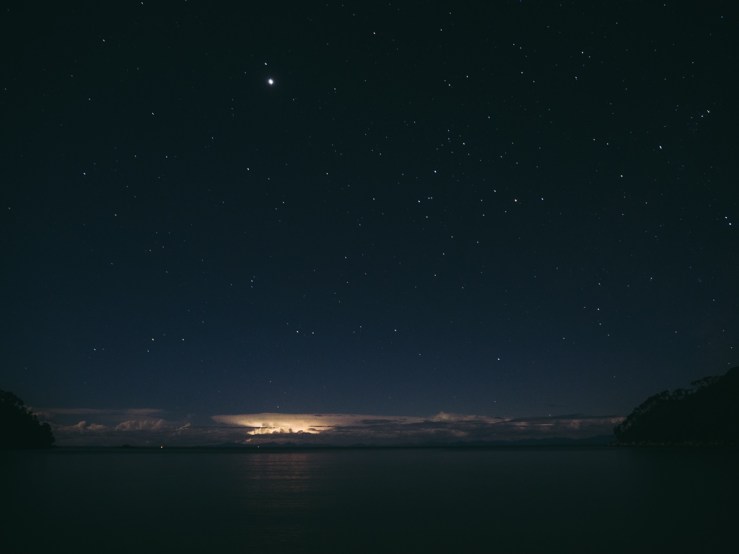
We arrived in Bark Bay to find a family had already arrived at the Bark Bay hut and started a fire in the stove, making the lovely space extra nice and cozy. After sunset, we walked out to the beach at Bark Bay to take some photos of the night sky using my camera and tripod. Across the Tasman Bay, in the distance, there was a thunderstorm and with a little luck and a lot of mistimed shots, I managed to capture it in one photo.
Lighting across the Tasman Bay
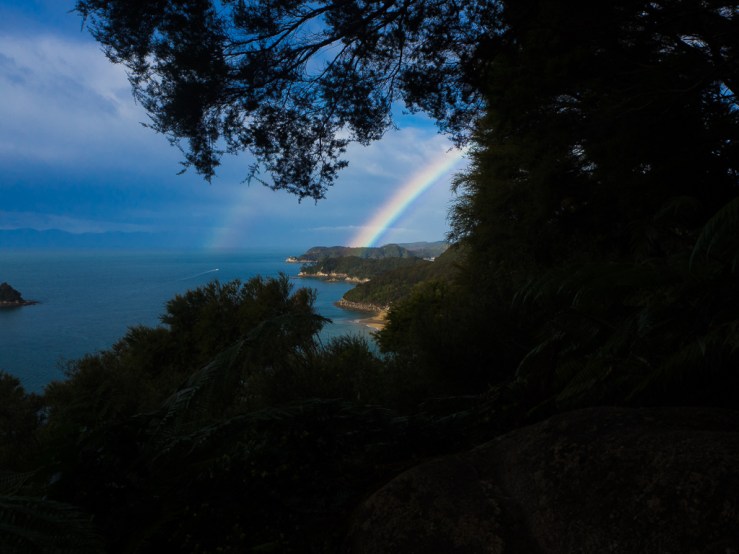
The start of our third day in the park was a bit grey and drizzly, but as the morning went on the weather cleared up and the sun hitting the last of the raindrops made for some beautiful rainbows.
A quick side trip to a lookout near Bark Bay
Day three featured a couple of side trips as we hiked from Bark Bay to Anchorage. We climbed up a steep and less-traversed trail to visit Cascade Falls, as well as taking a much more leisurely ten-minute detour to Cleopatra’s Pool (which must be an amazing place to take a cool dip in the summer).
Cleopatra’s pool
Anchorage Hut was the busiest and most well-outfitted of the locations we spent the night. Although none of the huts have cooking facilities, they do have flush toilets (although usually a short walk from the huts themselves) and Bark Bay and Anchorage both had a few solar-powered lights). This hut even had solar-powered mobile phone charging cables, which is something I never expected to see.
Torrent Bay, on the way to Anchorage
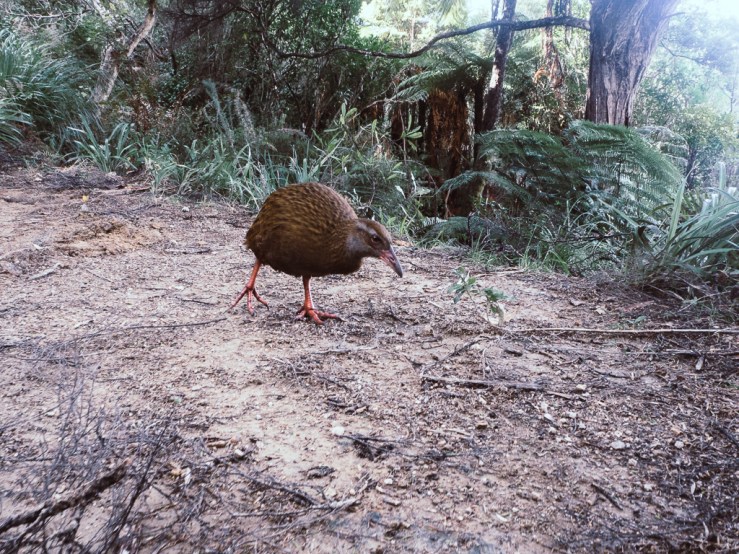
The final day, from Anchorage back to Marahau, was quick and easy, and we enjoyed burgers at The Fat Tui before heading off to Nelson for the night. A couple of weka, a kiwi-like bird that we had seen throughout the trip, tried very hard to steal our sandwiches.
Weka are so cheeky
Having previously done an overnight hike only once before, four days and three nights in Abel Tasman was definitely a new adventure. And so worth it. If you’re okay with chilly weather and love tranquil solitude, I definitely recommend exploring a national park in the offseason. Not only is it easier to do (we booked our huts a few weeks ahead of time, whereas in the summer they fill up months in advance; on other trips such as our road trip we were able to take advantage of first-come-first-serve campsites in parks like Yosemite that become highly in-demand book-ahead sites during peak season), but it’s a great way to enjoy the beauty and power of the site without crowds of other people. And if you choose to go to Abel Tasman, you’ll surely be in awe of the wonder of the world that you encounter.
One of the most beautiful places in the world for sure
Remember how in the Oregon Trail computer game when you reached a river you were always given a choice to ford it or not, and you always chose to ford it thinking “Yeah, it’ll probably be okay, and it’s so much faster,” and then you and/or your oxen always drowned? That choose-your-own-fate decision screen was at the forefront on my mind on the first night of last week’s tramp in Abel Tasman National Park. I’ll write about my whole four-day hiking adventure later this week, because it was one of the most amazing experiences I’ve had here in New Zealand, but there was one moment on the trip that is worthy of its own post as the most terrifying experience I’ve had while travelling to date.
For the most part, the Abel Tasman Coastal Track, one of New Zealand’s Great Walks, is a fairly relaxed hike, with well-defined paths and only a few hundred metres of elevation climb over it’s ~60km (we did about 50km due to our schedule and a slip that made the trail north of Anapai Bay inaccessible). However, there is one section that is far more than a leisurely walk in the park: the Awaroa inlet crossing.
Anapai bay beach
Immediately to the north of Awaroa hut is a river mouth that can only be crossed two hours either side of low tide… unless you want to swim. I checked the tide tables for the day we were beginning our hike from Totaranui campsite, about 7km north of Awaroa, and believed that low tide was around 5pm, meaning we could cross sometime after 3pm. Unfortunately, I was informed by the water taxi operator who was transporting us from Marahau to the start of our tramp that I had actually misread the table; the low tide that day wasn’t until 9pm. No worries, we thought, we’d do a couple of side trails and when we reached the start of the crossing we could easily chill out for a few hours on the beach until it was time to cross.
At first, things went according to plan. We arrived in Totaranui and hiked north to Anapai beach. After returning to Totaranui and stopping for lunch, we continued on for two hours or so until we reached the Awaroa inlet shoreline around 4:30pm. When we arrived, we thoroughly understood why crossing before the allotted timeframe was not going to happen:
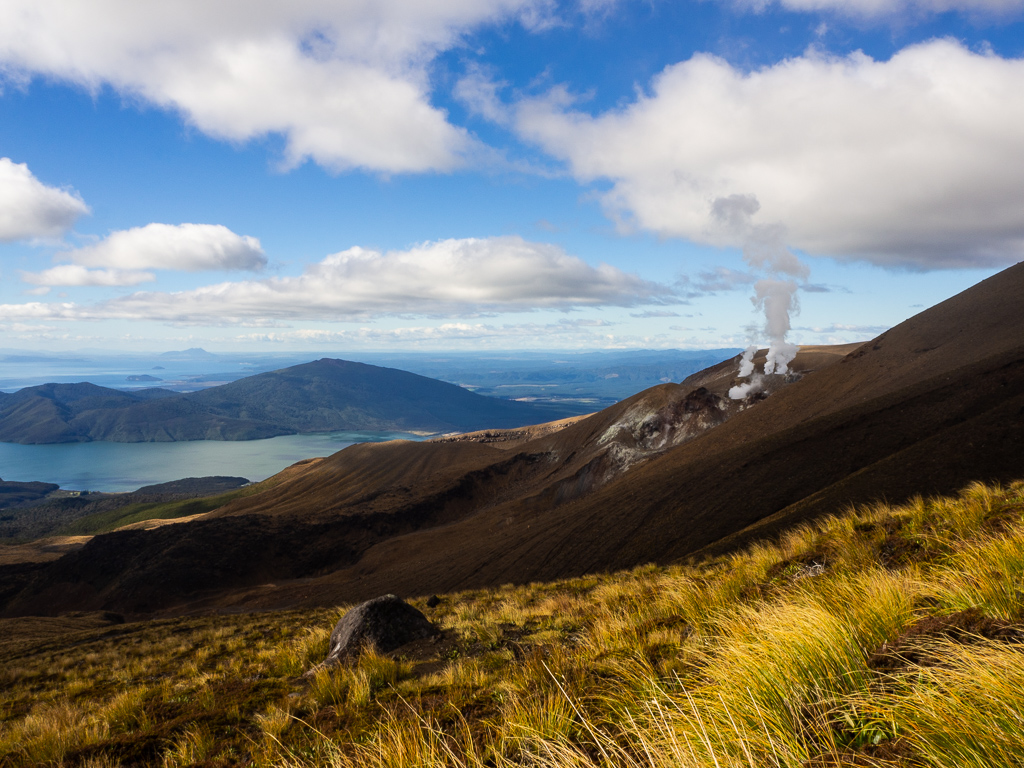
Earlier this week Steve and I headed a few hours north of Wellington to Tongariro to do the Tongariro alpine crossing. One of the highlights of the North Island, this 19-kilometre hike is known for some pretty epic natural formations including turquoise-tinted geothermal pools and the intimidating Mount Ngauruhoe—or as you might know it, Mount Doom. It’s also known for its changeable weather, especially this late in the season. When we arrived at our hostel, we were told by the owner that the shuttle hadn’t run for a few days, but that the forecast was good for the following day and she was optimistic we would be able to do the hike. The next morning, under an overcast sky, the shuttle operator told us that he would take us up but that he recommended we wait for a less ominous day. We decided to go anyway and luckily—after two hours of rain—the skies miraculously cleared up and we were rewarded with incredible views.
Mount Doom in the distance after the clouds (mostly) moved on
Going on a holiday often means stepping out of your comfort zone. Sometimes it means trying new cuisine that kinda grosses you out, sometimes it means navigating a country where you don’t know a word of the language, and sometimes it means venturing into the great outdoors when you’d normally rather be at the mall. There were definitely a few people we saw doing the crossing who weren’t particularly well prepared—like the folks on the shuttle with us who had to be driven to a local gear shop so they could rent rain jackets! While Steve and I only did our first overnight hike a few months ago, we’re experienced trampers and were ready for anything. If you’re thinking of exploring New Zealand or anywhere else known for its hiking, here are a few tips to help your tramping experience:
About a year and a half ago I ran my first half-marathon. Then I all but stopped running. It’s not that I don’t enjoy running, because I obviously do or I wouldn’t have run a half to begin with, but first I was taking a break after all that training; then the weather was too hot; then too cold; then we were living in a van. Next thing I knew it was a year and a half later and I hadn’t run in ages. When I moved to Wellington I decided to sign up for the Round the Bays half, convinced Steve to do the same, and started running again. I learned a lot from the Vancouver Half-Marathon, my first-ever race, but I still picked up a few new insights this time around.
Before the race and ready to run!
The first thing I learned is that in some ways, it is like that old adage about riding a bicycle. Obviously you’re not going to jump back into running after not training for ages and immediately be able to run that whole 13.1mi/21.1km, but running a race requires mental training as well as physical. Before training for my first half-marathon I had never run 13.1 miles before. The longest run I could find in my Runkeeper records was 10 miles, way back in 2012. Usually I topped out around 5 or 6.
Training for my second half-marathon was different because I knew I could finish it. I had a good suspicion that I could back in Vancouver, but for this one I already knew because I had done it before. Getting over that mental hurdle (running pun, ha ha) made it much easier to jump into training and push myself toward that 13.1 mile goal.
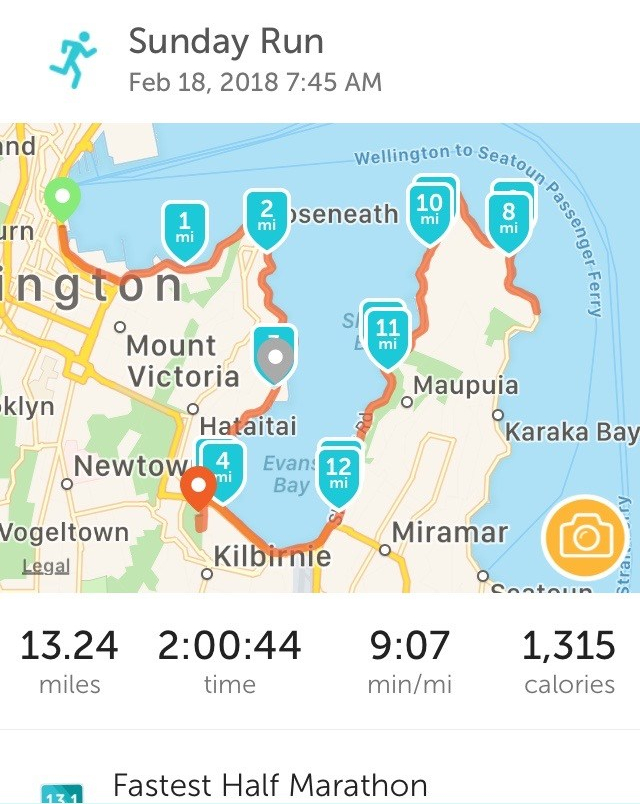
While the first thing I learned came at the very start of my training for Round the Bays, the second arrived at the very end, as I crossed the finish line. I ran my first half-marathon in 2:08:12. That time around, I didn’t have a goal time because I had no benchmark for how fast I was and I just wanted to finish. This race, my goal was to finish in two hours or less. And… I didn’t. According to the official race results, my final time was 2:00:42. Just 42 seconds longer than my goal: close, but not quite there.
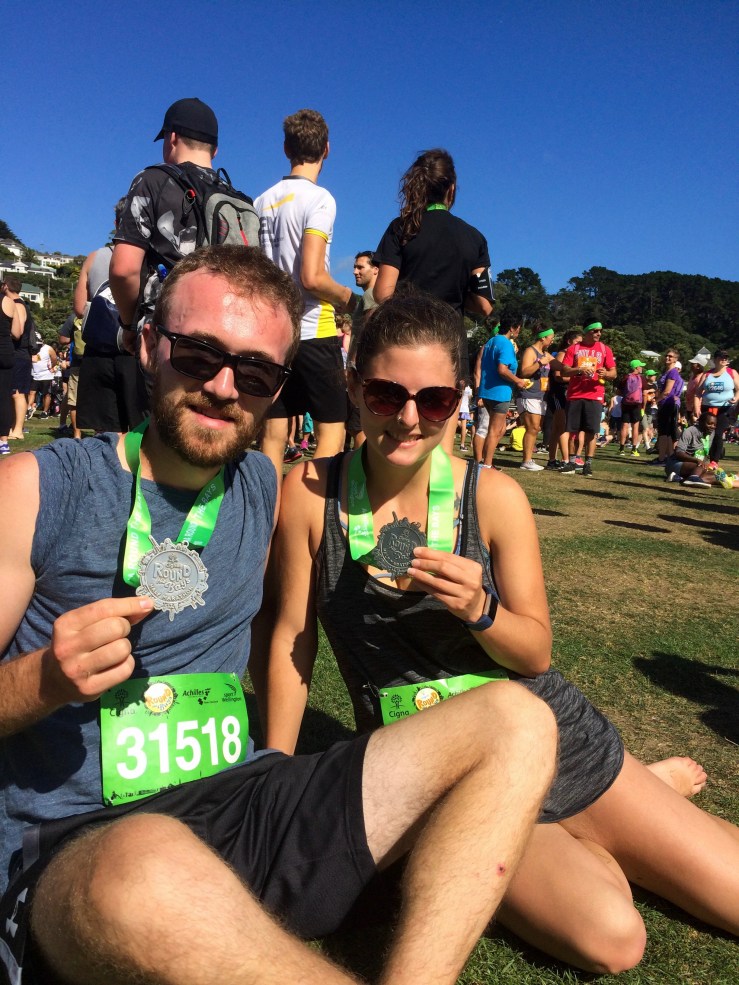
After the race and ready to sit!
I’m a perfectionist, and I hate not meeting my own expectations. There are a lot of excuses that can be made– a serious head wind for most of the course, a rumour that the track is just a bit longer than a half-marathon (and the GPS on my phone would seem to back that up)–but at the end of the day, I just didn’t quite get there. Usually I’m pretty hard on myself when I “fail” at something, so I expected to feel disappointed that I didn’t achieve my goal.
Instead I felt proud and excited. I cut seven-and-a-half minutes off my previous time, with half as much training as I did for the last race. I also felt energized–after my last half-marathon I felt like there was no way I could see myself running a full marathon in the future. Now? It seems like a definite possibility (with a good bit more training first, of course). I’m happy to celebrate my victories instead of dwelling on my “failure,” and now I have a goal to work toward in my next half.
My main goal is to not stop running for over a year like I did after the Vancouver half. I’m enjoying a week off from running this week to rest and recharge, but I’m looking forward to getting back to it next week and breaking that sub-2 hour barrier in my next race for sure! And maybe then I’ll be ready to turn 13.1 into 26.2! Or not, but I’ll be glad to succeed or fail at whatever comes next.
My unofficial race results—ready to do even better next time!










 thebestpossibletime