Kia ora! As usual, I haven’t been updating this blog, so last you heard I was hanging out at my parents’ house in Pennsylvania, and now here I am on the other side of the world in Wellington, New Zealand. Steve and I arrived about three weeks ago to begin our 12-month working holiday visas here in New Zealand, and it’s been nothing short of amazing so far. I promise, promise, promise (but I always say that, don’t I?) I’ll give you some NZ details soon, but first I want to talk about the journey over and our stop along the way.
Before heading off to New Zealand, I went over to Ireland for a month. It was the first time i’d been back since finishing my MA and leaving three years ago, so I was so excited to return to Killarney, Galway, and see some new places like Wicklow and the Ring of Kerry. More on that later, but I want to jump ahead to leaving Ireland on November 21st.
The longest flight I’d ever taken before November was about nine and a half hours from Philadelphia to Madrid. We were looking about 30 from Dublin to Auckland. Obviously there are no direct options, so when we were deciding which route to take we started discussing stopping over somewhere for a few days to hopefully lessen the jet lag and take the opportunity to see somewhere new. And that’s how we ended up on a flight from Dublin to Heathrow before heading on to Kuala Lumpur, Malaysia.

We picked KL for a few reasons. It’s not Dubai, one of the most common spots for layovers between the east and west but someplace neither of us have much desire to see. The combination of Asian cultures that KL promised interested and appealed to us. It’s also meant to be far less expensive than other cities we considered like Hong Kong and Singapore. And so we booked a hostel and were off to Malaysia.
We arrived in Malaysia after almost 24 hours of traveling (counting layovers and time spent driving to the airport), hungry and tired and completely unprepared for the heat and humidity, coming from Ireland’s already wintery conditions. After checking into our hotel we only made it around the corner for some (delicious) indian food before returning to our room and collapsing to sleep.
Luckily, our flight was scheduled that we got to KL in the evening, so by morning we were fairly refreshed and our sleeping schedules weren’t too horribly screwed up. We ventured out to explore the city. Our first stop was the famous Central Market, where hawkers and vendors sold their wares to hordes of tourists. We were immediately tempted by any number of items but, having been told that KL is a shopping mecca, we used our willpower to hold off in anticipation for having plenty more options over the course of our stay.
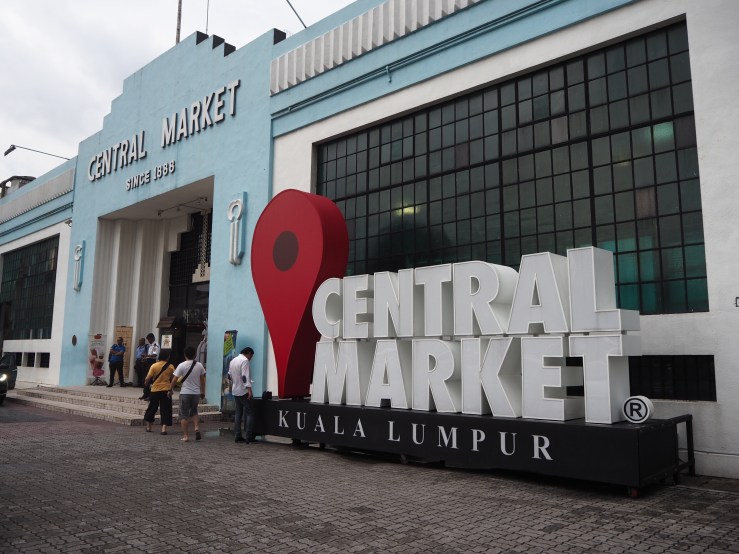
As it turned out, our shopping trip would soon continue as we left the market to find a torrential downpour. Wanting to stay inside as much as possible until the rain let up, we headed for Bukit Bintang and a seemingly endless parade of malls. Usually I get equal parts bored and overwhelmed in massive shopping malls, but the bright lights, bustling crowds, and array of brands and shops I had never heard of combined to create an experience more like the Vegas Strip or New York City than a typical trip to the mall.
We cheerfully spent the rest of the afternoon going from shop to shop, mall to mall, and when the rain had let up we took a friend’s advice and made our way to Jalan Alor, the famous outdoor street food market.
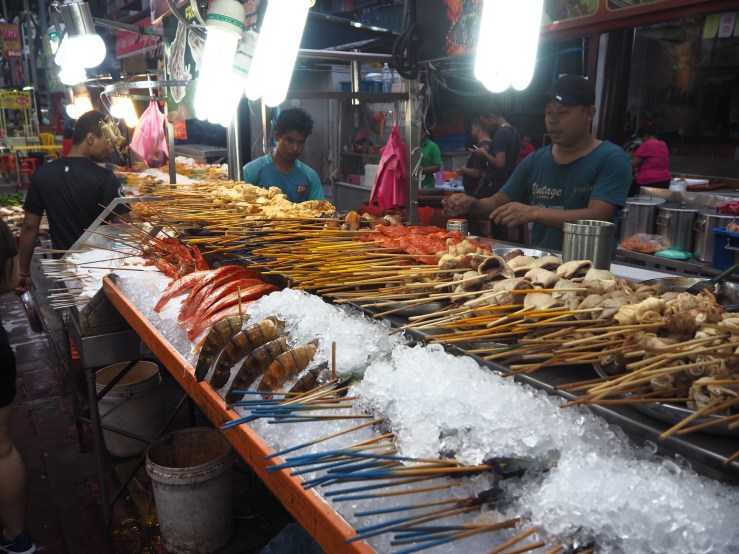
I would be remiss if I didn’t tell you how amazing the food in KL is. For as little as three US dollars, you can stuff your face with incredible mee goreng (fried noodles), nasi goreng (fried rice), or my favourite, hokkien mee. This last we ate twice in Lot 10, a food court with an offshoot kiosk of the original restaurant that created this smokey, savoury noodle dish. I could have eaten it half a dozen times more if it hadn’t been for my desire to try as many different dishes as I could.

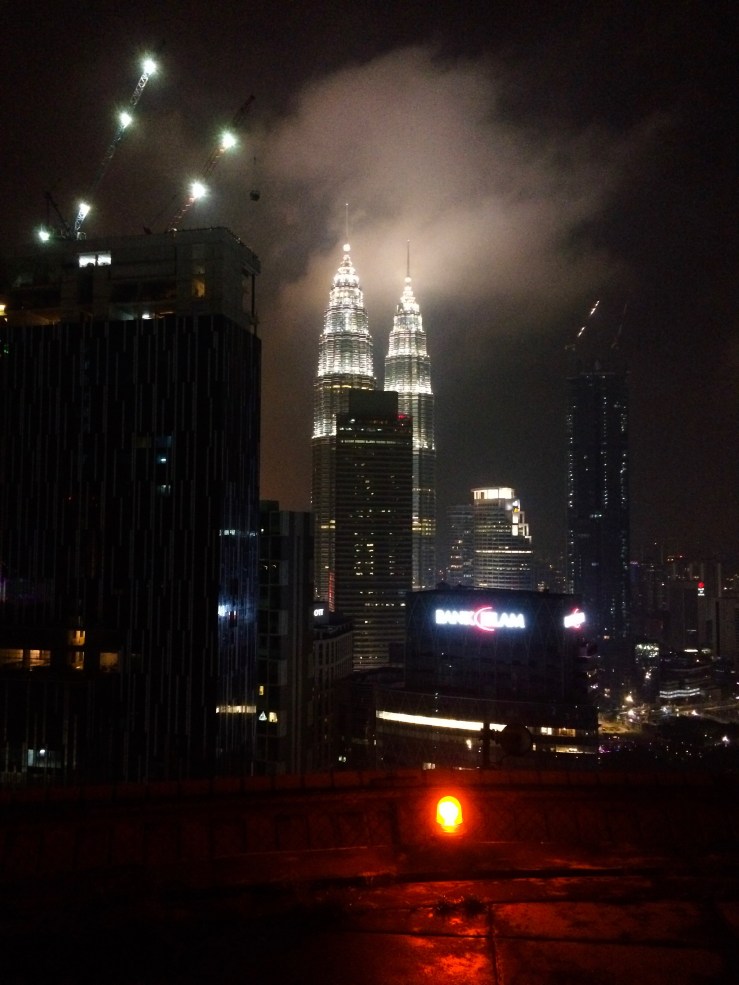
On days two and three of our trip, we visited the two most famous attractions in KL. The morning of the second day took us to the Petronas Towers, one of the tallest structures in the world (it’s the tallest twin tower, and the 12th tallest building overall). First we took the lift up to the skywalk on the 41st floor, where we stepped out onto the (enclosed) bridge between the two towers and got what we thought was an impressive view of the city.

And it was, but it was nothing compared to being sent up to the 83rd floor and walking around the observation room, taking in the 360-degree views of the city and surrounding area. One of the most striking things about KL is the contrast of old and new. Skyscrapers sit next to temples and down the street from aging villages. In the distance, the mountains and hills encase the city, impressing their own power on the imposing newness of the vibrant billboards and rushing traffic.

In the afternoon, we ventured south through Brickfields (also known as Little India due to its cultural make-up) and to the Royal Palace. Unfortunately we were not allowed to take pictures inside of the lavish rooms where the King and his family live when they are in the city, but it was still an interesting introduction to some of the political culture of Malaysia. I have to admit, I knew (and still know) very little about Malaysia, and on this trip we focused more on having fun and eating a lot of food than really learning, for fear of taking in too much information and arriving to New Zealand exhausted rather than refreshed, but I was glad to get a little break from the bustle of the city and see a bit of Malaysia’s history at the same time.
The next day, we visited KL’s other most famous attraction: the Batu Caves. Having heard advice from friends who had visited, we came prepared. We made sure to cover our knees and shoulders for modesty (although judging by the amount of skin most other tourist were showing, this wasn’t strictly enforced unless you were actually entering a temple) and, more importantly, we didn’t carry anything that the monkeys might try to steal.
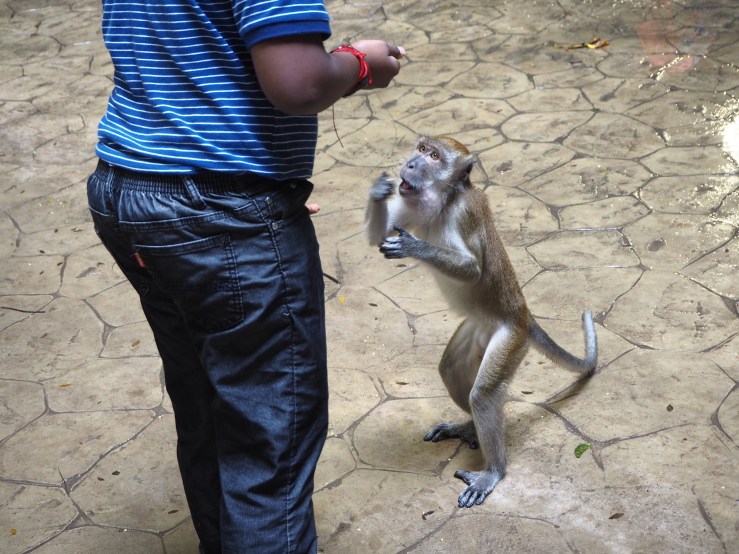
We had been advised to visit the caves early in the day, when it wouldn’t be so hot to climb the steps up, and apparently everyone else had received the same advice as the steps were crowded with locals and tourists. Monkeys leapt around, not caring if they got in the way, happily stealing from unsuspecting people who stopped to take photos or look back at the city. The caves itself were cool to see, although heavily scaffolded from restoration construction work.
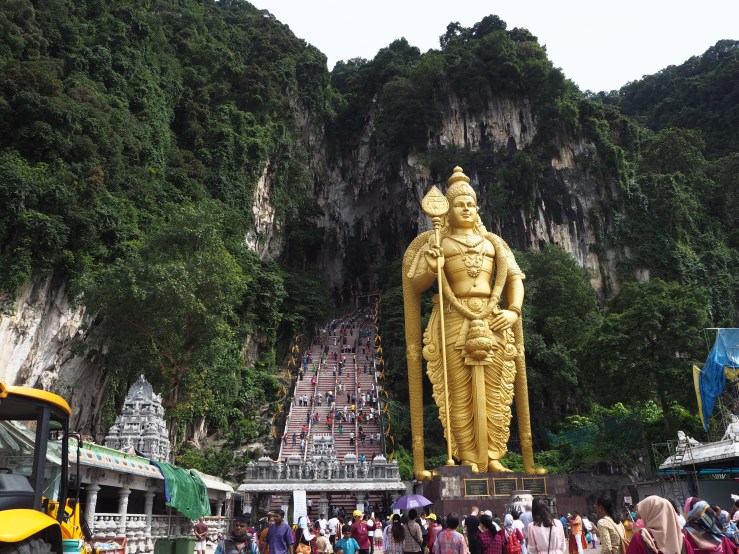
However, it was the cave just around the corner from the main entrance that was one of the highlights of my trip. The Dark Cave is an eco-reserve that traverses deep into the mountain and features an array of bat species, cave-dwelling insects, and one of the rarest spiders in the world. We took the 45-minute tour and were led by our excellent guide, Ain, into the cave.
Dark Cave is aptly named. For most of the tour, light from outside is visible. However, as you go deeper into the cave, it fades away until you turn the corner and find only illumination from the torchlights provided. Then, the tour guide asks you to switch off your lights before she switches off her own, leaving you in darkness so complete that opening and closing your eyes looks exactly the same. It’s an intense experience.
Throughout the tour you can hear the chirps of bats and the dripping of water. In one area, openings in the cave create an eerie wind. In another, the falling water creates a beautiful calcite waterfall, seemingly frozen in time as the moving water flows over it. I didn’t hear anything about this tour before we went, but if you are ever in KL I highly recommend it.

In the evening, it was back to the bright lights of the city and up to the top of a local hotel where a helipad-by-day, bar-by-night offers incredible views of the city. We stayed for two cocktails and then went exploring along the main tourist/bar street. A ladies’ night deal saw me drinking free gin & tonics—don’t worry, Steve wasn’t completely left out; he got 2-for-1 Long Islands. As you might expect, we weren’t up for doing much the following day.
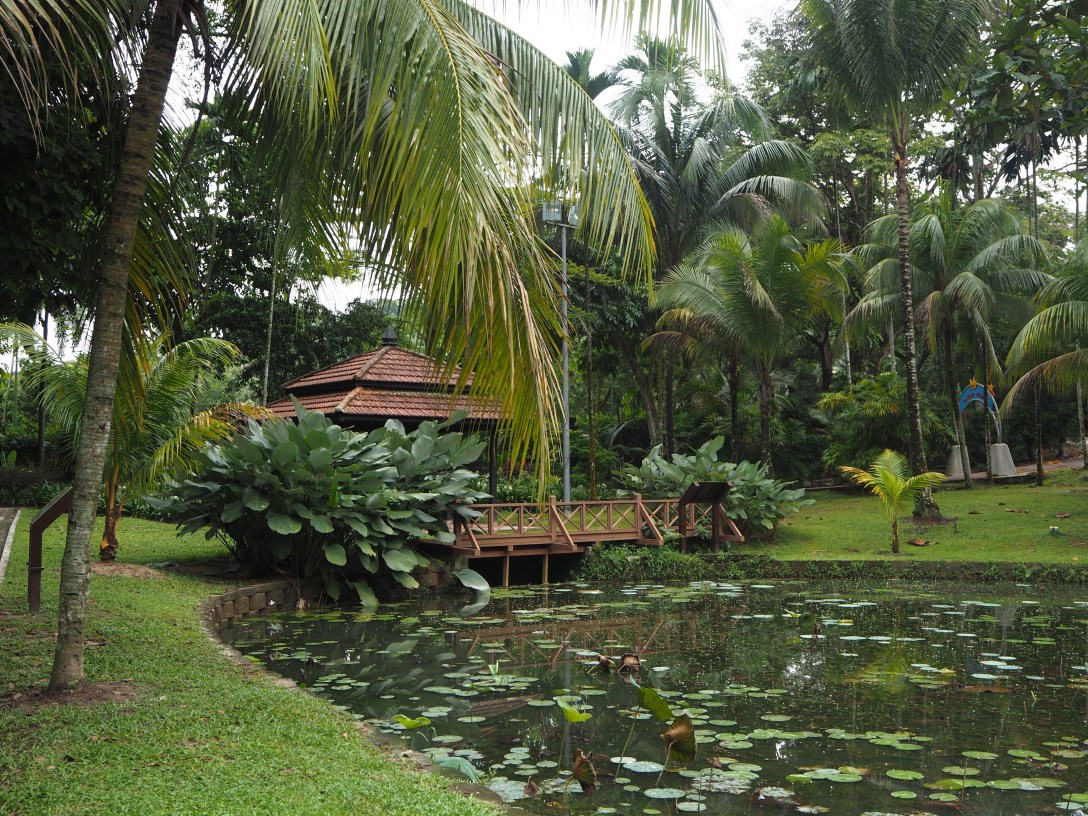
Our flight on the day we left wasn’t until nearly midnight, and we were determined to cram as much into our last day as possible. In part, it was because we wanted to experience all of KL that we could, but it was also an effort to tire ourselves out in the hopes of catching a few minutes of shuteye on the flight to Auckland. We explored the botanical gardens in the morning. seeing a variety of local trees and flowers.
Afterward, we headed to the central market once more, where I tried something that I had been curious about since Steve had done it on our first day: a massage of sorts by small, toothless fish who got their sustenance by eating the dead skin cells of your feet. It was an incredibly weird but oddly nice feeling, and I have to admit my feet felt pretty good afterward, despite the number of miles I had put on them over the course of our trip.

Finally, a quick stop back at Jal Alor for one last dose of delicious Asian street food saw us off before we returned to our hotel, collected our luggage, and hopped in a taxi off to the airport. Onward to New Zealand!